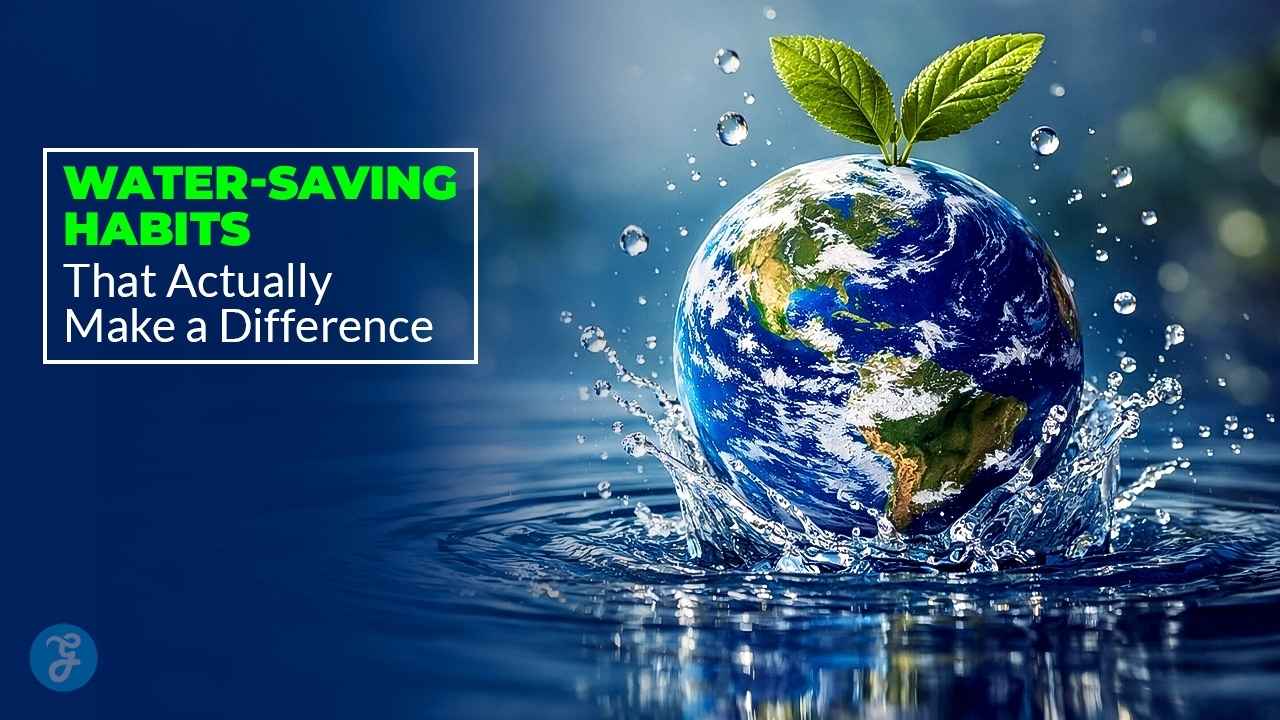
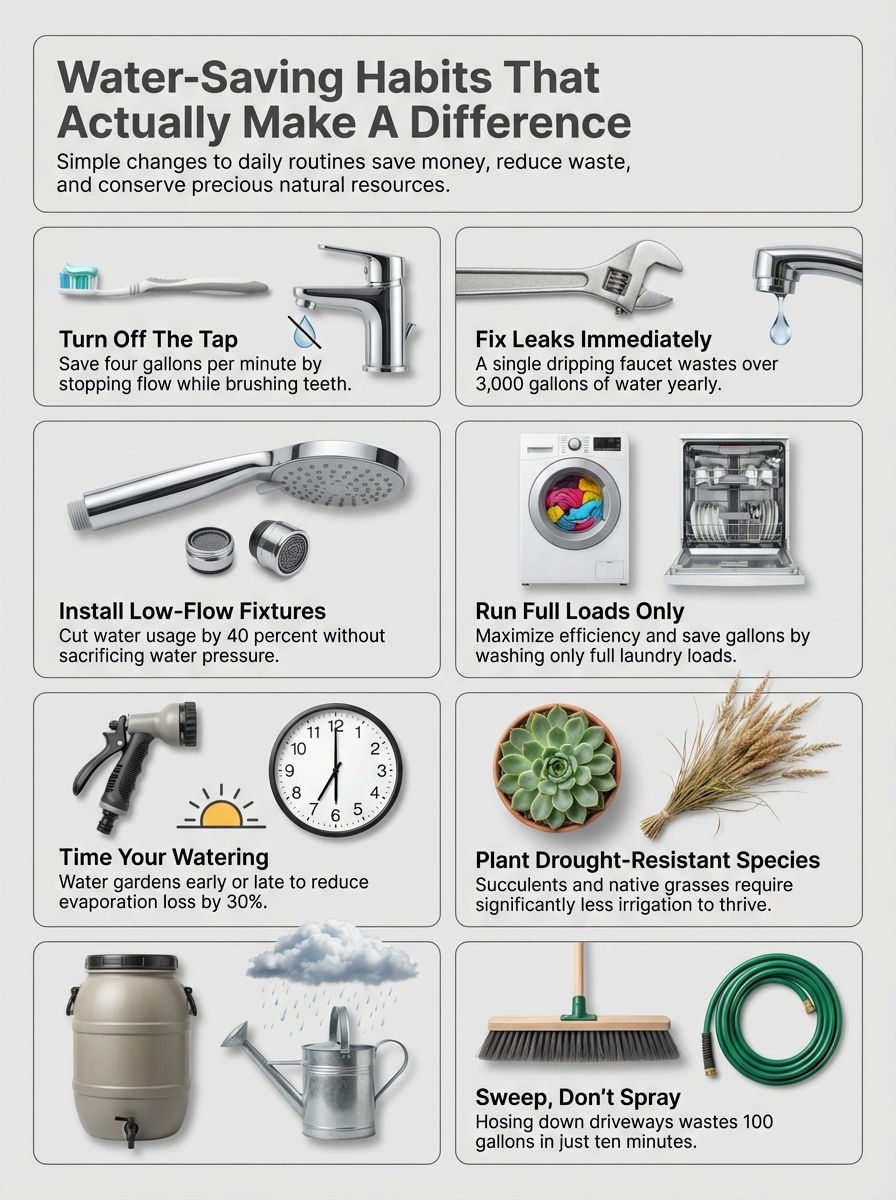
Have you ever stared at your water bill and wondered why the numbers look wrong? It feels like a bug in the code. You might see a leaky faucet or a sprinkler running at noon. These small errors often slip under our radar. They still drain your money and our shared water resources. One data point might surprise you. A single dripping faucet can waste over 3,000 gallons of water each year. That is enough to fill sixty bathtubs.
I want to help you debug your home’s water system. We will look at practical Water-Saving Habits that cut waste without making your daily routine harder. Are you ready to see how a few logic updates can make a massive difference? Let’s get to work.
Why Water-Saving Habits Matter
We need to understand the root cause before we fix the system. Freshwater is not endless. Only 3% of Earth’s water is fresh. Most of that is locked away in glaciers or deep underground.
The stakes are high. Cities like Cape Town faced “Day Zero” back in 2018 where taps nearly ran dry. In the United States, reservoirs like Lake Mead have seen historic lows recently. This puts pressure on everyone.
Every drip adds up to a system failure. A single leaking tap wastes over 3,000 gallons annually. That is as much as thirty people drink in the same timeframe. Saving water reduces stress on public infrastructure. It also cuts the energy required to heat and treat that water.
Less waste means more clean water stays where it belongs. It remains available for drinking, farming, and future needs.
“You never miss the water till the well runs dry.”
Indoor Water-Saving Habits
Saving water at home might feel like a minor optimization. However, the data proves it adds up fast. Simple changes indoors help your pipes last longer. They also trim your monthly bills.
Turn off the tap while brushing your teeth
A standard bathroom faucet flows at about 2.2 gallons per minute (GPM). If you leave it running for two minutes while brushing, you waste over four gallons. That is like watching money go right down the drain.
Switch off the tap until you need to rinse. This easy habit requires zero technical skill but saves a massive amount of water over time.
This creates a better loop for your daily routine. Kids and adults both make a bigger impact by doing this every morning and night. It reduces unnecessary load on your plumbing and lowers your bills without any complex tools.
Fix leaks promptly
Leaks are the bugs in your plumbing system. A single leaking faucet can drip over 3,000 gallons per year. Even a silent toilet leak can waste up to 200 gallons a day according to the EPA.
The “Dye Test” Diagnostic:
- Remove the lid from your toilet tank.
- Place a few drops of food coloring into the tank water.
- Wait 15 to 20 minutes without flushing.
- If color appears in the bowl, you have a leak. It is usually a worn-out flapper valve which costs less than $10 to replace.
Check pipes and cabinets often for wet spots. Fix problems right away to improve the efficiency of your system. Call a professional if the job is too big. Quick fixes make a measurable difference in conservation.
Use a low-flow showerhead and faucet aerators
The next step is upgrading your hardware. Swapping old fixtures for WaterSense-labeled models is the most effective patch you can apply. A standard showerhead uses 2.5 gallons per minute. A low-flow version uses 2.0 gallons or less.
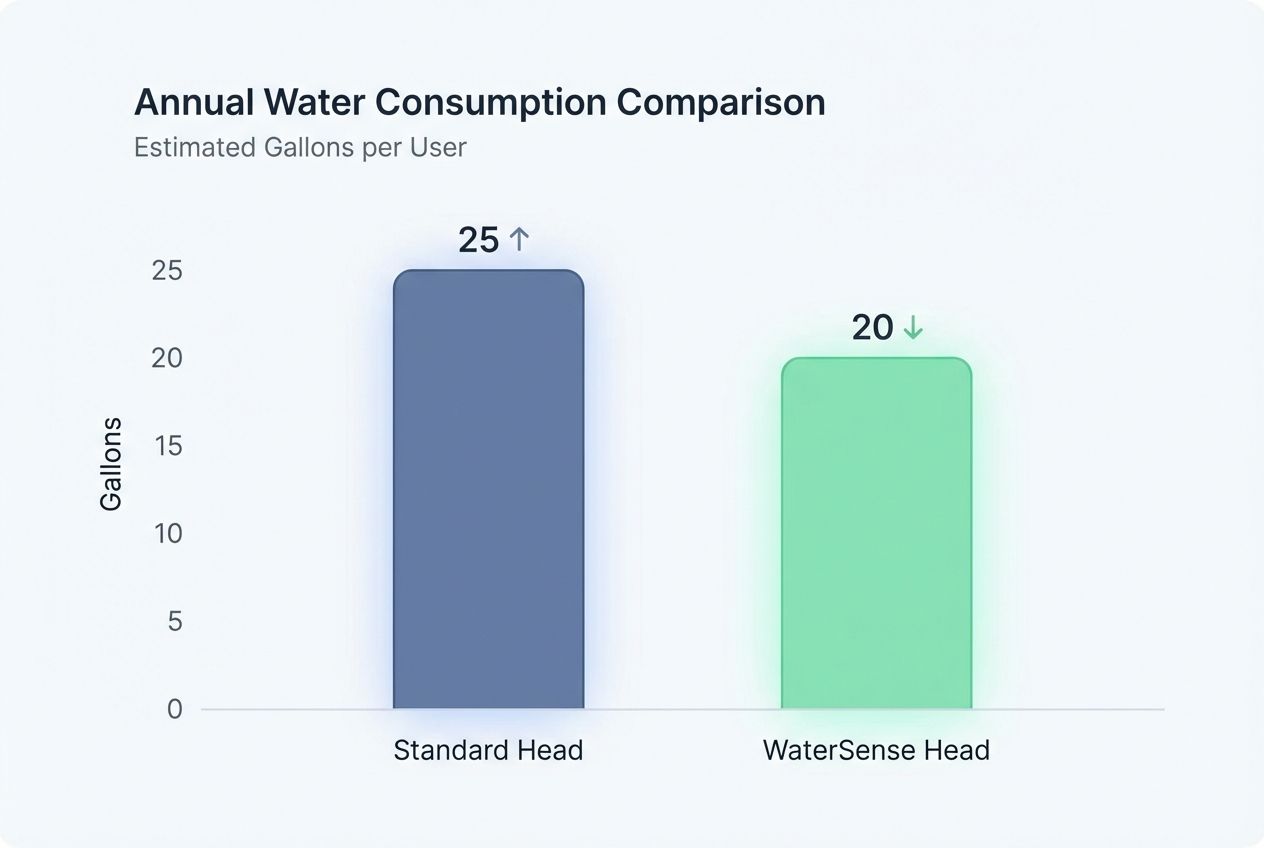
Here is how the numbers compare for a 10-minute shower:
| Fixture Type | Gallons Per 10 Min | Yearly Use (1 Person) |
|---|---|---|
| Standard Head | 25 Gallons | 9,125 Gallons |
| WaterSense Head | 20 Gallons | 7,300 Gallons |
| Total Savings | 5 Gallons | 1,825 Gallons |
Faucet aerators are another great tool. They screw onto most taps in seconds. They mix air with water to maintain pressure while cutting flow. Your rinse feels just as refreshing. Your hands get clean all the same. These upgrades boost efficiency immediately.
Efficiency isn’t about doing less, it’s about using resources wisely.
Run dishwashers and washing machines only with full loads
Dishwashers and washing machines are resource-heavy processes. Running them only when full optimizes their output. One cycle with a few dishes wastes resources. It is like watering the garden during a rainstorm.
Modern Energy Star dishwashers are actually more efficient than hand washing. They use about 3.5 gallons per cycle. Hand washing the same load can use up to 20 gallons. However, you must run full loads to get this benefit.
This saves on your energy bill too. Fewer cycles mean less power used and less hot water needed. Check your appliance manual for an “Eco” mode. This setting often extends the wash time but significantly lowers water and energy consumption.
Collect and reuse water where possible
You can stretch your savings by capturing “graywater.” This is the relatively clean wastewater from baths, sinks, and washing machines. Place a bucket in your shower to catch the cold water while you wait for it to heat up.
Use this collected water for these tasks:
- Watering houseplants.
- Flushing toilets manually.
- Cleaning outdoor furniture.
- Refreshing the garden soil.
In dry months, set out buckets during short storms. Use that rainwater for irrigation later. Even leftover ice cubes can melt into a drink for potted plants. This ensures every input in your system has a purpose.
Outdoor Water-Saving Habits
Saving water outside is often where you see the biggest ROI. The EPA estimates that up to 50% of outdoor water use is wasted due to evaporation or runoff. Small changes in your yard routine correct this inefficiency.
Water your garden early in the morning
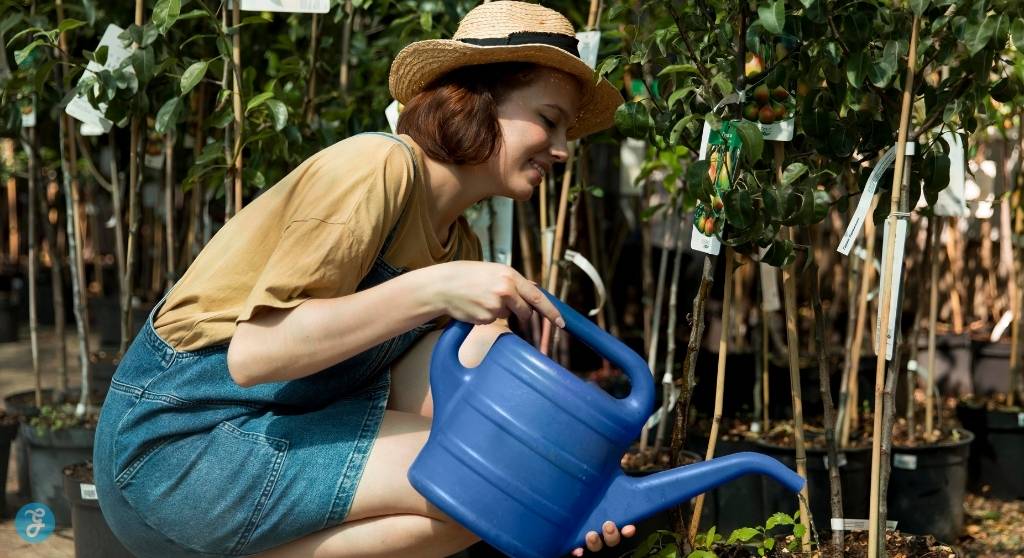
Hot sun causes water to evaporate before it reaches the roots. Early morning is the best time to run your irrigation. Late evening is a good backup option. This simple schedule change can reduce waste by 30%.
Less evaporation means your garden gets the full benefit. It saves resources and helps the environment. Cool times also lower stress on roots. Conservation grows with each drop you keep in the soil.
Use drought-resistant plants in landscaping
Smart gardening is about choosing the right components for your environment. This approach is often called “Xeriscaping.” Drought-resistant plants make gardens resilient in dry weather. They require far less irrigation than traditional grass.
Consider adding these tough plants to your yard:
- Lavender: Smells great and needs very little water once established.
- Coneflower (Echinacea): A native US flower that thrives in heat.
- Sedum: A succulent that stores water in its leaves.
- Fescue Grass: A durable alternative to thirsty Kentucky Bluegrass.
These choices add color and texture to any yard. They trim your resource use significantly. A yard full of these survivors stands strong against droughts.
Install a rain barrel to collect rainwater
You can lower your bill by catching the rain that falls for free. Place a rain barrel under a gutter pipe to gather water straight from the roof. The EPA states that a single 55-gallon rain barrel can save about 1,300 gallons of water each summer.
Use this collected water for gardening or washing outdoor tools. There is no need to turn on your hose. Rainwater is excellent for plants because it is free of the chlorine and fluoride found in tap water.
Pro-Tip: Always cover your barrel with a fine mesh screen. This prevents mosquitoes from using your water storage as a breeding ground.
Use a broom instead of a hose
Sweeping driveways and sidewalks with a broom is a manual fix that beats the automated one. A standard garden hose can blast out 10 gallons every minute. Just ten minutes of cleaning could send 100 gallons into the storm drain.
Sweep instead. Save the water for showers or gardening. This conservation habit starts with a simple choice. Pick up a broom instead of reaching for the hose. It keeps your yard clean while supporting sustainability.
Energy and Water Conservation
Cutting back on hot water lowers energy bills. This is a double win for your wallet and the planet. Heating water accounts for about 18% of a home’s energy use. Optimizing this protects your budget.
Reduce hot water use to save energy
Shorter showers save both water and energy. Hot water heating is power-intensive. Try washing clothes in cold water. Modern detergents are formulated to work perfectly in cold settings. Your laundry gets clean and you shrink your utility bill.
Take small steps. Switch off the tap while soaping up in the shower. You should also check your water heater settings.
Many manufacturers set water heaters to 140°F by default. Lowering this to 120°F is sufficient for most households, prevents scalding, and saves energy.
Install water-efficient appliances and fixtures
Switching to water-efficient appliances can cut your daily use by up to 30 percent. Look for the Energy Star label on washers and dishwashers. For bathrooms, look for the WaterSense label.
A WaterSense-certified toilet uses about 1.28 gallons per flush. Older models use 3.5 gallons or more. That saves thousands of gallons every year for a family. Washing machines with high-efficiency ratings also help save both water and energy.
These smart choices protect resources. They keep utility bills low without any loss in comfort. It is like swapping out an old hard drive for an SSD. You get better performance with less energy.
Building Awareness and Encouraging Action
Change often starts at home. Sharing simple tips sparks big shifts in how people value water. Sometimes all it takes is a quick chat to get everyone on the same page.
Educate your household about water conservation
Talk about water-saving habits at home. Show kids how turning off the tap saves gallons. Set up a chart to track daily habits like shorter showers.
Lead by example. Fix drippy faucets right away. Only run the dishwasher when it is full. Bring conservation into everyday chat. Explain how using less water helps during drought. Share facts like how families can waste up to 180 gallons a week from leaks alone. Make saving water a shared goal. The whole house becomes part of the solution.
Encourage community participation
Small actions spark big change. Neighbors can work as a team. Spot water leaks in parks or playgrounds together. Local groups often share tips on efficient irrigation.
You could set up a community contest for the best water-saving garden. Organize clean-ups where everyone brings reusable buckets. Children may help by making posters about conservation for schools.
Getting involved helps spread good habits fast. Many towns sponsor “Fix-a-Leak Week” in March. Volunteers might even install efficient fixtures at community centers. Support creates pride. People start looking out for shared resources.
Support local programs
Join local efforts like community water clean-up days. These programs teach smart habits. You may see neighbors setting up rain barrels. These examples help others learn.
Some cities offer rebates. You might get money back for buying a high-efficiency toilet or smart irrigation controller. Check your local utility website for these offers. Support from the neighborhood builds a bigger impact over time.
Each person who saves water helps keep resources in better shape. Your voice can push towns to fix public systems. Every drop saved is a step toward true sustainability.
Final Words
Saving water at home is easy when you use the tips we discussed. Fixing leaks, using full loads, and watering plants early are simple habits. They fit right into daily life. Small changes mean big savings for your bill and the planet. You can find more ideas from local groups or online guides if you want to keep learning.
Every drop counts. Make these habits yours today. It truly starts with just one person turning off the tap.