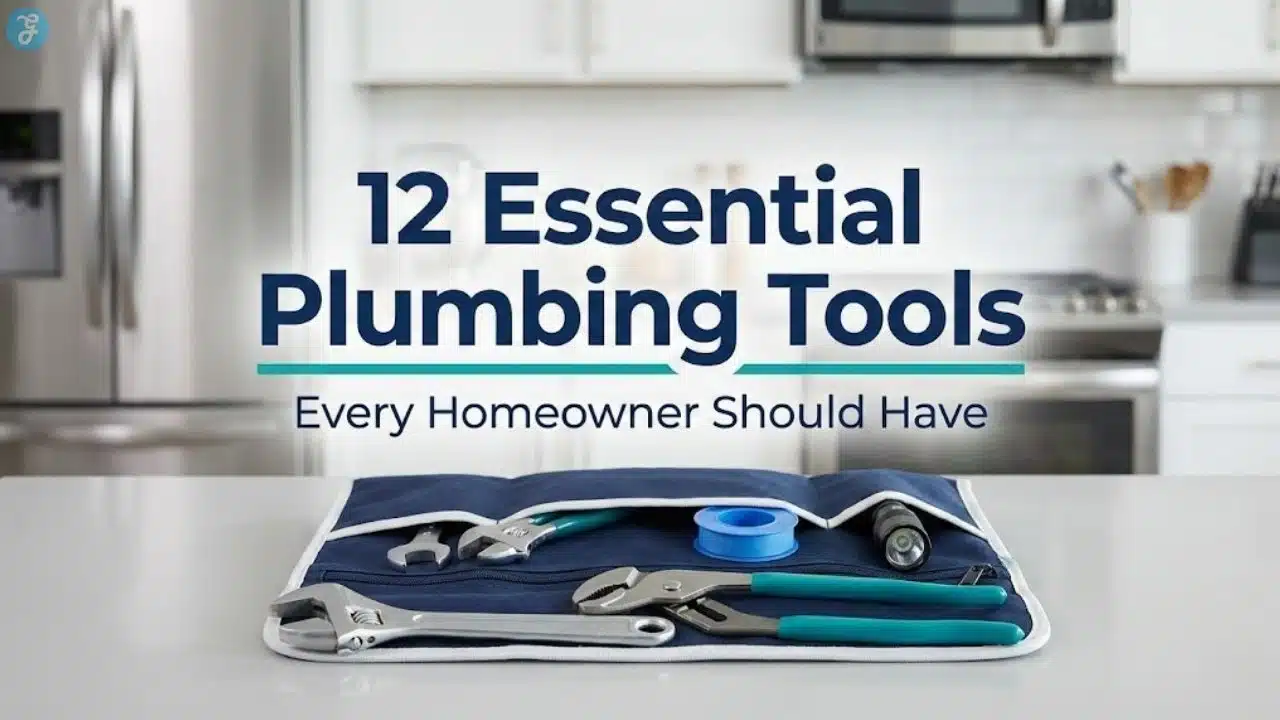
Plumbing issues never feel urgent until they suddenly are. A slow drip under the sink can quietly ruin a cabinet. A toilet that backs up can become a mess in minutes. The good news is that most “panic moments” at home are caused by simple problems that can be handled quickly with the right basics. Essential plumbing tools give you the ability to stop damage early, do small fixes safely, and decide with confidence when it’s time to call a pro.
This is not about turning you into a plumber. It’s about being prepared for the most common homeowner situations: leaks, clogs, loose fittings, and routine replacements.
Why Every Homeowner Should Keep Basic Plumbing Tools
Home plumbing gets used every day. That alone guarantees wear over time. Rubber washers degrade. Drain lines collect buildup. Shutoff valves get stiff. Joints loosen slightly through vibration and temperature changes. None of that means your home has “bad plumbing.” It means plumbing is a working system, and working systems need occasional attention.
Having basic tools on hand helps you respond in the moment. It also helps you avoid bad quick fixes, like overtightening a plastic fitting, pouring harsh chemicals down a drain, or ignoring a leak because you don’t have what you need. A small tool kit can save you money, but it also saves time and stress.
What It Means to Be “Prepared” Without Overbuying
Most homeowners don’t need specialty tools meant for full bathroom remodels or professional pipefitting. Preparedness means owning versatile tools that cover the most common tasks and fit typical household fixtures. It also means choosing tools you can use confidently, store easily, and maintain without hassle.
A good home plumbing kit should let you do things like:
-
Tighten or loosen supply lines and faucet nuts
-
Clear common sink and toilet clogs
-
Seal threads to stop small leaks
-
Catch and control water during a repair
-
See clearly in tight spaces
If you can do those things well, you can handle a huge percentage of everyday plumbing issues.
Essential Plumbing Tools Checklist for Homeowners
Before you jump into the list, it helps to think in categories. Most home plumbing tasks fall into four buckets:
-
Turning and holding (wrenches and pliers)
-
Unclogging (plungers and snakes)
-
Sealing (tape, putty, and small parts)
-
Cutting and access (cutters, screwdrivers, light, and cleanup gear)
When you cover those categories, you’ll be prepared for the problems that actually happen in real homes.
12 Plumbing Tools Every Homeowner Should Own
Here are 12 plumbing tools every homeowner should own:
1. Adjustable Wrench
An adjustable wrench is a staple because it fits different nut sizes without requiring a full set of fixed wrenches. It’s most useful on compression fittings, supply line connections, and shutoff valve nuts under sinks and behind toilets. When used correctly, it gives you controlled turning power without chewing up the hardware.
Look for an adjustable wrench with a smooth jaw adjustment and a comfortable handle. Cheap versions can slip, which increases the risk of rounding off a nut. A good technique is to seat the jaw firmly, apply steady pressure, and avoid fast jerks. If a fitting is stuck, don’t immediately force it harder. Stabilize the pipe with another tool when possible, or reassess whether the part is meant to be tightened at all.
This tool earns its place because it solves a lot of “minor leak” situations quickly, especially when a connection has loosened over time.
2. Tongue-and-Groove Pliers
Tongue-and-groove pliers are one of the most useful gripping tools for plumbing. They adjust quickly to different sizes, allowing you to hold a fitting steady while turning another part with a wrench. That “two-tool control” prevents twisting a pipe or stressing a joint, which is a common homeowner mistake.
These pliers are helpful for things like showerhead removal, slip nut tightening, drain assembly work, and holding a pipe while you loosen a stubborn connection. They can also be used to pull out debris during minor drain cleaning, as long as you’re careful with sharp edges.
Choose a pair with solid teeth and a comfortable grip. Use them with controlled pressure, especially on finished chrome fixtures, which can be scratched easily. If appearance matters, use a cloth between the jaws and the fixture to reduce marks.
3. Pipe Wrench
A pipe wrench is designed to bite into round pipes and fittings. It’s the tool you reach for when a smooth fitting refuses to move or when you need serious grip on metal piping. For homeowners, it’s most useful in basements, utility rooms, garages, or any area with exposed pipes where appearance is less important.
Pipe wrenches can damage finished fixtures, so they’re not usually the first choice under a kitchen sink unless you’re working on rough plumbing. The best way to use one is to position the wrench so the teeth bite in the direction you’re turning, then apply steady force. If you’re working on older metal connections, apply penetrating oil and allow time before forcing the fitting.
This tool is essential because certain stuck fittings simply won’t respond to lighter tools, and having the right grip prevents injuries and stripped parts.
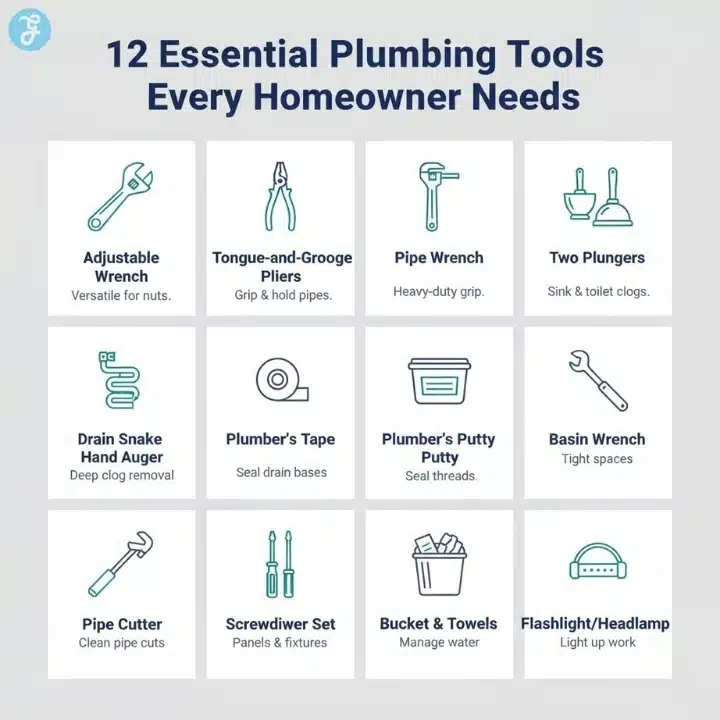
4. Two Types of Plungers
A plunger is not a one-size-fits-all tool. Homeowners should keep two types: a cup plunger for sinks and tubs and a flange plunger for toilets. The flange plunger creates a better seal inside the toilet drain opening, which is why it’s more effective for toilet clogs.
Plunging works best when you create a tight seal and use controlled, repeated pressure. Many people push too hard immediately. Instead, start with a gentle push to set the seal, then use steady strokes to build suction and movement. For toilets, make sure there’s enough water in the bowl to cover the plunger head.
A plunger is a must-have because it’s fast, chemical-free, and often solves the issue in minutes. It also reduces the temptation to use harsh drain cleaners that can damage pipes and create dangerous splashes.
5. Drain Snake or Hand Auger
When a plunger fails, a drain snake is usually the next best step. It reaches deeper into the pipe to break up or pull out clogs caused by hair, soap scum, and buildup. For most homes, a basic hand auger works well for sinks, tubs, and showers.
The key to using a snake is patience. Feed it slowly, rotate as you advance, and don’t force it around sharp turns. When you hit resistance, rotate and work the clog gently. Once you pull debris out, flush the drain with hot water and check that the flow has improved.
Snakes are valuable because they solve the root problem rather than masking it. They also help you avoid repeated clogs by removing buildup that a quick chemical treatment might leave behind.
6. Plumber’s Tape
Plumber’s tape, also called thread seal tape, helps seal threaded connections and reduce small leaks. It’s most commonly used on showerheads, some faucet connections, and threaded pipe fittings where water could seep through the threads.
Application matters. Wrap the tape in the direction the fitting will tighten, usually clockwise as you face the threads. Use a few wraps, smooth it down, and then tighten the fitting normally. Too little tape won’t seal. Too much tape can bunch up and prevent proper tightening.
This is a low-cost tool with a big payoff because it solves those annoying “slow drip” leaks that occur at threaded joints and makes future disassembly easier.
7. Plumber’s Putty
Plumber’s putty is used to seal around drains, faucet bases, and certain fixture mounts. It stays pliable, which makes it useful where you want a watertight seal but may need to remove the fixture later. It’s common in sink drain installation and certain bathroom fixture tasks.
The best use case is sealing the lip of a drain flange or a fixture base where water could sneak underneath. You roll it into a thin rope, press it into place, tighten the part, and wipe away the excess. Always check whether your fixture material requires a different sealant. Some materials or manufacturers prefer silicone.
Putty helps prevent slow, hidden leaks that can damage cabinets and countertops over time, especially around sinks where water exposure is frequent.
8. Basin Wrench
A basin wrench is made for one frustrating job: reaching faucet mounting nuts in tight spaces behind sinks. If you’ve ever tried to replace a faucet with a regular wrench, you already know why this tool matters. The basin wrench has a long handle and a pivoting jaw that grips the nut from awkward angles.
It’s especially helpful during kitchen faucet swaps, bathroom faucet replacements, and certain shutoff valve work. The trick is to position the jaw correctly and use steady pressure. A headlamp helps a lot here because visibility is usually poor under sinks.
For homeowners, a basin wrench turns a “this is impossible” task into a realistic DIY job and prevents injury from awkward twisting and overreaching.
9. Pipe Cutter
A pipe cutter gives you clean, controlled cuts, which is essential if you ever need to replace a section of pipe or install a new fitting. Many homeowners use pipe cutters for copper pipe, but there are also cutters designed for plastic piping. Clean cuts matter because crooked or jagged cuts can cause poor seals and future leaks.
A cutter works by tightening the wheel against the pipe and rotating around it, gradually increasing pressure until the pipe separates. After cutting, you usually need to deburr or smooth the edge. That helps the seat fit properly.
Even if you don’t use a pipe cutter often, having it available matters when a small repair suddenly requires removing a damaged section cleanly rather than hacking it with a saw.
10. Screwdriver Set
Plumbing work involves access panels, fixture screws, hose clamps, and mounting brackets. A simple set with both flathead and Phillips drivers covers most needs. This becomes important when you’re removing a toilet tank lid, opening an access panel, tightening a loose handle, or disassembling a drain trap assembly that uses screws.
Choose screwdrivers with comfortable handles and sturdy tips. Stripped screws are a small problem that can quickly become a big annoyance. For tight areas, a short driver or a multi-bit driver can be useful, but the core requirement is basic reliability.
A good screwdriver set supports almost every plumbing repair because plumbing is rarely just pipes. It’s also fixtures, mounts, and access points.
11. Bucket and Absorbent Towels
Water will come out when you open a drain trap, disconnect a supply line, or remove a fixture. A bucket and towels prevent the water from causing damage. They’re also critical for controlling a leak while you shut off a valve or diagnose the source.
A bucket catches the obvious spill, but towels handle the hidden risk, like water running along the bottom of a cabinet or dripping behind a pipe. Keeping a dedicated set of old towels near your tool kit makes response faster and reduces cleanup stress.
This is also a safety tool. Wet floors cause slips, and water around electrical outlets or appliances can become dangerous quickly. A bucket and towels help you keep the workspace controlled.
12. Flashlight or Headlamp
Most plumbing work happens in poor lighting. Under sinks, behind toilets, in basements, or near water heaters, visibility is often the biggest barrier to safe repairs. A bright flashlight helps, but a headlamp is even better because it keeps your hands free.
Good lighting makes it easier to spot small leaks, corrosion, hairline cracks, and slow drips. It also helps you read labels on shutoff valves and identify which supply line connects to which fixture. That clarity reduces mistakes and speeds up the job.
If you want a single upgrade that makes DIY plumbing feel less stressful, better lighting is a surprisingly effective choice.
Is It Cheaper to Own Tools Than to Call a Plumber?
For small issues, yes. One service call can easily cost more than several high-quality basics. The bigger benefit is speed. If you can shut off water, catch a leak, and make a simple repair immediately, you prevent secondary damage. Water damage is often the expensive part, not the original plumbing problem.
That said, there’s a clear line. If you’re dealing with hidden leaks, sewage backups, gas lines, water heater problems, or anything you’re not confident handling, a licensed plumber is the right move. Tools help you manage the situation until help arrives, and they keep you from guessing.
What Purposes Do These Tools Serve?
With the right basics, many common homeowner tasks become manageable:
-
Tightening a loose faucet handle or supply line connection
-
Clearing a sink clog caused by hair or food debris
-
Stopping a slow drip at a threaded connection
-
Replacing a showerhead without leaks
-
Removing and cleaning a sink trap
-
Swapping a basic faucet with less frustration
-
Controlling water safely while waiting for professional help
Owning essential plumbing tools also helps you diagnose problems more accurately. When you can identify where water is coming from and what type of fitting is involved, you can make better decisions about repair vs replacement and avoid wasting money on the wrong fix.
Safety Rules Homeowners Should Follow Before Any Plumbing Work
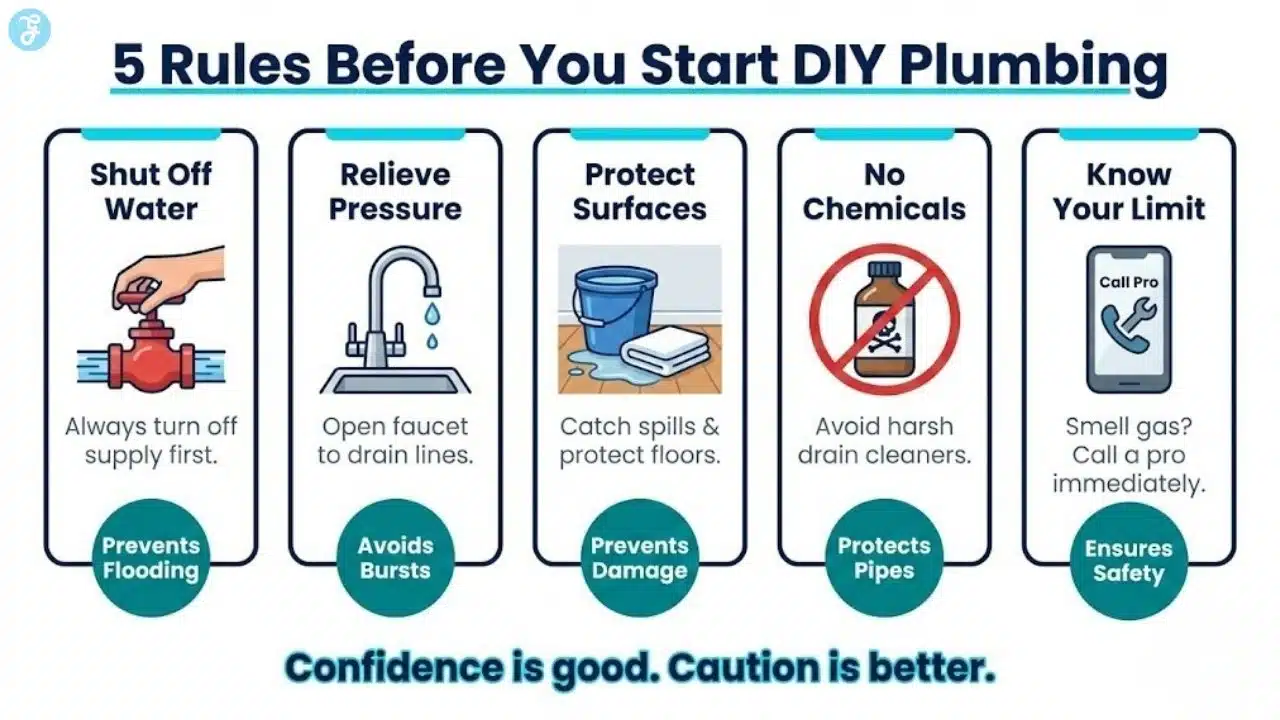
If you do only a few things, do these:
-
Shut off the water before disconnecting anything
-
Relieve pressure by opening a faucet after shutting off the valve
-
Protect surfaces with towels before turning tools on finished fixtures
-
Avoid chemical drain cleaners if you plan to snake a drain
-
If you smell gas, leave the area and contact professionals immediately
-
If a leak is active and you can’t stop it quickly, shut off the main water supply
Confidence is good. Caution is better. The goal is clean, controlled repairs, not rushing.
The Bottom Line On Essential Plumbing Tools
A small toolkit doesn’t replace a professional, but it does replace panic. When you keep the right basics at home, you can stop leaks sooner, clear clogs safely, and handle common fixes without turning a small problem into an expensive one. Essential Plumbing Tools give homeowners practical control, faster response, and peace of mind, especially in the moments when water is doing exactly what you don’t want it to do.
Frequently Asked Questions (FAQs)
Here are the most common questions and their answers that readers have:
Do I Need Professional Training to Use These Tools?
No. Most are simple to use with basic care and patience. Start with small tasks like tightening a connection or plunging a drain, and work slowly.
Can These Tools Replace a Plumber?
They help with minor repairs and maintenance. For major leaks, sewer issues, or anything involving gas lines, a licensed plumber is still necessary.
How Much Should I Spend on a Starter Plumbing Kit?
Buy fewer tools, but buy reliable ones. A solid adjustable wrench, a good plunger, and a basic snake often deliver more value than a large, cheap set.
Are Chemical Drain Cleaners a Good Substitute for a Snake?
They can damage pipes over time and can be hazardous to handle. A snake physically removes the blockage and is often the safer long-term choice.
What Should I Add Next After I Buy the Basics?
If you want to expand, add spare washers, a small assortment of O-rings, and a pair of work gloves. Those small additions make common repairs faster.