The internet gravitates toward conspiracy because it promises order. If there is a secret “Client List”, a hidden register of names locked away, then the evil appears contained. It suggests that if we can pry open the lock, we can expose the monsters and restore a sense of justice. These Epstein unsealed documents show that the fixation on a list obscures the far more unsettling reality revealed by the records themselves. But the January 2026 release of nearly 3.5 million pages of Epstein related documents by the US Department of Justice points to a colder truth. There is no definitive list. There never was. Jeffrey Epstein did not require a secret society because he operated openly, shielded by proximity to some of the world’s most powerful institutions.
The “List” Illusion vs. The “Log” Reality
We must begin by questioning the terminology that has distorted public discourse. The public demand for a “Client List” reflects a desire for simplicity within a complex legal landscape. It assumes a binary world in which a single document neatly separates “guilty” from “innocent.”
However, what the Department of Justice unsealed following the Epstein Files Transparency Act is not a roster of clients. It is a vast archive of flight manifests, deposition transcripts, emails, calendars, and investigative records. We must be legally precise here:
- Flight Logs (The Lolita Express): These document transportation. Flying on Epstein’s plane functioned as a status symbol for parts of the global elite, operating as a private networking corridor between New York, Palm Beach, and the US Virgin Islands. While some destinations later became associated with abuse, the act of transit alone does not constitute proof of participation in sex trafficking.
- Deposition Mentions: Many names appear simply because lawyers asked victims, “Have you ever met X?” or “Did you see Y at the party?” A positive answer establishes presence, not criminal conduct.
The viral obsession with finding a “smoking gun” list distracts from the actual mechanism of abuse. By focusing on which celebrity flew to the island, we ignore the far more dangerous question: Who paid for the fuel?
Comparative Analysis: The Document Reality Check
| Feature | The “Client List” Myth | The Document Reality (Jan 2026) |
| Nature of Evidence | A single, definitive “Black Book” of criminals. | A scattered archive of emails, flight logs, and calendars totaling 3.5M pages. |
| Implication of Name | If you are named, you are guilty. | Names include victims, witnesses, pilots, and unwitting guests. |
| Mechanism of Cover-up | Secret blackmail tapes hidden in a safe. | Public NDAs, large donations, and “Soft Power” networking. |
| Primary Enablers | A “Cabal” of politicians. | Compliance officers, University Deans, and Estate Lawyers. |
The Banking Shield: Profit Over Compliance
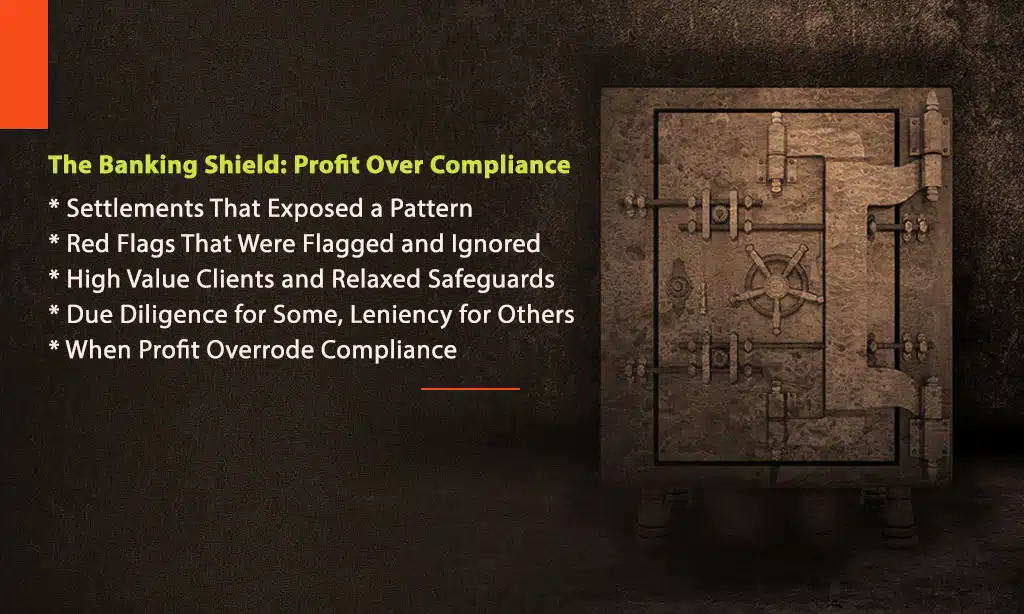
If you want to understand how a convicted sex offender (post-2008) continued to traffic women globally, do not look at the tabloids. Look at the wire transfers. One of the most troubling findings emerging from recent analysis is the role of the global banking system.
While we all remember the 2023 settlements, $290 million from JPMorgan Chase and $75 million from Deutsche Bank, the new wave of litigation in 2025 and 2026 against Bank of America and BNY Mellon suggests this was not an isolated failure. It reflects an industry wide pattern.
The legal theory of the “Knowing Beneficiary” argues that financial institutions may have profited from accounts linked to Epstein despite persistent warning signs. Internal emails released during discovery show compliance officers repeatedly flagged suspicious cash withdrawals—$40,000 to $80,000 a month in cash—that had no business justification. Yet, senior executives overruled these red flags because Epstein was a “key client” who brought in other billionaires.
This destroys the myth of “Due Diligence.” For the average account holder, relatively modest transfers can trigger scrutiny.
The “Wall of Cash” Compliance Gap
| Compliance Protocol | Standard Banking Protocol (The 99%) | The Epstein Protocol (The 1%) |
| KYC (Know Your Customer) | Rigorous background checks; accounts frozen for minor discrepancies. | “High Risk” flags ignored; background checks waived for “special” clients. |
| Suspicious Activity Reports (SARs) | Automatically filed for cash withdrawals over $10k. | JPM flagged only $4.3M during his life, but found $1.3B in suspicious transfers after his death. |
| Account Closure | Immediate closure upon conviction of a serious crime. | Accounts remained active for years after Epstein’s 2008 sex offense conviction. |
| Internal Justification | “Regulatory Compliance is non-negotiable.” | “Reputational risk is manageable compared to revenue generation.” |
The Soft Power Shield: Reputation Laundering
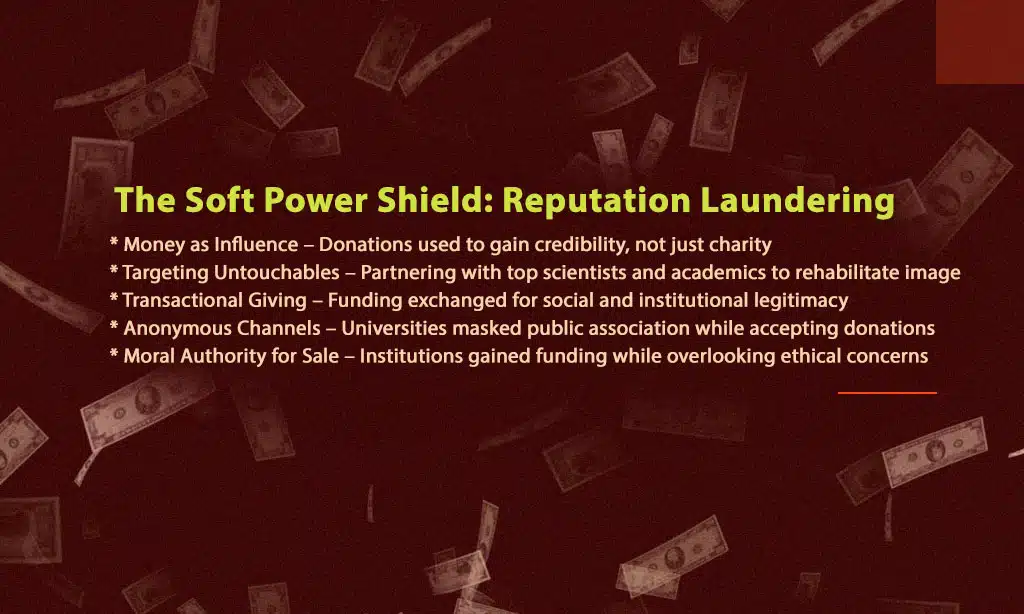
Money was the engine, but “Science Philanthropy” was the paint job. Epstein understood that to reintegrate into polite society after his 2008 conviction, he needed to associate with people who were untouchable: scientists and academics.
The unsealed documents clarify the extent of his infiltration into institutions like MIT and Harvard. This was not charity; it was a transaction. Epstein leveraged donations to regain social and institutional credibility. By funding theoretical physics, evolutionary biology, and AI research, he laundered his reputation.
When a university accepts a donation from a known predator, they are selling more than a plaque on a wall; they are selling their moral authority. The internal reports from these institutions revealed that fundraising officials created “shadow channels” to accept Epstein’s money anonymously. They marked donations as “Anonymous” in public records while courting him in private, knowing full well that public association would be toxic. They wanted the cash without conscience.
The Price of Legitimacy: A Transactional Breakdown
| Institution Type | What Epstein Gave | What Epstein Received | The “Laundering” Effect |
| Ivy League Academia | Funding for high-risk, “eccentric” science (e.g., Transhumanism). | Access to Nobel Laureates and “Intellectual Dinners.” | Shifted his image from “Registered Offender” to “Visionary Patron.” |
| Global Non-Profits | Large, unrestricted cash donations. | Board seats or “Advisor” titles. | Enabled access to high level international forums and UN-adjacent events. |
| Tech Incubators | Seed capital for risky startups. | Proximity to founders like Gates/Musk. | Framed him as a “futurist” rather than a financier of abuse. |
Case Studies in “Capital”: How Access Was Sold
We can categorize Epstein’s relationships not by crimes (which remain unproven for many associates), but by the type of capital he traded. The “Client List” narrative flattens these nuances, but an analytical approach reveals three distinct categories of complicity.
The Three Pillars of Epstein’s Network
| Figure Archetype | Type of Capital Traded | The Mechanism of Normalization |
| The Politician | Social Capital | Legitimization. By socializing with Epstein in the 90s and 00s, political figures signaled to law enforcement that he was a “safe” and respected member of the elite. |
| The Philanthropist | Rehabilitation Capital | Re-entry. Meetings occurring after 2008 provided the crucial signal that Epstein’s conviction was a “past mistake” to be overlooked, allowing him to re-enter high-level diplomatic circles. |
| The Tech Mogul | Visionary Capital | Relevance. Epstein aggressively courted the tech elite to pivot his image from “finance guy” to “futurist,” insulating himself with the protective halo of innovation. |
Note: The inclusion of names here reflects their appearance in logs, depositions, or public admissions of meetings, and analyzes the sociological impact of those meetings. It does not allege criminal participation in Epstein’s trafficking.
The Psychology of Denial
Why do we cling to the idea of a list? Because the alternative, systemic complicity, is harder to stomach.
If we accept that there is no secret list, we have to accept that the “good guys”—the university deans, the bank CEOs, the charitable directors—were the ones holding the door open for the predator.
The “Banality of Evil,” a concept introduced by Hannah Arendt, is perfectly illustrated here. The evil wasn’t just on the island. The evil was in the compliance officer who clicked “Approve” on a suspicious wire transfer because he wanted his bonus. The evil was in the scientist who took the grant money because he wanted a new lab, ignoring the source. The ecosystem of global finance and diplomacy is built to accommodate wealth, regardless of its origin.
Future Outlook: From Witch Hunt to Reform
The release of the 2026 documents should mark the end of the amateur sleuthing era and the beginning of the legislative reform era. The “List” is a dead end. The “System” is the target.
What Comes Next?
- Expansion of “Knowing Beneficiary” Laws: We are seeing a push to codify the legal precedents set in the JPM/Deutsche cases. Corporations could face criminal liability, not just civil fines, if they are found to have facilitated human trafficking through negligence.
- The End of the NDA: The primary tool used to silence victims was the Non-Disclosure Agreement. The Victims and Prisoners Act 2024, which became fully enforceable in late 2025, has already begun to void NDAs in instances of sexual abuse, a massive step forward for survivors.
- Philanthropic Transparency: Universities and non-profits may be forced to disclose the true sources of “Anonymous” donations, preventing the kind of reputation laundering Epstein utilized.
Final Thoughts
We are looking for monsters under the bed, while the real architects of this nightmare are still sitting in boardrooms. The “Client List” is a myth that allows us to externalize the problem. But the reality is that the system worked exactly as it was designed: to protect the powerful from the consequences of their actions. Until we dismantle the financial and social structures that prioritize “Access” over “Ethics,” there will be another Epstein. And he won’t need a secret list either.
Read part 1: Beyond the List: Why the Epstein Files Are Testimony, Not Tabloid