The ride experience has changed before you even step in.
Not too long ago, booking a taxi meant calling a number, waiting on hold, and repeating the pickup address multiple times.
If the driver got lost, customers had to explain the route all over again. And when the ride ended, they fumbled for cash or a card while the meter kept ticking.
That world is fading fast.
Today, your customers can book a ride without even touching your phone screen.
- They can confirm their pickup just by speaking.
- They can pay without handing over cash or tapping buttons.
The journey feels smoother before the ride even arrives.
Voice interfaces and contactless experiences are not just new features; they are changing the way passengers and taxi businesses interact.
The quiet but effective revolution under the hood
When we think of technology in taxis, we often imagine flashy screens or complex apps. But the real transformation here is subtle.
Voice AI means your taxi app can understand natural speech. Your customers can say, “Book me a cab to the airport in 20 minutes,” and it happens instantly. No need to scroll through menus or type in details.
Contactless experiences mean they don’t have to handle cash or even a phone for payments.
The ride is charged automatically through a saved card, digital wallet, or NFC-enabled device.
Think of it like riding with a driver who already knows the customer’s preferences, their usual stops, and the way they like to pay.
Why customers prefer to talk and not tap
Customers aren’t just enjoying these features for convenience. They’re enjoying them because they feel natural.
For busy commuters, voice booking saves precious minutes in the morning rush. Instead of opening the app, finding the right options, and confirming, they just say it out loud.
For elderly passengers or people who aren’t comfortable with smartphones, it removes the stress of navigating menus. Speaking is easier than tapping tiny icons.
Contactless payments are another crowd favorite.
- No awkward moments at the end of the ride.
- No searching for change.
- No handling cards in a hurry.
Just step out, knowing everything is settled.
Barriers that are slowly disappearing
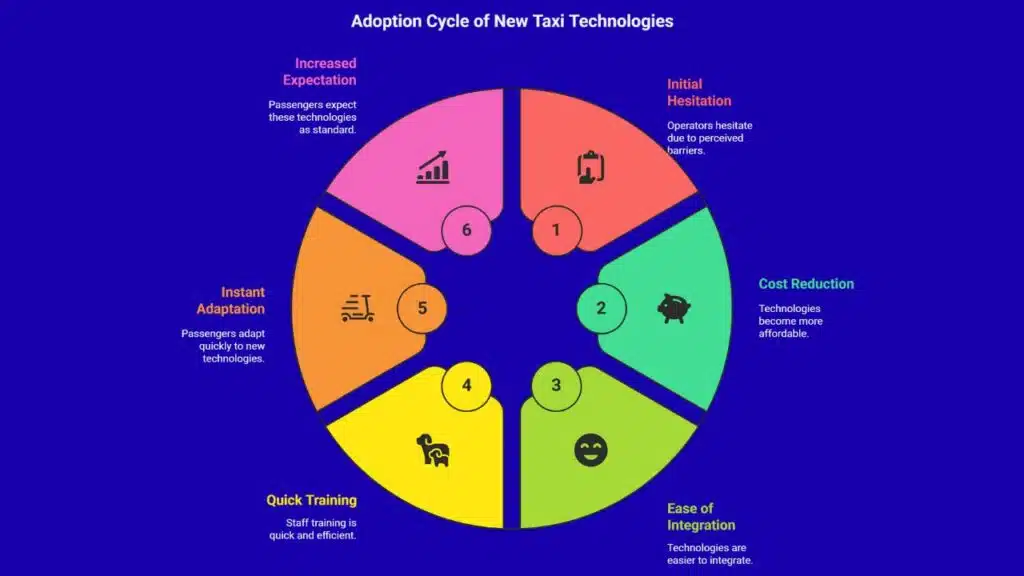
When voice and contactless first appeared in the taxi space, some operators hesitated.
- They thought it was only for large fleets.
- They assumed it would be too expensive.
- They worried drivers and passengers wouldn’t adapt.
But the reality is different now. Technologies are more affordable and easier to integrate. Staff training often takes less than a day.
And passengers? They adapt instantly, because the experience is intuitive.
The more people try it, the more they expect it as a standard option. That’s how it shifts from “extra feature” to “basic service expectation.”
It’s easy to think voice and contactless tech only benefit riders. But taxi businesses often gain even more.
Voice booking reduces the chance of booking errors.
When your customers speak naturally, the system captures the details directly, without middle steps where mistakes can happen.
That means fewer wrong addresses, fewer delays, and fewer frustrated customers.
Contactless payments mean faster turnaround at drop-offs.
Drivers can take the next ride sooner because they don’t have to wait for payment processing. Over a day, that adds up to more completed trips and higher earnings.
For smaller and local fleets, these tools help level the playing field with big ride-hailing apps.
You don’t need an in-house tech team to compete; modern taxi dispatch solutions often come with these features built in, ready to use.
Voice interfaces and contactless experiences: The future of simplified transport
If the past few years have taught us anything, it’s that rider habits change quickly when a better option comes along.
Voice interfaces may not just book your ride. They could handle conversations like, “Pick me up after my meeting,” with the system tracking your calendar and real-time location.
Contactless could go beyond payments. Imagine automatic check-ins for loyalty rewards, instant tip suggestions, or seamless transfers between taxi and public transport with a single tap or voice command.
For taxi businesses, the focus will shift from simply “offering” these features to “personalizing” them for each rider. A returning passenger might hear, “Good morning, John, heading to the usual station?” before even asking.
Takeaways
The most powerful technology doesn’t shout for attention; it quietly works in the background, making life easier.
Voice interfaces and contactless experiences are doing exactly that for the taxi industry. They remove friction from the booking and payment process, making rides smoother for passengers and more efficient for businesses.
In the end, this isn’t about gadgets or trends. It’s about creating a ride that feels effortless, from the moment you think about booking to the moment you step out at your destination.
- For passengers, it means less stress and more comfort.
- For you, it means higher efficiency and happier customers.
That’s not just an upgrade, it’s a transformation.
And to become a part of such transformation, you must start by exploring these two features in detail and how they can help your taxi business serve better and a wider pool of customers.