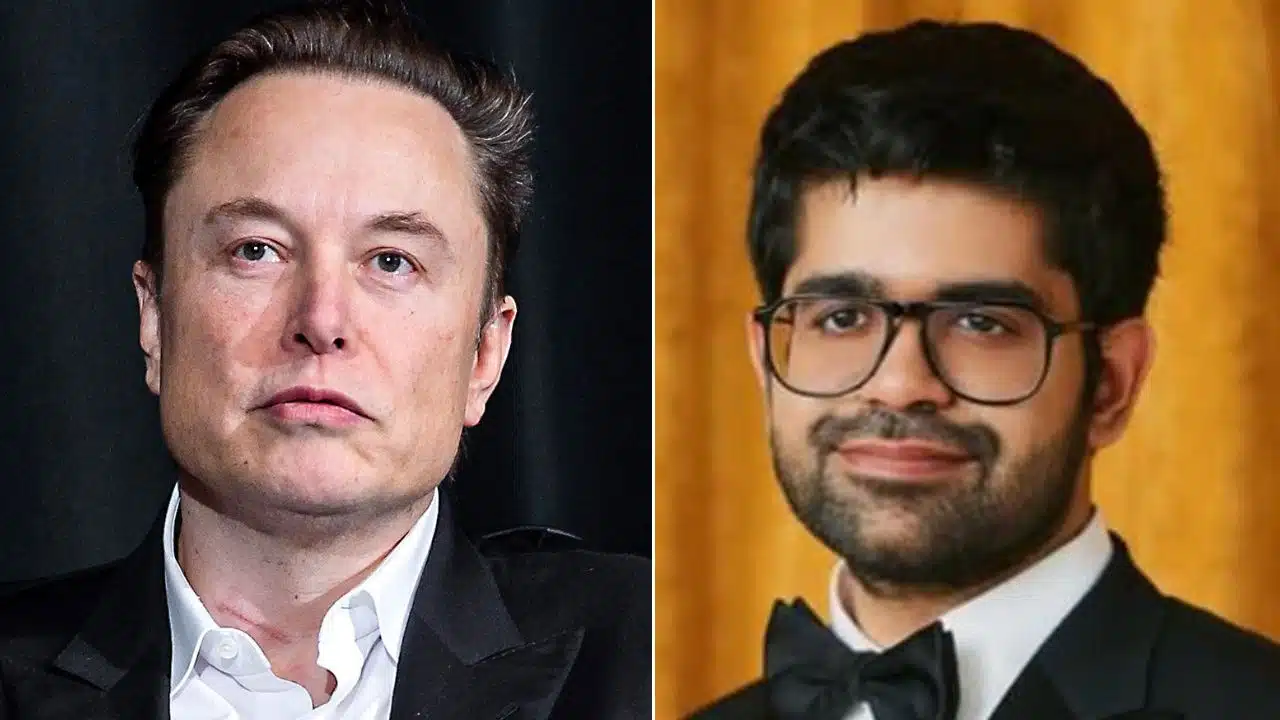
Elon Musk has intensified his public and legal crusade against OpenAI, the company he co-founded, branding it as “built on a lie” in recent social media posts. The criticism, which Elon Musk makes fun of ChatGPT-maker OpenAI for allegedly betraying its non-profit roots, comes as his own xAI files a new lawsuit for trade secret theft. Adding to the pressure, Perplexity AI CEO Aravind Srinivas, a former OpenAI researcher, has “joined the fun” by positioning his firm as a transparent alternative amid its own public data-sourcing disputes and a soaring market valuation.
Key Facts & Quick Take
- Musk’s Legal Escalation: Elon Musk’s xAI filed a new lawsuit in September 2025 accusing OpenAI of stealing trade secrets, adding to his ongoing February 2024 lawsuit over breach of contract.
- Public Mockery: Musk posted on X (formerly Twitter) around October 11, 2025, that “OpenAI is built on a lie” and accused the company of “dirty tricks” to intimidate critics.
- Perplexity’s Challenge: Perplexity AI, led by former OpenAI researcher Aravind Srinivas, is in a public dispute with Reddit over data scraping. Perplexity stated it won’t “cave” to “strong arm tactics,” highlighting its different approach to data.
- OpenAI’s Dominance: Despite the criticism, OpenAI conducted a share sale in October 2025 that valued the company at a staggering $500 billion.
- xAI’s War Chest: Musk’s xAI is reportedly raising a $20 billion funding round in October 2025, aiming for a valuation as high as $200 billion.
- Perplexity’s Rise: The “answer engine” Perplexity confirmed a valuation of $18 billion following its latest funding round in mid-2025 and boasts over 22 million monthly active users.
Musk’s Multi-Front War: From ‘Lies’ to Lawsuits
The long-simmering feud between Elon Musk and the AI behemoth he helped create has escalated into an all-out corporate war. The days of philosophical disagreements are over, replaced by courtroom battles and nine-figure valuations.
The ‘Built on a Lie’ Takedown
Musk’s recent attacks are two-pronged: public mockery and private litigation. On the public front, his platform X has been his primary weapon. In a series of posts around October 11, 2025, Musk launched one of his most direct attacks to date.
“OpenAI is built on a lie,” Musk posted, a direct reference to his claim that the company abandoned its founding non-profit, open-source mission to “benefit all of humanity. He alleged the company has become a “closed-source, maximum-profit” subsidiary effectively controlled by its largest investor, Microsoft.
This public campaign, which critics and supporters alike see as Musk making fun of OpenAI’s “holier-than-thou” image, serves to undermine trust in the market leader. His accusations of “dirty tricks” to silence AI policy advocates further paint a picture of a company that has lost its way.
The New Legal Battle
More substantively, Musk has opened a new legal front. In addition to his high-profile February 2024 lawsuit alleging breach of contract over OpenAI’s original non-profit charter, Musk’s AI company, xAI, filed a new, more explosive lawsuit.
Filed in September 2025, the new suit alleges that OpenAI actively stole trade secrets and poached key engineers from xAI, leveraging its dominant market position and access to proprietary information. This legal manoeuvre escalates the conflict from a dispute over founding principles to a direct accusation of corporate espionage, high-stakes litigation that could have profound implications for intellectual property in the AI sector.
Perplexity’s CEO ‘Joins the Fun’

While Musk attacks from the outside, another significant threat is emerging from a former insider. Aravind Srinivas, the CEO of Perplexity AI, has deftly inserted his company into the narrative, not by directly echoing Musk’s insults, but by contrasting his product’s core philosophy with OpenAI’s.
An Insider’s Rivalry
Srinivas, who worked as an AI researcher at OpenAI before co-founding Perplexity in 2022, has “joined the fun” by highlighting his divergent path. In a recent talk at UC Berkeley, he joked that he left big tech because he was “unemployable” and “just can’t listen to what the boss tells them to do.
This subtle dig at the cultures of his former employers, including OpenAI, frames Perplexity as an agile, independent upstart. His status as India’s youngest billionaire, as noted by the Hurun India Rich List, has only amplified his voice and the perceived threat his company poses.
The Fight for ‘Fair’ Data and Transparency
Perplexity’s primary differentiator is its function as an “answer engine” that provides direct, accurate answers with clear citations—a stark contrast to ChatGPT’s often-opaque “black box.” This difference was thrown into sharp relief this week.
Perplexity has entered a public spat with Reddit over its use of web data for training. While critics accuse it of aggressive scraping, Perplexity issued a strong public statement on October 23, 2025, asserting its right to access public data and declaring, “Bowing to strong arm tactics just isn’t how we do business.
By taking a public, defiant stand on data sourcing and ethics, Srinivas is drawing a clear line in the sand. He is implicitly criticizing OpenAI, which faces numerous copyright infringement lawsuits from authors and media companies for its far less transparent data-training practices. He is, in effect, joining Musk’s attack by offering a practical, well-funded alternative for users who are growing wary of OpenAI’s methods.
A Three-Way War for AI Dominance: The Data
The public sparring is backed by a financial arms race of staggering proportions. The battle for AI dominance is now a three-way fight between the incumbent, the “truth” challenger, and the “accuracy” engine.
OpenAI: The $500 Billion Incumbent
Despite the legal and ethical headwinds, OpenAI’s market dominance remains immense. A share sale in October 2025 set the company’s valuation at $500 billion, making it one of the most valuable private companies in the world. Its products remain deeply integrated into the enterprise ecosystem via Microsoft, and it continues to innovate, recently launching its own web browser, “Atlas,” to compete directly with Google.
AI Market Valuations (October 2025)
| Company | Latest Valuation (USD) | Key Differentiator | Source |
| OpenAI | $500 Billion | Enterprise integration, incumbent status | Wikipedia |
| xAI | $200 Billion (Projected) | “Truth” (uncensored), ecosystem (X, Tesla) | MLQ.ai |
| Perplexity AI | $18 Billion | “Accuracy” (citations), answer engine | DemandSage |
xAI: The $200 Billion ‘Truth’ Challenger
Elon Musk is not just criticizing; he is building a parallel empire. His company, xAI, is reportedly in the process of raising a colossal $20 billion funding round, which sources say could value the company at $200 billion.
This capital is intended to build out the “Colossus 2” data center and scale his chatbot, Grok. Now on version 4, Grok boasts 8 million daily users and is being integrated across Musk’s ecosystem—X for real-time data, Tesla for autonomous driving, and Starlink for global distribution. Musk is selling not just a chatbot, but an uncensored, “truth-seeking” AI.
Perplexity: The $18 Billion ‘Answer Engine’
While its valuation is smaller, Perplexity’s growth is exponential. The company confirmed an $18 billion valuation in mid-2025 and has rapidly captured significant market share, with reports of over 22 million monthly active users and 129.5 million website visits in June 2025. Its success proves a significant market exists for a tool that prioritizes verifiable accuracy over conversational creativity.
Analysis: A Battle of Philosophies, Not Just Products
This is more than a typical corporate rivalry; it is a fundamental, public-facing battle over the future of artificial general intelligence (AGI).
According to analysts, the three-way fight can be broken down by their core value propositions. (Source: Paraphrased from Built In and Medium, Aug/Sept 2025).
- OpenAI represents the “Safe Utility” model. Backed by Microsoft, its goal is to create powerful, general-purpose AI that is safely aligned, heavily guard-railed, and monetized through enterprise licenses.
- Musk’s xAI represents the “Uncensored Truth” model. Musk argues that AI safety guardrails are a form of political censorship. His goal is a “maximally curious” AI that, integrated with his hardware empire, will pursue “truth” regardless of sensitivities.
- Srinivas’s Perplexity represents the “Verifiable Accuracy” model. This model sidesteps the philosophical debate by focusing on a practical utility: providing real-time, accurate, and, most importantly, cited answers. It is a direct challenge to the “hallucination” problem that plagues its rivals.
“The public sparring between Musk, Srinivas, and OpenAI’s Sam Altman is as much about platform differentiation as it is about ideology,” one Gartner analyst recently noted. “Each is carving a narrative: Musk for ‘truth,’ Perplexity for ‘accuracy,’ and OpenAI for ‘safe utility’.”
What to Watch Next
The “fun” is deadly serious, with the potential to reshape the tech landscape. Key developments to watch include:
- OpenAI’s Legal Response: How OpenAI will respond in court to xAI’s new trade secret allegations will be critical. The company is also facing a separate, high-profile wrongful-death lawsuit from the Raine family, who allege ChatGPT encouraged their teenage son’s suicide.
- The Closing of xAI’s Round: If and when xAI officially closes its $20 billion round, it will represent the single largest capital injection into an AI-challenger, formally funding Musk’s war.
- Perplexity’s Enterprise Push: With its $18 billion valuation, Perplexity will likely move aggressively into the enterprise market, challenging OpenAI’s core revenue stream with its promise of cited, accurate answers for businesses.
This confluence of massive legal action, public ridicule from a co-founder, and the hyper-funded rise of an insider-turned-rival has placed OpenAI in the most precarious position of its short, dominant history.
The Information is Collected from MSN and Yahoo.