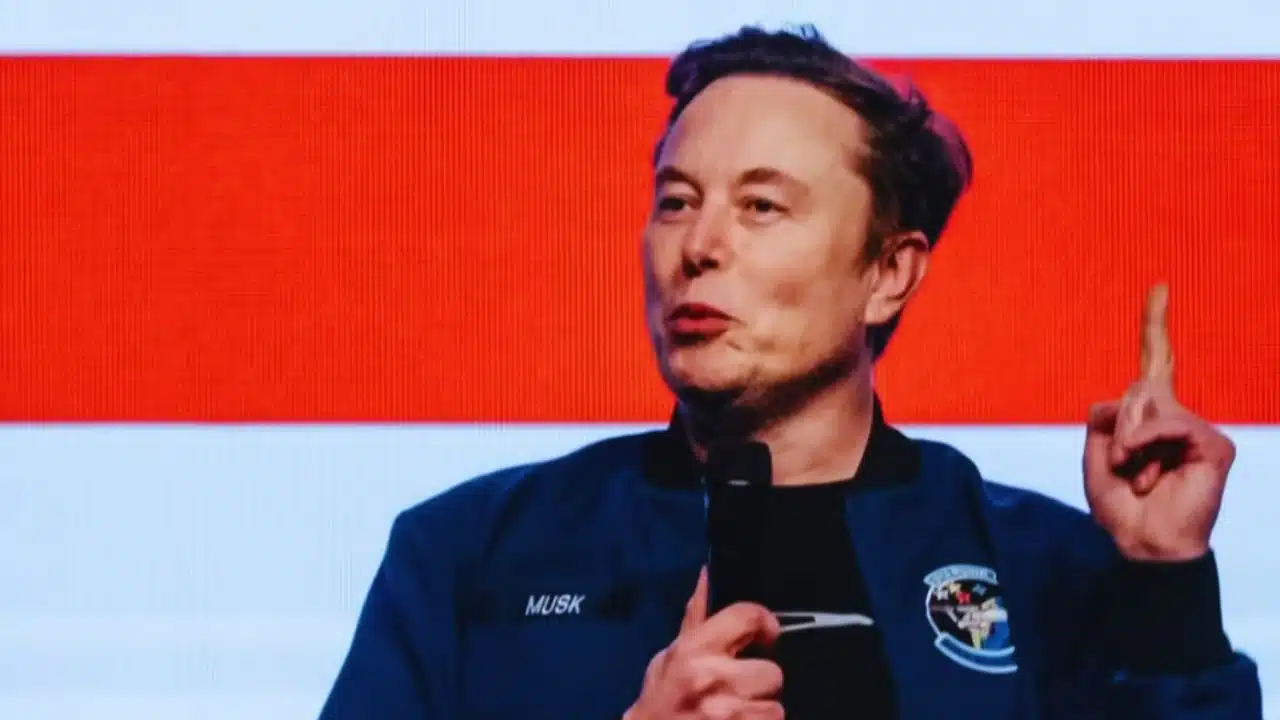
Elon Musk, the billionaire CEO of Tesla and SpaceX, has announced the formation of a new political party—a bold move that comes just days after a public and bitter fallout with former U.S. President Donald Trump.
Once viewed as one of Trump’s strongest allies and financial backers during the 2024 presidential campaign, Musk has now positioned himself as a political disruptor, claiming that America’s two-party system no longer serves the public interest.
The Announcement on X
Musk revealed his plan on Saturday through a series of posts on X, the social media platform he owns (formerly Twitter). Declaring that Americans live under what he described as a “one-party system,” Musk introduced the “America Party”—a proposed third party aimed at challenging what he called “waste, corruption, and authoritarian spending habits” entrenched in both the Democratic and Republican parties.
“When it comes to bankrupting our country with waste & graft, we live in a one-party system, not a democracy. Today, the America Party is formed to give you back your freedom,” Musk wrote on X.
This striking political statement marks a dramatic departure from Musk’s recent history of support for Trump’s policies, especially those centered on cutting government waste and reducing bureaucracy.
From Trusted Adviser to Political Opponent: What Went Wrong?
Musk’s pivot away from Trump was not sudden—it has been brewing in recent months, triggered primarily by disagreements over fiscal policy. Musk had been a major donor to Trump’s 2024 re-election campaign, pouring millions into political action committees and reportedly advising the administration on technology, infrastructure, and government efficiency.
He was also chosen to lead the now-disbanded Department of Government Efficiency, a new federal agency created during Trump’s second term to streamline operations and reduce taxpayer spending.
However, that partnership began to unravel with the drafting of what Trump called his “One Big Beautiful Bill”—a comprehensive domestic tax and spending plan that promised wide-scale infrastructure improvements, healthcare expansions, and new defense investments.
Independent economic analysts, including those from the Congressional Budget Office (CBO) and Committee for a Responsible Federal Budget (CRFB), projected that the bill could add trillions of dollars to the federal deficit over the next decade. Musk echoed these concerns and emerged as one of the bill’s most vocal critics.
Musk’s Fiscal Concerns and Opposition to the Bill
Musk’s main point of contention was the bill’s projected impact on the national debt. In several posts and public interviews, he referred to the legislation as a form of “debt slavery,” arguing that its costs would burden future generations and ultimately weaken the U.S. economy.
He stated that while he supported targeted investments in science and innovation, he could not back a bill that in his words was “built on unsustainable promises, inflated projections, and political showmanship.”
Though Musk initially attempted to downplay the feud—deleting several critical tweets and stating that he still supported “many goals of the Trump administration”—the situation escalated when Trump moved forward with the bill. The legislation passed both chambers of Congress late last week and was signed into law by the president on Friday.
Within 24 hours, Musk declared the formation of a new party, reigniting tensions between two of the most powerful figures in American politics.
What Is the America Party?
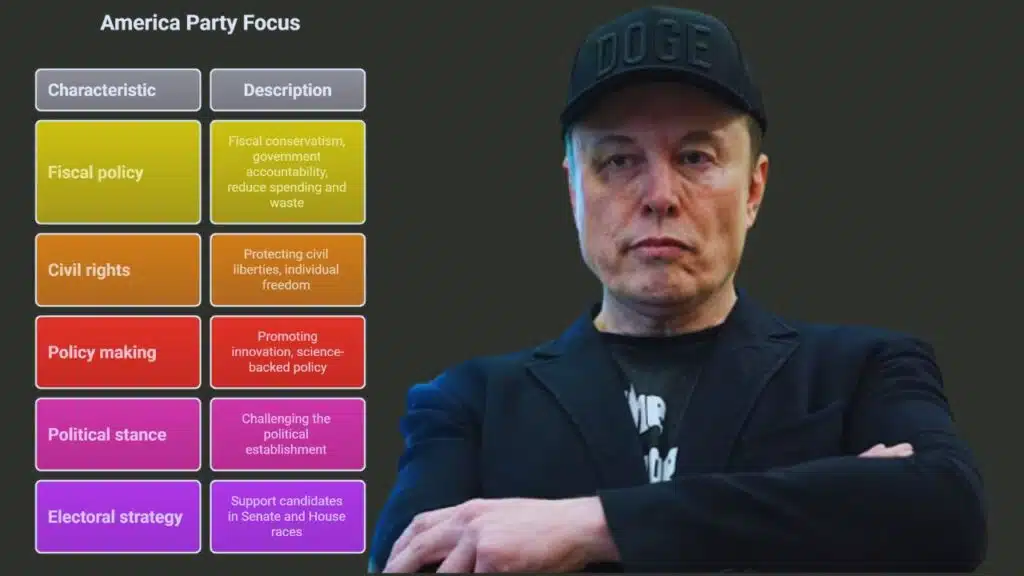
So far, the America Party remains in the early conceptual phase. Musk has yet to release a formal platform or list of endorsed candidates. However, in follow-up posts on X, he revealed that the party’s initial focus will be on:
- Fiscal conservatism and government accountability
- Reducing federal spending and waste
- Protecting civil liberties and individual freedom
- Promoting innovation and science-backed policymaking
- Challenging the political establishment of both parties
Musk also said that the America Party would support candidates in a handful of Senate and House races during the 2026 midterm elections, with the goal of building momentum for future presidential runs or national influence.
No Official Registration Yet
Despite the bold declarations, the Federal Election Commission (FEC) has not yet received any official filings regarding the formation of the America Party. As of the most recent FEC public database update, no entity by that name has submitted paperwork required to operate as a registered political party or political action committee.
Experts say that while forming a party is legally possible, it’s a massive organizational task that demands legal groundwork, nationwide ballot access, donor infrastructure, and compliance with election laws in all 50 states.
Trump Responds with Threats of Retaliation
Donald Trump did not take Musk’s political rebellion lightly. In several statements to media and on his Truth Social platform, Trump mocked Musk, accused him of betrayal, and hinted at consequences for Musk’s business interests.
The former president specifically referenced federal contracts awarded to Musk’s companies—particularly SpaceX (which supplies satellite services and space launch capabilities to NASA and the Department of Defense) and Tesla (which has benefited from U.S. tax credits and environmental programs).
Trump even made a veiled threat about reconsidering these government ties, saying the “monster” agency Musk once led—referring to the Department of Government Efficiency—might “go back and eat Elon.”
While it remains unclear if the Biden administration or a future Trump government would act on these threats, political observers note that the federal government has substantial influence over regulatory approvals, federal grants, and public contracts linked to Musk’s enterprises.
Why It’s So Hard to Launch a Third Party in America
Musk is not the first billionaire to attempt to break the two-party system. Business magnate Ross Perot famously ran as an independent candidate in 1992, capturing nearly 19% of the national popular vote—one of the most successful third-party runs in U.S. history. Yet, Perot did not win a single state, and his Reform Party later faded into obscurity.
Analysts from institutions like Pew Research, Brookings, and Harvard Kennedy School say that deep structural challenges—such as the electoral college, first-past-the-post voting system, and ballot access laws—make it extremely difficult for third parties to gain a foothold.
Moreover, voters often fear that supporting a third-party candidate will “split the vote”, handing victory to their least preferred option in a closely contested race.
Still, there is growing dissatisfaction among U.S. voters. A 2024 Gallup poll found that 62% of Americans believe a third major party is needed. Musk’s move appears to tap into this discontent, but whether he can transform it into a viable political movement remains to be seen.
What’s Next for Musk’s Political Future?
While Musk continues to dominate in the worlds of technology, space, and electric vehicles, the political world operates by different rules. For his new America Party to gain influence, he will need to:
- Define a clear, relatable policy platform
- Build national grassroots support
- Gain ballot access in multiple states
- Attract credible candidates
- Convince skeptical voters and donors
Whether he succeeds or not, Elon Musk’s latest move signals an escalation in the battle between populist factions inside and outside the Republican Party, and adds yet another twist to the already complex dynamics heading into the 2026 and 2028 election cycles.
The Information is Collected from BBC and CNN.