Every year, millions of Muslims around the world come together to observe Eid Milad un Nabi, the commemoration of the birth of Prophet Muhammad (peace be upon him). Falling on the 12th day of Rabi al-Awwal in the Islamic lunar calendar, this day carries deep spiritual and cultural significance.
For believers, Eid Milad un Nabi is not merely a festive occasion. It is a day to remember the Prophet’s timeless message—a message rooted in peace, compassion, and humanity. His teachings transcended tribal divisions, social inequalities, and political conflicts, offering guidance that remains relevant in the modern world.
This article explores the history, spiritual meaning, global traditions, and contemporary relevance of Eid Milad un Nabi, reminding us that this day is more than a celebration—it is a call to live with kindness, justice, and empathy.
The Historical Significance of Eid Milad un Nabi
Eid Milad un Nabi, also known as Mawlid al-Nabi, holds a deep place in Islamic history. It marks the birth of Prophet Muhammad (peace be upon him) on the 12th of Rabi al-Awwal, a day cherished by Muslims across generations.
The earliest recorded celebrations began in the Fatimid dynasty of Egypt in the 11th century, where believers gathered for Qur’an recitations, prayers, and reflections on the Prophet’s life. Over time, this tradition spread widely—from North Africa to the Middle East, Turkey, South Asia, and beyond—taking on unique cultural expressions in each region.
While interpretations differ among Muslim communities, the essence of Eid Milad un Nabi remains the same: to remember, honor, and reflect on the life and teachings of the Prophet Muhammad, whose mission reshaped the course of human history with values of peace, compassion, and justice.
The Origins of Mawlid Celebrations
Eid Milad un Nabi is often referred to as Mawlid al-Nabi or simply Mawlid. The earliest organized celebrations can be traced back to the Fatimid Caliphate in Egypt during the 11th century. Over time, the tradition spread to other parts of the Muslim world, adapting to local cultures.
-
In Turkey, it became known as Mevlid Kandili.
-
In South Asia, it grew into one of the largest public religious celebrations with processions and illuminations.
-
In North Africa, communities incorporated local music, food, and poetry.
Sunni and Shia Perspectives
-
Sunni Muslims: Often focus on sermons in mosques, Qur’anic recitation, and recounting the Prophet’s life.
-
Shia Muslims: Place extra emphasis on the Prophet’s family and may hold large gatherings and processions.
While interpretations differ, the central theme remains the same—honoring the Prophet’s life and legacy.
Prophet Muhammad’s Teachings on Peace and Harmony
Peace was central to the Prophet Muhammad’s mission. In a world divided by tribal warfare, he introduced a vision of coexistence, justice, and compassion.
-
The Qur’an (21:107) describes him as “a mercy to all the worlds.”
-
His leadership in Medina created one of the first pluralistic societies where Muslims, Jews, and Christians coexisted under mutual agreements.
The Treaty of Hudaybiyyah: A Lesson in Diplomacy
One of the most remarkable examples of his peaceful approach was the Treaty of Hudaybiyyah, signed in 628 CE. Instead of escalating conflict, the Prophet accepted a treaty that appeared unfavorable but ultimately paved the way for peace and the spread of Islam.
Lessons for Today’s Divided World
From political conflicts to community disputes, the Prophet’s example reminds us that peace often requires patience, compromise, and wisdom. Eid Milad un Nabi serves as an annual call to embrace these values.
Compassion as the Core of His Message
The Prophet Muhammad’s compassion was not limited to his followers. His kindness extended to the poor, orphans, women, animals, and even his adversaries.
Stories of Compassion
-
He would stand up when funeral processions passed, regardless of the deceased’s religion.
-
He shared meals with the poor and encouraged others to never sleep on a full stomach while neighbors went hungry.
-
He urged kindness to animals, saying, “Fear Allah in your treatment of animals.”
Rahmatan lil-‘Alamin (Mercy to the Worlds)
Muslims believe the Prophet was sent as a mercy to all creation, not just humanity. This broad compassion is why charity, feeding the poor, and community service are central practices during Eid Milad un Nabi.
Modern Reflections on Compassion
In a world facing poverty, displacement, and injustice, the Prophet’s example encourages us to:
-
Support humanitarian aid.
-
Protect vulnerable communities.
-
Promote empathy in leadership and governance.
Humanity and Universal Brotherhood in Islam
One of the Prophet Muhammad’s greatest legacies was his emphasis on human equality and universal brotherhood.
The Farewell Sermon
In his final sermon, he declared:
-
“No Arab is superior to a non-Arab, nor a non-Arab to an Arab.”
-
“No white is superior to a Black, nor a Black to a white—except in piety and good action.”
This revolutionary message challenged centuries of tribal hierarchies and set the foundation for universal human rights.
Humanity Beyond Borders
Eid Milad un Nabi is a reminder that Islam’s call for justice and equality transcends race, culture, and geography. Many interfaith dialogues today draw inspiration from the Prophet’s inclusive vision.
Celebrating Eid Milad un Nabi Today
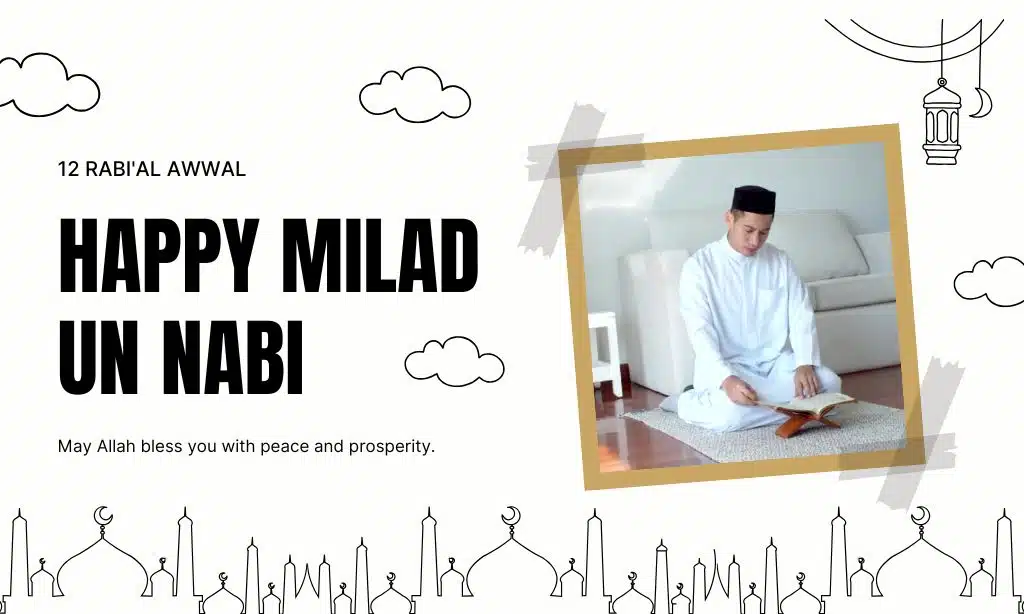
The way Eid Milad un Nabi is celebrated varies across the globe, but the essence remains the same—love for the Prophet and reflection on his message.
Global Observances
-
South Asia: Streets are decorated, mosques illuminated, and large processions held. Special dishes are prepared for family and neighbors.
-
Turkey: Marked with Qur’an recitation, religious lectures, and poetry.
-
Middle East: Charity drives, food distribution, and prayer gatherings dominate.
-
Western Diaspora: Communities gather in mosques, schools, and homes to educate younger generations about the Prophet’s life.
Practical Ways to Celebrate with Purpose
Instead of focusing only on festivities, many Muslims emphasize acts of service:
-
Donating to orphanages and hospitals.
-
Organizing food drives.
-
Hosting educational programs about the Prophet’s teachings.
Why the Message Matters in the Modern World
In today’s world, marked by conflict, inequality, and social division, the Prophet Muhammad’s message is more relevant than ever.
-
For Leaders: His humility and justice provide a model of ethical governance.
-
For Communities: His compassion teaches us to embrace diversity and care for the vulnerable.
-
For Individuals: His patience, honesty, and kindness offer guidance for daily life.
Eid Milad un Nabi thus becomes not just a religious holiday but a global reminder of how humanity can move forward through peace, compassion, and justice.
Takeaways
Eid Milad un Nabi is more than a commemoration of the Prophet Muhammad’s birth—it is a day of reflection. It reminds us to embrace his teachings of peace, embody his compassion, and uphold the dignity of all humanity.
As the world faces new challenges, this sacred occasion calls on us to revive his message in our personal lives, communities, and global actions. The true celebration lies not in lights and festivities, but in living by the values he stood for.
Eid Milad un Nabi Mubarak!