

The construction world changes fast in 2026. Builders face pressure to cut carbon emissions and waste. Homeowners want homes that save energy and last long. Eco-friendly building materials lead this shift. They use less energy to make and install.
Many come from renewals like plants or waste. These picks lower bills and boost comfort. Governments push rules for green builds. Costs drop as tech improves. This list covers the top 10 trends now.
Why Choose Eco-Friendly Materials?
These materials lower the construction industry’s impact on the planet. The sector uses 40% of global energy and emits much CO2. Green choices like renewable timber and recycled items reduce waste. They also save money on energy bills over time.
In 2026, trends show a rise in bio-based and low-carbon options. Rules push for net-zero buildings. This shift makes green materials key for new projects. Demand grows fast as costs fall. Homeowners love the natural look too. These picks fit both small homes and big offices. They improve air quality inside. Long-term savings beat first costs.
| Benefit | Impact |
| Carbon Reduction | Up to 40% less emissions |
| Energy Savings | 20-60% lower use |
| Cost Over Time | Lower maintenance |
| Waste Cut | 50% less on site |
| Health Boost | Less toxins |
1. Cross-Laminated Timber (CLT)
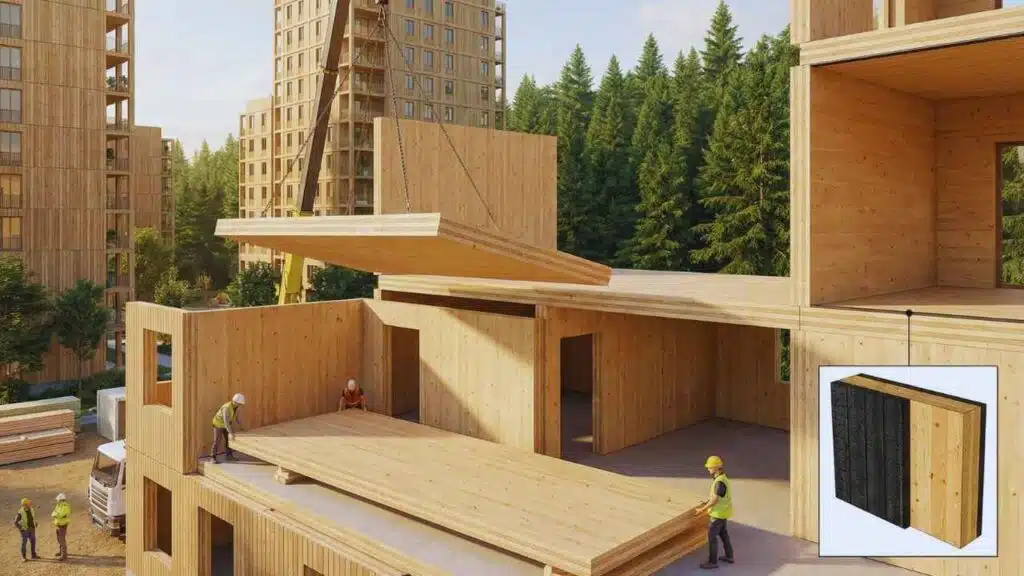
Cross-laminated timber, or CLT, changes how we build tall. It stacks wood layers glued crosswise under heat and pressure. This creates flat panels as strong as concrete. Use them for floors, walls, roofs, even beams. Warm wood feel beats cold steel. Factories pre-cut to fit perfect. Trucks haul less weight than concrete. Sites stay clean with dry assembly. No wet trades slow progress. CLT comes from fast-growing softwoods like spruce. Forests replant quickly to keep supply steady. Each cubic meter traps one ton of CO2 for decades. This stored carbon fights climate change right in your walls.
Fire tests show it chars slow on the outside. This protects the core for over 90 minutes. Earthquakes shake it less than concrete too. In 2026, the market hits $2.25 billion as cities allow taller wood towers. Costs start high but drop with scale. It insulates better than steel frames. Sound blocks well in apartments. Maintenance stays low over 50+ years. Codes now match it to concrete heights.
| Property | Value |
| Strength | Matches steel |
| Fire Resistance | 90+ minutes |
| Carbon Stored | 1 ton/m³ |
| Construction Speed | 30-50% faster |
| Lifespan | 60+ years |
| Insulation | R-1.4 per inch |
| Weight | 50% less than concrete |
2. Hempcrete
Hempcrete offers a breathable wall option from a wonder crop. Mix hemp hurds—the woody core—with lime and water. Cast in place or make blocks. It sets light yet tough. Hemp needs little water or land. Grows in 4 months anywhere. Farmers gain new income from hurds. The mix breathes moisture in and out. Homes stay dry without AC overuse. Thermal mass holds heat or cool air for steady temps. Sound dampens too, great for noisy areas. Fireproof lime stops flames quick.
Bugs hate the alkaline mix. In Europe, old homes retrofit with it to hit energy codes. Carbon math shows it locks more CO2 than making it releases. No off-gassing like foams. By 2026, factories scale up for prefab blocks. Costs match brick in warm climates. Pair it with timber frames for hybrid walls. Fills gaps in retrofits easy.
| Property | Value |
| Insulation | High thermal mass |
| Carbon Impact | Negative |
| Fire Rating | Resistant |
| Moisture Control | Excellent |
| Weight | 15% of concrete |
| Growth Cycle | 4 months |
| Sound Reduction | 40-50 dB |
3. Mycelium Composites
Mycelium grows buildings from mushroom magic on waste. Fungal roots eat straw or wood chips in bags. In 5-7 days, it forms solid blocks. Bake to stop growth. Shapes fit any mold—bricks, tiles, even curves. Farms supply cheap substrate. No mining or oil needed. The result insulates like foam but biodegrades fully. Fire chars it without toxic smoke. Water? It molds less than wood. Strength suits non-load walls or cladding.
Artists use it for art installs that vanish later. In builds, it fills gaps or makes tiles. End life? Compost it back to soil. Cycles waste to home sweet home. 2026 sees startup factories in cities. It pairs with hemp for full bio-walls. Low cost draws developers. Tests show seismic flex.
| Property | Value |
| Weight | Lightweight |
| Fire Resistance | High |
| Growth Time | 5-7 days |
| Biodegradable | Yes |
| Insulation | R-2.5/inch |
| Cost | Under $10/ft² |
| Mold Resistance | High |
4. Recycled Plastic Bricks and Lumber
Recycled plastic turns trash to treasure in builds. Sort bottles and bags by type. Shred, heat low, mold tight. Bricks interlock; lumber cuts like wood. No splinters or warp. Colors from plastic shine years. Diverts 1 million tons waste per big plant. Use for fences, pavers, or sheds first. Now walls too with rebar. Water slides off easy.
UV blocks keep it from fading. Install snaps together like Lego for speed. In poor areas, locals make jobs sorting trash. Flood zones love no-rot hold. Market booms to $5 billion. Rules ban virgin plastic in public builds. Tech mixes fibers for bend strength. Recycles endless loops.
| Property | Value |
| Durability | High |
| Waste Diverted | Millions of tons |
| Cost Trend | Competitive |
| Applications | Bricks, lumber |
| Lifespan | 50+ years |
| Water Resistance | Full |
| No Termites | Yes |
5. Green Concrete
Green concrete fights cement’s dirty rep with smart swaps. Replace half with fly ash, slag, or limestone-calcined clay. CO2 drops 40-70% at same strength. Mix pours like old stuff. Cures in standard times. Colors blend natural. LC3 clay tech leads in 2026. Labs tweak for hot or cold cures.
Less water too, key in dry spots. Colors match stone for pretty facades. Big firms like Holcim roll it out wide. Bridges test it for cracks. Roads last longer. Savings add up. Less trucks haul it. Recycles power plant waste. Scales to megaprojects.
| Property | Value |
| CO2 Cut | 40-70% |
| Strength | Equal to standard |
| Cost | Lower long-term |
| Water Use | Reduced |
| Cure Time | 7-28 days |
| Applications | All concrete uses |
| Color Options | Natural |
6. Bamboo
Bamboo stands tall as nature’s steel from the grass family, ready to reshape modern construction with unmatched speed and strength. This giant grass surges up to 3 feet daily in ideal spots, reaching harvest at just 3-5 years—far quicker than hardwoods that take decades. Culms, or poles, boast tensile strength that outpulls steel by weight, making them ideal for beams, floors, scaffolding, and even high-rise frames. Simple treatments like borax soaking fend off bugs and mold without harsh chemicals. Engineers now laminate strips into glue-free boards that meet strict building codes worldwide. Its natural flexibility shines in earthquakes, bending without breaking. Farmers love it too—roots spread to fight erosion while groves regrow from rhizomes endlessly.
Use whole poles for rustic huts, tropical resorts, or emergency shelters that assemble fast. Strips make sleek flooring with warm tones that age beautifully. Scaffolding swaps out steel towers, cutting setup time and crane needs. Carbon sink power packs 7 tons per hectare yearly, beating most trees and regenerating soil health. No clear-cutting required; selective harvest keeps groves productive. Exports from Asia flood markets, but local groves pop up in the Americas and Africa. 2026 brings bamboo towers in earthquake zones like Japan and Chile. Costs run half of imported wood in bulk buys. Warm, golden feel suits cozy homes and luxury villas. Pair it with lime plaster for full green walls. Low water needs fit dry climates perfect.
| Property | Value |
| Growth | 3-5 years |
| Strength | Steel-like |
| CO2 Sink | 7 t/ha/year |
| Renewable | High |
| Cost | $0.50-$2/ft |
| Versatility | Poles to boards |
| Erosion Control | Yes |
| Seismic Flex | Excellent |
7. Straw Bales
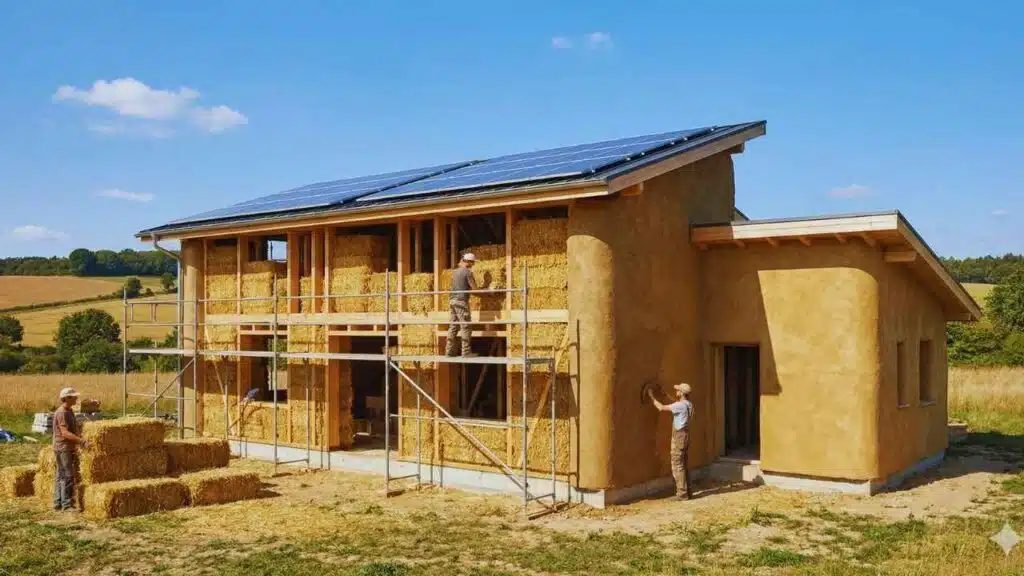
Straw bales craft super-insulated walls from common farm leftovers, turning wheat or rice waste into cozy, energy-smart homes. Bales compress straw tight into dense blocks that stack like giant bricks, held by pins or wood frames for stability. Thick 18-24 inch walls deliver R-30 to 50 insulation—double foam boards—slashing heat loss in cold winters or hot summers. Lime or clay plaster coats seal weather tight while letting vapor breathe through, dodging trapped moisture woes. Source bales cheap at $5-8 each from nearby fields, keeping transport low. Weekend crews raise walls fast, no heavy gear needed. Load-bearing designs stand alone; infill works with any frame.
Fire risk? Plaster renders it safer than exposed wood, passing tough tests. Raise bases on gravel to block mice and floods. Humidity self-regulates for mold-free air. Real homes cut energy bills 50-70%, paying back fast. Quiet insides muffle street noise perfect for suburbs. Rural pioneers love the look; urban codes now greenlight it wide. Pairs with solar panels for off-grid dreams. Earth plasters add artful curves. Scales from sheds to two-story homes easy.
| Property | Value |
| Insulation | R-30+ |
| Cost | Low |
| Fire | Safe plastered |
| Local Source | Yes |
| Energy Save | 50-70% |
| Thickness | 18-24 inches |
| Pest Control | Raised foundation |
| Vapor Open | Yes |
8. Rammed Earth
Rammed earth builds ancient-strong walls from the ground up, using local soil to craft timeless, low-impact structures that breathe with the land. Mix 90% sand-clay-gravel dirt with just 5-10% lime or cement stabilizer, then dump into reusable forms. Pneumatic tampers pack it layer by layer to stone density, releasing forms to reveal swirling, paint-free colors from your soil type. Massive walls hoard daytime heat, releasing slow at night for steady indoor temps without big HVAC runs. No factories needed—mix on site with basic tools. Curves, angles, or straights flow free for organic designs.
Proven 500+ year lifespans dot China and Yemen still standing. Sound swallows echoes for peaceful rooms. Rare cracks fix easy with mud slip. CO2 footprint shrinks versus fired bricks by 90%. Add fibers like straw for quake toughness now. Low skill draws DIY fans; pros speed with machines. 2026 mixes hemp strands for flex. Fits luxury eco-lodges to affordable housing. Cools passive in deserts.
| Property | Value |
| Lifespan | Centuries |
| Thermal Mass | High |
| Emissions | Low |
| Aesthetic | Natural |
| Soundproof | Good |
| Cost/ft² | $10-20 |
| Skill Level | Low |
| Seismic Boost | With fibers |
9. Self-Healing Concrete
Self-healing concrete acts like living tissue, automatically patching cracks to extend life and slash upkeep in harsh conditions. Dry bacteria spores or capsules mix into fresh pours at 1-2% cost bump. Water seeps into fissures up to 0.8mm wide, waking microbes to grow limestone plugs that seal tight in days. Reinforcing steel stays rust-free, dodging billion-dollar repair tabs on bridges and dams. Standard pours, no special gear—pumps and finishes like normal. Lab cracks heal 80% on first try; field tests shine in wet-freeze cycles.
Dormant bugs wait decades dry, activating only on damage. Tunnels gain drip-proof walls; marine piers fight salt. Early roads show less potholes after winters. Bacteria types tune for acids or sulfates too. 2026 rolls to highways and seawalls. Lifespan stretches 30-50% easy. Crews cheer fewer call-backs.
| Property | Value |
| Crack Seal | 0.8mm |
| Lifespan | Extended |
| Corrosion | Prevented |
| Cost Save | Long-term |
| Seal Rate | 80% |
| Applications | Bridges, slabs |
| Dormancy | Decades |
| Multi-Trigger | Water, salts |
10. Cork Insulation
Cork insulation harvests bouncy power from oak bark stripped gentle, delivering top-tier comfort without tree harm in sunny groves. Workers peel live cork oaks every 9-12 years; bark regrows thick for repeat cycles spanning centuries. Boards cut precise or granules blow loose for R-3.6 to 4.0 per inch, rivaling synthetics but fully natural. Heat blocks firm; sound deadens steps and traffic. Impervious to bugs, rot, or mold—wet it, shake dry.
Loose-fill stuffs attics or walls in hours, no itch or masks. Rigid panels fit between studs tight. Compresses little, springs back full under loads. Fire chars safe, no drip or fumes. Portugal and Spain supply endless from old forests. Homes whisper-quiet; bills plummet year-round. Floors underlay too. Green labels stick easy.
| Property | Value |
| R-Value | 3.6-4.0 |
| Fire | Retardant |
| Renewable | 9 years |
| Acoustic | Good |
| Compression | Resilient |
| Source | Europe/Africa |
| No Itch | Yes |
| Multi-Use | Walls, floors |
Future of Sustainable Building
Sustainable building surges ahead in 2026, blending these top materials into smart hybrids that hit net-zero goals with ease and style. Picture CLT frames wrapped in hempcrete walls, topped with bamboo roofs and cork insulation—full carbon sinks that pay back energy fast. Costs plunge 20-30% yearly as factories scale and supply chains green up. 3D printing layers green concrete on site, slashing waste to near zero while custom curves flow free. Building codes evolve quick: EU mandates 50% bio-materials by 2028; US cities chase LEED Platinum standard.
Tech amps up too—sensors in self-healing concrete ping apps on cracks before they grow. Mycelium panels grow onsite from local waste, zero shipping miles. Recycled plastic snaps into modular homes that assemble in days, perfect for disaster relief or urban infill. Bamboo engineers push 20-story towers, flexing safe in quakes where steel snaps. Global south leads: India bales straw mega-projects; Africa rams earth villages at pennies per square foot.
Homeowners win big—property values jump 15% for certified green homes, resale flies. Health perks shine: no VOCs mean kids breathe clean, allergies drop. Energy independence pairs with solar skins on straw walls. By 2030, hybrids dominate 70% new builds as virgin steel and cement face carbon taxes. Supply gluts from hemp farms crash prices further. Watch workforce shift: masons train in bio-mixes, creating million green jobs worldwide.
| Trend | Projection |
| Hybrid Use | 70% by 2030 |
| Cost Drop | 20-30%/year |
| Green Jobs | Millions new |
| Code Mandates | 50% bio by 2028 |
| Value Rise | 15% premiums |
Final Thoughts
Sustainable building hits prime time in 2026—your project can lead the charge. Start small: swap insulation or add bamboo accents in remodels. Team with certified green architects for codes and rebates. These materials cut costs long-term, lift property values, and shrink your carbon footprint big. Families breathe easier toxin-free; communities build resilient. Delays cost more as virgin supplies tighten. Dive in now—future-proof your space, planet, and wallet for generations ahead. The green wave waits for no one.






























