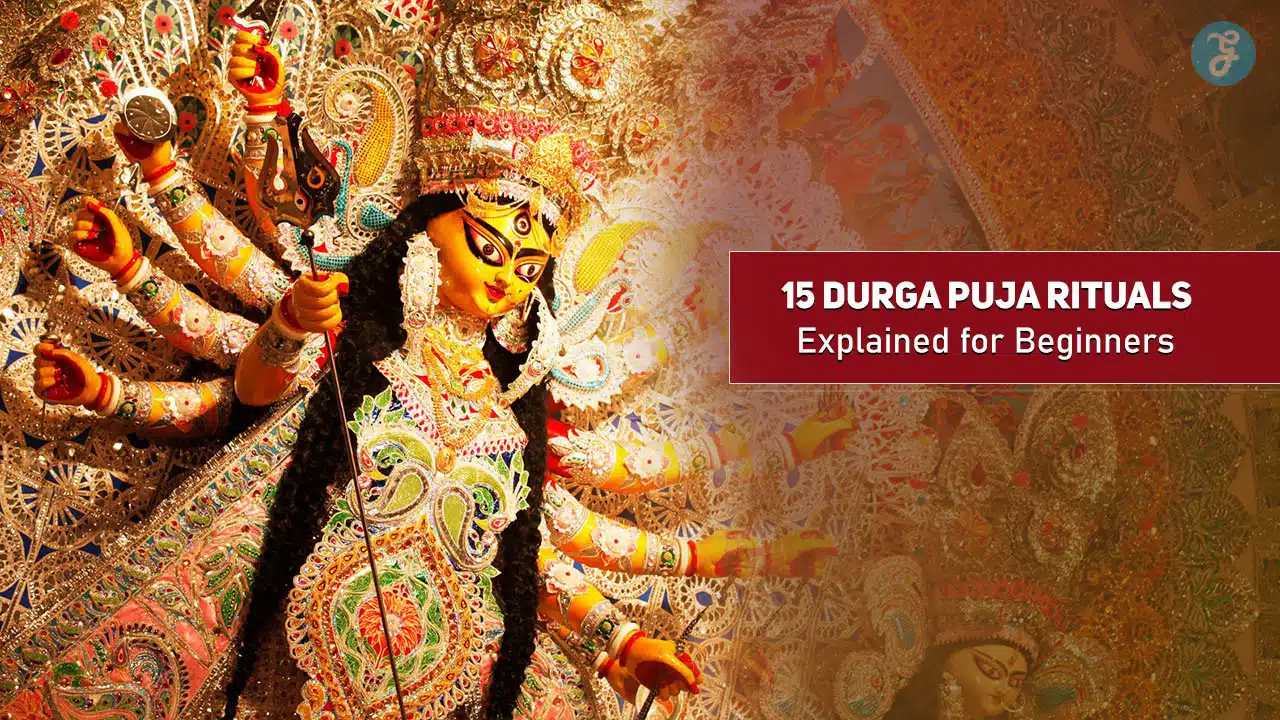
Durga Puja is one of India’s most significant Hindu festivals, primarily celebrated in the eastern regions of West Bengal, Assam, and Odisha, as well as in Bangladesh and Nepal. The festival honors Goddess Durga’s victory over the buffalo demon Mahishasura, symbolizing the triumph of good over evil.
It spans ten days, with the last five days (Shashthi to Dashami) being the most significant. For those unfamiliar, the numerous rituals and customs observed during Durga Puja may seem overwhelming. This guide provides a simple breakdown of the 15 most essential Durga Puja rituals to help beginners understand the festival better.
1. Bodhon (Invocation of Goddess Durga)
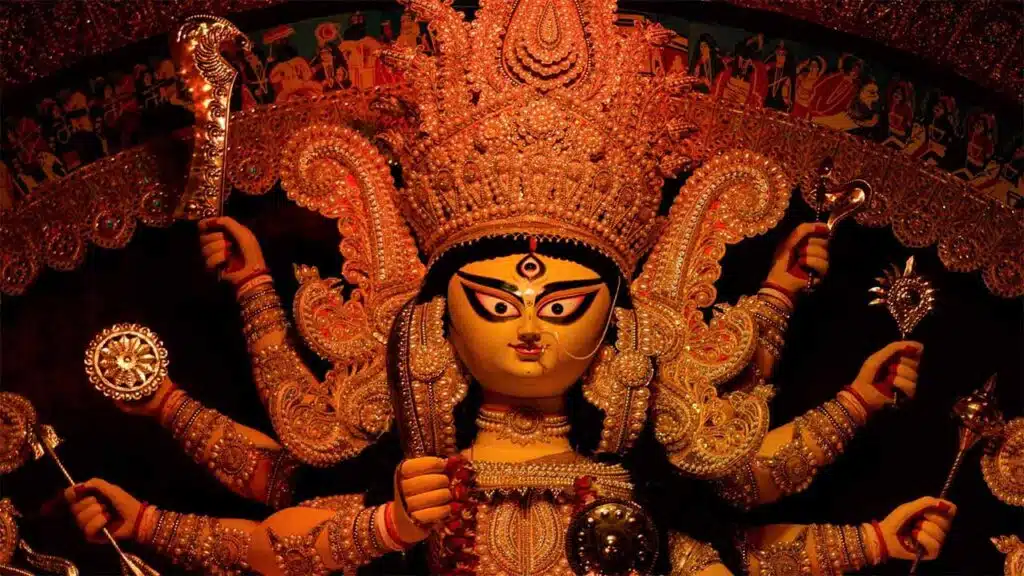
The ritualistic invocation of the goddess Durga on Mahalaya, known as Bodhon, marks the beginning of Durga Puja. Devotees call upon the goddess to descend from her celestial abode and bless the earth. Traditionally, priests perform this by reciting mantras and invoking the goddess’s presence through a clay idol. For beginners, this ritual symbolizes the start of Durga’s earthly visit and sets the tone for the celebrations.
2. Kalash Sthapana (Establishing the Holy Pot)
The Kalash (holy pot) is established on Shashthi (the sixth day of Durga Puja) as a symbolic representation of Goddess Durga. A pot filled with water, topped with mango leaves and a coconut, is placed in the worship area, symbolising purity and the divine. The priest invites the goddess to reside in the Kalash, invoking her energy for the remaining days of the puja.
3. Chokku Daan (Painting the Eyes of the Goddess)
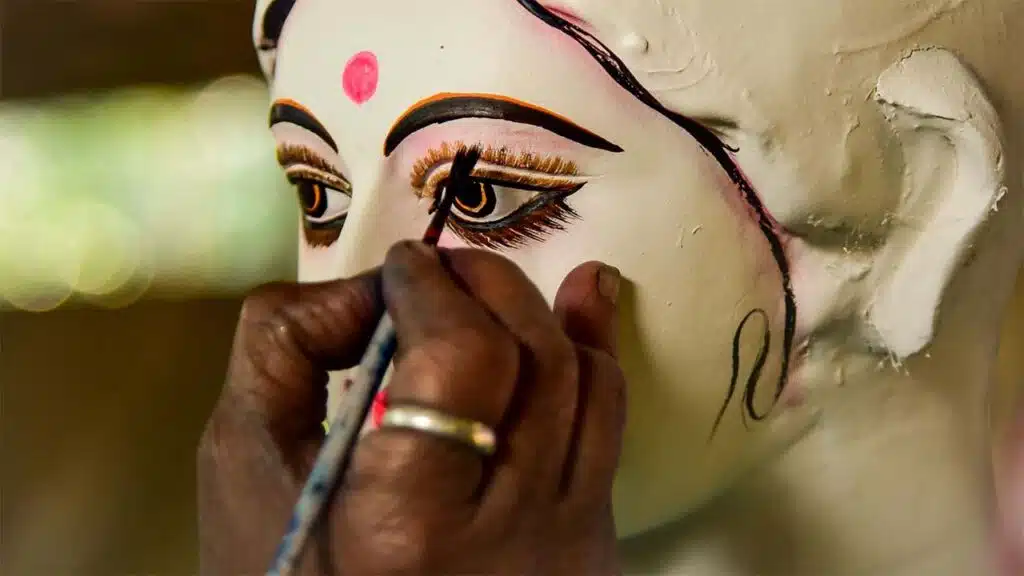
A significant moment in Durga Puja is the ritual of Chokku Daan, in which the artisan paints the eyes of the clay idol of Goddess Durga. This takes place on Mahalaya and is considered an artistic and spiritual act. The opening of the eyes symbolizes the goddess coming to life and is believed to invoke her presence in the idol.
4. Shashthi Puja (Welcoming the Goddess)
Shashthi is the sixth day of Durga Puja, marking the goddess’s official arrival to her devotees. This day begins with the Amantran ritual, which involves inviting the goddess and welcoming her into the pandals (temporary stages set up for the puja). Traditionally, devotees offer prayers and perform an Adhibas ritual, symbolizing the sanctification of the pandal and its transformation into a space for divine worship.
5. Saptami Puja (Nabapatrika)
On the seventh day, known as Saptami, the Nabapatrika ritual is performed, in which nine different plants (representing the nine forms of Durga) are tied together and bathed in the river, symbolizing purification. These plants are then placed near the goddess and worshipped along with her idol. This is a way of honoring nature and symbolizing Durga’s connection to all life forms.
6. Kumari Puja (Worshipping the Young Girl)
Kumari Puja is a sacred ritual where a young girl, symbolizing the goddess in her virgin form, is worshipped. The girl is usually between one and sixteen years old and dresses as Goddess Durga. The ritual is performed on Ashtami (eighth day) with the belief that the young girl embodies purity and divine energy, reflecting the goddess’s nurturing and protective qualities.
7. Ashtami Anjali (Sacred Offerings)
During a special morning prayer on Ashtami, the most significant day of Durga Puja, devotees offer Anjali—flowers and prayers—to Goddess Durga. Pushpanjali is one of the most powerful forms of prayer, in which devotees offer flowers to the goddess while chanting mantras. It’s believed to purify the heart and soul, connecting the devotee directly to the goddess.
During the transitional period between Ashtami and Navami, Sandhi Puja is performed. It is a highly significant ritual that commemorates the moment when Durga transformed into her fierce form to kill the demon Mahishasura. Devotees light 108 lamps and offer 108 lotus flowers during this sacred moment, believing that the goddess’s energy is at its peak.
On Navami, the ninth day, the Homa ritual is performed, during which offerings are made to the sacred fire. This fire symbolizes the divine presence, and offerings like ghee, rice, and herbs are made to purify the environment and invoke blessings. Navami marks the climax of Durga Puja, commemorating Durga’s final victory over Mahishasura.
10. Dhuno Porano (Traditional Bengali Ritual)
During Navami, Dhuno Porano is a distinctive ritual that primarily women observe. It entails the burning of dhuno (fragrant resin) in an earthen pot, which women then carry while balancing the burning dhuno on their hands or heads. It is done with enormous devotion and energy, symbolizing the purification of the environment and the celebration of the goddess’s victory.
11. Sindoor Khela (playing with Vermilion)
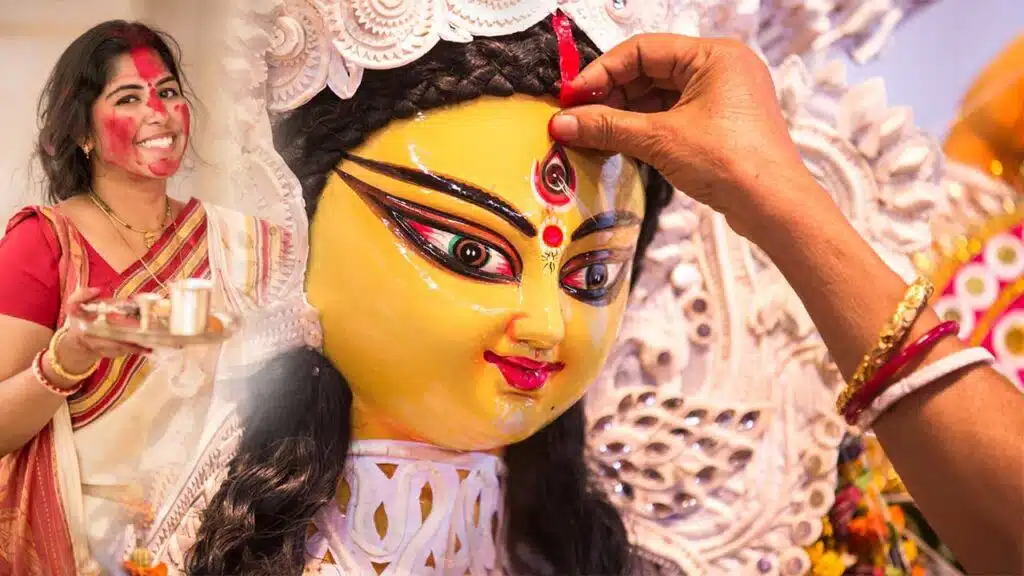
Married women perform Sindoor Khela on Dashami, the tenth day, where they apply sindoor (vermilion) to each other and the goddess’s forehead. This ritual symbolizes the power of womanhood and the goddess’s blessings for a long, blissful married life. It’s a joyous celebration that also signifies a bittersweet farewell to Durga as she prepares to return to her heavenly abode.
12. Visarjan (Immersion of the Idol)
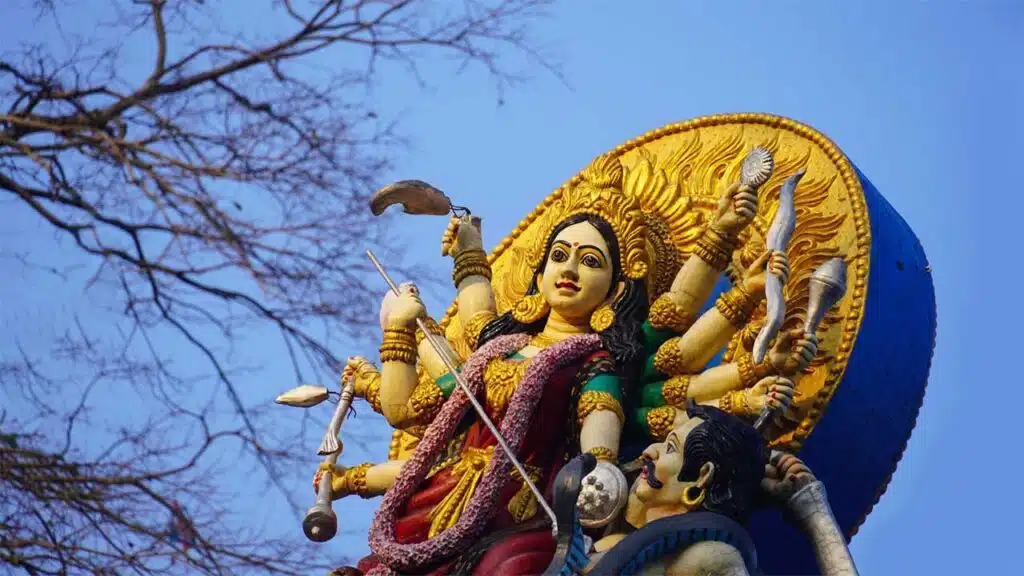
Visarjan marks the end of Durga Puja, during which the goddess idol is taken to a nearby river or water body for immersion. The immersion symbolizes the goddess returning to her divine home, and it’s a tearful yet hopeful moment for devotees. Visarjan is also a way of releasing the goddess’s energy back into nature.
13. Dhak Dance (Drum Performances)
Throughout Durga Puja, the rhythmic beats of the Dhak (traditional drum) fill the air. Special dhakis (drummers) perform during the rituals, and these beats are believed to invite the goddess into the puja pandals. The Dhak Dance, which accompanies the beats, is a way of celebrating the goddess’s presence and adds to the festive atmosphere.
14. Bhog Distribution (Offering Food to the Goddess)
During the festival, special offerings, known as Bhog, are prepared and offered to the goddess. The bhog typically consists of rice, fruits, sweets, and other vegetarian dishes. After the offering, Prasad distributes the food among devotees. This ritual symbolizes food sharing and the goddess’ blessings.
15. Bisarjan Jal Khela (Water Play During Immersion)
As the idol is immersed during Visarjan, devotees often participate in a playful water ritual called Jal Khela. This entails splashing water on each other to celebrate the festival’s successful completion. It is believed to cleanse the body and soul, washing away the sorrow of bidding farewell to the goddess while looking forward to her return next year.
Conclusion
Durga Puja is not only a religious festival but also a celebration of culture, art, and tradition. Each ritual holds deep significance and reflects the essence of devotion, unity, and gratitude. For beginners, understanding these rituals offers a meaningful connection to the spiritual and cultural fabric of Durga Puja. As the goddess departs, the hope for her return continues, making Durga Puja a celebration of life’s cyclical nature and the eternal victory of good over evil.