

The Walt Disney Company has confirmed that all of its streaming platforms will see price increases beginning October 21, 2025. The decision impacts not only Disney+ but also Hulu, ESPN Select, and the bundles that combine these services.
For Disney+, the changes are significant. The ad-supported plan will rise from $9.99 to $11.99 per month, while the ad-free premium plan will jump from $15.99 to $18.99 per month. Customers who prefer to pay annually for the ad-free plan will face an even steeper hike, with the price moving from $159.99 to $189.99 per year.
Other Disney-owned services are also affected. Hulu’s ad-supported subscription will increase from $9.99 to $11.99 monthly, and its ad-free tier will see a rise as well. ESPN Select, which replaced ESPN+, will go from $11.99 to $12.99 per month. Combined packages such as the Disney+, Hulu, and ESPN bundle will rise across the board, making it more expensive for families who rely on bundled streaming. Even the recently launched bundle combining Disney+ and Hulu with Warner Bros. Discovery’s Max will cost subscribers as much as 17.6 percent more beginning in late October.
These increases mark the fourth year in a row that Disney has raised its streaming prices. The company raised rates in December 2022, October 2023, and October 2024, with this latest announcement following the same pattern: a September announcement with new rates beginning in October.
Disney’s Business Context
Disney argues that rising prices are part of its broader strategy to stabilize its streaming division. After years of heavy investment in content, the company’s direct-to-consumer segment finally turned a profit in Q3 2024, largely due to growth in Disney+ subscriptions and strong international expansion. Executives are under pressure to maintain that profitability in a crowded streaming market that includes Netflix, Amazon Prime Video, Apple TV+, and Warner Bros. Discovery’s Max.
However, constant price hikes test consumer loyalty. Analysts note that Disney risks higher churn rates as families evaluate whether the value of bundled subscriptions still justifies the cost. Services like Netflix and Amazon Prime Video have already seen backlash for raising prices multiple times in short succession, and Disney appears to be following the same path.
Controversy Over Jimmy Kimmel Suspension
The timing of these increases could not be worse for Disney. The company is already mired in controversy due to the temporary suspension of Jimmy Kimmel Live! on ABC.
On September 17, 2025, Disney-owned ABC announced that the long-running late-night program would be “pre-empted indefinitely” following comments Kimmel made on his September 15 broadcast while discussing the murder of conservative influencer Charlie Kirk. The remarks, which many described as provocative and politically charged, drew harsh criticism from Federal Communications Commission Chairman Brendan Carr and major ABC affiliate owners such as Nexstar and Sinclair. In response, these affiliates removed the show from their schedules, forcing Disney to act.
The decision to suspend Kimmel quickly escalated into a cultural firestorm. Demonstrators gathered outside Disney Studios in Burbank, California, accusing the company of censorship and political bias. Social media campaigns urging subscribers to cancel Disney+ trended across multiple platforms. According to third-party data analysts cited by The New York Times, Disney+ experienced a surge in cancellations that surpassed typical boycotts aimed at other streaming services.
Industry and Public Backlash
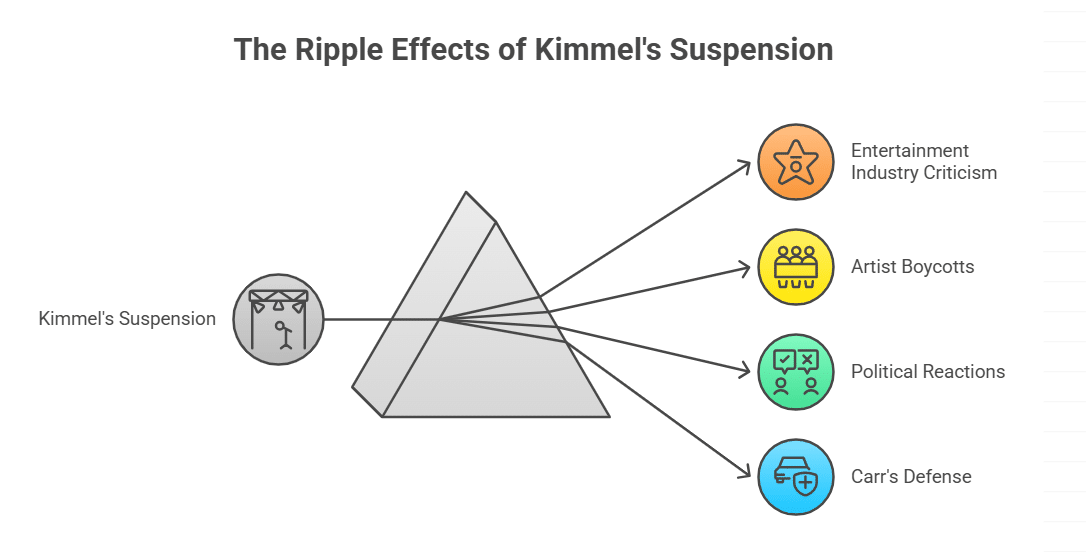
The suspension of Kimmel also triggered an outpouring of criticism from within the entertainment industry. Hundreds of actors, musicians, and writers — many of whom have worked with Disney over the years — signed an open letter condemning the company’s move as an attack on free speech. Prominent artists like Sarah McLachlan refused to participate in Disney-backed projects, including a planned documentary about the Lilith Fair music festival, and several others joined her boycott.
Politicians across the spectrum also weighed in. Many Republican leaders argued that Carr had exceeded his authority by appearing to pressure Disney, while Democrats expressed concern about corporate interference in creative expression. Carr, however, denied threatening ABC’s broadcasting licenses and instead shifted responsibility entirely onto Disney, claiming that the decision to pull Kimmel from the air was a corporate choice.
Disney Reverses Course
After six days of mounting pressure, Disney announced that Jimmy Kimmel Live! would return to air on September 23, 2025. Analysts estimated that the network risked losing tens of millions of dollars in advertising revenue if the program remained off the air, given that it has been a late-night staple for more than two decades.
Yet even as Kimmel returned, the controversy remained unresolved. Several major affiliate groups, including Nexstar and Sinclair, stated they would not immediately reinstate the show, meaning that roughly one-quarter of ABC stations across the country would not broadcast the late-night program. The divide underscores how deeply the incident fractured Disney’s relationships with both affiliates and viewers.
Horrible Timing for a Price Increase
On the very same day that Disney confirmed Kimmel’s return, the company revealed its new streaming prices. For many customers, this appeared tone-deaf and poorly timed. Raising subscription costs immediately after alienating subscribers, employees, political leaders, and celebrities only reinforced the perception that Disney is out of touch with its audience.
Public trust in Disney has been shaken. Critics argue that the company prioritized corporate interests over cultural responsibility, and the price hikes only add to consumer frustration. Many subscribers are now weighing whether Disney’s content library justifies the rising costs, especially when alternatives are available.
What This Means for Subscribers
For viewers, the financial impact is straightforward:
-
Expect to pay $2–$3 more per month depending on whether you subscribe to ad-supported or ad-free tiers.
-
Annual subscribers to ad-free Disney+ will face a $30 increase.
-
Families subscribed to bundled packages will see monthly costs increase across every combination.
-
ESPN Select customers, particularly sports fans, will also have to budget for higher monthly fees.
Disney is notifying subscribers directly about these changes, but customers have only a few weeks to decide whether they want to continue at the higher rates or cancel before October 21.
This latest episode highlights Disney’s precarious balancing act. On one hand, the company must keep streaming profitable as traditional TV revenues decline. On the other hand, its decisions around content, free speech, and corporate responsibility continue to draw criticism from across the political and cultural spectrum.
The controversy over Jimmy Kimmel has made clear that Disney’s actions are being scrutinized not just as a business but as a cultural institution. Whether the company can navigate the fallout while retaining subscribers will depend on how it manages the weeks ahead.
For now, millions of households will soon pay more to watch Disney’s content. But the larger question is whether those households still believe the brand reflects their values — or whether rising prices and mounting controversies will push them toward competitors.