Some films start to blur together, and that gets dull fast. A handful of filmmakers turn one shot into art using color, framing, and clear visual storytelling. In this guide to 10 Directors Who Are Masters of Visual Storytelling, you’ll see how creative direction, film composition, and a bold artistic style separate them from the pack.
Keep reading to learn who paints with light better than anyone working today.
Key Takeaways
- Steven Spielberg sets the bar for emotion and spectacle in films like E.T. (1982), Jurassic Park (1993), and Jaws (1975). He pairs strong feelings with daring visuals.
- Martin Scorsese grew up in Little Italy and studies human nature in classics such as Goodfellas (1990). He won Best Director for The Departed (2006).
- Christopher Nolan uses nonlinear stories, which means the timeline jumps around, in Memento (2000) and Inception (2010). Dunkirk’s three clocks raised tension and helped fuel huge box office returns.
- Alfonso Cuarón builds realism with extended single takes, also called long takes. Gravity’s immersive scenes, shot with Emmanuel Lubezki, brought Oscar-level visuals.
- Hayao Miyazaki shaped poetic animated worlds at Studio Ghibli after Nausicaä of the Valley of the Wind (1984). Princess Mononoke (1997) earned about $150 million in Japan.
How Does Steven Spielberg Inspire Cinematic Imagination?
Steven Spielberg pulls you into worlds that feel big and close at the same time. His films mix heart and craft; the result is visual storytelling that sticks with you.
Movies like E.T. and Jurassic Park balance wonder and fear in the same scene. Working with cinematographer Janusz Kami&\#324;ski, he shapes light and shadow to guide your eye. Cinematography means how the camera captures images, from lenses to lighting to movement.
He keeps raising the standard for effects. Think of Jurassic Park’s living, breathing dinosaurs in 1993 or the shark’s threat in 1975. Universal themes like friendship, hope, and survival make the spectacle matter.
He builds suspense with smart pacing. Symbols do heavy lifting too. A bicycle across the moon or a red coat in a gray world adds meaning without a single word. That is mise-en-scene, the total design of what you see in a shot, working in harmony.
What Makes Martin Scorsese a Chronicler of Human Complexity?
Martin Scorsese was born in Queens, New York, in 1942 and grew up in Little Italy. That neighborhood grit and warmth show up in his films. You meet strivers, loners, and dreamers, then watch them make tough choices.
In Mean Streets (1973), Taxi Driver (1976), and Raging Bull (1980), his character studies feel raw and honest. A character study is a story focused on a person’s inner life, not just the plot around them.
Scorsese earned a B.S. in 1964 and an M.A. in film by 1966 at NYU. That grounding in classic cinema sharpened his craft. Goodfellas (1990) redefined crime films for a generation. The Departed finally brought him an Oscar for Best Director in 2006 after many nominations.
Longtime partners like Leonardo DiCaprio add new layers in The Aviator and The Wolf of Wall Street. Even his documentaries, such as Shine a Light (2008), hum with life. He captures people at their best and worst, and you feel every beat.
Why Are Christopher Nolan’s Nonlinear Narratives So Effective?
Christopher Nolan loves bending time. A nonlinear narrative is a story that does not follow a straight timeline. He uses it to keep your mind active and your eyes searching for clues.
Memento (2000) told a mystery backward and earned Oscar nominations. Following (1998), made for about $6,000, already showed his taste for tricky structures. Inception (2010) layered dreams within dreams, won four Oscars, and topped $800 million worldwide.
His style heightens attention. You watch for details because the order of events matters as much as the events themselves. The Dark Knight trilogy played with time and tension in a superhero setting.
Dunkirk set three stories on three different clocks, then synced them for impact. It won three Oscars and earned Nolan his first Best Director nomination in 2017. Oppenheimer kept history lively by shifting viewpoints while staying crystal clear. The effect is simple, the emotions hit harder because each reveal feels earned.
How Does Wes Anderson Use Symmetry and Color to Tell Stories?
Wes Anderson frames shots like storybook pages. Centered faces, neat windows, and long halls create balance that feels calm and precise.
Look at The Grand Budapest Hotel and its pink lobby, lined up left to right like grid paper. That symmetry hints at characters who crave control, even when chaos pushes in.
His color palettes, which are the planned sets of colors for a film, do quiet storytelling. Pastels sit next to bold shades. Dusty oranges match family strain in The Royal Tenenbaums. Bright reds charge the young adventure in Moonrise Kingdom.
Small props become memory hooks, like Margot’s yellow coat or Zero’s purple hat box. This is visual composition, meaning how shapes and colors guide your feelings without dialogue.
What Innovations Does Alfonso Cuarón Bring with Long Takes and Realism?
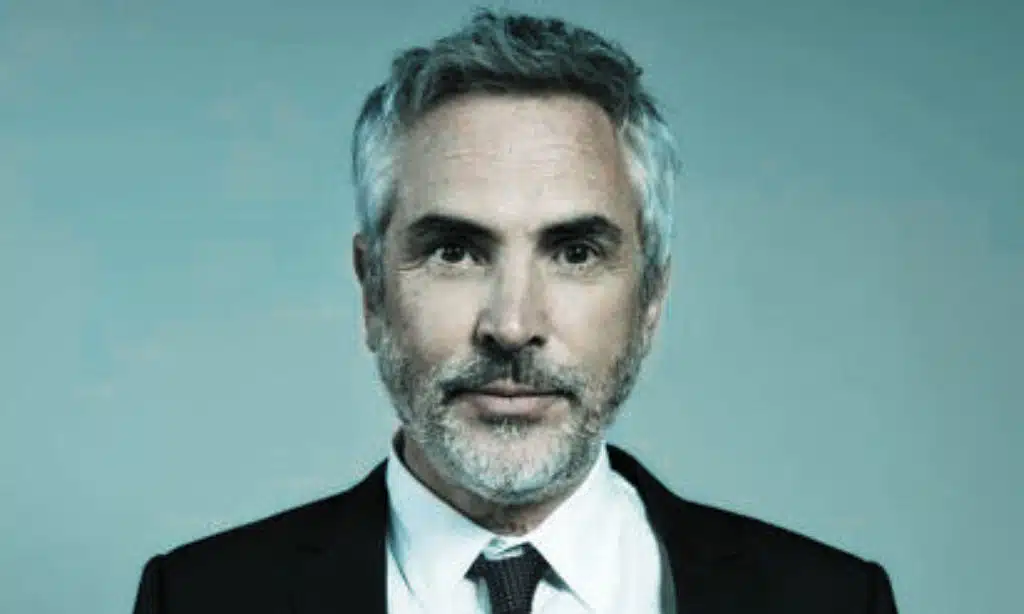
Alfonso Cuarón is famous for long takes, single shots that run for an unusually long time. In Children of Men (2006), a six-minute action run pulls you into danger without a cut.
This technique builds continuity and tension. Actors stay with the moment, so their reactions feel true. Gravity (2013) floats with a space traveler, and you float with her. That deep immersion keeps your hands clenched on the armrest.
His realism comes from simple, honest frames. Working with Emmanuel Lubezki, he leans on natural light and lived-in spaces. Rooms feel used, streets feel gritty, and emotions have room to bloom.
Themes like loss, hope, and survival land harder because they look and sound familiar. Many directors chase this clarity, but few match Cuarón’s mix of craft and empathy.
How Does Denis Villeneuve Create Moody Atmospheres in Film?
Denis Villeneuve builds mood you can almost touch. One slow pan, one held breath, and the room goes quiet.
With cinematographer Roger Deakins, he shapes cold light and deep shadows in Blade Runner 2049. Each frame feels vast and lonely. A color palette of blues and grays suggests isolation. In Arrival and Prisoners, those hues echo grief and doubt.
Sound design, which is the careful choice of effects and mix, carries weight. Footsteps thump like distant thunder in empty spaces. Music swells and fades at just the right moment.
The result is a steady pressure that forces you to face big questions about fear, responsibility, and connection. The pace is patient, and the payoff lingers.
Why Is Quentin Tarantino Considered a Pioneer of Visual Pulp Storytelling?
Quentin Tarantino grew up in California after being born in Knoxville, Tennessee. He turned indie cinema into a playground of grit, style, and sharp jokes.
Reservoir Dogs (1992) and Pulp Fiction (1994), which won the Palme d’Or at Cannes, made his voice impossible to ignore. Pulp fiction means edgy crime tales with tough talk and fast twists.
He blends stylized violence with witty dialogue. Four Rooms, Jackie Brown, and Kill Bill mix old-school genre tricks with modern editing, lighting, and music. Each frame pops like a comic panel.
His Oscar for Best Original Screenplay shows how he hooks audiences. Energy, attitude, and careful craft turn messy situations into cult classics that many imitate but rarely equal.
How Does Guillermo del Toro Build Dark Fantasy Worlds?
Guillermo del Toro mixes horror, folklore, and wonder to build deep, eerie worlds. He often uses practical effects, meaning real makeup, models, and puppets, not just computers.
Pan’s Labyrinth blends old myths with real human pain. Colors guide emotion, with dark backgrounds and sharp reds or golds to mark danger and desire.
Symbolism runs strong. Keys open more than doors; eyes warn of risks yet to come. His stories feel layered because everything on screen, from a carved box to a crooked tree, carries meaning.
That is careful art direction, the planning of sets, props, and textures so the world feels alive. The magic works because the emotions are honest.
What Makes Stanley Kubrick a Perfectionist of Visual Masterpieces?
Stanley Kubrick chased precision in every image. From The Shining’s carpets to 2001: A Space Odyssey’s stars, he controlled pattern and light.
He researched for months before shooting. His compositions turned halls and rooms into puzzles for your eyes. He sometimes demanded dozens of retakes to get one short scene just right.
In 2001, he pushed special effects far ahead of their time in 1968. Many filmmakers still study those methods. His influence crosses genres and generations because he made visuals carry story and theme.
Cinematography, movement, and design worked like gears in a clock. Nothing felt random, and nothing was wasted.
How Does Hayao Miyazaki Craft Poetry in Animated Storytelling?
Hayao Miyazaki started at Toei in 1963, sketching dreams frame by frame. His first feature, Lupin III: The Castle of Cagliostro (1979), already glowed with charm.
After Nausicaä of the Valley of the Wind (1984), he co-founded Studio Ghibli. He paints feelings into tiny details, like wind brushing tall grass or soot sprites darting through air.
In Princess Mononoke (1997), wild forests seem to whisper secrets. That movie earned about $150 million in Japan and proved his stories reach every age. Spirited Away (2001) took folk ideas and turned them into a dream that audiences did not forget.
His characters feel human, brave yet fragile. That honesty is why the fantasy lands so well.
Why Is Sofia Coppola Known for Minimalist Emotional Narratives?
Sofia Coppola tells quiet stories that still hit hard. Minimalist here means she uses fewer words and cleaner images, letting silence do the talking.
In Lost in Translation, which won her an Oscar for Best Original Screenplay in 2003, the mood carries the story. Empty halls, soft city lights, and a lingering camera reveal loneliness and longing.
Her leads, often women like Charlotte in Lost in Translation or Marie in Marie Antoinette, wrestle with identity and isolation. The emotions feel personal because the camera stays close and patient.
That balance of restraint and depth puts her beside stylists like Scorsese and Anderson. It proves that less can be powerful, if you place each image with care.
Takeaways
Visual storytelling sits at the core of lasting cinema. These ten filmmakers show how creativity, strong cinematography, and careful film composition can turn a scene into a feeling you carry home.
Each director uses a distinct artistic style. Light, color, framing, sound, and confident narrative techniques shape what you feel before a character speaks. The result is clear, you do not just watch the plot, you experience the pictures.
If you care about visual aesthetics or fresh ways to tell a story, this list is a map. Different voices, one goal, to make images speak with power and grace.
FAQs on Directors Who Are Masters of Visual Storytelling
1. What makes these 10 directors masters of visual storytelling?
They use the camera like a paintbrush, turning every shot into a story. Their films show emotion without saying much. You can spot their style in how they frame scenes, play with light, and guide your eyes across the screen.
2. How do these filmmakers influence other directors?
Their work sets trends that ripple through Hollywood and beyond. Many up-and-coming filmmakers study their movies to learn tricks about pacing, color, and mood. Watching them is like getting a free film school lesson.
3. Can you give examples of famous movies by these visual storytellers?
Sure thing; think of sweeping desert shots from “Lawrence of Arabia,” or the bold colors in “In the Mood for Love.” Each director leaves fingerprints on their films—whether it’s slow-motion action or clever shadows dancing on walls.
4. Why does strong visual storytelling matter in cinema?
It grabs viewers right away and keeps them hooked even if there’s little dialogue. A powerful image sticks with you long after credits roll; sometimes one look says more than ten pages of script ever could.