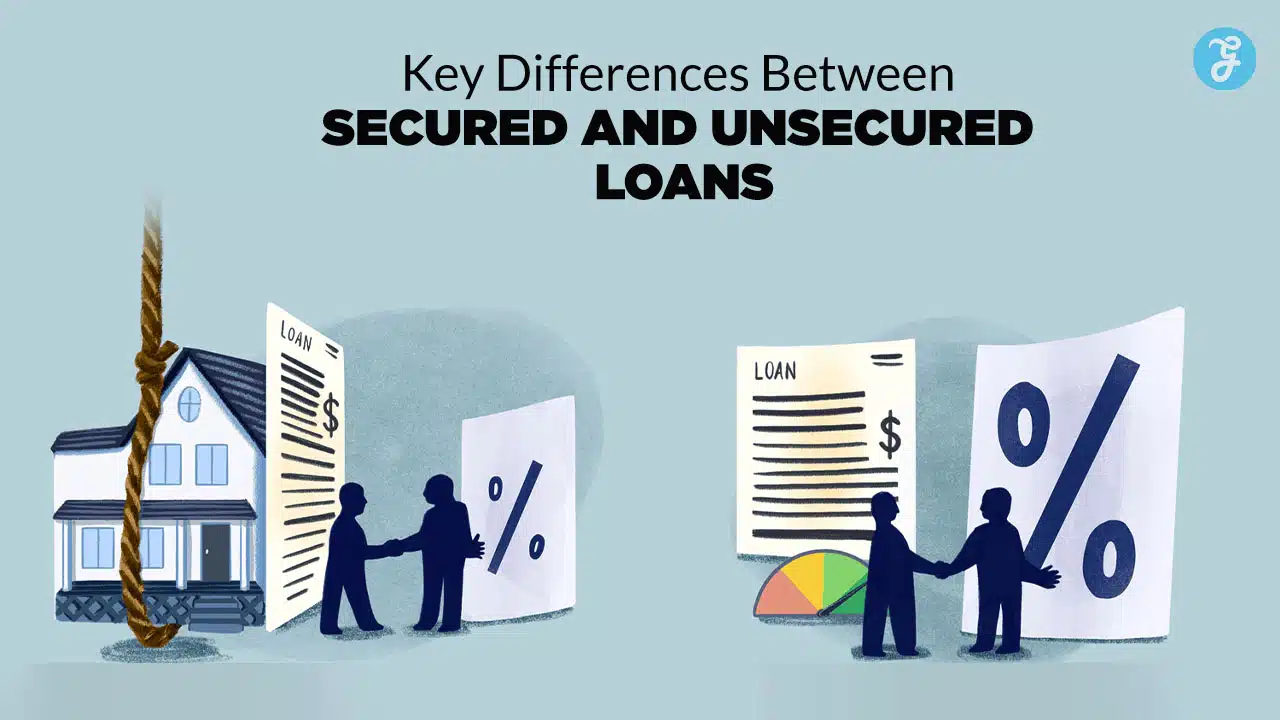
When people talk about borrowing, one distinction sits quietly behind almost every offer: whether the loan is secured or unsecured. This single detail shapes how much you can borrow, what you’ll pay in interest, how fast you get approved and how much you stand to lose if things go wrong.
In this guide, we unpack the key differences between secured and unsecured loans, looking beyond textbook definitions. The goal is simple: to help you read loan offers with a sharper eye and understand which type of borrowing actually fits your situation.
Understanding the Differences Between Secured and Unsecured Loans
Before breaking down the differences between secured and unsecured loans, it helps to get the basics clear.
What is a secured loan?
A secured loan is backed by an asset you own or are buying. That asset is called collateral. If you stop repaying, the lender has the legal right to take that collateral and sell it to recover what you owe.
Major financial guides describe secured loans as credit that is “collateralized” by a house, car or other valuable asset. Mortgages, auto loans, many business loans and some personal loans fall into this camp.
Because the lender holds collateral, the perceived risk is lower. In return, lenders often offer lower interest rates and higher borrowing limits than you’d find with similar unsecured products.
What is an unsecured loan?
An unsecured loan is not tied to any specific asset. Here, the lender relies on your creditworthiness – your credit history, score, income and existing debt – instead of collateral.
Common types of unsecured loans include:
- Unsecured personal loans
- Credit cards
- Many student loans
- Some lines of credit
Because unsecured loans carry more risk for the lender, the trade-off is familiar: higher interest rates and stricter requirements around your credit profile.
Typical examples of secured and unsecured loans
Secured loans:
- Mortgages
- Auto loans
- Home equity loans and home equity lines of credit (HELOCs)
- Secured personal loans (backed by a car, savings account or investment portfolio)
Unsecured loans:
- Unsecured personal loans
- Credit cards
- Many student loans
- Some small-business loans and lines of credit
With that foundation, we can look at the 10 key differences between secured and unsecured loans that shape real borrowing decisions.
10 Key Differences Between Secured and Unsecured Loans
Understanding the key differences between secured and unsecured loans helps you compare risk, costs, eligibility and long-term impact. This section breaks down how each loan type works so you can make a more informed borrowing decision.
1. Collateral vs. No Collateral
The first and most fundamental difference is collateral.
- Secured loans require you to pledge an asset – a home, car or other property – as security for the lender. If you default, the lender can repossess or foreclose on that asset.
- Unsecured loans do not require collateral. Approval is based on your credit and income, supported by your promise to repay. If you default, the lender cannot simply take your property without going through the legal system.
In practical terms, a secured loan asks: “What can you put up as security?” An unsecured loan asks: “Can we trust you to repay based on your track record?”
This distinction sits at the heart of nearly all differences between secured and unsecured loans.
2. Interest Rates and Overall Cost of Borrowing
Collateral changes the way lenders price risk.
Because a secured loan gives the lender a claim over an asset, it usually comes with:
- Lower interest rates compared with similar unsecured products
- More stable pricing, especially for long-term loans like mortgages
Unsecured loans, by contrast, are typically more expensive because:
- The lender has no collateral to fall back on
- The only protection is your credit profile and legal options if you default
Credit cards and many unsecured personal loans charge noticeably higher rates than mortgages, auto loans or HELOCs. That price difference reflects the higher risk built into unsecured loans.
Over time, this difference in interest rates can dwarf other costs. A slightly lower rate on a large secured loan, repaid over many years, can translate into thousands in savings.
3. Borrowing Limits and Loan Terms
Another clear difference between secured and unsecured loans is how much you can borrow and for how long.
- Secured loans often offer higher borrowing limits because the loan is tied to a valuable asset. Mortgages and home equity products, for example, can run into hundreds of thousands of dollars, repaid over 10–30 years.
- Unsecured loans usually come with lower maximum amounts and shorter repayment terms. Many personal loans cap out at a fraction of a typical home loan and are repaid over two to seven years.
For large purchases, long-term projects or debt consolidation on a big scale, lenders tend to favor secured structures. Unsecured loans work better for smaller, shorter needs.
4. Eligibility and Credit Score Requirements
Because lenders can seize collateral if you fail to repay a secured loan, they can sometimes accept a lower credit score or thinner credit history than they would for an unsecured loan. This is not universal, but it is a common pattern in the market.
For secured loans, your credit profile does most of the heavy lifting. Lenders closely examine:
- Credit score and history
- Debt-to-income (DTI) ratio
- Employment and income stability
Because unsecured credit is riskier for the lender, they may:
- Reject applications with weaker credit
- Offer smaller limits
- Charge significantly higher rates even when approved
This is one of the most practical differences between secured and unsecured loans. If your credit is imperfect, you may find it easier to get approved for a loan backed by collateral, provided you are comfortable with the added risk to your assets.
5. Application Speed and Documentation
The type of loan you choose also influences how quickly the money reaches your account.
Secured loans can involve:
- Property valuations or appraisals
- Title checks or registration of liens
- More documentation around the collateral
These extra steps slow the process. Mortgages and home equity loans, for example, can take weeks from application to funding.
Unsecured loans are often designed for speed. Many online lenders market:
- Same-day or next-day decisions
- Minimal documentation beyond ID, proof of income and bank statements
- Digital applications that can be completed on a phone or laptop
If you need money quickly for a smaller expense, this speed advantage for unsecured loans can outweigh the higher interest cost.
6. Flexibility in How You Use the Funds
Lenders also treat secured and unsecured loans differently when it comes to how you use the money.
With secured loans, the loan and the asset are often linked:
- A mortgage is used to buy or refinance a home
- An auto loan is used to buy a vehicle
- A HELOC is tied to home equity and often used for home-related expenses, though some borrowers tap it for other needs
Some secured personal loans are more flexible, but lenders still tend to monitor how the funds are used when the collateral is a specific asset.
Unsecured loans are generally more open-ended. Many lenders market unsecured personal loans as suitable for:
- Debt consolidation
- Medical bills
- Weddings and education-related costs
- Home improvement projects
- General “cash flow” or emergency needs
This flexibility is a core attraction of unsecured borrowing, especially when you are juggling multiple smaller expenses rather than one major purchase.
7. Risk and Consequences of Default
Default risk sits at the center of any loan agreement, and here the differences between secured and unsecured loans become very real.
For secured loans:
- If you stop paying, the lender can repossess or foreclose on the collateral
- If the collateral’s value does not cover the outstanding balance, you may still owe the difference
- Losing your home, car or other property has long-term financial and personal consequences
For unsecured loans:
- The lender cannot directly seize your assets without legal action
- Instead, they may send the debt to collection organizations, add fees, and potentially sue
- A court judgment can eventually lead to wage garnishment or liens in some jurisdictions
Both paths damage your credit, but the secured route carries a very visible additional risk: losing the asset you pledged.
8. Impact on Your Credit Profile
Both secured and unsecured loans show up on your credit report, and both can help or hurt you depending on how you manage them.
Positive impact (for both types):
- Making on-time payments builds a record of responsible borrowing
- Successfully repaying a loan can improve your credit mix (a combination of installment debt and revolving credit)
Negative impact:
- Late payments, defaults and charge-offs harm your credit score
- Collections and legal judgments can stay on your report for years
One subtle difference: certain secured products, like mortgages, are often seen by lenders as signals of long-term financial responsibility when managed well. But that perception only applies if you keep payments up to date.
9. Fees, Insurance and Other Conditions
Beyond headline interest rates, the fine print can differ between secured and unsecured loans.
With secured loans, you may encounter:
- Appraisal or valuation fees
- Title search and registration fees
- Higher closing costs on mortgages and home equity products
- Insurance requirements linked to the collateral
With unsecured loans, the fee structure can be simpler but still significant:
- Origination fees deducted from the loan amount
- Late payment and returned payment fees
- Balance transfer fees on credit cards
When comparing offers, it is not enough to look at the interest rate alone. For an accurate comparison between secured and unsecured loans, borrowers should pay attention to the annual percentage rate (APR), which wraps together interest and many mandatory fees.
10. Best Use Cases: When Each Loan Type Makes Sense
Putting all these differences together, you can see patterns in when each type of loan tends to work best.
Secured loans may make sense when:
- You need to borrow a large amount (for a home, car or business expansion)
- You can handle a longer repayment period
- You are comfortable pledging an asset and understand the risk of losing it
- Your credit score is not perfect, but you have strong collateral
Unsecured loans may be better when:
- You need smaller to medium-sized amounts for mixed or short-term needs
- You prefer not to risk your home, car or savings
- You want a faster approval process with fewer steps
- You have a solid credit score and stable income
The right choice is not about which type is “good” or “bad” in absolute terms. It is about which structure fits your goals, risk tolerance and time frame.
How to Choose Between a Secured vs Unsecured Loan
Once you understand the differences between secured and unsecured loans, the next step is practical: choosing between them for a specific borrowing need.
Questions to Ask Before You Decide
What am I borrowing for?
- A long-term asset like a home or car often points toward a secured loan.
- Short-term or mixed expenses might be better suited to an unsecured personal loan or line of credit.
How much do I really need?
- If your borrowing need is modest, an unsecured option can avoid putting major assets at risk.
- For larger sums, especially when tied to a property, a secured structure may be the only realistic route.
How strong is my credit profile?
- Strong credit can secure competitive rates on unsecured loans.
- With weaker credit but meaningful assets, a secured loan might be easier to obtain, though it raises the stakes if you default.
What can I afford to lose?
- If the idea of risking your home, car or savings makes you uncomfortable, that is a clear signal to think carefully before taking on secured debt.
How quickly do I need the money?
- If time is critical, unsecured products – especially those offered by online lenders – typically move faster than secured loans that require valuations and legal checks.
Common Borrower Scenarios
Common borrower scenarios show differences between secured and unsecured loans work in real situations. These examples help you understand which loan type fits specific financial needs and why borrowers choose one option over the other.
Debt consolidation:
Borrowers with high-interest credit card balances sometimes use a secured loan (like a home equity loan) to consolidate at a lower rate. The trade-off is clear: you swap high interest for the risk of losing your home if you cannot keep up with the new payments.
Home improvement:
A home equity loan or HELOC can be cost-effective for major renovation projects, because it uses your home as collateral and often carries lower rates than unsecured options.
Kiplinger
Emergency expenses or one-off costs:
For medical bills, car repairs or smaller cash-flow gaps, an unsecured personal loan or credit card may be more appropriate. The interest may be higher, but your assets are not directly on the line.
Business funding:
Entrepreneurs often face a mix of secured and unsecured offers, from asset-backed equipment loans to unsecured lines of credit. The right choice depends on whether the business can pledge specific assets and how volatile its cash flow is.
Across all these scenarios, the question remains the same: What are you trading for access to someone else’s capital?
Final Thoughts on the Differences Between Secured and Unsecured Loans
Secured and unsecured loans sit on opposite ends of a spectrum that balances risk, cost and flexibility.
- Secured loans trade collateral and higher personal risk for lower interest rates, higher limits and longer terms.
- Unsecured loans trade higher interest and tighter approval standards for speed, flexibility and the ability to borrow without tying up your assets.
Understanding the differences between secured and unsecured loans turns a confusing menu of offers into a clearer set of choices.
The best borrowing decision is rarely about chasing the lowest rate or the largest possible loan. It is about matching the structure of the debt to the purpose, timing and level of risk you can live with. When those elements line up, both secured and unsecured loans can play constructive roles in a long-term financial plan.