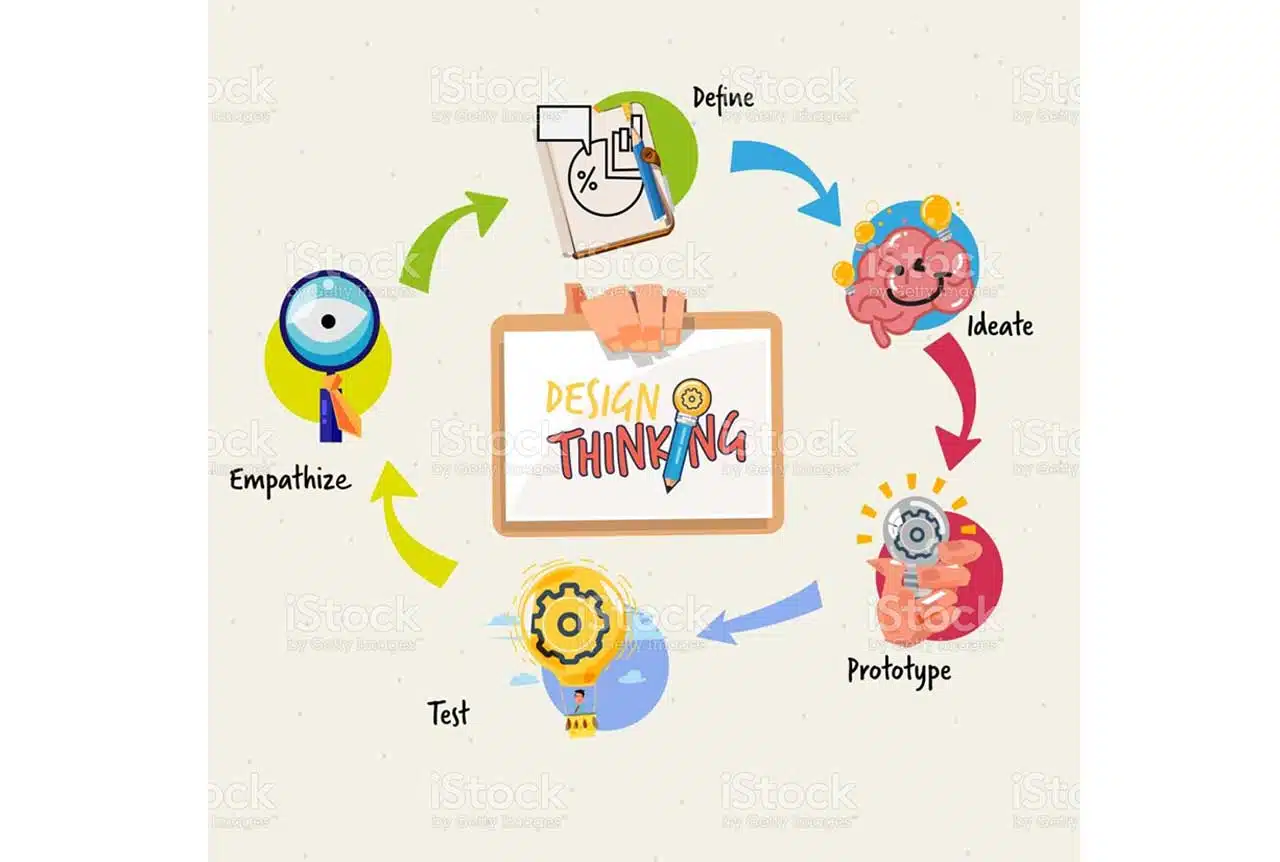
Design thinking involves the process of human-centred problem-solving to create meaningful experiences for customers. Designers and marketers often use design thinking and human-centred design to identify customers’ pain points, then formulate a system to solve their problems.
Design Thinking stems from a human-centred approach which involves harnessing the ideas of a group of individuals and designing from there. This process helps solve problems as the design thinking process optimises learning, iteration and feedback throughout the design stage. As the world becomes further interconnected the importance of a unified understanding and approach becomes increasingly important—design thinking workshops are the first step in this process.
This approach embraces problem-solving skills to achieve design goals while inspiring customers through delivering innovative solutions to complex problems. In design, there’s no single right way to do anything. There are often numerous ways to tackle a specific design situation and problems – by improving your design skills; you’ll be able to develop a method that works for you.
The following tips cover design thinking strategies to help you master the design-thinking process;
- Embrace ambiguity: Design thinking is about design, and design is all about uncertainty and ambiguity, so embrace it.”
- No Ideas: Rephrase: “I don’t like the idea” to “I’m not sure how this design will work, sound and look“. Don’t dwell on ideas; focus on design.
- Start with problems: Problems are design opportunities. Focus on people’s frustrations and how to resolve them. What is missing? What needs fixing? The first step of designing a product or service is identifying what you’re trying to solve for people, who the users are and why they care. Using someone else’s solution as your design baseline helps in observing and understanding that problem statement better.
- Iterate: Design solutions need to be tested and iterated; then iterate again. Design thinking is not about coming up with a design at the end; it’s about how you will get there by building prototypes quickly and effectively. The goal is for people to present ideas, obtain feedback and improve upon them, then repeat the cycle all over again. Keep improving your design until you get a method that works well for everyone involved in the design process.
- Reality check: As product developers or entrepreneurs, we can get so caught up in the details of our ideas that we stop seeing what’s happening around us. That’s why design thinking involves getting out from behind your computer screen and targeting users face-to-face. Talk to people on the street, go door-to-door if you have to; design thinking is all about using design research methods like interviews, observation and testing to make sure that design ideas will work for everyone.
- Presentation tips: Stories are more compelling than data – present design stories (using design research methodologies like observations, interviews etc.) instead of design data (like user numbers). Current design concepts instead of design deliverables; investing time in increasing the design thinking ability of your team members will prove beneficial later on when it’s their turn to present results.
- Not your fault: Designers may want everything done perfectly right at first or struggle with design goals they find hard to achieve. While design thinking is an iterative process that involves continuous learning, design thinkers are encouraged to design outside the box to work around problems using design research techniques because design solutions are not your fault – they’re user problems.”
- It’s a story: Design thinkers tell stories instead of writing reports, and their presentations usually include pictures and illustrations as well as words. Convey design thinking results by telling a narrative about what you’ve learned and how things changed through your design project or exercise. Use stories to share design insights with others so everyone involved in the product development cycle will understand every step in the process.
- Ugly vs beautiful: Look past aesthetics; focus on function over form for design thinking concepts, research techniques and design thinking deliverables. It’s important to design something people can use first before worrying about design deliverables like design artifacts.
- Creativity is the new literacy: Designers have always known that creativity can solve seemingly unsolvable problems. However, design thinkers should know how to make sense of creative ideas because design thinking calls for both creative skills and critical problem-solving abilities.
- Sketching matters: Regular sketching helps designers understand what they are observing or envisioning by getting their thoughts on paper, even if it seems rough around the edges. Sketching also encourages outside-the-box design thinking since design thinkers won’t be afraid to pitch a design solution not previously attempted.
- The design thinking process: There is no single design thinking process for designers to follow – it’s not a step-by-step design guide, but it is a way designers think and approach projects on a day-to-day basis. The design thinking process involves six steps or phases that include;
- empathising with the user experience
- defining your design challenge
- ideating potential solutions
- prototyping those ideas as concepts
- reviewing those initial concepts through testing
- refining design concepts based on observations and user feedback.
- Design goals vs design standards: Designers desire to breakthrough design standards or even design goals to create something new and innovative. Design thinkers help design teams create feasible design concepts and goals for solutions to become a reality.
- It’s about the user: Great design ideas come from empathising with the people using a product or service. Designers use empathy techniques like observations, interviews and testing to gain insight into a person’s needs and wants before creating a design solution that will solve a problem for them or provide satisfaction.
- Easy vs intuitive: Think “low learning curve” when designing design thinking deliverables since you don’t want your designs to make users overthink what’s required.
- Design for the next generation: Design for mobile users has never been more critical since most people now use a mobile device as their primary computer. Design thinking enables design teams to create concepts that can work on all mobile devices, not just one or two specific ones.
- Designing for cultural differences: When thinking about deliverables, it’s essential to plan with cultural differences in mind. Every concept or solution needs to work for users worldwide by designing culturally adaptable ideas through design research techniques like interviews and testing.
- Designing for diverse teams: A diverse design team can bring many different perspectives to the table and more likely achieve a solution representative of the actual people who will use a product or service. When considering deliverables, remember internal diversity within your own company is just as important as external diversity when creating designs – to ensure all the needs of your audience base are considered.
- Creativity has no limits: While creativity is encouraged in the design process, deliverables should be well-grounded in design goals or design standards, otherwise, designs will never become a reality.
- Think like your users: Design concepts need to focus on the most important criteria for users – what is most important to them? How can design teams create design thinking deliverables tailored to the end user’s needs and wants?
- Design concepts must fit into current processes: With design concepts, you’re creating something new, but without an existing process to support it, any design concept won’t turn into a product or service.
- Evaluate design concepts: Deliverables should be evaluated on design goals, design standards and design requirements—if an idea doesn’t meet or exceed the necessary design requirements, the solution will require cycling through the design phase more than once.
- Solutions need to be feasible: Ease of use is essential in design thinking as complex solutions may frustrate audiences to an extent they stop using them. Look for ways to simplify designs without sacrificing quality or usability when creating your team’s following product or service.
- Designers need training & experience: Design thinking isn’t something you can learn overnight and requires consistent effort to fine-tune your skills.
- The challenge of consistent change: The challenges design thinkers face are ever-evolving as new trends and technologies become available, and the challenge is to learn and adapt consistently.
Conclusion.
Design thinking is critical in design deliverables; design concepts become design solutions for customer problems. Taking every opportunity to thoroughly test design solutions, removing the ego, embracing teamwork and encouraging the free flow of ideas and creativity is the only way to achieve innovative solutions and retain a truly customer-centric approach.