


On Christmas Eve in South Asia, the air is often soft and warm instead of icy, the streets glow with strings of lights, and the most meaningful moments tend to arrive late, sometimes right at midnight—when church bells ring, choirs sing, and families gather for food and conversation that can stretch into the early hours. If you grew up picturing Christmas as a winter holiday of fireplaces and snowfall, South Asia offers a strikingly different setting: palm-lined roads, humid coastal breezes, crowded city boulevards, and open-air celebrations that feel lively and local, even when the decorations look familiar.
This is also a region where Christmas is not experienced in one uniform way. In some places it’s a public-season spectacle with bustling streets, hotel buffets, and music in the air; in others it is primarily church-centered and community-focused, observed most intensely by Christian families and congregations.
What connects these experiences is that December 24 is widely treated as a special threshold night, the time when people finish preparing, step into worship, sing carols, visit nativity scenes, and welcome Christmas with a blend of devotion and celebration.
Why December 24 matters so much across South Asia
December 24 carries a particular emotional weight in many Christian communities because it is both a closing and an opening: the end of Advent anticipation and the beginning of Christmas joy. In many churches, the most attended service of the season is not necessarily a daytime gathering on December 25, but the late-night worship on December 24—often called Midnight Mass or a Christmas Eve night service. For families, that means the day is frequently spent preparing clothing and food, finishing decorations, visiting relatives, and arriving early to church because crowds can be large in well-known parishes.
The role of Advent and anticipation
For many Christians, Advent is a season of reflection and preparation. That mindset shapes how Christmas Eve feels: it’s not only a party night, but also a moment of gratitude and spiritual focus. The anticipation can be felt in small details—choirs rehearsing for weeks, families cleaning and decorating, and churches preparing nativity scenes that become the visual heart of the season.
Christmas Eve vs Christmas Day in the region
This is also why Christmas Eve is often more atmospheric than Christmas Day. December 25 can become a day of rest, long lunches, and quiet family time, while December 24 is the night when public life sparkles: lights are switched on, choirs perform, and neighbors move through streets that feel transformed. Even in countries where Christians are a minority, Christmas Eve may be visible in certain districts, near prominent churches, and in commercial spaces that reflect the holiday season for shoppers and travelers.
The tropical Christmas feeling: familiar symbols in a different climate
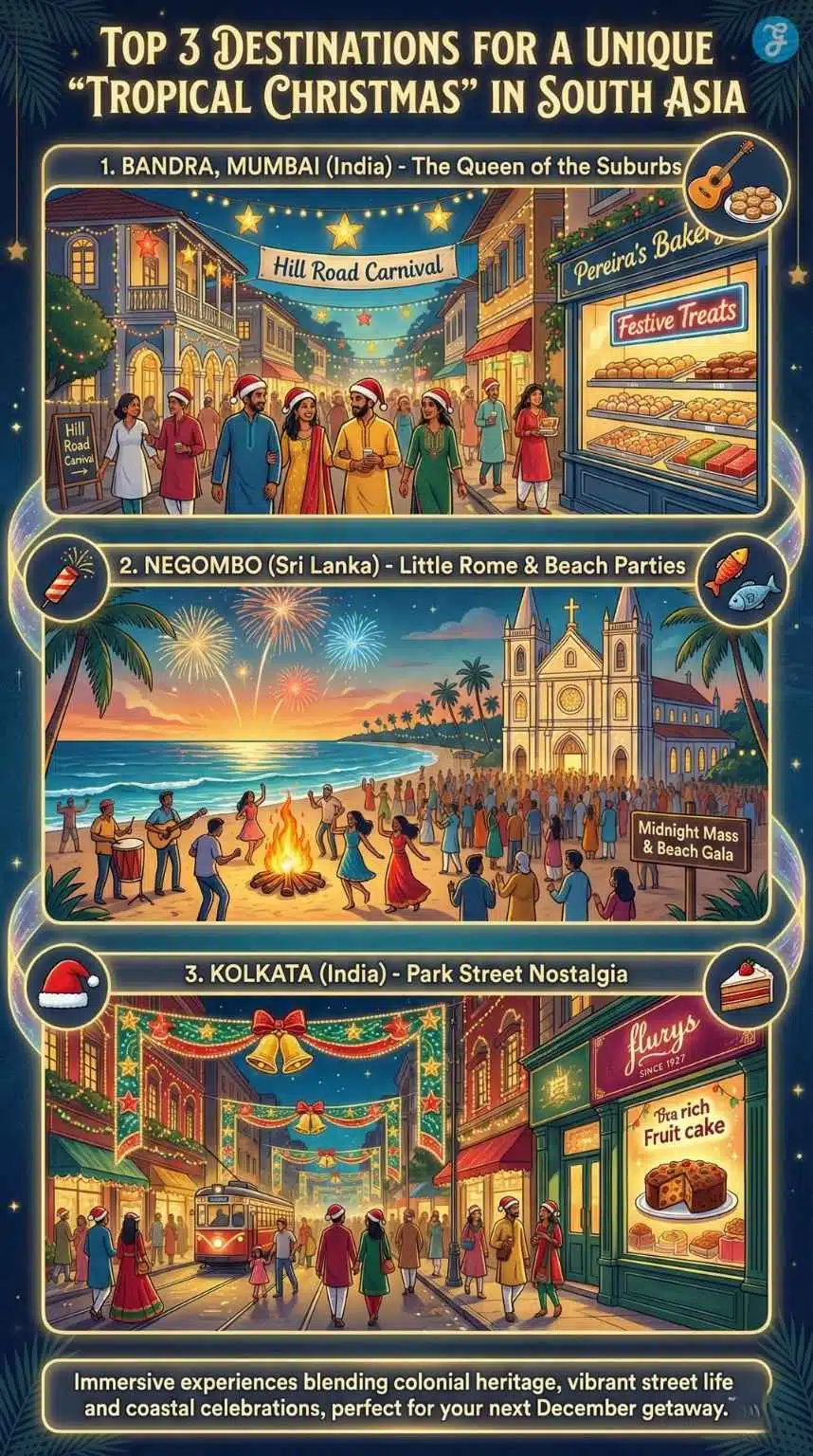
One of the most fascinating aspects of Christmas Eve in South Asia is how easily global Christmas symbols blend into local tropical realities. You might see Christmas trees, Santa hats, stars, tinsel, and red-and-green décor, but they appear against a backdrop that is unmistakably South Asian: warm evenings, street vendors, palm trees, rickshaws, beach towns, and the constant motion of city life. The result is not a copy of a Western Christmas—it’s a regional version that uses familiar seasonal imagery while keeping its own rhythms.
Light over winter imagery
In tropical settings, décor often emphasizes illumination rather than “winter scenes.” Hanging stars, glowing lanterns, and long strings of bulbs framing church gates and neighborhood streets can matter more than snowflakes. Even when artificial snow appears in malls or venues, it reads as playful rather than literal because the surrounding air is not cold.
The outdoors becomes part of the celebration
In many South Asian cities and coastal regions, warm nights invite people outside. Instead of staying indoors for warmth, families stroll under light displays, gather in courtyards, and travel between church, relatives’ homes, and restaurants. The climate doesn’t reduce the holiday—it changes the way people move through it.
The spiritual core: Midnight Mass, carols, and nativity scenes
Although Christmas Eve has a social and public side, the heart of the night for many families remains spiritual. Across South Asia, churches commonly highlight a few elements that appear again and again: a nativity scene (sometimes called a crib), a strong emphasis on music and carols, and a late-night service that builds toward the moment Christmas begins.
Nativity scenes and “crib” culture
Nativity scenes can be simple or elaborate. In many churches, you’ll find a carefully arranged display of Mary, Joseph, the infant Jesus, shepherds, angels, and the Magi (sometimes added later), often surrounded by handmade scenery. In homes, families may create a smaller crib as part of their seasonal décor. This practice becomes a centerpiece for children and visitors, and in some communities, it’s common to visit multiple churches to see how each one has created its nativity.
Carols as community participation
Carols are not merely background sound; they are a social ritual. Choirs rehearse for weeks, and carol performances may happen inside the church, in courtyards, and sometimes as community visits where groups sing from house to house. The content can include global favorites as well as local-language hymns, which makes Christmas Eve feel both universal and rooted in place.
What Midnight Mass feels like
Midnight Mass typically includes prayers, Christmas hymns and carols, Bible readings, and a celebratory atmosphere that builds toward the moment Christmas begins. People often describe the moments after the service ends as among the most joyful of the season: families greet friends, share sweets, take photos outside church gates, and head home for a late meal. Worship and celebration are not separate parts of the night; they flow into each other.
Christmas Eve in South Asia, country by country
Across the subcontinent, the night of December 24th is the climax of the season. Each country adds its own local flavor to the liturgy and the party.
India: regional variety, “Bada Din,” and December 24 street energy
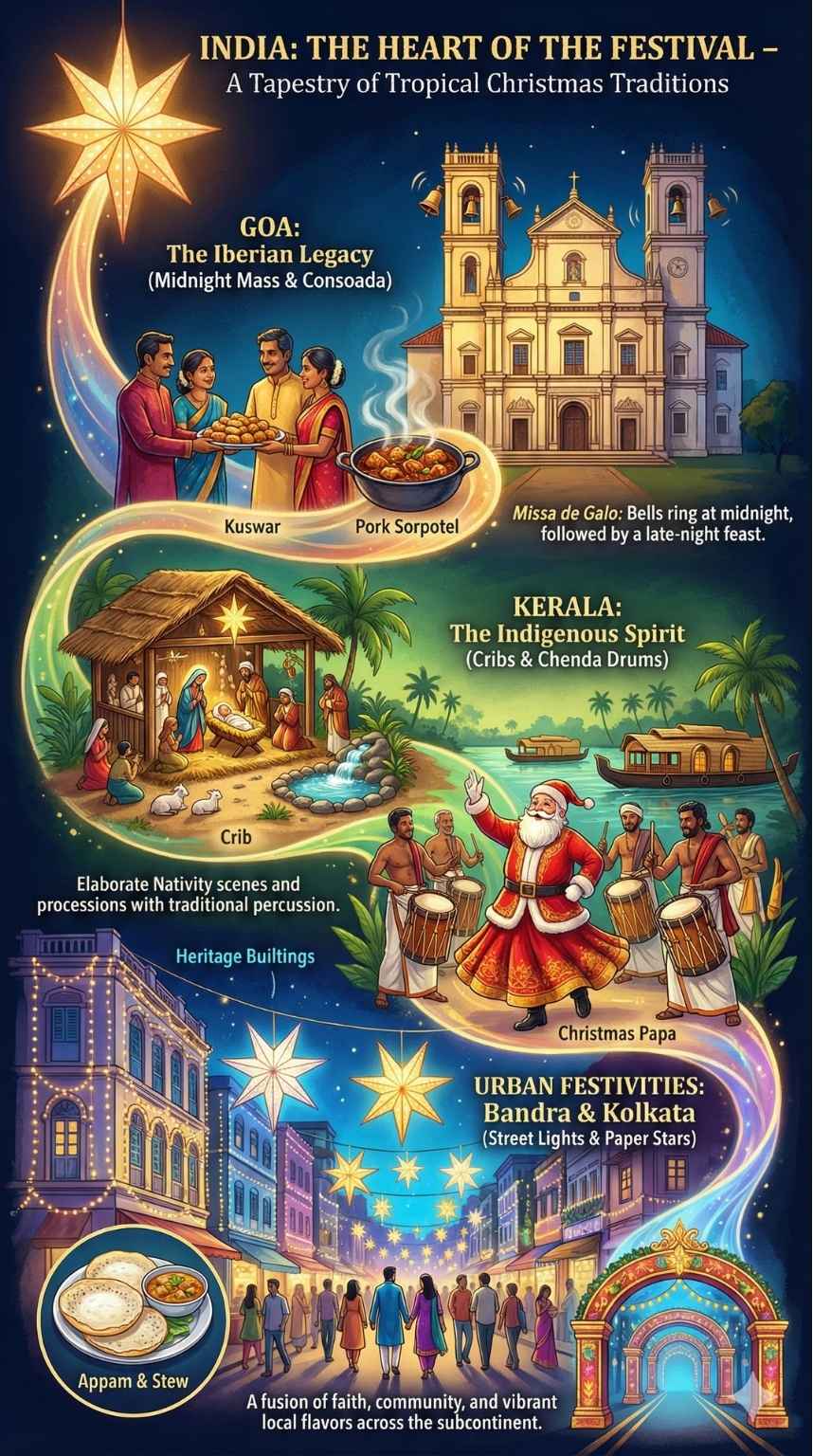
India is often the most regionally diverse Christmas story in South Asia. The scale and visibility of Christmas Eve can vary dramatically by state, city, and community, but a few patterns show up widely: churches decorated with stars and lights, the steady presence of carol singing, and the central importance of a late-night Christmas Eve service. In many Indian settings, Christmas is also popularly referred to as “Bada Din” (“the big day”), a phrase that signals how the holiday has entered common cultural vocabulary even beyond Christian communities.
Goa: coastal warmth and late-night celebration
Goa frequently represents the “holiday postcard” version of Christmas Eve in India. The atmosphere often blends devotion and celebration in a way shaped by church culture and tourism. Many families treat Midnight Mass as the emotional center of the night, and afterwards, neighborhoods and gathering spaces can feel lively. The warm coastal environment supports an outdoorsy kind of celebration—one that doesn’t depend on winter weather to feel festive.
Kerala: deep church tradition and family-centered Christmas Eve
Kerala offers a different texture, shaped by long-established Christian communities and strong church traditions. Preparations for Christmas are often woven into community life, and Christmas Eve can feel like a spiritual night and a family night at once. Food plays a major role after church, but the broader meal can be as important as dessert. Kerala’s Christmas Eve is often remembered as much for its feeling—family conversations, shared meals, and the glow of church lights—as for any single public spectacle.
Kolkata: Park Street lights and the city-wide festive mood
Kolkata’s Christmas Eve—especially around Park Street—stands out for its public street culture. Lights, crowds, restaurants, and movement can make December 24 feel like a city festival. While churches remain central for worshipers, the wider city vibe becomes a story in itself, with people arriving simply to experience the atmosphere.
Northeast India: choirs, carols, and community energy
In the Northeast, Christmas Eve may feel especially musical. Choir performances and community carol culture are often part of how the season is experienced. Even without massive street scenes, the intensity of participation—singing, visiting, and gathering—can make December 24 feel profoundly communal.
India’s Christmas Eve food notes
Food in India on Christmas Eve often includes festive cake—plum cake is frequently mentioned in many households—along with cookies and sweets. But dessert is only one part of a broader culinary story that changes region to region. Many households treat the post-service meal as the true “Christmas Eve table,” where family recipes take center stage, and guests are welcomed warmly.
Bangladesh: “Boro Din/Bara Din,” church-centered celebrations, and winter flavors
In Bangladesh, Christmas Eve is most visible around churches and Christian neighborhoods, where decorations, services, and gatherings create bright pockets of celebration. Many people refer to Christmas as “Boro Din” or “Bara Din,” meaning “the big day,” which captures how the holiday is recognized in cultural language, even when it is not a mainstream public festival for everyone.
Dhaka and major cities’ Christmas Eve energy
For Christian families, December 24 is often a day of preparation leading into an evening or late-night church service. Churches may hold special programs, and choirs may perform carols in Bengali and English. The atmosphere can feel intimate and community-focused, with people greeting neighbors, visiting relatives, and sharing food as part of the celebration.
Winter treats and the Bangladesh Christmas table
December is winter in Bangladesh, and winter is known for beloved local treats. That means Christmas gatherings can naturally blend with broader seasonal food culture. Depending on region and family tradition, winter snacks and sweets such as pitha may be part of the seasonal table, alongside cakes and cookies.
Sri Lanka: Midnight Mass, Colombo sparkle, and the coastal holiday mood
Sri Lanka’s Christmas Eve often reflects a balance between church-centered worship and a wider seasonal atmosphere. For many families, the core of December 24 remains the church service, particularly a late-night Mass or vigil. The moment of entering a decorated church, hearing carols performed by a choir, and taking part in worship as the night deepens can be the emotional peak of the season.
Colombo: city lights and festive dining
Around Colombo, public spaces can feel visibly festive. Hotels and restaurants often create Christmas Eve dining experiences, and city streets may feature seasonal lighting that makes the evening feel bright and welcoming. Christmas Eve becomes layered: spiritual and community-driven for worshipers, and seasonal through food and décor for those joining the city atmosphere.
Coastal areas and strong church communities
In areas known for strong church communities, Christmas Eve can take on an especially lively character. The warm night air supports movement—people traveling between services, homes, and gatherings—without the constraints of harsh winter.
Pakistan: worship-centered Christmas Eve and community warmth
In Pakistan, Christmas Eve is strongly anchored in church life for those who celebrate it. December 24 tends to focus on attending a Christmas Eve service—often a late-night Mass—followed by community gatherings and family meals. Carol singing can play an important role, and choirs may perform special pieces that heighten the feeling of anticipation.
Large-city services and public organizations
In large cities and around prominent churches, Christmas Eve may involve careful public organization because gatherings can be large, and movement around worship sites increases. This shapes the experience of arriving and leaving, while community warmth remains central.
Nepal: church worship in Kathmandu and a growing city-season layer
In Nepal, Christmas Eve is most visibly celebrated in and around Kathmandu, where churches host Christmas Eve services and where the holiday season is also reflected in commercial and tourist areas. For Christian families and communities, December 24 is centered on worship, nativity themes, music, and gathering with neighbors and relatives.
Kathmandu: services, music, and nativity themes
Churches may feature nativity plays or choir performances, creating a setting that feels both solemn and joyful. The gathering after church—greetings, sweets, and family time—often becomes part of the night’s emotional core.
Tourist districts: seasonal décor and nightlife
Restaurants and venues in popular districts sometimes hold themed events, and decorations in commercial areas may reflect the season. This produces a dual experience: a faith-centered Christmas Eve inside churches and family homes, and a broader seasonal atmosphere in entertainment areas.
Maldives: Christmas Eve as a curated resort experience
The Maldives is predominantly Muslim, so Christmas Eve is not generally experienced as a nationwide public religious celebration. However, the Maldives has a major tourism economy, and in resort islands, December 24 is often treated as a key holiday program night. Resorts may host special dinners, performances, and festive décor aimed at international visitors, creating an experience that is planned and curated.
The role of food: cakes, sweets, and the Christmas Eve table
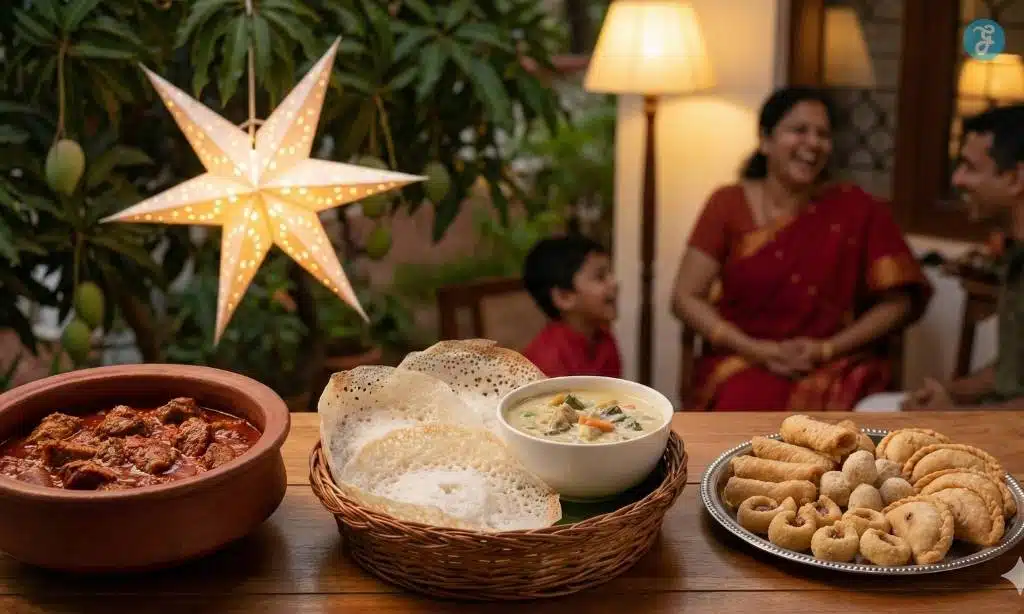
Across South Asia, food is not a side note to Christmas Eve—it’s one of the main ways families express celebration and care. The details vary, but the pattern is similar: after church, people gather for sweets, cake, tea, and a more substantial meal, often shared with relatives or neighbors.
How food traditions differ by place
In many Indian settings, festive cakes, cookies, and sweets are common, with plum cake frequently mentioned in many households. In Bangladesh, winter treats and local sweets may blend into Christmas gatherings alongside cakes and cookies. In Sri Lanka, both home dining and seasonal restaurant experiences can be part of the night.
In Pakistan and Nepal, the post-service meal often becomes the emotional center of family time—less about showcasing a particular dish and more about gathering around a table that feels abundant and welcoming. In the Maldives, food may appear as a curated resort dinner designed to create a celebratory holiday mood.
Food mood table (quick scan)
| Place | What the Christmas Eve food story often feels like | Common seasonal themes |
|---|---|---|
| India | Festive cakes plus regionally specific home meals after Mass | Plum cake in many areas; cookies and sweets; family feasts |
| Bangladesh | Community sharing with winter-season flavors | Cakes/cookies alongside local winter sweets and treats |
| Sri Lanka | A mix of family meals and city-season dining experiences | Sweets, festive menus, warm hospitality |
| Pakistan | Post-service family meals and sweets as a celebration | Home gathering, sharing, and community warmth |
| Nepal | Church-night gatherings followed by family food and visiting | Sweets, tea, and hospitality-driven meals |
| Maldives (resorts) | Curated holiday dinners designed for guests | Gala dining, themed menus, and entertainment |
Music and community: why carols matter so much here
Carols in South Asia are more than seasonal background music. They are a form of community participation that blends worship with social connection. Choirs practice intensively, and Christmas Eve becomes a moment when that effort is shared publicly. In many communities, carols are sung in multiple languages—English alongside local languages—so the soundscape reflects both global tradition and local identity. In some places, carol groups visit homes or perform in neighborhood spaces, turning singing into a moving celebration. In others, the most powerful carol experience happens during the church service itself, when the entire congregation joins in.
Cities, crowds, and Christmas streets: the public side of December 24
A modern reality of Christmas Eve in South Asia is that it can become a public event even beyond church boundaries—especially in large cities and famous festive districts. Streets known for Christmas lights and restaurants can become packed, and movement around prominent churches increases. This public side doesn’t replace the religious core; instead, it runs parallel to it. Some people go primarily for worship, some for the seasonal street vibe, and many for both. The result is a night that feels layered: sacred time for worshipers, social time for families, and seasonal time for cities.
How to experience Christmas Eve respectfully in South Asia
If you attend a church service, dress modestly, arrive early, and avoid disruptive photography—especially during prayer. If you’re invited to a home gathering, bring a small, thoughtful item if appropriate, greet family members warmly, and show genuine interest in local traditions. Christmas Eve hospitality in South Asia is often generous and heartfelt; responding with gratitude and respect is the best way to be welcomed into the celebration.
At-a-glance: what Christmas Eve in South Asia often looks like
| Country | The signature Christmas Eve feeling | What most commonly anchors the night | What stands out to visitors |
|---|---|---|---|
| India | Regionally diverse; can be church-centered or city-wide festive | Midnight Mass, carols, nativity scenes | Big lights in certain city zones; strong choir culture in some regions |
| Bangladesh | Community-focused and church-centered | Christmas Eve services and gatherings | Winter-season treats alongside cakes; close-knit community celebrations |
| Sri Lanka | Church worship plus strong city-season sparkle | Late-night Mass and carols | Colombo lights and seasonal dining; warm coastal holiday mood |
| Pakistan | Worship-centered and community-driven | Midnight Mass and church gatherings | Strong congregation focus; careful organization around large gatherings |
| Nepal | Church celebrations plus a small city-season layer | Christmas Eve services and music | Kathmandu visibility: a mix of worship and commercial festive spaces |
| Maldives | Mostly tourism-led celebration in resorts | Curated resort programming on Dec 24 | Planned gala dinners, entertainment, and décor for guests |
Frequently Asked Questions about Christmas Eve in South Asia
1) Why is Christmas Eve such a big deal in South Asia compared to Christmas Day?
In many communities, December 24 is the most “active” part of the season because it is when preparation and celebration converge. Families decorate, cook, dress up, and attend late-night services on the same day, creating a feeling of momentum that peaks at midnight. Christmas Day can then become more restful—focused on family meals and visits—while Christmas Eve carries the emotional build-up and the climactic moment of welcoming Christmas.
2) What happens during Midnight Mass in South Asia?
Midnight Mass in South Asia generally follows the same spiritual purpose as elsewhere—worship, scripture, prayer, and celebration of the nativity—but the experience is shaped by local community culture. Choir performances are often a highlight, and you may hear carols in both English and local languages. The atmosphere can be deeply joyful, especially as the service ends and people greet each other outside, often sharing sweets and exchanging warm holiday wishes.
3) Is Christmas Eve celebrated publicly everywhere in South Asia?
It depends on the country and the city. In places with large Christian communities or famous festive districts, Christmas Eve can be highly visible in public streets and commercial spaces. In other areas, it may remain mostly within church communities and family gatherings. Even within the same country, one neighborhood can feel intensely festive while another feels like a normal December night—so the most accurate answer is that Christmas Eve visibility is local rather than uniform.
4) What foods are common on Christmas Eve in South Asia?
You’ll often find cakes, cookies, and sweets across the region, but the “Christmas Eve table” varies widely by culture and household. In many parts of India, festive cakes—often including plum cake—are popular alongside larger home meals. In Bangladesh, Christmas gatherings may blend with winter-season sweets and treats. In Sri Lanka, families may celebrate with home meals or seasonal dining experiences in the city. The most consistent element isn’t a single dish; it’s the shared act of eating together after worship.
5) What’s the best way for a visitor to take part respectfully?
The simplest approach is to treat Christmas Eve as both a religious event and a community gathering. If you attend a church service, dress modestly, arrive early, and avoid disruptive photography—especially during prayer. If you’re invited to a home gathering, bring a small, thoughtful item if appropriate, greet family members warmly, and show genuine interest in local traditions. Christmas Eve hospitality in South Asia is often generous and heartfelt; responding with gratitude and respect is the best way to be welcomed into the celebration.
Final Words: A Warm Welcome to Christmas
Christmas Eve in South Asia is best understood as a night of anticipation and arrival. It is the evening when preparation turns into participation—when lights are switched on, choirs sing, nativity scenes draw visitors, and families move toward worship and togetherness. The tropical environment doesn’t dilute the holiday; it reshapes it. Warm air encourages open-air celebration, coastal areas add a vacation mood, and cities turn certain streets into seasonal landmarks.
At the same time, the spiritual core remains steady. For many families, the most meaningful moment is still the late-night church service—often Midnight Mass—followed by greetings, sweets, and a shared meal at home. The region’s diversity means the details will always change by place and community, but the emotional arc of December 24 remains recognizable across borders: gather, sing, worship, share, and welcome Christmas.






























