

Choosing eco-friendly materials for a sustainable home is no longer a niche concern. It is becoming a baseline expectation for homeowners, buyers, and regulators. As 2026 approaches, the conversation around materials extends beyond style and price. It now includes carbon footprint, human health, durability, and long-term value.
This shift creates both opportunity and confusion. Product labels are crowded with green claims. New materials appear every year. At the same time, familiar options such as wood, concrete, and steel face fresh scrutiny over their climate impact.
This guide looks at how to navigate those choices. It focuses on the principles and practical decisions that help you select eco-friendly materials for a sustainable home in 2026, whether you plan a new build or a renovation.
Why Eco-Friendly Materials Matter for a Sustainable Home in 2026
Homes shape environmental impact in two main ways. The first is operational energy: the electricity and fuel used for heating, cooling, and appliances. The second is embodied carbon: the emissions released when materials are extracted, manufactured, transported, and installed.
For decades, policy and design focused on operational energy. Better insulation, efficient windows, and improved heating systems all reduced energy use. That work continues. However, as grids become cleaner and homes use less energy, embodied carbon stands out more clearly.
Each choice you make about structure, insulation, finishes, and furnishings affects that embodied footprint. Some materials, such as mass timber or recycled steel, require less energy to produce than traditional options. Others lock up carbon that plants absorbed as they grew. Still others, especially high-cement concrete, can carry a heavy climate load.
Health is another driver. Many conventional paints, adhesives, and composite boards release volatile organic compounds and other pollutants into indoor air. Over time, that off-gassing can contribute to respiratory problems, headaches, and general discomfort. Eco-friendly materials for a sustainable home aim to minimise such emissions.
Finally, market trends matter. Buyers increasingly ask about energy performance and materials. Insurance and lending markets are watching climate risk. As a result, homes built with durable, low-carbon, and low-toxicity materials may hold their value better in the coming decade.
Core Principles for Choosing Eco-Friendly Materials for a Sustainable Home
In a crowded market, it helps to step back from brands and trends. Start with a set of principles you can apply to any category, from foundations to flooring.
Look at Life-Cycle and Embodied Carbon
Eco-friendly materials for a sustainable home perform well over their whole life cycle. That means they use fewer resources and produce fewer emissions from extraction to disposal.
When you compare products, look for information on embodied carbon or life-cycle assessments. These may appear as environmental product declarations or in technical datasheets. As a rule of thumb, prefer materials that:
-
Use less energy to manufacture.
-
Contain recycled or rapidly renewable content.
-
Allow reuse, recycling, or safe biodegradation at the end of life.
For example, timber components often have far lower embodied carbon than comparable steel or concrete elements. Recycled metal roofing can offer durability with lower emissions than virgin metals. Bio-based insulation materials can replace more carbon-intensive alternatives while also improving indoor comfort.
Check Certifications and Standards
Green labels vary in depth and credibility, so treat them as starting points, not guarantees. Still, independent certifications are useful tools when choosing eco-friendly materials for a sustainable home.
Look for:
-
Credible forestry certifications for wood and bamboo, indicating responsible management.
-
Low- or zero-VOC labels for paints, sealants, varnishes, and adhesives.
-
Recycled content labels for metal, glass, and certain composites.
-
Third-party environmental product declarations, where available, for high-impact materials such as concrete and insulation.
Certifications do not replace careful reading. However, they can help you filter options quickly and identify manufacturers that treat sustainability as more than a marketing line.
Prioritise Durability and Maintenance
A material that fails early, or needs constant replacement, rarely counts as sustainable. Durability matters as much as recycled content or a green logo.
Ask how a product performs in your climate. Consider moisture, temperature swings, pests, and sunlight. A finish that lasts decades without repeated sanding or repainting often has a lower life-cycle impact than a delicate “eco” alternative that needs frequent repair.
In practice, this means choosing robust flooring for high-traffic areas, weather-resistant exterior cladding, and fittings that can be repaired rather than replaced.
Think Local, Reused and Recycled
Transporting heavy materials across long distances adds to their footprint. Whenever possible, use local stone, brick, or timber and work with nearby manufacturers.
Reused and reclaimed materials also play a key role in a sustainable home. Salvaged brick, reclaimed wood flooring, or refurbished doors and windows keep existing resources in circulation. They reduce demand for new extraction and add character that new materials often cannot match.
Structural and Envelope Choices: Building the Shell of a Sustainable Home
The structural shell of a house locks in most of its embodied carbon. Here, decisions have long-term consequences.
Timber and Engineered Wood
Engineered wood products such as cross-laminated timber and laminated veneer lumber are now widely used in residential and mid-rise construction. They store carbon absorbed by trees and often require less energy to process than steel or concrete.
For a sustainable home in 2026, timber offers several advantages:
-
Lower embodied carbon compared with many conventional materials.
-
Lighter weight, which can reduce foundation requirements.
-
Precision prefabrication, which limits waste on-site.
To keep timber truly eco-friendly, ensure it comes from responsibly managed forests and is treated or detailed correctly for your climate.
Low-Carbon Concrete and Masonry
Concrete remains a core material in many homes, especially for foundations and slabs. However, not all concrete is equal.
Lower-carbon options substitute part of the cement with supplementary materials such as slag, fly ash, or calcined clays. Emerging bio-based concretes and blocks incorporate plant fibres or agricultural waste. For a sustainable home, you can:
-
Use low-carbon mixes where structural requirements allow.
-
Limit concrete to areas where its strength and durability are essential.
-
Combine concrete with timber or masonry to reduce overall volume.
Masonry made with recycled aggregates or locally sourced stone can further reduce impact.
Recycled Metal and High-Performance Roofing
Roofs and cladding protect the structure from weather and often drive the building’s visual identity. Recycled metal roofing offers a long service life and can reflect solar heat, cutting cooling loads in warm climates.
When evaluating roofing and cladding options:
-
Look for recycled content in metals.
-
Consider tile or slate sourced locally, where available.
-
Weigh the maintenance and replacement cycle of asphalt shingles against more durable alternatives.
The goal is not perfection but a balance of low embodied carbon, durability, and energy performance.
Interior Materials: Where Most Homeowners Feel the Difference
Inside the home, materials shape daily experience. They also influence indoor air quality and maintenance costs.
Sustainable Flooring for a Sustainable Home in 2026
Floors carry heavy wear. They must tolerate friction, impacts, and spills. At the same time, they cover large areas and drive both the aesthetic and the environmental profile of interiors.
Options include:
-
Bamboo: A rapidly renewable grass that can be processed into durable boards. Quality varies, so check manufacturing standards and adhesives.
-
Cork: Harvested from bark without cutting down trees. It provides resilience underfoot and natural acoustic benefits.
-
Certified hardwood: Responsibly sourced timber with a long life when properly maintained.
-
Linoleum: Made from linseed oil, wood flour, and natural resins, it has a long record of use and avoids many synthetic plasticisers.
-
Recycled-content tile or terrazzo: Incorporating recycled glass or stone fragments.
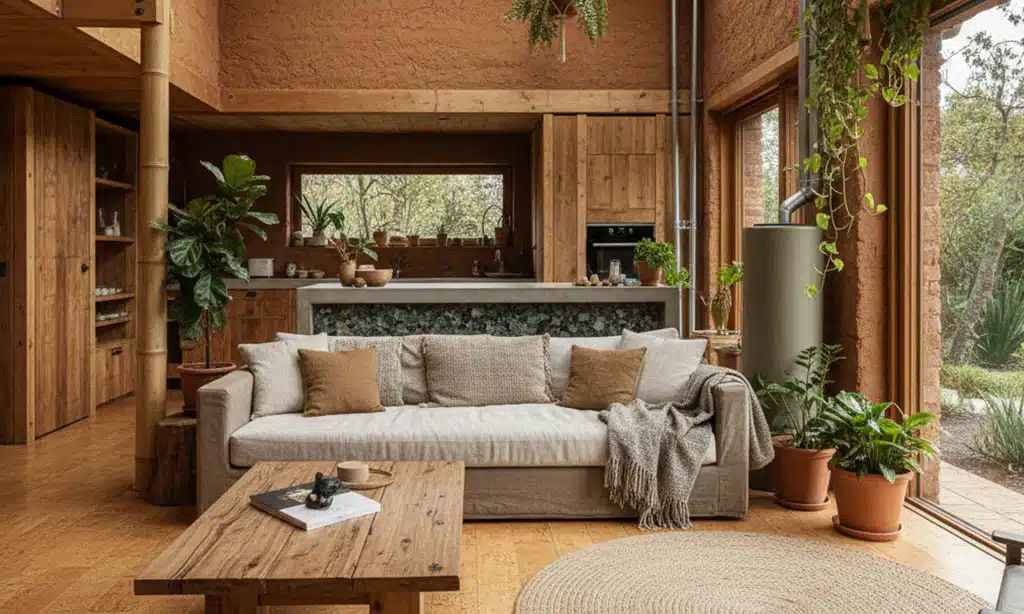
Polished concrete, when paired with low-carbon mixes and efficient heating, can also work in some sustainable homes. It suits modern aesthetics and can double as a thermal mass to smooth temperature swings.
Insulation and Wall Systems with Lower Impact
Insulation helps cut operational energy, but the insulation material itself has an environmental footprint. Eco-friendly materials for a sustainable home in 2026 increasingly include bio-based and recycled options.
Common choices include:
-
Cellulose insulation is often made from recycled paper treated for fire and pest resistance.
-
Wood-fibre boards which provide both insulation and acoustic benefits.
-
Sheep’s wool or other natural fibres, valued for their moisture-buffering properties.
-
Recycled denim or cotton, reusing textile waste.
Conventional foams also evolve. Some manufacturers now offer products with reduced blowing-agent emissions and recycled content. Where code and performance requirements demand high insulating values in thin assemblies, these improved foams can play a role.
Emerging materials such as mycelium-based panels and other bio-composites show how quickly the field is changing. While still niche, they point to a future where walls can be grown as much as manufactured.
Paints, Finishes and Adhesives That Protect Indoor Air
Walls, ceilings, cabinets, and trim make up much of a home’s visual surface. The products used to seal and finish them strongly influence indoor air quality.
To keep these layers eco-friendly:
-
Choose low- or zero-VOC paints from reputable manufacturers.
-
Use water-based varnishes and sealers where appropriate.
-
Avoid strong solvent-based products unless no alternative exists for a specific task.
-
Specify formaldehyde-free adhesives and resins for composite boards and laminates.
These choices reduce odours and help sensitive occupants breathe more easily.
Countertops, Cabinets, and Built-Ins
Kitchens and bathrooms are material-intensive spaces. Countertops, cabinets, and built-ins play a major role in making them part of a sustainable home.
Options to consider:
-
Recycled glass or composite stone with significant recycled content.
-
Solid wood or veneered cabinets made from certified timber.
-
Plywood and panels that are formaldehyde-free or use more benign binders.
-
Refaced or refurbished units, which extend the life of existing cabinetry instead of replacing it.
Function matters as much as material. Well-designed storage reduces clutter and makes spaces flexible, which can delay the need for future renovations.
Room-by-Room Guide to Eco-Friendly Materials for a Sustainable Home
Applying the principles of eco-friendly materials for a sustainable home becomes easier when you think room by room.
Kitchen and Dining
The kitchen often acts as the heart of the home and uses many materials and appliances.
Key moves include:
-
Durable, repairable countertops rather than delicate finishes that chip easily.
-
Cabinet carcasses built from certified or low-emission boards.
-
Fronts and doors that can be repainted or replaced without scrapping the whole unit.
-
Efficient appliances that reduce electricity and water use over their lifespan.
-
Long-lasting tapware and sinks with replaceable components.
A modest layout with smart storage can be more sustainable than a sprawling plan that demands more materials and energy.
Bathrooms and Wet Areas
Bathrooms face constant moisture and require careful detailing.
For a sustainable home:
-
Use non-slip tiles with recycled content where possible.
-
Seal walls with moisture-resistant boards that avoid high emissions.
-
Choose low-flow showerheads and taps that maintain comfort while reducing water use.
-
Avoid high-VOC sealants in small, poorly ventilated spaces.
Good ventilation and waterproofing prevent mould and damage, protecting both materials and health.
Living Spaces and Bedrooms
Living rooms and bedrooms benefit most from calm, healthy materials.
Consider:
-
Natural textiles such as wool, cotton, and linen for rugs, throws, and curtains.
-
Low-emission flooring such as cork, certified wood, or well-sealed bamboo.
-
Plastered or painted walls finished with low-VOC products.
-
Biophilic touches: timber, stone, plants, and daylight to support wellbeing.
Furniture plays a quiet but important role. Solid wood pieces that can be repaired, reupholstered, or passed on will almost always beat fast-furniture alternatives in sustainability terms.
Exterior and Outdoor Spaces
The outside of a sustainable home must resist the weather while supporting local ecology.
Good options include:
-
Durable cladding such as fibre-cement, timber with appropriate treatment, or recycled-content composites.
-
Decking made from responsibly sourced timber or composites that reuse plastic and wood waste.
-
Permeable paving and local stone for paths.
-
Planting schemes that use native or climate-appropriate species, reducing irrigation and chemical inputs.
Outdoor choices influence stormwater, heat build-up, and the wider landscape, extending the impact of your material decisions.
Budget, Trade-Offs, and Avoiding Greenwashing in 2026
Not every project can specify the most advanced low-carbon material in every location. Trade-offs are inevitable. The key is to spend where it matters most.
What Truly Reduces Impact
When selecting eco-friendly materials for a sustainable home, focus investment on:
-
Components that are hard to replace, such as structure, envelope, and major finishes.
-
Elements that cover large areas, such as insulation, roofing, and flooring.
-
Products with high embodied carbon, where lower-carbon alternatives exist.
Be cautious with products that rely on vague language such as “eco”, “natural”, or “green” without clear data. Look for specific claims: percentage of recycled content, quantified emission reductions, or independently verified labels.
Questions to Ask Builders, Designers, and Suppliers
Clear questions help cut through marketing. For each major material, ask:
-
Where is this material produced, and from what raw resources?
-
What is its expected lifespan in this application?
-
Is it repairable, reusable, or recyclable at the end of its life?
-
Does it contain any substances of concern, and what emission testing has been done?
-
What independent certifications or declarations support its environmental claims?
Professionals who work regularly with sustainable home materials should handle these questions with ease. If answers are vague, consider alternatives.
A Practical Checklist for Selecting Eco-Friendly Materials for a Sustainable Home
To bring all of this together, use a simple step-by-step framework.
Step 1: Define Your Priorities
Clarify your goals. Do you want to:
-
Cut embodied carbon as much as possible?
-
Improve indoor air quality for sensitive occupants?
-
Use local and natural materials?
-
Minimise maintenance over decades?
Rank these aims. They will guide your decisions when trade-offs arise.
Step 2: Map the Big Material Decisions
List the major components of your project: structure, roof, insulation, floors, walls, cabinets, countertops, windows, and exterior finishes. Identify which items:
-
Use the greatest volume of material.
-
It will be the hardest or most expensive to change later.
Focus your research on those first.
Step 3: Shortlist Options with Clear Data
For each component, create a short list of materials that:
-
Suit your climate and local regulations.
-
Have available information on embodied carbon, emissions, or certifications.
-
Fit within your broad budget range.
Drop options that lack transparency or basic environmental data.
Step 4: Compare Life-Cycle Value, Not Just Upfront Cost
A slightly higher price today can make sense if a material lasts longer, needs less maintenance, or significantly reduces energy use. Consider:
-
Expected lifespan and warranty.
-
Cleaning and maintenance requirements.
-
Impact on energy performance.
When you can, look at the cost over 20 or 30 years, not just at the point of purchase.
Step 5: Confirm Installation and Detailing
Even the best material can fail if installed poorly. Verify that:
-
Builders and tradespeople are familiar with the products you choose.
-
Details such as moisture control, ventilation, and thermal breaks are properly designed.
-
Waste on site will be minimised and, where possible, recycled.
Correct installation protects both performance and warranties.
Step 6: Document Decisions for Future Owners
Keep a simple record of the eco-friendly materials used in your sustainable home. Note:
-
Product names and manufacturers.
-
Certifications and ratings.
-
Maintenance recommendations.
Future owners, appraisers, and inspectors may all benefit from this information. It supports the long-term value of your sustainability choices.
Looking Ahead: How Today’s Choices Shape Tomorrow’s Sustainable Home
Homes built or renovated in 2026 will stand for decades. The eco-friendly materials for a sustainable home that you select now will influence not only your bills and comfort, but also emissions, indoor air quality, and resilience to future changes.
The good news is that options continue to broaden. Low-carbon concretes, engineered timber, recycled composites, natural insulations, and low-emission finishes now stand alongside traditional materials. With clear principles and the right questions, you can cut through marketing noise and design a home that aligns with both environmental responsibility and everyday practicality.
Sustainability is not a single product or label. It is the result of many informed choices, made step by step, from the foundations to the final coat of paint.































