

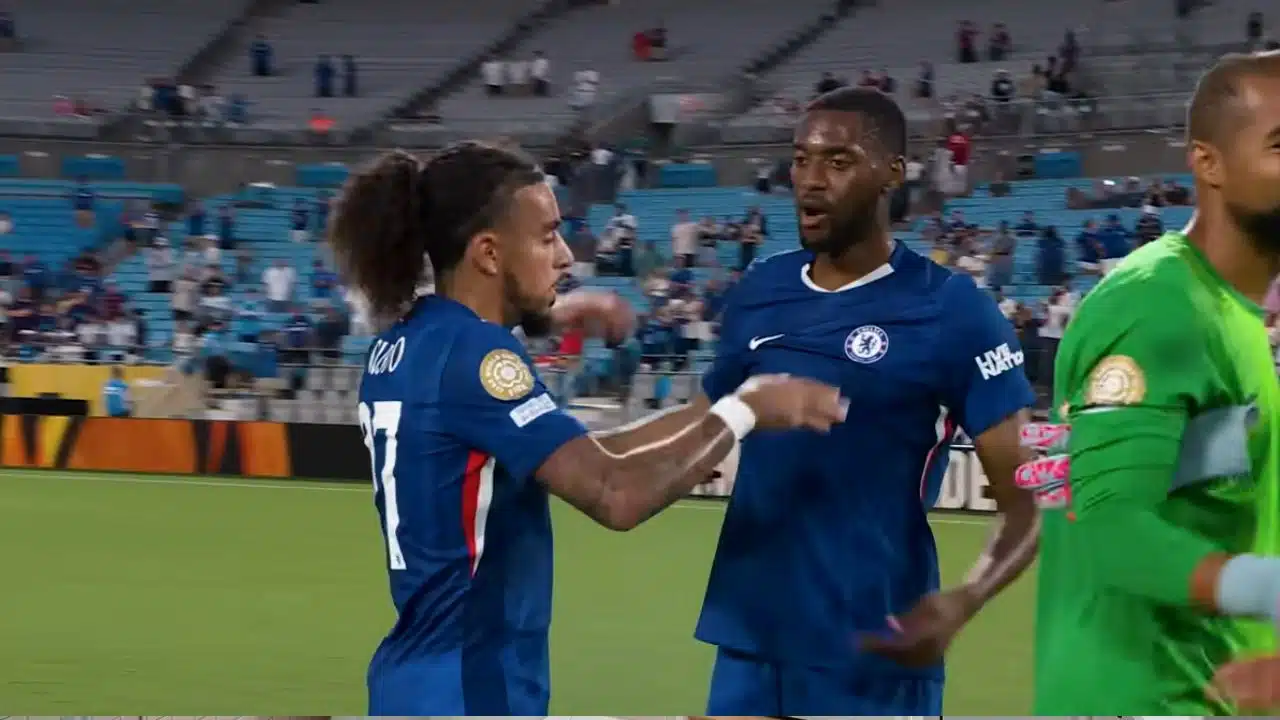
Chelsea made history on Saturday night by becoming the first English club to reach the quarterfinals of the newly expanded 2025 FIFA Club World Cup. The Premier League giants secured a hard-fought 4-1 win over Portugal’s Benfica in an eventful and weather-disrupted match in Charlotte, North Carolina.
The clash, held at Bank of America Stadium, unfolded in dramatic fashion, including a brilliant free-kick opener, a late penalty equalizer, an extended lightning delay, and extra-time heroics that ultimately sealed Chelsea’s progress.
A Tactical First Half: Chelsea Take Control Early
From the first whistle, Chelsea established dominance with their passing rhythm and pressing style under manager Enzo Maresca. The Blues controlled possession and dictated the pace of the game, keeping Benfica largely pinned in their own half.
Despite the goalless scoreline at halftime, Chelsea created the better chances. Marc Cucurella came closest to breaking the deadlock when he curled a powerful shot from inside the area, only for Benfica defender Antonio Silva to clear it off the line with goalkeeper Anatoliy Trubin beaten. Cole Palmer also threatened with a close-range strike after being played in on goal, but Trubin managed to keep it out with a reflex save at the near post.
Benfica, meanwhile, struggled to find any attacking rhythm. Their few chances came from quick counters, but Chelsea’s midfield trio of Moisés Caicedo, Conor Gallagher, and Kiernan Dewsbury-Hall ensured control in the center of the pitch.
Reece James Scores a Stunning Free Kick
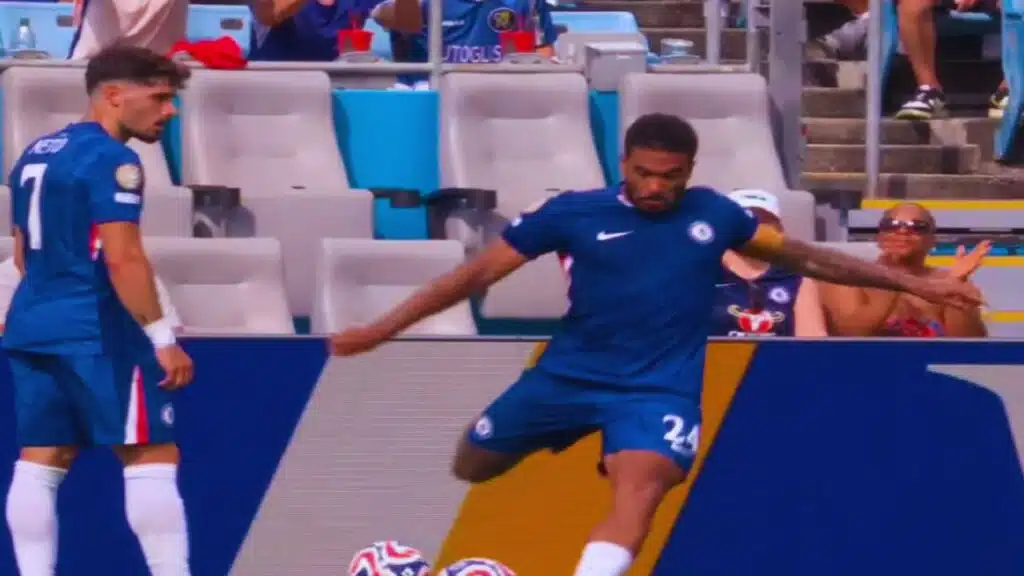
The breakthrough finally came in the 64th minute and in some style. Chelsea captain Reece James stepped up to take a free kick from a tight angle on the left wing. What looked like an intended cross turned into a moment of genius as James curled the ball inside the near post, catching Trubin off guard. The goal sent the Chelsea bench and fans into wild celebration, rewarding their dominance in the match.
James’ goal was particularly meaningful as it marked his return to top form after injury struggles in previous seasons. It also added to Chelsea’s reputation as a set-piece threat in the tournament.
Benfica’s Equalizer Comes in the Final Moments
Just when it seemed Chelsea would hold out for a regulation-time win, drama unfolded in stoppage time. In the fifth minute of injury time, Benfica launched a desperate attack that led to a controversial handball decision.
Right-back Malo Gusto was adjudged to have handled the ball while trying to block a cross. The decision, made after a VAR review, was contentious as Gusto’s arm appeared to be in a natural position. Nevertheless, referee Ismail Elfath awarded the penalty after being advised by the VAR to take a second look.
Veteran attacker Ángel Di María stepped up in stormy conditions and calmly slotted the penalty into the bottom corner, leveling the match at 1-1 and forcing extra time.
Severe Lightning Storm Forces Unexpected Two-Hour Delay
Just minutes after Benfica’s equalizer, the match was halted due to lightning strikes detected in the area. Under U.S. public safety protocols, all outdoor sporting events must be suspended for at least 30 minutes when lightning is seen or thunder is heard.
With only four minutes left in regular time, referee Elfath paused the match, and players were escorted to the dressing rooms. The delay ultimately extended to nearly two hours, frustrating both teams and fans. Chelsea players, in particular, were visibly upset, as they had victory within reach before the equalizer and were eager to close out the match.
The storm and unusually high temperatures — reaching above 34°C (93°F) — raised concerns about playing conditions in the U.S., which is set to co-host the 2026 FIFA World Cup. It marked the sixth time in Club World Cup history that a match was interrupted due to extreme weather.
Extra Time: Chelsea Turn Up the Heat
After the delay, Chelsea emerged with renewed energy and urgency. It didn’t take long for them to restore their lead.
In the 96th minute, substitute Christopher Nkunku found the net with a composed finish after a swift buildup involving Dewsbury-Hall and Caicedo. The Frenchman’s goal shifted momentum back in Chelsea’s favor and deflated Benfica, who were still reeling from the loss of rhythm due to the lengthy delay.
Two minutes later, Benfica’s task became even more difficult. Forward Gianluca Prestianni, who had earlier received a yellow card during the celebration of Di María’s equalizer, was shown a second yellow for a clumsy foul in midfield. The red card reduced Benfica to 10 men, giving Chelsea more space to operate.
In the second period of extra time, Chelsea added two more goals. Pedro Neto, who had been lively since coming off the bench, made it 3-1 with a clinical finish inside the box following a low cross from James. Dewsbury-Hall then capped off a brilliant individual performance by scoring the fourth in the 119th minute, striking a powerful shot past Trubin after a clever one-two with Palmer.
The final scoreline of 4-1 reflected Chelsea’s superiority in all areas of the game.
Palmeiras Down Botafogo in Another Extra-Time Battle
In Saturday’s earlier match, Brazilian powerhouse Palmeiras secured their place in the quarterfinals with a 1-0 extra-time win over domestic rival Botafogo at Lincoln Financial Field in Philadelphia.
The match was a tense affair, filled with attacking intent and end-to-end action. Both teams had multiple opportunities, and fans were treated to a high-energy encounter that featured 35 combined shot attempts.
Paulinho Delivers the Decisive Moment
After 90 minutes without a goal, Palmeiras broke the deadlock in the 100th minute through Paulinho. The young attacker picked up the ball on the right wing, danced past two defenders with a brilliant cut inside, and curled a left-footed shot into the far corner beyond goalkeeper John’s reach.
The goal proved decisive, as Botafogo, despite several late attempts and corners, couldn’t find a way back into the game.
Late Red Card Doesn’t Stop Palmeiras
Palmeiras were reduced to 10 men in the 116th minute when captain Gustavo Gomez received a second yellow card for a tactical foul in midfield. The defender brought down Botafogo’s Igor Jesus to halt a counterattack. Despite the numerical disadvantage, Palmeiras held firm defensively in the final minutes.
The match drew over 33,000 fans, many of whom created a lively South American-style atmosphere with drums, chants, and flags. The setting gave a preview of the vibrant energy expected in the 2026 World Cup.
Post-Match Comments Reflect Team Spirit
Speaking after the match, Palmeiras defender Bruno Fuchs praised the team’s mentality:
“Coach has been saying from the start that we’re chasing a dream. Dreaming costs nothing, and we keep that dream alive with every game. We’re proud to have qualified. We stay humble and focus on the next match.”
Quarterfinal Clash: Chelsea vs Palmeiras Set to Ignite
With both Chelsea and Palmeiras advancing, their quarterfinal matchup promises to be one of the highlights of the tournament. The two clubs previously met in the 2021 Club World Cup final in Abu Dhabi, which Chelsea won 2-1 after extra time. Palmeiras will be looking to avenge that defeat, while Chelsea aim to continue their run and move closer to the title.
The clash is expected to draw global attention, with key battles across the pitch — including James vs. Paulinho and midfield duels between Gallagher and Veiga — likely to define the outcome.
Saturday’s matches at the FIFA Club World Cup showcased the best of global football: drama, emotion, high-level skill, and the unpredictable power of nature. With Chelsea and Palmeiras through, the road to the final is heating up, promising more unforgettable moments in the days ahead.






























