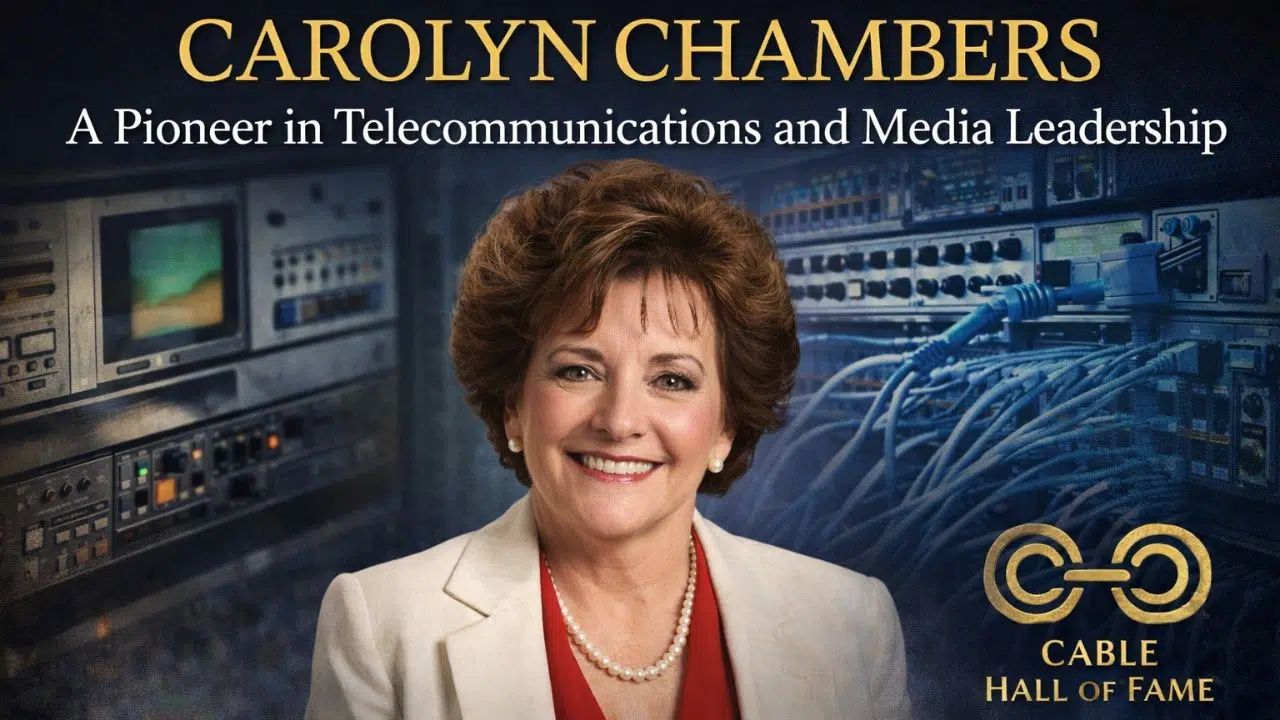
When Carolyn Chambers launched a television station in Eugene, Oregon, in 1959, she was a 25-year-old woman entering an industry dominated by men. Few could have predicted that this bold move would mark the beginning of a decades-long career that would ultimately earn her a place in the Cable Hall of Fame and establish her as one of the most respected figures in American telecommunications.
The name Carolyn Chambers represents more than just a successful business executive. It embodies a story of vision, resilience, and the kind of forward-thinking leadership that helped shape the modern cable industry. From humble beginnings with a single broadcast license to building a diversified media company, Chambers’ trajectory offers valuable insights for anyone interested in entrepreneurship, media, or leadership in rapidly evolving industries.
This article explores the remarkable career of Carolyn Chambers, her contributions to telecommunications, and the lasting legacy she created for future generations of media professionals.
Early Career and Breaking Into Broadcasting
The First Television Station
Carolyn Chambers’ entry into broadcasting came at a time when the industry was still finding its footing and when women in executive positions were rare. In 1959, she obtained the license for KEZI-TV in Eugene, Oregon, a move that required navigating a competitive FCC hearing process that lasted six and a half weeks . Chambers spent days on the witness stand, demonstrating not only her commitment but also her deep understanding of the business she was about to enter.
What drove a young woman in her mid-twenties to pursue such a challenging path? According to Chambers herself, the motivation was straightforward: “Eugene only had one TV station and I decided they ought to have a second one” . This combination of recognizing an opportunity and having the confidence to pursue it would define her entire career.
Building Liberty Communications
From that initial station, Chambers built Liberty Communications, which grew to encompass six television stations and 33 cable systems across 11 states . The expansion required not just business acumen but also the ability to secure financing, no small feat for a woman in the 1960s and 1970s. Chambers initially borrowed $100,000 from her father to fund the broadcast venture, but as the company grew, she established relationships with traditional banks .
The growth of Liberty Communications paralleled the expansion of the cable industry itself. Chambers was present for the transition from over-the-air broadcasting to the wired future that would eventually transform how Americans consumed media.
Chambers Communications Corporation
A New Chapter
In 1983, Chambers sold Liberty Communications to Tele-Communications Inc. (TCI), but she was far from retiring. Instead, she retained KEZI-TV and four cable systems in Washington and California, forming the foundation of Chambers Communications Corporation .
This new entity allowed Chambers to focus on the markets and operations she knew best while continuing to innovate. Over time, Chambers Communications expanded to include:
- Three television stations
- Cable systems serving multiple communities
- A video production company
- An Internet service provider
The company’s operations spanned Oregon, California, Idaho, and Washington, creating a regional media presence that touched thousands of viewers and subscribers .
Diversification and Related Enterprises
One distinctive aspect of Chambers’ business approach was her willingness to diversify into related fields. Her corporate umbrella included not just media properties but also construction interests, real estate holdings, and a winery . This diversification provided stability and allowed the various enterprises to share resources and expertise.
The winery, managed by her daughter Liz, represented a personal passion as well as a business venture demonstrating that Chambers’ entrepreneurial spirit extended beyond her primary industry.
Leadership Philosophy and Management Style
Developing People
Throughout her career, Carolyn Chambers emphasized the importance of building strong teams and developing talent. When asked about how she recruited and trained staff, she emphasized a practical approach: “You look at people and see what kind of skills they have and then you make them fit to the jobs that you need to have done depending on what each one of them does best” .
This flexible, people-centered approach to management helped Chambers build loyal teams that could adapt to the rapidly changing media landscape. She also invested in training, ensuring that employees could grow with the company.
Family in Business
Chambers successfully integrated the family into her business operations, with three of her five children working in various Chambers Communications enterprises. Her son Scott served as president and chief operating officer, while daughter Liz handled risk management, benefits, and the winery. Her youngest daughter, Silva, managed real estate for the company .
This multi-generational involvement speaks to Chambers’ ability to build not just a business but a lasting enterprise that could sustain family participation. It also demonstrates her commitment to Oregon, as all five children remained in the state with their families.
Industry Leadership and Recognition
Service to the Industry
Beyond her own companies, Carolyn Chambers contributed significantly to the broader telecommunications industry through leadership roles in key organizations. She served on the boards of:
- The National Cable Television Association (NCTA)
- The California Cable Association
- Women in Cable Telecommunications (WICT), where she served as president
These roles allowed Chambers to shape industry policy and advocate for the interests of cable operators large and small. Her perspective as someone who had built a company from the ground up gave her insights that were valuable at the national level.
Cable Hall of Fame
In 2006, Carolyn Chambers was inducted into the Cable Hall of Fame, recognizing her lifetime of contributions to the industry . This honor placed her among the most influential figures in American telecommunications and acknowledged both her business success and her service to the broader industry.
The Hall of Fame recognition also highlighted Chambers’ role as a pioneer for women in business. At a time when female executives were rare, she had not only succeeded but had done so while raising five children and maintaining deep community ties in Oregon.
Adapting to Industry Change
Embracing Evolution
One of Carolyn Chambers’ most defining characteristics was her embrace of change. When asked what excited her about the cable industry, she responded simply: “I think the change is what really excites me because it’s constantly changing. Nothing is the same today as it was yesterday and I like that” .
This attitude served her well through decades of transformation in media and telecommunications. From the early days of broadcast television through the rise of cable and the emergence of the internet, Chambers positioned her companies to adapt and thrive.
Looking Forward
Chambers demonstrated remarkable foresight about the direction of the industry. Her company’s early move into Internet service provision recognized that connectivity would become as important as content. The production company she built acknowledged that demand for programming would only grow as distribution channels multiplied.
This forward-looking perspective kept Chambers Communications relevant even as larger players consolidated and technology changed.
Legacy and Impact
A Model for Entrepreneurs
Carolyn Chambers’ career offers lessons for entrepreneurs in any field. She started with a clear vision, secured financing through persistence and relationships, built strong teams, and adapted as markets evolved. Her ability to sell Liberty Communications at the right moment while retaining core assets showed sophisticated strategic thinking.
Perhaps most importantly, Chambers demonstrated that business success need not come at the expense of family or community. She built her enterprises in Oregon, kept her family involved, and maintained connections to the region throughout her career.
Influence on Women in Business
As a woman who succeeded in a male-dominated industry, Chambers served as an inspiration and role model. Her leadership in organizations like Women in Cable Telecommunications helped create pathways for other women to enter and advance in the field.
When Chambers started in broadcasting, female executives were exceptional. By the time of her Hall of Fame induction, while still not common, they were no longer unprecedented in part because of pioneers like her who had proven what was possible.
Remembering Carolyn Chambers
Carolyn Chambers passed away in 2018 at the age of 79 after a battle with cancer . She left behind not just a group of successful companies but a legacy of innovation, integrity, and community commitment.
Her companies continued operating, her children remained involved in the enterprises she built, and the industry she helped shape continued evolving in directions she had anticipated. The Cable Hall of Fame biography that preserves her story ensures that new generations of media professionals can learn from her example.
Frequently Asked Questions About Carolyn Chambers
Who was Carolyn Chambers?
Carolyn Chambers was a pioneering media executive who founded Chambers Communications Corporation and was inducted into the Cable Hall of Fame in 2006. She began her career by obtaining a television station license in 1959 and went on to build companies that included broadcast stations, cable systems, and internet service providers .
What companies did Carolyn Chambers found?
Chambers founded Liberty Communications, which grew to include six TV stations and 33 cable systems across 11 states. After selling Liberty to TCI in 1983, she formed Chambers Communications Corporation, which operated television stations, cable systems, a production company, and an internet service provider .
What was Carolyn Chambers’ background before entering media?
Chambers was trained as an accountant and gained early experience working at a radio station where she learned multiple aspects of the business. She also came from a family of automobile dealers and became involved in that business while still in college .
How did Carolyn Chambers balance business and family?
Chambers raised five children while building her businesses. She structured her schedule to be available for her children in the mornings and evenings, taking work home to complete after they went to bed. Three of her children eventually joined her in the family business .
What awards and recognition did Carolyn Chambers receive?
Chambers was inducted into the Cable Hall of Fame in 2006. She also served in leadership roles with the National Cable Television Association, the California Cable Association, and as president of Women in Cable Telecommunications .
When did Carolyn Chambers pass away?
Carolyn Chambers died in 2018 at the age of 79 following a battle with cancer .
What was Carolyn Chambers’ approach to industry change?
Chambers embraced change as one of the most exciting aspects of the cable industry. She noted that “nothing is the same today that it was yesterday” and positioned her companies to adapt to technological and market evolution .
Where was Carolyn Chambers based?
Chambers was based in Eugene, Oregon, throughout her career. She was born in Portland and kept her companies’ headquarters in Eugene, with operations extending to California, Idaho, and Washington .
Lessons from a Media Pioneer
Carolyn Chambers’ career offers enduring lessons for business leaders and entrepreneurs. She demonstrated that success comes not from avoiding change but from embracing it from seeing each shift in technology or markets as an opportunity rather than a threat.
Her path also shows the value of building businesses that can outlast their founders. By involving family members, developing strong management teams, and maintaining financial discipline, Chambers created enterprises that could continue evolving after her passing.
For women in business, Chambers’ example remains particularly powerful. She succeeded in an industry where she had few female peers, not by conforming to expectations but by bringing her own strengths including the ability to balance professional demands with family commitments to the work of building companies.
Finally, Carolyn Chambers reminds us that business success and community commitment can reinforce each other. She built her companies in Oregon, kept them connected to the communities they served, and contributed to industry organizations that strengthened the entire field of telecommunications. Her legacy is not just in the companies she built but in the example she set for how to build them.
For those interested in media, entrepreneurship, or leadership, studying Carolyn Chambers’ career provides both inspiration and practical guidance. She took a single television station and built something lasting not through flashy moves or short-term thinking, but through steady vision, adaptability, and a genuine commitment to the people and communities her businesses served.