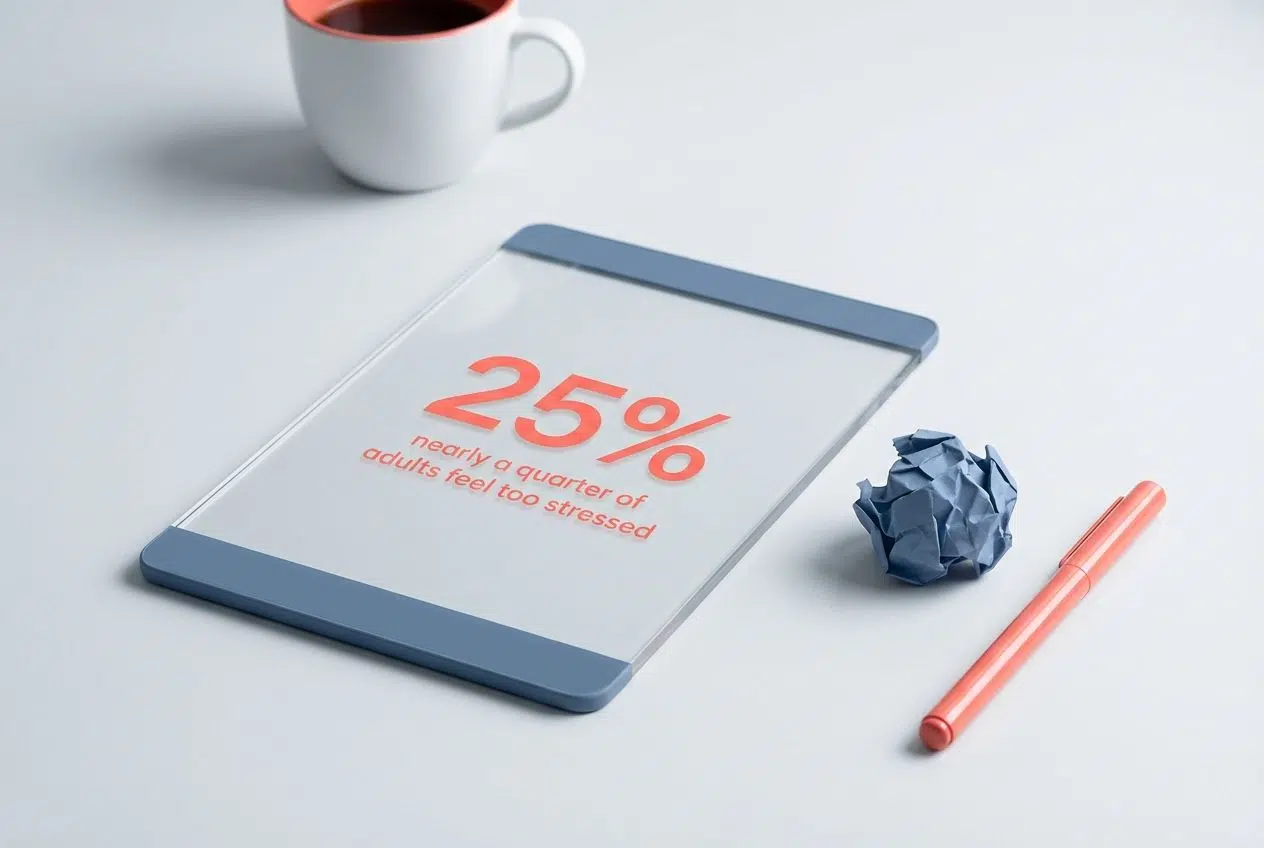
Everyone faces hard times. Maybe you failed a test, missed out on a job, or made a big mistake at work. It feels like the rug got pulled right out from under your feet. You might even wonder if you can ever recover. You are not alone in feeling this way. According to the American Psychological Association’s recent Stress in America survey, nearly a quarter of adults in the US report feeling too stressed to function on most days. That is a heavy load to carry.
But here is the good news. Studies show that people who actively work on building resilience do not just bounce back. They often end up stronger and wiser than they were before. I am going to walk you through the exact steps to help you grow through failure. We will look at real data and simple tricks to get you back on track. Ready to turn that setback into a comeback? Let’s get started.
What Is Resilience?
Resilience is simply the ability to adapt well in the face of adversity. It is what helps people stand tall and keep moving forward when life knocks them down.
Definition of resilience
Think of resilience like a rubber band. When you stretch a rubber band, it deals with the pressure and then snaps back to its original shape. That is exactly what resilience allows you to do emotionally.
It does not mean you don’t feel pain or sadness. It just means you don’t let those feelings stop you permanently. Psychologist Martin Seligman refers to this as “grit.” He found that this quality is often a better predictor of success than IQ or talent.
It is a skill you can build. Just like going to the gym, your “resilience muscle” grows stronger every time you use it to overcome a challenge.
Do not judge me by my success, judge me by how many times I fell down and got back up again. – Nelson Mandela
Importance of resilience in personal and professional life
Resilience is a massive advantage in your career. A 2024 report by BetterUp found that employees with high resilience are 31% more productive and 22% more innovative than their peers. Companies love hiring people who can handle change without falling apart.
Take J.K. Rowling as a famous example. She faced rejection from 12 different publishers before Harry Potter finally hit the shelves in 1997. Her ability to handle those “no” answers is the only reason we know her name today.
In your personal life, this skill protects your peace of mind. Your friends and family notice how you handle stress. When you stay steady during a crisis, you become a rock for the people around you.
The Psychology of Resilience
Resilience starts in the head. It is about how you explain setbacks to yourself. The good news is that you can retrain your brain to handle stress more effectively.
Understanding psychological resilience
Psychologists often talk about the “3 Ps” that can stunt resilience: Personalization, Pervasiveness, and Permanence. Resilient people understand that failure is usually not 100% their fault (Personalization), it doesn’t ruin their whole life (Pervasiveness), and it won’t last forever (Permanence).
By shifting your perspective to see challenges as temporary and specific, you create mental armor. This allows you to view a mistake as a lesson rather than a character flaw.
The oak fought the wind and was broken, the willow bent when it must and survived.
Common traits of resilient individuals
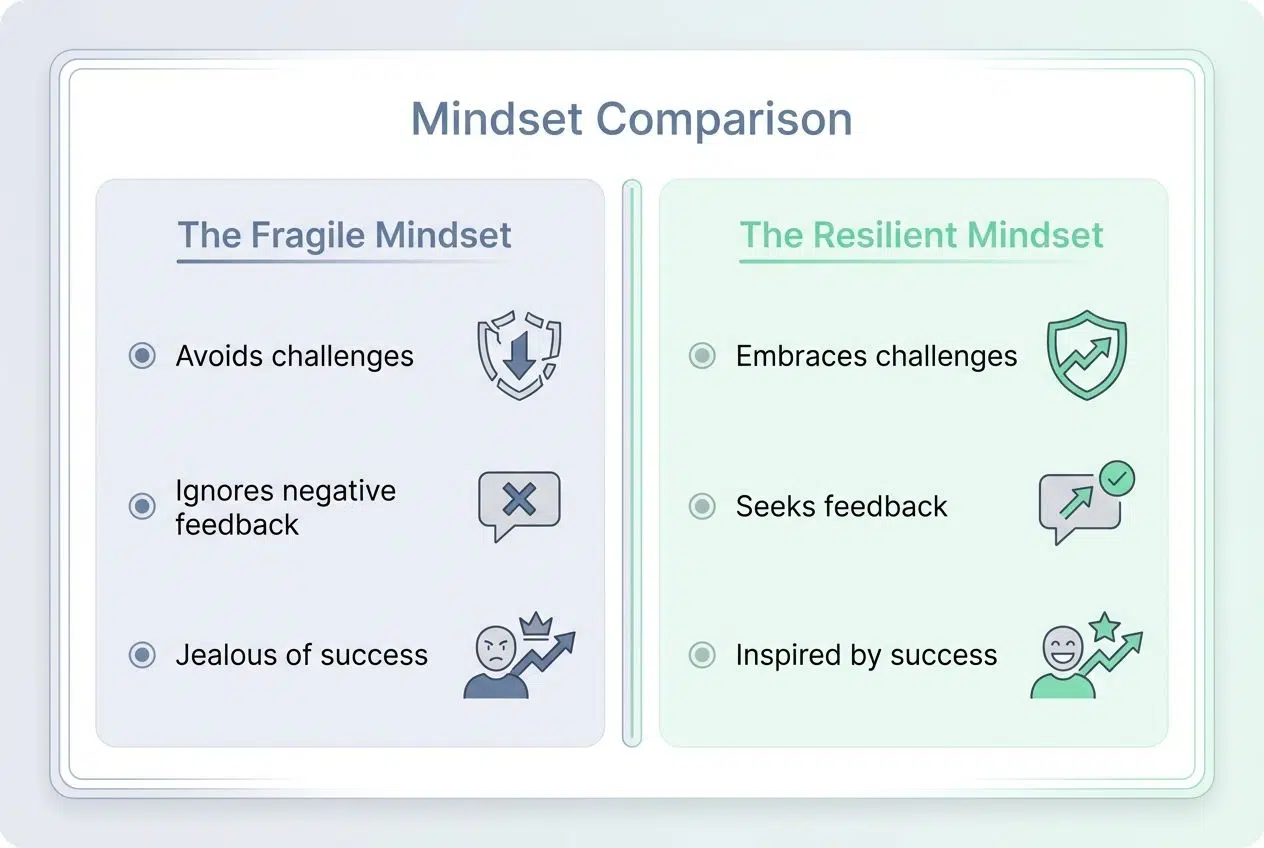
What does a resilient person actually look like in action? They share a specific set of habits. Here is how they compare to a more fragile mindset.
| The Fragile Mindset | The Resilient Mindset |
|---|---|
| Views failure as a reflection of their worth. | Views failure as data for improvement. |
| Avoids challenges to prevent mistakes. | Embraces challenges as a way to learn. |
| Ignores negative feedback. | Actively seeks feedback to adjust. |
| Feels jealous of others’ success. | Finds inspiration in others’ success. |
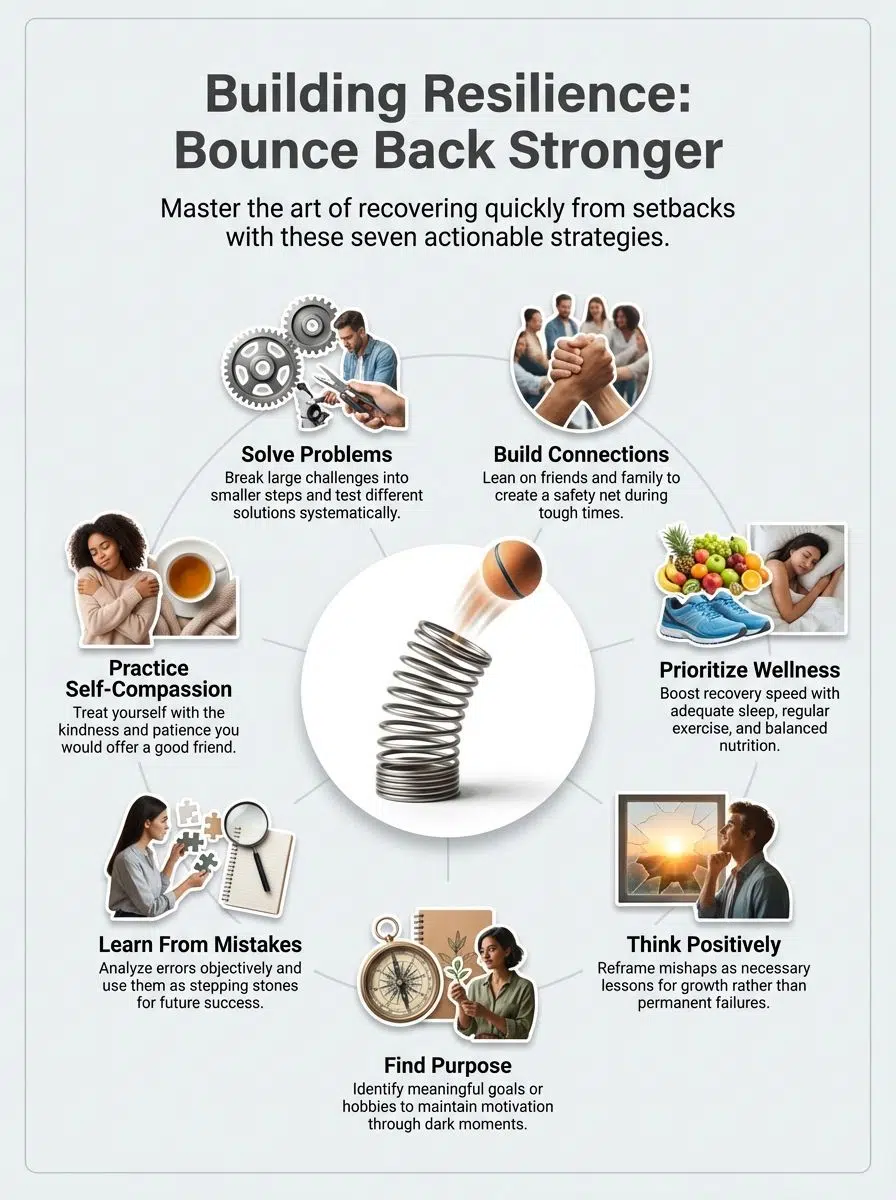
Developing these traits takes practice. Here are the core habits that help build this mindset:
- Strong relationships: They have a safety net of friends and mentors.
- Optimism: They focus on what they can control, not what they can’t.
- Flexibility: They adapt to new information quickly.
- Problem-solving: They break big issues into small, solvable parts.
- Self-compassion: They talk to themselves like a friend, not a bully.
Steps to Build Resilience
If you feel like life keeps throwing lemons your way, you need a plan. Building resilience helps you squeeze the juice instead of just getting hit by the fruit.
Build strong connections
Isolation is the enemy of resilience. The Harvard Study of Adult Development, one of the longest studies on human happiness, proved that strong relationships are the number one predictor of a long, healthy life. You need people in your corner.
Reach out to friends, family, or coworkers when things get heavy. You don’t always need a deep therapy session. Sometimes just grabbing coffee and laughing about a bad day is enough to reset your stress levels.
If you don’t have a strong network, try joining a local group. Websites like Meetup or VolunteerMatch are excellent places to find people who share your interests and values.

Foster physical and mental wellness
You cannot be mentally tough if you are physically exhausted. The CDC recommends adults get at least 7 hours of sleep per night, yet many of us skip this when we are stressed. Prioritizing sleep is the single most effective thing you can do for emotional regulation.
For immediate stress relief, try the “Box Breathing” technique used by Navy SEALs. Inhale for 4 seconds, hold for 4, exhale for 4, and hold for 4. It hacks your nervous system to calm you down instantly.
Don’t forget to move your body. A brisk 20-minute walk releases endorphins that act as natural painkillers for your mood. It clears the mental fog and helps you see problems in a new light.
Embrace healthy and positive thoughts
Your thoughts shape your reality. If you constantly tell yourself, “I’m a failure,” you will start to believe it. Positive thinking isn’t about ignoring problems; it is about trusting your ability to solve them.
Try the “Three Good Things” exercise developed by researchers at UPenn. Every night for a week, write down three things that went well that day and why they happened. Studies show this simple practice reduces depression and boosts happiness for up to six months.
Use constructive self-talk. Instead of saying “I messed up,” try saying, “I learned what doesn’t work, so I can try a different way tomorrow.”
Find a sense of purpose
Purpose acts like a compass during a storm. It gives you a reason to keep pushing when things are hard. This doesn’t have to be a grand life mission. It can be as simple as helping a neighbor or taking care of a pet.
Michael Jordan missed over 9,000 shots in his career. He didn’t quit because his purpose, his love for the game, and his desire to win, were stronger than his fear of missing.
Connecting with something bigger than yourself builds immense grit. When you focus on helping others, your own problems often feel smaller and more manageable.
Strategies for Bouncing Back From Failure
You have the foundation. Now let’s look at specific, actionable strategies to turn a setback into a win.
Learn from setbacks and mistakes
Don’t just move on from a mistake; analyze it. The US Army uses a method called the After Action Review (AAR). It is a powerful tool you can use too.
Ask yourself four questions after any failure:
- What was supposed to happen?
- What actually happened?
- Why was there a difference?
- What will I do differently next time?
This process removes the emotion and focuses on the facts. It turns a painful memory into a tactical lesson for the future. Thomas Edison used a similar mindset, viewing his thousands of failed experiments as simply “proven ways that do not work.”
Practice self-compassion
We are often our own harshest critics. Dr. Kristin Neff, a leading researcher in this field, suggests taking a “Self-Compassion Break” when you are struggling. Put your hand on your heart and admit, “This is a moment of suffering,” then tell yourself, “May I be kind to myself.”
Treat yourself with the same patience you would offer a student learning a new subject. Growth requires time. If you beat yourself up, you drain the energy you need to recover.
Research shows that self-compassion actually increases personal accountability. When you stop attacking yourself, you feel safe enough to admit your mistakes and fix them.
Develop problem-solving skills
Hope is not a strategy. You need a plan. A great framework for this is the WOOP method (Wish, Outcome, Obstacle, Plan) created by Professor Gabriele Oettingen.
- Wish: What do you want to achieve?
- Outcome: How will you feel when you get it?
- Obstacle: What is the main thing holding you back?
- Plan: What specific action will you take to get around that obstacle?
This method prepares your brain for hurdles before you even hit them. Instead of freezing up when things go sideways, you simply execute your pre-planned solution.
When to Seek Professional Help
Sometimes, resilience means knowing when you need backup. There is no shame in asking for expert support when the weight feels too heavy.
Recognizing the need for support
If you have felt stuck for weeks and nothing seems to help, it might be time to call a pro. Watch out for warning signs like persistent trouble sleeping, a total loss of interest in hobbies, or feeling constantly on edge.
In the US, you can call or text 988 to reach the Suicide & Crisis Lifeline anytime. It is a free, confidential resource for anyone in distress. Reaching out is an act of courage. It shows you are serious about your recovery and growth.
Benefits of therapy or counseling
Therapy gives you a safe, private space to unpack your thoughts. A counselor can teach you tools that are hard to learn on your own.
Cognitive Behavioral Therapy (CBT) is particularly effective for building resilience. It is a practical, goal-oriented approach that helps you spot unhelpful thought patterns and replace them with realistic ones.
Working with a professional accelerates your learning curve. You get personalized feedback and a structured plan to build your mental toughness.
Wrapping Up
Life is going to throw curveballs. That is a guarantee. But now you have the tools to hit them back. Building resilience takes time. It is a daily practice of small choices, choosing to sleep, choosing to be kind to yourself, and choosing to learn from the fall.
You have the strength to keep moving forward. Take a deep breath, pick one strategy from this list, and start today.