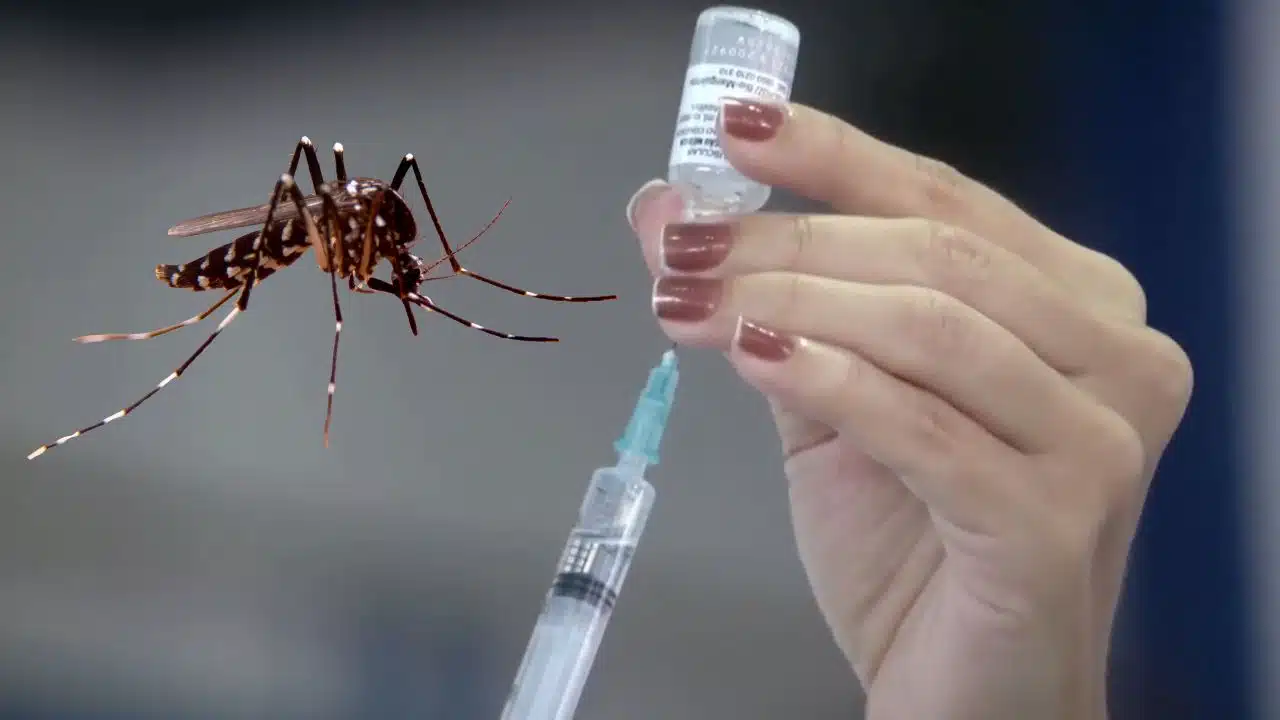
Brazil has taken a major step in the global fight against dengue fever by approving the world’s first single-dose dengue vaccine, a breakthrough that health officials are calling a historic milestone. The approval comes at a time when dengue cases are rising worldwide, driven by warmer temperatures, changing rainfall patterns, and the rapid expansion of dengue-carrying mosquitoes into new regions.
The vaccine, known as Butantan-DV, was developed by the Butantan Institute, one of Latin America’s leading public biomedical research centers. After eight years of clinical research, including large-scale trials across the country, Brazil’s health regulatory agency ANVISA has now authorized its use in people aged 12 to 59. The vaccine is expected to significantly boost the country’s ability to control the disease, especially during peak transmission seasons.
Unlike existing dengue vaccines — such as TAK-003, which requires two doses given three months apart — this newly approved vaccine needs only a single injection. Public-health experts say this offers a massive advantage: it simplifies vaccination campaigns, improves population coverage, reduces logistical barriers, and accelerates immunization in areas where dengue outbreaks spread rapidly.
During clinical trials involving more than 16,000 volunteers across different regions of Brazil, Butantan-DV demonstrated 91.6 percent efficacy against severe dengue, including the dangerous form known as dengue hemorrhagic fever. Overall protection against symptomatic dengue was found to be strong, and most reported side effects were mild and temporary, such as pain at the injection site, fever, or headache. Serious side effects were extremely rare.
Dengue, often called “breakbone fever,” is known for high fever, intense muscle and joint pain, fatigue, and in severe cases, internal bleeding and death. The disease is caused by the dengue virus, which is transmitted by Aedes mosquitoes — insects that have expanded their range due to warming temperatures, urban crowding, and global travel. In recent years, dengue has appeared in regions where it was once rare, including parts of Europe and the southern United States.
The need for better prevention tools has become urgent. According to the World Health Organization, 2024 saw more than 14.6 million dengue cases and nearly 12,000 deaths worldwide, the highest number ever recorded. Roughly half of these deaths occurred in Brazil, making the country one of the hardest hit by the global dengue surge. Researchers at Stanford University estimate that 19 percent of global dengue cases in 2024 were linked to climate change, reflecting how rising temperatures accelerate mosquito breeding and virus transmission.
Health officials in Brazil say the single-dose design of the new vaccine could transform dengue control efforts. Because many people fail to return for second doses in multi-dose vaccination schedules, single-dose vaccines are far more practical during outbreaks. With Butantan-DV, authorities can vaccinate millions more people in a shorter time, especially in remote or vulnerable communities.
“This is a historic achievement for science and health in Brazil,” said Esper Kallas, director of the Butantan Institute, during a press conference announcing the approval. He noted that dengue has troubled Brazil for decades, causing repeated outbreaks that strain hospitals and lead to rising death tolls. “A disease that has plagued us for decades can now be fought with a very powerful weapon,” he said.
Brazil has also signed an agreement with WuXi Biologics, a Chinese biopharmaceutical company, to help scale up the vaccine’s production. According to the Health Ministry, Brazil expects to receive around 30 million doses in the second half of 2026. Officials say domestic manufacturing capacity will also grow over time, allowing Brazil to expand coverage and potentially supply doses to other countries facing severe dengue burdens.
The introduction of Butantan-DV marks a major advancement for global health. As dengue continues spreading into new territories — from tropical climates to warm temperate regions — the need for faster and more effective prevention strategies is becoming more urgent. A single-dose vaccine not only simplifies logistics but also increases the likelihood of widespread adoption in regions where health systems are overburdened.
With this approval, Brazil positions itself at the forefront of dengue prevention, offering a new model for other countries battling climate-driven infectious diseases. The coming years will show how quickly the vaccine can be produced, distributed, and integrated into national immunization programs. But for now, health authorities emphasize that this development represents a turning point — one that could help curb one of the fastest-growing mosquito-borne diseases in the world.