

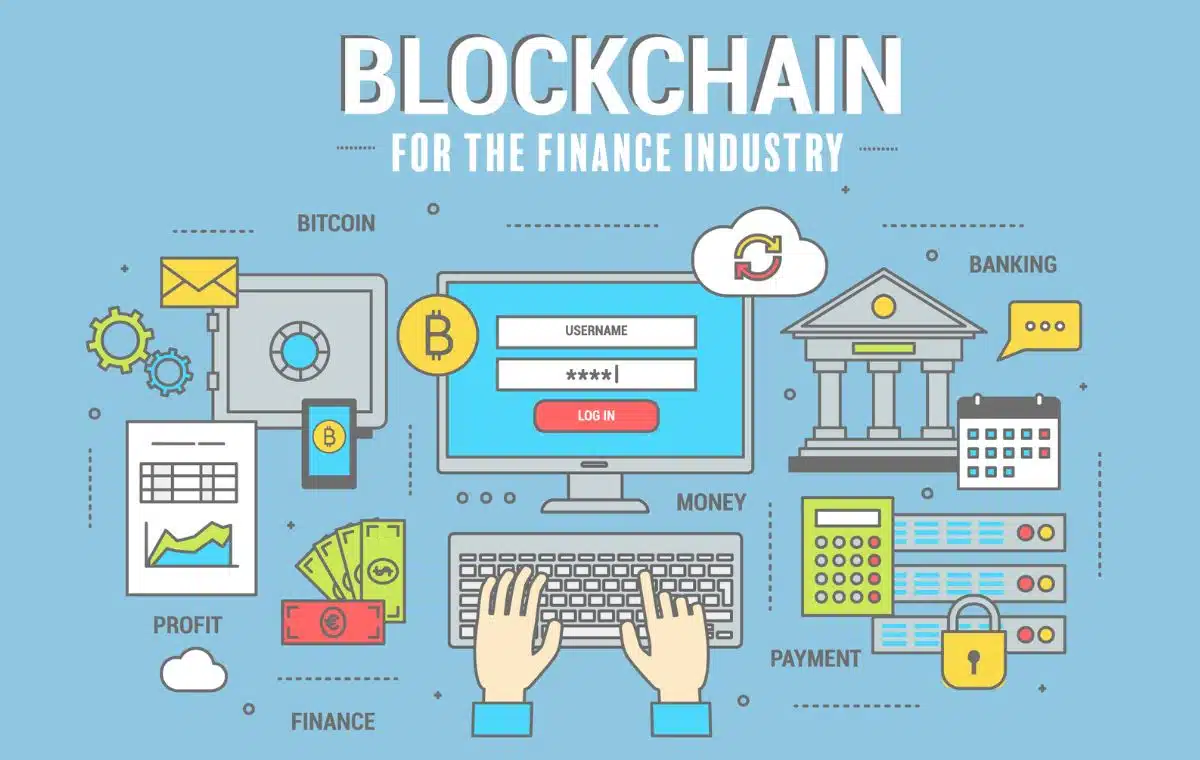
With more than two billion transactions occurring daily, each bank provides an immense economic benefit for global banks and a critical need for increased efficiency and safety. If you want to start bitcoin trading in only three steps, visit the bitcoin system. You will get the best liquidity, and the platform is immune to volatility risk. However, the business challenges faced by finance institutions are equally as complex to address, such as compliance with the U.S. Dodd-Frank Wall Street Reform and Consumer Protection Act (Dodd-Frank) or international sanctions legislation on Iran that affect international banking transactions being carried out in USD.
The challenges of blockchain technology go beyond the traditional banking industry to show how this new technology can completely revolutionize the way financial services are delivered worldwide. There is now a need to examine the benefits of blockchain technology, as recently, the United States Senate Banking Committee released its report on cryptocurrencies.
The Emergence of Bitcoin
Bitcoin has emerged as a preferred choice due to its anonymous nature. Although there are protocols designed for wallet use for electronic transactions, Bitcoin’s key distinguishing feature is that it is primarily used as an investment vehicle to purchase goods on online marketplaces.
In addition to the benefits of adopting new technology like blockchain, banks have some substantial concerns related to their ability to reap its regulatory advantages. With financial institutions branching out globally and accepting more clients, they must continue to focus on compliance.
For banks to stay compliant, there needs to be a mechanism where they can exchange information quickly and freely with each other on any transactions being processed by their respective subsidiaries. However, that is often difficult due to the lack of global communications standards between countries and the different currencies used in different countries.
Blockchain’s Potential and its Obstacles
Blockchain technology has helped to facilitate a more secure, efficient, and transparent exchange of information, which is becoming increasingly important due to the growing volume of transactions being processed. Blockchain technology could solve current issues faced by the financial services industry. It can facilitate secure transactions between multiple banks, corporations, and customers without requiring an intermediary or central authority. As a result, this decentralized infrastructure makes blockchain a secure system for information exchange.
A Look at Blockchain and Bitcoin in Practice
Although there are concepts that are primarily applicable today due to the limited practical use case of this new technology, many ideas are still in development stages aimed at improving existing technologies or developing brand new ones for modern use cases. For example, the financial services industry can use blockchain and bitcoin technology, but many banks are reluctant to adopt them due to the lack of flexibility and control. However, they must also determine how companies can utilize the blockchain to meet their needs.
The Issues Faced by Traditional Banking Methods
Common issues faced by banks include privacy and compliance concerns and controls set up to comply with the standards set by regulators. In addition, banks have had difficulty controlling transactions across borders because they need some intermediary authority with access to all channels that facilitate these transactions. Blockchain and bitcoin technology has no physical presence or involvement in cross-border payments, which are increasingly popular today due to growing global trade volumes among countries.
New Challenges for the Banking Industry
To understand the challenges banks face in this new environment, it is essential to identify some of the driving forces behind their decisions. Unfortunately, sometimes these diverse forces have led banks to make the wrong choices that can profoundly impact their overall operation. For example, some banks have benefited from technological advances by utilizing new technologies like blockchain technology. However, in other cases, they have ignored significant business opportunities as they are not convinced that blockchain has any long-term strategic value.
In addition to technical challenges and business decisions, regulatory and political issues may prevail regarding financial institutions embracing blockchain and bitcoin technology or other emerging tech trends. For example, U.S. regulators have embraced blockchain technology over the past several months. However, that momentum may be short-lived as there could still be some challenges related to capital and privacy.
Many types of blockchains and bitcoin are being used in a wide range of applications, from supply chain management to cybersecurity. For example, in banking, many banks have concerns regarding the security, privacy, and transparency of transactions that companies would propose for implementing blockchain technology. However, it is essential to realize that not all blockchains are identical. The characteristics and features of the best blockchain solutions vary with each application
they use.
According to a March report by Citibank, many global banks have expressed concerns regarding the challenges of implementing blockchain; many banks are still not convinced that blockchain has any significant long-term strategic value and are only starting to test the technology in pilot projects technology.
When selecting a suitable blockchain or bitcoin service provider, many factors still influence a bank’s decision on how to select their partner. An important consideration is how this partnership has implemented its products for financial institutions and what it can offer concerning security and privacy implementation.
































