Think about this: you’re in Brazil, and getting good healthcare feels like chasing a shadow. Long waits at hospitals, misdiagnoses that slip through the cracks, and remote areas cut off from doctors, it’s a tough spot for many folks.
You wonder if there’s a smarter way to fix these pains, something that makes health services faster and fairer for everyone.
Here’s a key fact: artificial intelligence, or AI, is set to shake up clinical practice and health systems in Brazil, with tools like machine learning helping predict epidemics and speed up drug discovery.
Our post explores the 12 Best Ways AI Is Revolutionizing Healthcare In Brazil, showing you real examples from diagnostics to mental health support, all backed by innovations like deep learning and AI-powered tools.
We’ll guide you through how these changes cut costs, boost quality, and tackle disparities, drawing on Brazil’s General Personal Data Protection Law for safe, transparent use.
Keep reading to see the future unfold.
Key Takeaways
- AI boosts diagnostics in Brazil. 58% of healthcare CEOs say it improves employee time management, above the national average.
- Generative AI aids telemedicine. 53% of healthcare professionals feel confident using it, beating the 51% national average. 47% of CEOs say it’s key to stay in business.
- LGPD law guards data privacy. It’s Federal Law no. 13,709/2018, started in August 2018, fully active by September 2020, with sanctions from August 2021.
- WHO stresses AI ethics. In March 2018, the Assembly discussed AI to boost public health. Eric Topol in 2019 noted AI empowers patients with their data.
- AI fights disparities. 35% of CEOs saw revenue jumps from AI, above the national average. It uses predictive analytics for fair care in remote areas.
Enhancing Diagnostics with AI
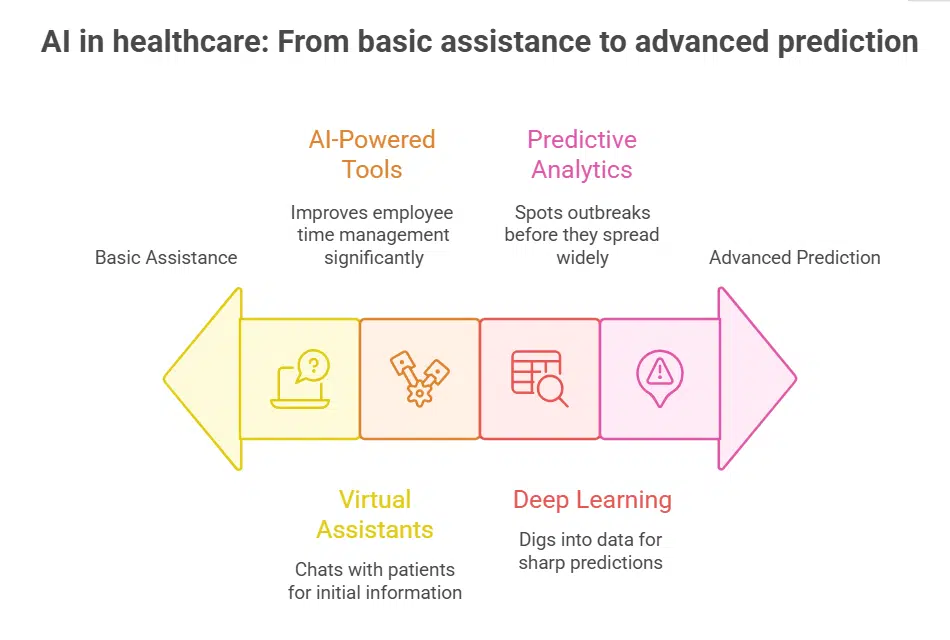
AI changes how doctors spot diseases in Brazil. Picture a smart system that scans medical images faster than any human eye. Deep learning, a type of machine learning, digs into medical records and genomic data to make sharp predictions.
This boosts accuracy in diagnostics, like catching cancer early. Health systems in Brazil use these AI-powered tools to cut down errors. You know that feeling when a quick test saves a life? That’s the magic here.
Plus, 58% of healthcare CEOs in Brazil say AI improves employee time management, beating the national average. Virtual health assistants help too, chatting with patients for initial checks.
Now, think of predictive analytics spotting outbreaks before they spread. AI in healthcare follows World Health Organization principles like transparency and equity. Doctors get explainable AI results, not black-box systems.
This means clear reasons for each diagnosis, building trust. In remote areas, telemedicine pairs with AI for fast consults. Data privacy stays key, guarding patient info. Machine learning algorithms learn from big data, refining clinical diagnoses.
Brazil’s healthtechs invest in this, driving innovation. It’s like giving doctors a super sidekick, making care fairer for all.
AI-Powered Personalized Treatment Plans
Doctors in Brazil use artificial intelligence to craft treatment plans that fit each patient like a glove. Deep learning, a key part of machine learning, digs into medical records and genomic data.
It spots patterns others miss. This leads to spot-on predictions for care. Imagine a system that knows your body’s quirks better than you do. AI-powered tools speed up drug discovery too.
They test virtual compounds fast. Patients get meds that work best for them. Predictive analytics plays a big role here. It forecasts how you’ll respond to therapy. Brazil’s health systems gain from this tech.
It cuts trial and error in treatments. Folks in remote areas see big wins. Their plans adjust in real time. Talk about a game changer for healing.
Transparency keeps things fair in these automated decisions. The right to explanation comes from LGPD and constitutional rules. It demands clear reasons for AI choices. Explainable artificial intelligence shines here.
It avoids black-box systems that hide their logic. Algorithmic transparency builds trust. Picture a doctor explaining your plan like a friend over coffee. No secrets, just facts. Data privacy guards your info.
Regulatory bodies watch over this. They set standards for health law. AI ethics guide the way. In clinical practice, this means safer care. Patients feel in control. Digital health tools make it all possible.
They blend tech with human touch. Brazil leads in using these for better outcomes.
Streamlining Administrative Processes in Hospitals
AI changes how hospitals handle daily tasks in Brazil. Imagine paperwork as a tangled knot; artificial intelligence unties it fast. Natural language processing, a key AI tool, reads and sorts patient records with ease.
This frees up staff for real care. A survey shows 58% of healthcare CEOs in Brazil see better time use for workers, beating the country’s average. Machine learning spots patterns in schedules, cutting wait times like a sharp knife through butter.
Deep learning helps predict busy hours, so teams plan ahead. QR Group steps in here, a Brazilian expert in healthcare product regulation. They guide firms to fit AI into rules and meet ANVISA standards.
Think of it as a helpful coach, making sure new tech plays by the book.
Staff often drown in admin work, but AI offers a lifeline. It automates billing and inventory checks, using algorithms to track supplies without errors. This boosts efficiency in the healthcare sector.
One CEO shared a story: “Our team used to chase forms all day; now AI handles it, and we focus on patients.” Data privacy stays safe with these systems, following health regulation guidelines.
Artificial neural networks power these tools, learning from past data to improve. In Brazil’s busy hospitals, this means quicker service and less stress. QR Group aids companies in adapting, ensuring compliance with medical devices rules.
It’s like giving hospitals superpowers to fight chaos.
AI in Epidemic Prediction and Management
Artificial intelligence spots epidemics early with predictive analytics. It crunches big data to forecast outbreaks, like a weather radar for diseases. Machine learning algorithms sift through patterns in health records.
Deep learning goes deeper, spotting hidden trends that humans miss. Think of it as giving doctors a crystal ball, but based on real facts. The WHO stresses ethical use of AI in public health.
They aim to boost health services and keep things accountable. Back in March 2018, the WHO Assembly talked about AI tech to lift public health.
AI empowers patients too, letting them handle their own health data for better results. Eric Topol highlighted this in 2019. In Brazil’s health systems, such tools predict virus spreads in crowded cities.
They manage responses fast, saving lives. Data privacy stays key, guarding personal info amid all this tech. Imagine chatting with an AI app that warns you about risks, like a helpful neighbor.
It makes fighting epidemics feel less scary.
Revolutionizing Radiology with AI Analysis
AI changes radiology in Brazil, like a smart sidekick spotting clues doctors might miss. Doctors use artificial intelligence to scan medical imaging fast and sharp. Deep learning examines X-rays, MRIs, and CT scans, pulling out details on tumors or breaks.
This tech analyzes medical records and genomic data to make clinically relevant predictions. Imagine a busy hospital; AI spots issues early, saving lives with quick calls. Machine learning boosts accuracy, cutting errors in tough cases.
Folks in remote spots get better reads too, thanks to these ai-powered tools.
Transparency matters a lot here, folks. Algorithmic transparency means clear docs on how AI works, so everyone gets it. Regulatory bodies push for this in the healthcare sector. AI in healthcare needs solid checks to build trust.
Deep learning helps predict epidemics from image patterns, tying into bigger health systems. Clinicians review automated decisions with ease. Data privacy stays key, guarding patient info in clinical practice.
Brazil’s doctors train on these tools, making care smarter day by day.
Improving Patient Monitoring Through Wearable AI Devices
Wearable AI devices track your heart rate, steps, and sleep patterns in real time, like a loyal friend keeping an eye on your health. These gadgets use machine learning to spot early signs of trouble, such as irregular beats that could signal heart issues.
In Brazil, doctors rely on them for constant patient monitoring, cutting down hospital visits and catching problems fast. Picture slipping on a smartwatch that whispers warnings before you even feel sick; it feels like having a personal guardian angel.
AI in these devices follows key rules from the WHO, stressing autonomy so you control your data, and transparency to explain decisions clearly. Think about the right to explanation, it lets you understand why the gadget flags a risk, all while protecting trade secrets.
Predictive analytics help with this, boosting equity in care across Brazil’s vast regions. Data privacy stays front and center, with responsibility guiding every alert to avoid harm and promote good.
Accelerating Drug Development with AI Algorithms
Artificial intelligence speeds up drug discovery in Brazil’s healthcare sector. AI-powered tools use machine learning to analyze vast data sets. They spot patterns that humans might miss, like a needle in a haystack.
Predictive analytics cuts down development time from years to months. This helps create new medicines faster for diseases like cancer or infections. Imagine scientists chatting with AI, “Hey, what if we tweak this molecule?” Deep learning algorithms then simulate results in a flash.
The WHO stresses ethical use of AI in public health to boost health services and keep accountability strong. In Brazil, these tools improve clinical practice and digital health. They tackle challenges in health systems, from organ transplants to everyday treatments.
AI ensures data privacy while driving innovation, much like a trusty sidekick in a medical adventure.
Enhancing Accessibility to Remote Healthcare with AI Telemedicine
AI telemedicine changes lives in Brazil’s remote areas. Picture a farmer in the Amazon, far from any doctor, getting quick health advice through his phone. Artificial intelligence powers these tools, making chats with doctors feel like talking to a wise friend.
Generative AI spots symptoms fast, using machine learning to suggest next steps. Health systems in Brazil adopt this tech to reach more people. AI applications include telemedicine, bridging gaps in care.
Professionals feel ready for it. In fact, 53% of healthcare professionals in Brazil show confidence in integrating generative AI, beating the 51% national average. CEOs see the big picture too.
About 47% of healthcare CEOs in Brazil say their companies need generative AI to stay in business. This tech acts like a lifeline, connecting patients to digital health without long trips.
Patients gain from AI-powered tools that listen and respond. Imagine a busy mom in a small town using an app for mental health support, powered by deep learning. It offers self-care tips like cognitive-behavioral therapy exercises.
Data privacy stays key in these systems. Regulatory bodies watch over algorithmic transparency to keep things fair. Brazil’s health regulation pushes for explainable AI, avoiding black-box systems.
Venture funding flows into these innovations, boosting healthcare innovation. Entrepreneurs build resilience with emerging technologies. AI in healthcare cuts disparities, making services feel close at hand.
Folks in rural spots now access transplantation info or chronic care plans easily. This shift feels like opening a door to better days, one virtual visit at a time.
AI-Assisted Robotic Surgeries
AI-assisted robotic surgeries change how doctors operate in Brazil. Surgeons use artificial intelligence to guide robots during procedures. These tools rely on machine learning and deep learning algorithms.
They make cuts more precise, like a steady hand that never shakes. Picture a doctor in Sao Paulo controlling a robot arm with AI help; it spots tiny details the eye might miss. This tech cuts down errors and speeds up recovery for patients.
Yet, regulation poses challenges because these AI systems adapt and evolve fast.
The World Health Organization lists six key principles for AI in healthcare: autonomy, non-maleficence/beneficence, transparency, responsibility, equity, and responsiveness/sustainability.
Brazil’s health systems must follow these to keep things fair. Imagine a farmer in a remote area getting top surgery through AI robots; it bridges gaps in care. Doctors train with these tools, boosting their skills.
Still, data privacy stays vital as AI handles sensitive info. This innovation pushes healthcare forward, one precise cut at a time.
Optimizing Resource Allocation in Public Health Systems
Artificial intelligence transforms public health systems in Brazil by using predictive analytics. These tools spot patterns in data, like patient flows and supply needs. Picture a busy hospital, staff juggling beds and meds like a game of musical chairs.
AI steps in, forecasts demands with machine learning, cuts waste, and boosts efficiency. The WHO stresses ethical use of AI in healthcare to improve services and hold systems accountable.
This approach fits Brazil’s vast networks, where resources often stretch thin.
Folks in remote areas feel the pinch of limited care, but AI-powered tools offer a lifeline. Deep learning algorithms analyze trends, guide better distribution of doctors and equipment.
Think of it as a smart GPS for health resources, dodging traffic jams of inefficiency. The right to explanation lets people grasp these automated decisions, balancing algorithmic transparency with trade secrets.
Data privacy stays key under health regulation, guarding patient info while optimizing health systems. Regulatory bodies push for explainable AI, avoiding black-box systems that hide how choices get made.
AI in Mental Health Care and Support Services
AI changes mental health care in Brazil like a trusted friend lending a hand during tough times. Imagine chatting with a machine learning app that spots signs of stress before you do, that’s the power of artificial intelligence in healthcare.
These tools use deep learning to analyze speech patterns and predict mood swings. Doctors rely on AI for diagnostics and predictive analytics in mental health care. Patients get support through chatbots that offer instant advice, like a digital shoulder to lean on.
In Brazil, such AI-powered tools tackle high rates of anxiety and depression. Equity matters here, as the World Health Organization stresses in its six key principles for regulating AI in healthcare: autonomy, non-maleficence/beneficence, transparency, responsibility, equity, and responsiveness/sustainability.
Think of it as a safety net, making sure no one slips through the cracks. QR Group helps companies adapt to these AI technologies and meet ANVISA compliance, keeping things safe and sound.
Machine learning digs into data privacy concerns, guarding personal stories like a locked diary.
People in remote Brazilian areas now access mental health services via AI, bridging gaps that once felt like vast oceans. Deep learning algorithms review emotional health patterns, spotting risks early.
Health systems integrate these automated systems for better clinical practice. Regulation of artificial intelligence ensures algorithmic transparency, avoiding black-box systems that hide their secrets.
Patients enjoy the right to explanation and right to review in automated decisions. This setup balances the trade-off between explainability and accuracy. Digital health blooms with AI in the healthcare sector, boosting healthcare innovation.
Emotional health apps use generative artificial intelligence to create custom coping strategies, almost like a personal coach whispering encouragements. Regulatory bodies and medical councils watch over this, tying into consumer protection legislation.
Investments flow into these ventures, with venture capital fueling growth in health services research. QR Group stands ready to guide through health regulation and health law, making AI a true ally in mental well-being.
Tackling Healthcare Disparities with AI Solutions
AI steps in like a trusty sidekick to fix gaps in healthcare across Brazil. It uses diagnostics and predictive analytics to spot issues early in underserved areas. Imagine, machine learning sifts through data to predict outbreaks, making care fairer for everyone.
Deep learning powers tools that analyze medical imaging fast, cutting wait times in remote spots. The WHO pushes for ethical AI use in public health, boosting services and holding systems accountable.
You see, AI in healthcare builds trust with data privacy and health regulation in mind.
Health systems in Brazil gain big from artificial intelligence. AI-powered tools help bridge divides, like in rural zones with poor access. CEOs report real wins; 35% of them saw revenue jumps from AI adoption, beating the national average.
Think of it as a smart coach guiding resources where they count most. Predictive analytics flags risks, while ethical guidelines keep things fair. This tech fights disparities head-on, improving lives one algorithm at a time.
Regulation and Ethical Considerations for AI in Brazilian Healthcare

Brazil tackles AI in healthcare with strong rules, like the General Personal Data Protection Law, or LGPD. This law, Federal Law no. 13,709/2018, started in August 2018. It kicked in fully by September 2020, and added sanctions in August 2021.
LGPD pushes for algorithmic transparency in artificial intelligence systems. If you get hit with an automated decision from some deep learning tool in a hospital, and it feels off, Article 20 lets you ask for a review of decisions based only on automated processing of personal data.
That keeps things fair, right? Folks deserve clear info on these automated decisions, even if trade secrets try to hide details. The right to explanation comes straight from LGPD and Brazil’s constitution.
It builds trust in AI-powered tools for medical imaging or drug discovery.
Groups like the National Data Protection Authority, ANPD, and the Brazilian Health Regulatory Agency, ANVISA, lead the charge on algorithmic regulation. They focus on data privacy and health regulation in the healthcare sector.
Machine learning can spot diseases, but without checks, it could mess up lives. Brazil’s setup ensures accountability in digital health. Think of it as a safety net for algorithmic due process.
People gain the right to review black-box systems, balancing explainable AI with accuracy needs. This approach fights ethical pitfalls in health systems, making AI a true helper, not a hidden boss.
Leveraging AI for Data-Driven Public Health Policies
AI changes how leaders make public health choices in Brazil. Health officials sift through huge data piles like detectives on a case. They use machine learning to spot trends fast.
The WHO Assembly in March 2018 talked about AI technologies that boost public health. This helps spot disease outbreaks early, you know, before they spread like wildfire. Topol in 2019 stressed how AI lets patients control their health data, leading to better results.
Folks feel more in charge, and that’s a game-changer. Studies by Richman in 2018 and Rajkomar et al. in 2019 looked at AI regulation frameworks and machine learning hurdles in medicine.
These point to needs like data privacy and algorithmic transparency.
Leaders in Brazil tap AI-powered tools for smarter policies. These tools give health systems a super brain. Deep learning digs into patterns from medical imaging and drug discovery.
Regulatory bodies push for rules like the General Data Protection Regulation, or GDPR, to guard info. This fights issues in the healthcare sector. AI innovation drives fair access, even in remote spots.
Health law experts call for explainable AI to avoid black-box systems. Patients get a right to explanation on automated decisions. These steps reveal the inner workings of the systems.
Such steps build trust in digital health.
AI’s Role in Medical Education and Training in Brazil
Artificial intelligence shapes medical education in Brazil like a smart coach guiding new doctors. Students use AI-powered tools for diagnostics and predictive analytics, making lessons feel real and hands-on.
Imagine chatting with a virtual patient that learns from your choices, thanks to machine learning. That sparks excitement, right? Deep learning helps simulate tough cases, building skills fast.
Healthcare pros love this shift. In fact, 53% of them in Brazil feel confident with generative AI, beating the 51% national average. QR Group steps in here, helping firms adapt these techs and meet ANVISA rules.
Schools tap AI to train on medical imaging and even drug discovery basics. Picture a student spotting issues in scans with AI’s quick eye, like a detective with a super lens. This boosts learning in health systems across the country.
Companies lean on groups like QR Group for smooth integration, keeping everything safe and compliant. AI in healthcare education opens doors, making complex ideas simple and fun.
Challenges and Future Prospects of AI in Brazilian Healthcare
AI in healthcare faces big hurdles in Brazil, folks. Think about this: regulation gets tough because machine learning and deep learning algorithms keep changing and growing. These systems adapt fast, like a river that shifts its path overnight.
Regulators struggle to keep up with health law demands. High-risk fields, such as clinical practice, need explainable AI to build trust. Yet, explainability techniques often give shallow or shaky reasons for decisions.
That messes up integration into digital health tools. Imagine a doctor relying on a black-box system; it’s like flying blind in a storm. A key trade-off pops up between explainability and accuracy, too.
Push for clear answers, and you might lose some precision in medical imaging or drug discovery.
Data privacy adds another layer of worry in Brazil’s health systems. Ethical issues loom large, with calls for algorithmic transparency and the right to explanation. Picture patients demanding a review of automated decisions; that’s algorithmic due process in action.
Regulatory bodies and medical councils push for compliance, drawing from ideas like the General Data Protection Regulation (GDPR) in Europe. In Brazil, consumer protection legislation steps in to guard against risks.
Future prospects shine bright, though. AI-powered tools could boost epidemic prediction and personalized treatment plans. Developers work on balancing that trade-off, creating systems that explain without losing punch.
Brazilian innovators eye machine learning for better resource allocation in public health. Challenges feel like climbing a steep hill, but the view at the top promises real change in healthcare innovation.
Takeaways
AI changes healthcare in Brazil like a smart friend who spots problems early. Think of doctors using machine learning to craft treatment plans that fit each patient perfectly, saving lives and cutting costs.
Brazil’s LGPD law guards data privacy, making sure these tools stay safe and fair for everyone. Picture a future where deep learning helps predict epidemics, keeping communities healthy.
Let’s embrace this tech wave with care, turning challenges into wins for better care.
FAQs on Best Ways AI Is Revolutionizing Healthcare In Brazil
1. Hey, how is artificial intelligence revolutionizing healthcare in Brazil, you ask?
Well, AI in healthcare uses machine learning to speed up medical imaging, like spotting issues in X-rays faster than a cheetah on the run. It also boosts drug discovery, turning what used to be years of work into months, imagine that.
2. What’s the big deal with deep learning in Brazil’s health systems?
Deep learning powers AI-powered tools that predict diseases early, saving lives like a superhero swooping in just in time.
3. Can you tell me about algorithmic transparency in Brazilian healthcare?
Sure, algorithmic transparency means folks get a right to explanation for automated decisions, so no more black-box systems hiding secrets; it’s like opening the hood of a car to see what’s making it tick. This ties into health regulation, where regulatory bodies push for explainable AI to avoid that trade-off between explainability and accuracy.
4. How does AI handle data privacy in Brazil’s healthcare sector?
In the healthcare innovation scene, data privacy guarantees protect patient info, much like locking your diary from prying eyes. Consumer protection legislation steps in to enforce this, linking with algorithmic due process for fair play.
5. What role does explainable AI play in clinical practice over there?
Explainable AI in clinical practice lets doctors understand AI decisions, offering a right to review that’s as clear as day. Medical councils back this, blending it with digital health tools to keep things on the up and up, avoiding those murky waters of confusion.
6. Are there any soft law approaches for AI in Brazil’s health law?
Yeah, soft law in health law provides flexible guides for artificial intelligence, like gentle nudges rather than strict rules. It covers areas from industrial automation in hospitals to regulatory compliance, helping the sector innovate without tripping over red tape.