Indian roads can change fast. One turn gives you fresh tarmac. The next turn throws potholes, loose gravel, and broken edges at your tyres. Add random speed breakers, steep parking ramps, and monsoon waterlogging, and you get a daily stress test for any vehicle.
That is why this guide focuses on the best SUVs for Indian roads in a practical way. We are not picking winners based on hype. We are looking at what helps you survive real conditions: useful ground clearance, sensible suspension, strong tyres, and ownership ease. If an SUV feels tough but is hard to maintain, it does not truly fit India.
Why Indian Road Conditions Need A Different Kind Of SUV
Indian road problems are not one single thing. They are a mix of sharp impacts and long-term wear. A car can feel fine on a smooth test drive, then start suffering once the roads get rough. The truth is simple: repeated hits damage weak suspension parts faster. Bad roads also expose underbody components that are fine on clean highways.
A “tough” SUV for India is not only about off-roading. It is also about staying stable when the road surface disappears. It should keep passengers comfortable without scraping the belly. It should also be easy to service, because wear-and-tear is normal here.
| Common Indian Road Challenge | What A Tough SUV Should Offer |
| Deep potholes and sharp broken edges | Strong suspension, controlled rebound, sturdy tyres |
| Tall speed breakers and steep ramps | Practical ground clearance and good angles |
| Waterlogged streets in monsoon | Safe intake placement, sealed electronics, careful wading ability |
| Gravel, mud, and rural tracks | Strong chassis, traction support, durable tyres |
| Long highway stretches with surprise craters | Stability, predictable brakes, confident steering |
The 8 Toughness Factors Used To Pick These SUVs
This list uses factors you can understand and verify. It is not perfect science, but it keeps the logic consistent. Each factor affects how an SUV behaves when roads get ugly. Some factors protect the car. Others protect your comfort and wallet.
Think of this like a “stress checklist.” If an SUV scores well on most items, it usually feels easier to live with in India. If it fails on many items, the ownership experience can become tiring.
| Toughness Factor | Why It Matters In India |
| Ground clearance (usable, not just claimed) | Prevents scraping on speed breakers and ruts |
| Suspension tuning and travel | Absorbs hits and reduces cabin shock |
| Wheel size and tyre sidewall | Taller sidewalls ride better and resist damage |
| Underbody protection | Shields vital parts from rocks and sharp edges |
| Platform type (ladder frame vs monocoque) | Ladder frames often tolerate repeated abuse; monocoques can feel smoother |
| Drivetrain (2WD/4WD, low range, traction aids) | Helps when a wheel loses grip in slush or on steep climbs |
| Water-wading readiness | Useful in monsoon, if used carefully and within limits |
| Service reach and parts availability | Toughness also means quick recovery when something wears |
At-A-Glance Specs Snapshot (Quick Comparison)
This table is meant to save your time. It shows what each SUV is trying to be. It also helps you avoid comparing the wrong vehicles. A hardcore off-road SUV and a family monocoque SUV can both be “tough,” but in different ways.
Treat these numbers as a starting point. Always confirm the exact trim, tyre size, and drivetrain in your city. Variants change the experience more than most people expect.
| SUV | Platform Type | Ground Clearance | 4×4 / Low Range | Best For |
| Mahindra Scorpio-N | Ladder frame | ~187 mm | 4WD available | Mixed roads + highway travel |
| Mahindra Thar | Ladder frame | ~226 mm | 4WD | Trails, bad roads, adventure |
| Force Gurkha | Ladder frame | ~233 mm | 4WD + diff locks | Extreme rough roads + slush |
| Toyota Fortuner | Ladder frame | ~225 mm | 4WD available | Touring + heavy use durability |
| Mahindra Bolero Neo | Ladder frame | ~180 mm | RWD | Rural running + simplicity |
| Maruti Suzuki Jimny | Ladder frame | ~210 mm | 4WD | Narrow roads + hills + light trails |
| Tata Safari | Monocoque | ~200 mm | FWD | Family comfort on broken roads |
1. Mahindra Scorpio-N (Balanced Strength For Real Roads)
The Scorpio-N is a solid “do-it-all” style SUV. It is designed to handle poor roads without feeling like a pure off-road toy. It can deal with bad patches in daily driving. It also feels confident on long highway runs. That balance is rare in this segment.
It is also a practical option for families who do not want extreme compromises. It gives you a tough stance and a strong chassis feel. At the same time, it offers a modern cabin and day-to-day comfort.
| Key Toughness Points | What It Means In Daily India Use |
| Useful ground clearance | Fewer underbody scrapes on speed breakers |
| Ladder-frame build | Better tolerance for repeated rough-road stress |
| 4WD available on select variants | Extra help in slush, steep climbs, rough rural tracks |
| Strong diesel torque (variant-dependent) | Easier overtakes when loaded |
Why It Suits Indian Roads
This SUV feels like it was tuned for mixed reality. City potholes do not scare it as much as low cars. Broken edges are less likely to cause sudden scraping. You sit higher, which helps visibility in traffic and waterlogged streets. The chassis feel inspires confidence when roads are unpredictable.
It also offers variant choice, which matters in India. If your use is mostly city, you can prioritize comfort. If your use includes rural routes, you can prioritize traction and tougher tyres. The SUV does not force one lifestyle.
Toughness Highlights To Cover Before Buying
Do not buy this SUV only by looking at photos. Check the ground clearance figure for the exact trim. Check wheel size, because it changes ride comfort. Confirm whether the variant has 4WD if you need it. Also check the tyre profile, because sidewall height affects pothole comfort.
Then focus on the practical points. Look at underbody protection. Ask about mud flap coverage. Check how low the front lip sits. These small details decide how often you scrape.
What To Watch Out For
Size can be a challenge in tight lanes. Parking in crowded areas may feel stressful. Some wheel-and-tyre setups can feel firm on sharp potholes. Your comfort can change a lot based on tyre pressure and load.
Also, do not assume 4WD is necessary for every buyer. If your roads are broken but dry, ground clearance and suspension matter more. Choose based on your real route, not your future fantasy trip.
Best Buyer Profile
This SUV suits people who do a bit of everything. It works for city users who face terrible roads daily. It works for families who travel by highway often. It also works for buyers who want a tough feel without going full off-road.
If you want one SUV for daily life and weekend travel, it fits well. It is a strong candidate in the best SUVs for Indian roads list for balanced buyers.
2. Mahindra Thar (Tough Tool-Like SUV For Unpredictable Terrain)
The Thar is not pretending to be a soft city crossover. It is built with an adventure-first attitude. It is short, tall, and designed to tackle rough paths. When roads vanish, it usually stays composed. That is why it is loved by people who see real bad roads.
This SUV is also easy to place on narrow tracks. The compact footprint helps on village lanes and mountain routes. It can handle rough terrain that makes bigger SUVs feel clumsy. But it also comes with lifestyle trade-offs.
| Key Toughness Points | What It Means In Real Use |
| High ground clearance | Better ability to clear ruts and rocks |
| 4WD availability | More traction in slush, sand, and steep climbs |
| Short overhangs | Better approach and departure ability |
| Rugged build style | Designed to take harder hits than typical SUVs |
Why It’s Considered Tough-As-Nails
This SUV is purpose-built. It prioritizes geometry and traction. It is designed to climb over obstacles instead of avoiding them. It also feels less fragile on rough surfaces. That psychological confidence matters when you drive in chaos.
The Thar is also popular in regions where roads are seasonal. In monsoon, many routes become muddy. On hills, roads can break after rain. A vehicle like this reduces the “will I get stuck?” stress.
Real-World India Use Cases
This is the SUV for washed-out roads. It is useful in mountain states where lanes are narrow and broken. It suits construction zones and rural connectors. It also suits people who do weekend trails or overlanding trips. Even in cities, it can be a comfort if your area has terrible roads.
But be honest about your use. If your driving is mostly traffic jams and mall parking, this may not be your best daily tool. Toughness is not free. You pay with some comfort and convenience.
Ownership Notes
Cabin space and boot practicality are limited compared to family SUVs. Getting in and out can feel awkward for elders. Ride can feel bouncy on certain surfaces. Wind and road noise may be higher than softer SUVs.
Maintenance is still manageable, but tyre choice is important. A good all-terrain tyre can help toughness. But it can also add noise. Choose tyres based on your real road mix.
Ideal For
This is ideal for adventure-focused buyers. It fits people who live in rough-road regions. It also fits those who travel to remote places often. If you want a tough second car for exploration, it works very well.
For many buyers, it is one of the best SUVs for Indian roads only when the roads are genuinely harsh.
3. Force Gurkha (Maximum Ruggedness For Rough-Route Buyers)
The Gurkha is built like a utility machine. It is designed with off-road strength as a top priority. It is not trying to be the smoothest or most premium. Instead, it focuses on hardware that survives harsh use. This is why it has a strong reputation among hardcore users.
If your route includes deep mud, broken tracks, or waterlogged lanes, this SUV becomes relevant. It also appeals to buyers who want a distinctive, no-nonsense feel. But it is not for everyone.
| Key Toughness Points | What It Means In India |
| Very high ground clearance | Strong protection on rough surfaces |
| High water-wading capability (claimed) | Useful in deep waterlogging with safe driving |
| 4WD with locking differentials | Helps when wheels lose traction |
| Upright, tough construction | More utility, less luxury |
What Makes It Special
This SUV is about traction and clearance. It has features that target extreme conditions. It is built for situations where you cannot pick the perfect line. It is also built for people who accept a more “mechanical” driving feel. That directness can be a benefit off-road.
It also stands out because it embraces simplicity. The design feels functional. The approach is old-school rugged. For some buyers, that is exactly the point.
Toughness Checklist To Confirm
Before you buy, confirm the water-wading claim and what it means in practice. Ask about safe depth limits and driving speed. Confirm underbody protection coverage. Check tyre availability and replacement cost. Also check service coverage in your region, because this matters more than people admit.
Then do a proper test drive. Try a broken stretch. Feel the suspension response. Listen for rattles. Notice steering weight and turning radius. These details decide whether you can live with it.
Where It’s Not For Everyone
Cabin refinement may feel basic. Features may not match the price in a feature-to-feature comparison. Service reach can vary by city. Resale may depend on local demand. You must be comfortable owning a niche product.
If your roads are mostly normal with occasional potholes, it can feel like overkill. You might be happier with a balanced SUV. Toughness is great, but daily comfort also matters.
Best For
This SUV is best for truly rough environments. It is good for rural users with poor roads. It is good for buyers who plan frequent off-road trips. It is also good for people who value hardware more than screens.
If your area has serious monsoon issues, it becomes a strong candidate.
4. Toyota Fortuner (Heavy-Duty Touring Toughness)
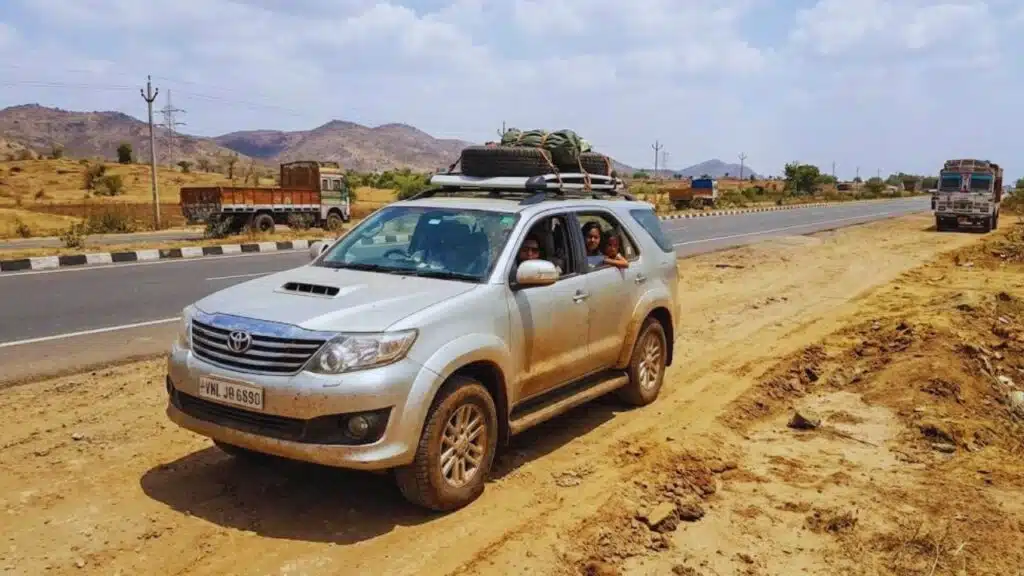
The Fortuner is often chosen by buyers who want long-term durability. It has a strong ladder-frame foundation. It is designed to handle heavy usage and rough travel. It also has strong road presence and a proven image in India. Many people buy it for peace of mind.
This is a big SUV. It feels solid on highways. It can handle broken patches while carrying full passengers and luggage. It is a common choice for intercity travel in tough conditions.
| Key Toughness Points | What It Means For You |
| High ground clearance | Less worry about scraping |
| Ladder-frame + strong diesel torque (variant-dependent) | Confident loaded touring |
| 4WD available | More traction when conditions worsen |
| Strong reputation and resale | Ownership confidence for many buyers |
Why It Keeps Getting Picked For Tough Duty
This SUV is built with a heavy-duty mindset. It feels stable at speed. It also feels like it can take long-term punishment. For many owners, reliability reputation plays a big role. They want something that does not feel delicate.
It is also popular because it suits many roles. It can be a family tourer. It can be a business vehicle. It can be a rough-route travel companion. That flexibility keeps demand high.
Indian Road Strengths
On highways, this SUV feels planted. On broken patches, it does not feel nervous. The high seating position helps visibility on chaotic roads. Ground clearance helps in poor construction zones. It also handles load well, which matters for long trips.
In monsoon, the confidence can be helpful. But water is always risky. Even tough SUVs can suffer in deep water. Drive smart, not brave.
What To Consider
It is expensive. It is also large, which can be tiring in tight city areas. Ride can feel firm at low speed on sharp potholes. Tyres and maintenance costs can also be higher than smaller SUVs.
If your driving is mostly city, think carefully. This SUV shines more when you travel long distances. It is not always the best daily commuter.
Best For
This suits frequent travelers. It suits large families that do highway trips often. It suits buyers who prioritize long-term rugged ownership. It also suits those who want strong resale confidence.
For touring-heavy buyers, it is a strong pick among the best SUVs for Indian roads.
5. Mahindra Bolero Neo (Simple, Practical, Rural-Proven)
The Bolero Neo is a practical SUV for people who want a straightforward tool. It is designed for daily running. It is often chosen in semi-urban and rural regions. It prioritizes function over fancy features. That can be an advantage when roads are bad and service support matters.
This is not an SUV that tries to impress with screens. It tries to impress by showing up every day. It is also compact enough for narrow streets. That is a real benefit in many Indian towns.
| Key Toughness Points | What It Means In Daily Life |
| Useful ground clearance | Works for most rough daily roads |
| Simple, rugged approach | Easier to maintain in smaller towns |
| Compact footprint | Easier on narrow lanes and crowded markets |
| Practical seating | Useful for local family travel |
Why It’s A Common “Bad Roads” Answer
Many buyers choose it for its simple strength. It is designed to tolerate rough use. It is also built with practicality in mind. That includes basic repairability and daily usability. In places where roads stay broken for years, this matters.
It also feels less stressful to own. Small scrapes or rough usage do not feel like a disaster. This “workhorse mindset” is why it stays relevant.
What To Highlight Before You Buy
Check the ride quality on your local road. Check how it feels over potholes. Check steering weight in traffic. Confirm seating comfort for your family. Also check safety features and build expectations, because this is not a premium product.
Then check the basics. Tyre availability is important. Suspension durability is important. Service convenience is important. Ownership is more than the purchase day.
Compromises
Cabin design and features may feel basic. Highway comfort may not match premium SUVs. Noise insulation may be lower. Safety and modern tech may vary by variant. Be clear about what you are trading.
If you want a soft and quiet experience, this may not satisfy you. If you want a tough daily runner, it can be a smart choice.
Best For
This is best for high-running users. It is best for rough areas where roads are always poor. It suits buyers who value easy maintenance. It also suits families that want a simple SUV without overthinking.
6. Maruti Suzuki Jimny (Compact, Confident, And Surprisingly Capable)
The Jimny is a different kind of toughness. It is not huge. It is not heavy. But it is built with a rugged base. It has a ladder-frame chassis and a compact body. That gives it a unique advantage on narrow and broken routes.
This SUV is often loved for its size. In India, narrow lanes are common. Tight parking is common. Mountain roads can be stressful in big cars. Jimny reduces that stress.
| Key Toughness Points | What It Means For You |
| Good ground clearance for its size | Helps on broken roads and steep ramps |
| Compact footprint | Easy handling in tight spaces |
| 4WD system | Helpful on slippery climbs and rough tracks |
| Simple rugged foundation | Useful for light trails and exploring |
Why Jimny Works In India Despite The Size
Size is not weakness here. In many Indian conditions, size is an advantage. You can place the vehicle precisely. You can avoid obstacles more easily. You can take narrow detours during construction. That makes the driving experience calmer.
It also feels less intimidating for new SUV buyers. You get an SUV-like view and clearance without the bulk. That balance is appealing.
Ideal Scenarios
This SUV fits hill driving well. It fits rural lanes well. It fits weekend exploration well. It is also great for city users who want a small SUV that can handle potholes. It is a good choice if you value control more than size.
It also suits people who drive alone or with one passenger often. If your usage is mostly small-group travel, it makes more sense.
Limits You Should Accept
Power and high-speed overtakes may not feel effortless when fully loaded. Boot space is limited compared to bigger SUVs. Ride comfort depends on road and tyre setup. Wind noise can be noticeable. These are normal trade-offs in a compact rugged vehicle.
If your family needs big space and premium comfort, look at larger options. If your priority is narrow-road confidence, it shines.
Best For
This is best for mountain users, city users with tight parking, and explorers. It is also best for buyers who want 4WD in a manageable size. If your routes are narrow and unpredictable, it can be one of the smartest picks.
7. Tata Safari (Family Comfort That Still Handles Bad Roads)
The Safari is built for families who want space and comfort. It is not a hardcore off-road machine. But it is designed to handle bad patches better than many low cars. It offers a high seating position. It also offers a comfortable cabin for long trips. That matters when your roads are not kind.
This SUV makes sense if your bad roads are mostly potholes, construction zones, and uneven rural connectors. It is for people who want to stay comfortable while still having useful clearance. For many families, this is the most realistic definition of “tough.”
| Key Toughness Points | What It Means For Families |
| Useful ground clearance | Helps on speed breakers and rough patches |
| Comfortable cabin | Easier long trips with elders and kids |
| Strong highway stability | Calm feel on long routes |
| Practical seating (6/7 seater) | More flexible travel planning |
Why It Fits The “Indian Conditions” Brief
Comfort is a big part of toughness. If passengers get tired, you drive worse. This SUV focuses on ride comfort and cabin space. That helps daily life. It also helps long-distance travel. You arrive less exhausted.
It also feels like a true family SUV. Seating and storage are more usable than in hardcore off-roaders. For most Indian households, that matters more than rock-crawling ability.
What To Validate With A Test Drive
Check ride quality over potholes. Check how it handles sharp edges at low speed. Check braking stability on uneven roads. Check turning radius in tight areas. Also check visibility in rain and at night.
Then check the wheel and tyre setup. Larger wheels can reduce cushion. Tyre pressure changes feel a lot on bad roads. A short test drive on smooth roads is not enough.
Considerations
This SUV is not meant for extreme off-roading. It is usually front-wheel drive, which is fine for most buyers. But it will not replace a true 4WD SUV in deep slush. Also, large size means careful parking and lane judgment.
If your route is extreme, consider ladder-frame 4WD options. If your route is normal-bad, this can be a better everyday tool.
Best For
This is best for families. It is best for people who do highway trips often. It is also best for buyers who want comfort first but still need clearance. If your daily life is rough roads plus family needs, it fits well.
Best SUVs For Indian Roads: Quick Decision Guide
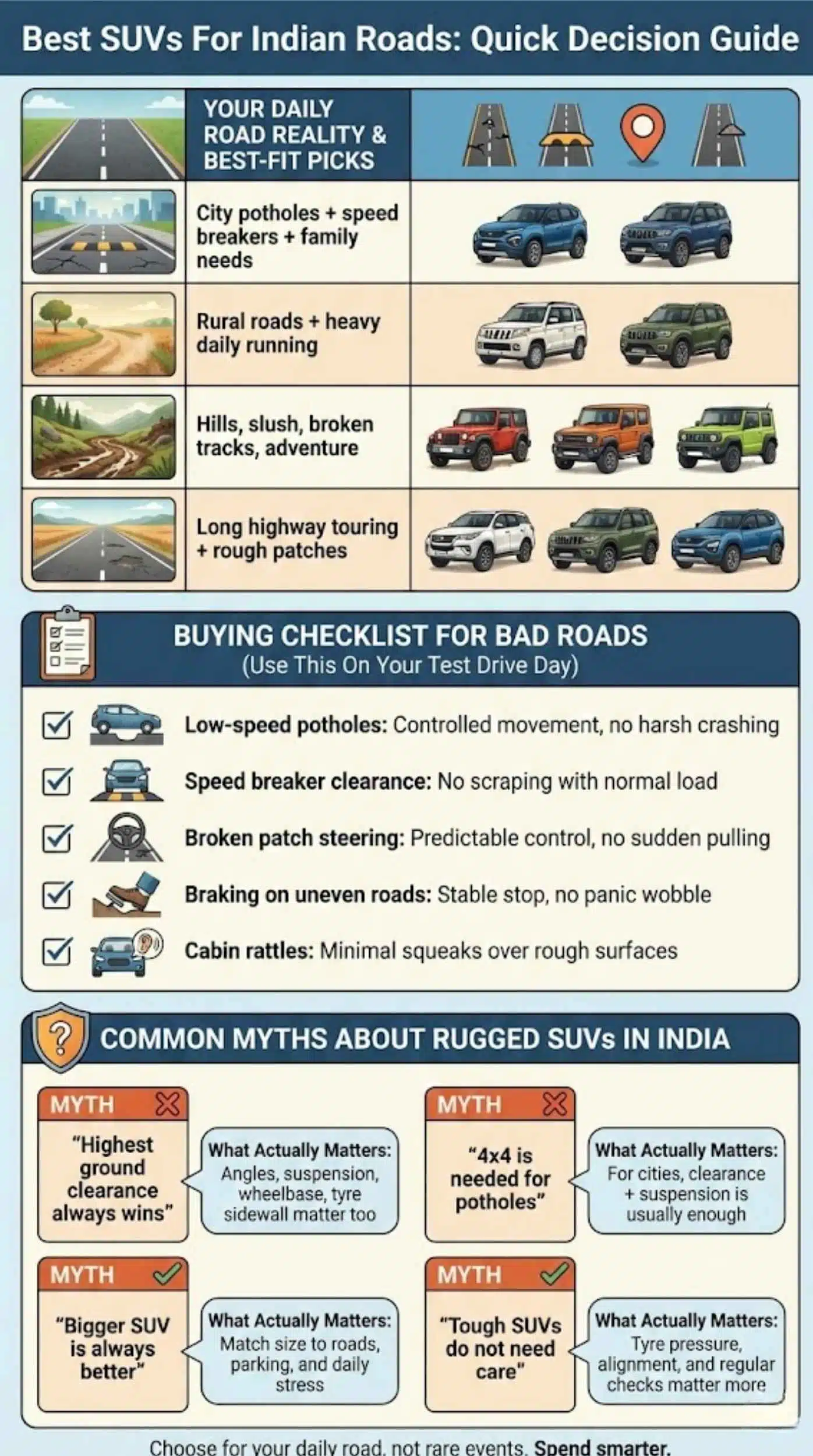
Choosing becomes easy when you match the SUV to your road pain. Most buyers make mistakes because they buy for rare events. Instead, buy for the road you drive every day. Then add a small buffer for your worst month, usually monsoon.
Use this guide like a shortcut. It is not perfect, but it will reduce confusion. It also helps you ignore unnecessary features. You will spend smarter.
| Your Daily Road Reality | Best-Fit Picks From This List |
| City potholes + speed breakers + family needs | Safari, Scorpio-N |
| Rural roads + heavy daily running | Bolero Neo, Scorpio-N |
| Hills, slush, broken tracks, adventure | Thar, Gurkha, Jimny |
| Long highway touring + rough patches | Fortuner, Scorpio-N, Safari |
Buying Checklist For Bad Roads (Use This On Your Test Drive Day)
A brochure cannot show you how an SUV behaves on your street. Your local road is the real exam. Test the car where you actually drive. Drive it slowly over potholes. Drive it over a speed breaker at a normal pace. Then repeat with passengers if possible.
Also, watch your own comfort. Notice the seat support. Notice the noise levels. Notice how much you tense up. A good SUV reduces stress. That is part of toughness too.
| What To Check | What “Good” Feels Like |
| Low-speed potholes | Controlled movement, no harsh crashing |
| Speed breaker clearance | No scraping with normal load |
| Broken patch steering | Predictable control, no sudden pulling |
| Braking on uneven roads | Stable stop, no panic wobble |
| Cabin rattles | Minimal squeaks over rough surfaces |
Common Myths About Rugged SUVs In India
SUV myths are everywhere. Many buyers think toughness means only high ground clearance. Others think 4×4 is mandatory. Some believe bigger size automatically means safer driving. These ideas can lead to poor decisions and wasted money.
Reality is more balanced. A well-tuned suspension can matter more than extra clearance. A good tyre can matter more than a fancy mode dial. And good driving habits can matter more than any badge.
| Myth | What Actually Matters |
| “Highest ground clearance always wins” | Angles, suspension, wheelbase, tyre sidewall matter too |
| “4×4 is needed for potholes” | For cities, clearance + suspension is usually enough |
| “Bigger SUV is always better” | Match size to roads, parking, and daily stress |
| “Tough SUVs do not need care” | Tyre pressure, alignment, and regular checks matter more |
Final Thoughts: Choosing The Best SUVs For Indian Roads
The smartest SUV choice is the one that matches your daily reality. If your roads are mostly broken city patches and speed breakers, comfort and tyres matter most. If your roads include rural ruts, slush, and steep climbs, traction and clearance matter more. If your trips are long and loaded, stability and reliability matter.
The best SUVs for Indian roads are not always the most expensive. They are the ones that reduce stress, protect the underbody, and stay serviceable. Shortlist two or three options. Test drive them on your worst stretch. Then choose the SUV that feels calm, not just tough.
FAQs
Which SUV Is Best For Bad Roads In India For Daily Use?
Daily use depends on your mix of comfort and toughness needs. If you want a balanced SUV, Scorpio-N is a strong all-rounder. If you want a family-first option, Safari fits many households. If your roads are truly harsh, Thar or Gurkha can make daily life easier.
Think about your most common road, not your occasional trip. A comfortable SUV that handles potholes well may be better than a hardcore off-roader for city life. Always test drive on your worst stretch.
What Ground Clearance Is Enough For Indian Roads?
There is no one magic number. For many Indian cities, around 180–200 mm can be enough for speed breakers and rough patches. If your area has deep ruts, rocky tracks, or poor rural roads, higher clearance helps. But clearance alone does not solve ride comfort.
Also look at approach and departure angles. A long SUV can still scrape if the angles are poor. Wheelbase and suspension travel also matter.
Is A Ladder-Frame SUV Better Than A Monocoque For Rough Roads?
Ladder-frame SUVs are often built for heavy-duty use. They can tolerate repeated abuse well. Monocoque SUVs can feel smoother and more car-like on highways. For most buyers, both can work. The right choice depends on how rough your “rough” really is.
If you regularly face deep ruts and heavy impact zones, ladder-frame can give peace of mind. If your rough roads are mainly potholes and construction zones, a comfortable monocoque can be smarter.
Do I Really Need 4×4 For Potholes And Broken City Roads?
Most city buyers do not need 4×4. Potholes and speed breakers mainly need ground clearance, tyres, and suspension tuning. 4×4 helps when traction is missing, like deep slush, steep wet climbs, sand, and loose gravel. If you do not face those often, you may not use it.
4×4 also adds cost and complexity. That is fine if you need it. But if you do not, spend that money on better tyres, insurance, and maintenance.
Which SUV Is Best For Narrow Hill Roads?
In hills, size matters. A smaller SUV feels easier to place. It also reduces stress on tight bends and narrow lanes. Jimny is a strong match for that use. Thar can also work well due to compact size and rugged basics.
But do not ignore comfort. If your family travels often, choose the one that keeps everyone calm. Hills already demand focus. A comfortable seat and good visibility help.
Is Water-Wading Safe In Monsoon?
Water-wading is risky, even in tough SUVs. Depth can be hard to judge. Hidden potholes can trap wheels. Moving water can push a vehicle. Also, sudden water entry can damage engines and electronics. So you should avoid it unless you truly must cross.
If you must, go slow. Avoid creating a wave. Keep a steady pace. Never enter moving water that looks strong. And follow the vehicle’s official limits and safety advice.