Planning a journey through the best places to visit in Southeast Asia for backpackers is a rite of passage for the modern adventurer. In 2026, the region has evolved from a simple budget trail into a sophisticated network of high-speed trains, 5G-ready islands, and sustainable eco-lodges. Whether you are looking for the chaos of a neon-lit metropolis or the silence of a remote mountain pass, Southeast Asia offers a level of cultural depth and financial freedom that is impossible to find elsewhere.
For those ready to swap the office for the open road, these 15 destinations provide the ultimate framework for a life-changing expedition.
How We Evaluated the Top Backpacker Hubs
To curate this 2026 list, we moved beyond just “cheap beer” and looked at the infrastructure that supports a modern backpacker’s lifestyle.
| Criteria | Evaluation Metric | Why It Matters |
| Daily Budget | Average cost for dorms and street food | Allows for longer travel durations and more experiences on a limited budget. |
| Connectivity | Availability of high-speed Wi-Fi and 5G | Essential for digital nomads and keeping in touch with home while off the grid. |
| Social Gravity | Density of hostels and community hubs | Determines how easy it is to find a “tribe” and travel partners on the road. |
| Adventure Access | Proximity to unique nature or activities | A true backpacker hub must offer more than just a place to sleep. |
The 15 Best Places to Visit in Southeast Asia for Backpackers
From the misty peaks of Northern Vietnam to the surf breaks of the Philippines, these are the essential stops for your 2026 itinerary.
1. Chiang Mai, Thailand
Chiang Mai remains the undisputed capital of the backpacker world. It offers a perfect blend of ancient temple culture and modern cafe life. In 2026, the Nimman district has become a global center for remote workers, while the Old City retains its heritage charm. It is one of the few places where you can live like royalty on a modest budget.
-
Best features: Incredible street food markets and a massive community of international travelers.
-
Pros: Extremely safe and very easy to navigate on a rented scooter.
-
Things to consider: The “smoky season” in March and April can significantly impact air quality.
2. Pai, Thailand
Located just a few hours north of Chiang Mai, Pai is a mountain valley sanctuary known for its “hippie” vibe. It is the kind of place where people arrive for three days and stay for three weeks. The days are spent exploring waterfalls and hot springs, while the nights revolve around the famous walking street market.
-
Best features: Pai Canyon sunsets and the most relaxed atmosphere in Thailand.
-
Pros: Very affordable lodging and a strong focus on wellness and organic food.
-
Things to consider: The road from Chiang Mai has over 700 curves and can be a challenge for motion sickness.
3. Ha Giang, Vietnam
The Ha Giang Loop is the definitive adventure of 2026. It is a multi-day motorbike journey through the most dramatic mountain scenery in Southeast Asia. Backpackers typically join “easy rider” tours or rent their own bikes to navigate the winding roads through limestone pinnacles and ethnic minority villages.
-
Best features: The Ma Pi Leng Pass and authentic homestays with local families.
-
Pros: A true “frontier” experience that feels untouched by mass tourism.
-
Things to consider: You need a valid motorcycle license and travel insurance that covers riding.
4. Hoi An, Vietnam
Hoi An is a UNESCO World Heritage site famous for its yellow-walled ancient town and thousands of glowing lanterns. It is the tailoring capital of the world, where backpackers can get high-quality custom suits or dresses made for a fraction of Western prices. The nearby An Bang beach provides a perfect coastal escape just minutes from the historic center.
-
Best features: Lantern-lit nights and world-class banh mi sandwiches.
-
Pros: Extremely walkable and photogenic at every corner.
-
Things to consider: The town can get very crowded with day-trippers during the late afternoon.
5. Da Nang, Vietnam
Da Nang has emerged as the most balanced city for long-term travelers in Vietnam. It offers a mix of modern skyscrapers, beautiful beaches, and easy access to the mountains. In 2026, its digital infrastructure is among the best in the region, making it a favorite for those who need to work while they travel.
-
Best features: The Dragon Bridge and the nearby Marble Mountains.
-
Pros: Great value for money and a very clean, organized urban environment.
-
Things to consider: It feels more like a “city” than a “backpacker town.”
6. Luang Prabang, Laos
This riverside town is the spiritual heart of Laos. It is a peaceful mix of French colonial architecture and gilded Buddhist temples. The daily morning alms ceremony is a sobering cultural experience, while the nearby Kuang Si Falls offers some of the most beautiful turquoise water in the world.
-
Best features: Kuang Si Waterfalls and the Mekong River sunset cruises.
-
Pros: A very slow, intentional pace of life that encourages reflection.
-
Things to consider: Laos is generally more expensive than Vietnam due to being landlocked.
7. Vang Vieng, Laos
Once known solely for wild parties, Vang Vieng has rebranded itself as the outdoor adventure capital of Laos. It is surrounded by jagged karst mountains that are perfect for rock climbing, paragliding, and hot air ballooning. The famous “tubing” on the river is now a much more relaxed and scenic activity.
-
Best features: Blue Lagoon swimming holes and Nam Xay viewpoint.
-
Pros: Some of the best scenery in the region for very low prices.
-
Things to consider: The road conditions in Laos are notoriously poor; the new high-speed train is a better option.
8. Siem Reap, Cambodia
Siem Reap is the gateway to Angkor Wat, the largest religious monument in the world. Beyond the temples, the town has a vibrant nightlife scene centered around “Pub Street.” In 2026, the area has also become a hub for social enterprises, with many cafes and shops supporting local community projects.
-
Best features: Sunrise at Angkor Wat and the floating villages of Tonle Sap.
-
Pros: Extremely friendly locals and a very high density of quality hostels.
-
Things to consider: The temple passes are a significant expense that you must budget for.
9. Bangkok, Thailand
Bangkok is the frantic, neon-lit engine of Southeast Asia. It is almost certainly where your journey will begin or end. From the backpacker enclave of Khao San Road to the high-end malls of Sukhumvit, the city offers a dizzying array of experiences. It is also the food capital of the world, with street stalls that have earned Michelin stars.
-
Best features: Grand Palace and the endless street food variety.
-
Pros: Excellent public transit and cheap domestic flights to the rest of the region.
-
Things to consider: The heat and humidity can be overwhelming for those not used to tropical climates.
10. Canggu, Bali (Indonesia)
Canggu is the global headquarters for the “digital nomad” lifestyle. It is a world of surf breaks, beach clubs, and trendy cafes. While it has become quite commercialized, the community energy is unmatched. It is the best place to network with other travelers and find your footing in Indonesia.
-
Best features: Echo Beach sunsets and a massive variety of coworking spaces.
-
Pros: The highest concentration of “Western comfort” and healthy food options.
-
Things to consider: Traffic congestion has become a major issue; rent a scooter and be patient.
11. Ubud, Bali (Indonesia)
Ubud is the cultural and spiritual center of Bali, famous for its rice terraces and monkey forests. It attracts those looking for yoga retreats, meditation, and a slower pace of life. It provides a lush, jungle alternative to the coastal chaos of the south.
-
Best features: Tegalalang Rice Terrace and the Sacred Monkey Forest Sanctuary.
-
Pros: Excellent for wellness-focused travelers and traditional Balinese art.
-
Things to consider: Like Canggu, it can feel very “touristy” in the main town center.
12. Gili Trawangan, Indonesia
Gili T is a tiny island where motorized vehicles are banned. Everyone gets around by bicycle or horse-drawn carriage. It is famous for its vibrant party scene and incredible turtle snorkeling right off the beach. It is a “no-shoes, no-worries” destination that defines the backpacker island dream.
-
Best features: Swimming with sea turtles and the iconic over-water swings.
-
Pros: A true car-free paradise with a very social atmosphere.
-
Things to consider: Fresh water is scarce; be mindful of your water usage.
13. Siargao, Philippines
Siargao is the surfing capital of the Philippines and has become a trendy alternative to Bali. It has a “raw” feel that is hard to find elsewhere. The island is covered in millions of coconut trees and features some of the most stunning lagoons and rock pools in the country.
-
Best features: Cloud 9 surf break and the Sugba Lagoon.
-
Pros: Incredibly welcoming locals and a genuine island-life vibe.
-
Things to consider: Internet can be spotty; it is a place to disconnect rather than work.
14. Penang, Malaysia
Penang is a food lover’s paradise. The capital, George Town, is a UNESCO site filled with street art and historic shophouses. Malaysia is often overlooked by backpackers, which is a mistake. It offers a more “orderly” experience with excellent English proficiency and some of the best culinary diversity in Asia.
-
Best features: George Town street art and the Penang Hill funicular.
-
Pros: Incredible mix of Malay, Chinese, and Indian cultures.
-
Things to consider: Alcohol is much more expensive here than in Thailand or Vietnam.
15. El Nido & Coron, Philippines
Located in the Palawan province, these twin destinations offer the most beautiful island-hopping tours on the planet. You will spend your days on a traditional boat exploring hidden lagoons, limestone cliffs, and shipwrecks from WWII. The water clarity here is world-class, making it a top choice for divers and snorkelers.
-
Best features: Big Lagoon in El Nido and the Twin Lagoons in Coron.
-
Pros: Unrivaled natural beauty that looks like a screensaver.
-
Things to consider: Getting here involves long van rides or expensive domestic flights.
Quick Overview
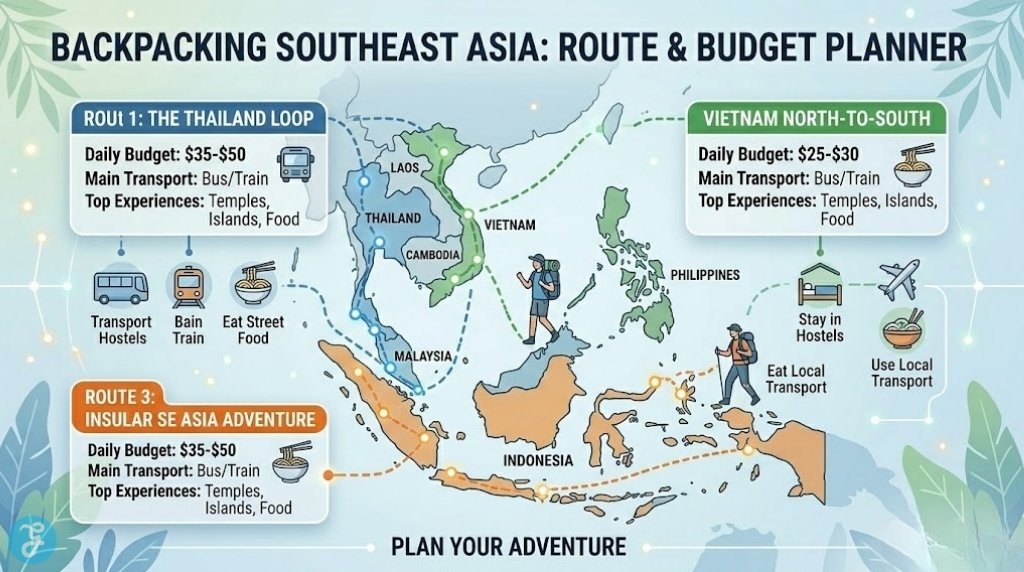
The following table summarizes these top hubs to help you plan your route across the best places to visit in Southeast Asia for backpackers.
Comparison Table
| Destination | Vibe | Typical Daily Budget | Primary Activity |
| Chiang Mai | Cultural / Digital | $25–$35 | Temples & Cafes |
| Ha Giang | Adventurous | $30–$40 | Motorbike Loop |
| Hoi An | Historic / Relaxed | $25–$35 | Tailoring & Beach |
| Luang Prabang | Spiritual / Calm | $30–$45 | Waterfalls & Alms |
| Siem Reap | Historic / Party | $25–$40 | Angkor Wat |
| Bangkok | Urban / Chaotic | $35–$50 | Street Food & Nightlife |
| Canggu | Surf / Social | $40–$60 | Surfing & Coworking |
| Gili T | Island / Party | $30–$45 | Snorkeling & Biking |
| Siargao | Tropical / Raw | $35–$50 | Surfing & Island Hopping |
| Penang | Culinary / Urban | $30–$45 | Food & Street Art |
Quick Picks
-
Best for First-Time Backpackers: Thailand (Bangkok & Chiang Mai)
-
Best for Budget Travelers: Vietnam (Hanoi, Hoi An, Da Nang)
-
Best for Serious Adventure: Vietnam (Ha Giang Loop) or Laos (Vang Vieng)
-
Best for Island Life: Indonesia (Gili Islands) or Philippines (Siargao)
Final Thoughts
Choosing the best places to visit in Southeast Asia for backpackers is about finding a balance between the legendary “Banana Pancake Trail” and the emerging frontiers of 2026. While the famous hubs like Bangkok and Bali offer safety and social connection, the true magic of the region often lies in the mountain passes of Laos or the remote lagoons of Palawan. By staying flexible and embracing the local pace of life, you will discover that Southeast Asia is not just a destination; it is a profound lesson in perspective, resilience, and the joy of the unknown.