The digital world has transformed significantly as we move through 2026. Finding the right tools to identify profitable search terms is more critical than ever for maintaining a competitive edge. These platforms allow you to understand how users are searching in an era dominated by artificial intelligence and voice assistants.
Choosing the right technology can make the difference between a successful campaign and a wasted marketing budget. The best keyword research tools provide deep insights into user behavior and competitive strategies. This guide will help you select the most effective software to drive your organic growth this year.
Selection Criteria For Our Top Rankings
We evaluated these platforms using a strict set of performance metrics to ensure they meet the needs of modern marketers. Our team looked at data accuracy and the speed of information retrieval across different global markets. We also prioritized tools that offer unique features for analyzing generative search results.
| Criterion | Weighting |
| Data Precision | 35% |
| AI Integration | 25% |
| Competitive Intelligence | 20% |
| User Interface | 20% |
Discovering The 15 Best Keyword Research Tools For Success
The following list represents the most effective solutions for finding and analyzing keywords in the modern digital world. Each entry has been tested for its ability to handle complex search queries and provide actionable insights. These selections will help you build a more robust search strategy for your brand.
1. Semrush
Semrush remains a dominant force in the industry by offering a massive database of billions of keywords. It provides a comprehensive view of both organic and paid search performance for any domain in the world. The platform is continuously updated with new features that track how brands are appearing in AI generated answers. This is a vital resource for anyone looking to scale their digital marketing efforts.
Special Features:
-
Keyword Magic Tool for generating massive lists of related terms
-
AI Visibility tracking for modern search results
-
Deep competitive analysis for every niche market
Things To Consider:
-
The user interface can be overwhelming for new users
-
Monthly costs are among the highest in the industry
Best For: Large agencies and enterprise marketing teams
2. Ahrefs
Ahrefs is widely respected for having one of the most accurate backlink indexes currently available. Its keyword research tool provides unique metrics like traffic potential to help you prioritize your content roadmap. The software is built for professionals who require high precision data for their technical analysis. It is an essential tool for those focused on authority building.
Special Features:
-
Keywords Explorer with data for over ten different search engines
-
Site Audit tool to fix technical SEO issues automatically
-
Detailed rank tracking for specific geographic regions
Things To Consider:
-
Subscription plans are based on a credit usage system
-
The learning curve is steep for beginner marketers
Best For: Professional SEO experts and data analysts
3. Google Keyword Planner
This free tool is the official source for search volume data directly from the worlds largest search engine. It is an essential foundation for any search marketing campaign regardless of your budget. Most experts use this tool to validate findings from other third party platforms. It integrates perfectly with your other Google marketing assets.
Special Features:
-
Raw search volume data directly from the Google source
-
Forecasting tools for planning future ad spend and traffic
-
Seamless integration with your
Things To Consider:Google Ads account
-
Volume data is often grouped into broad ranges
-
Lacks the competitive features of paid software suites
Best For: PPC campaigns and baseline search research
4. Moz Keyword Explorer
Moz offers a clean and intuitive approach to research that focuses on the most impactful metrics. Its priority score combines volume and difficulty to help you find the best opportunities quickly. The platform is a favorite for teams that value clear and actionable information. It remains a reliable staple in the SEO community.
Special Features:
-
Proprietary Priority Score for easy keyword ranking
-
Accurate organic click through rate estimates for all terms
-
Helpful suggestions for related topics and clusters
Things To Consider:
-
The database is smaller than competitors like Semrush
-
Updates to certain metrics can be slower than rivals
Best For: In house teams at small and medium businesses
5. Surfer SEO
Surfer SEO has become an essential tool for marketers who want to optimize their content for real time search results. It analyzes the top ranking pages to give you a blueprint for your own articles. This tool ensures that your content is semantically relevant to the topic you are targeting. It simplifies the bridge between research and writing.
Special Features:
-
Content Score for real time optimization feedback during writing
-
Automated topical maps for building site authority fast
-
AI powered outline generator for search friendly articles
Things To Consider:
-
The focus is more on optimization than broad research
-
Pricing can be high for creators with multiple websites
Best For: Content writers and digital publishers
6. AnswerThePublic
This platform uses a visual approach to map out the questions that users are asking online. It is an incredible resource for finding long tail keywords and creating helpful FAQ sections for your site. You can see the exact who and what and why behind any topic you choose. It helps bridge the gap between search volume and human curiosity.
Special Features:
-
Visual mind maps for brainstorming content ideas
-
Comparison trees that show how users weigh different options
-
Daily search alerts for new questions in your industry
Things To Consider:
-
Does not provide historical volume or difficulty metrics
-
Free version has very limited daily search capabilities
Best For: Brainstorming blog topics and understanding intent
7. KWFinder
KWFinder is designed to be the easiest tool for finding profitable long tail keywords with low competition. It offers a clean user interface that makes complex data look simple and easy to understand. The platform is particularly strong for those who need to research specific local markets. It provides a great user experience for everyday SEO tasks.
Special Features:
-
Very accurate keyword difficulty metrics for beginners
-
Search data for over fifty thousand locations worldwide
-
Easy to use interface that requires no technical training
Things To Consider:
-
Not intended for large scale enterprise site management
-
Keyword suggestions are less numerous than larger suites
Best For: Beginners and owners of local small businesses
8. Ubersuggest
Ubersuggest provides a great balance of features and affordability for people on a limited budget. It includes keyword suggestions and site audits and competitor tracking in one package. The tool is known for its simplicity and its helpful AI features for content creation. It is a solid choice for those starting their SEO journey.
Special Features:
-
Lifetime access options for a one time payment fee
-
AI powered tool to generate optimized content outlines
-
Competitor top pages report to see what works for others
Things To Consider:
-
Data can be less comprehensive for very niche topics
-
Customer support can be slower than premium alternatives
Best For: Freelancers and early stage startup founders
9. Keywords Everywhere
This browser extension allows you to do research while you are performing your normal daily tasks. It overlays volume and competition data directly onto the websites you visit most often. You can see metrics for Google and YouTube and Amazon without leaving the page. It is a highly efficient way to validate search terms on the go.
Special Features:
-
Historical charts showing keyword trends over several years
-
Analysis of the keywords used by your top ranking rivals
-
Support for many different search engines and platforms
Things To Consider:
-
The tool uses a credit system that can finish quickly
-
Limited depth compared to a dedicated research suite
Best For: Quick validation of ideas during daily browsing
10. SpyFu
SpyFu is built specifically for users who want to see exactly what their competitors are doing. It allows you to download every keyword your rivals have ever bought on Google Ads. This information is vital for building a strategy that can effectively challenge your peers. It provides a historical perspective on keyword value.
Special Features:
-
Kombat tool to see where your keyword targets overlap
-
Historical records of your competitors ad copy and rankings
-
No limits on the amount of data you can download
Things To Consider:
-
Primary focus is on the US and UK search markets
-
Interface is tailored toward professionals and can be dense
Best For: Competitive benchmarking and paid search managers
11. AlsoAsked
AlsoAsked scrapes the data from Google to show you how different topics are related to each other. It helps you build topical authority by covering all the subtopics that users are asking about. This is a critical tool for creating comprehensive guides and pillar pages. It reveals the intent behind the query in a visual way.
Special Features:
-
Live data scraping for the most current search questions
-
Hierarchical maps that show the flow of user curiosity
-
Export options to move your data into other SEO tools
Things To Consider:
-
This tool provides intent data but no search volume
-
Very niche subjects may not have deep question trees
Best For: Building comprehensive content clusters
12. KeywordTool.io
KeywordTool.io is the best option for marketers who need data for platforms other than Google. It generates keywords for YouTube and TikTok and Instagram as well as e-commerce sites. This allows you to reach your audience wherever they spend their time online. It is the gold standard for multi platform search research.
Special Features:
-
Support for nearly two hundred countries and eighty languages
-
High relevance suggestions based on search autocomplete data
-
Dedicated research tabs for mobile app store optimization
Things To Consider:
-
The free version does not show search volume data
-
Lacks the all in one features of a platform like Semrush
Best For: Social media managers and e-commerce sellers
13. Clearscope
Clearscope uses artificial intelligence to help you write content that is semantically relevant to your topic. It analyzes the top results to find the hidden terms that signal authority to search engines. The platform is designed to improve your rankings through better content quality. It makes complex data easy for writers to use.
Special Features:
-
Real time content grading to measure your optimization level
-
Easy integration with Google Docs for collaborative editing
-
Keyword grouping to help you organize your content strategy
Things To Consider:
-
It has a high price point that may not fit all budgets
-
Most effective for optimizing content that is already written
Best For: Large content teams and digital marketing agencies
14. Otterly.AI
Otterly is a new tool that focuses on how brands appear in generative search engine responses. It monitors how often your website is cited as a source by AI models like Gemini. This information is crucial for maintaining visibility as search behavior shifts toward AI. It is a futuristic addition to any modern SEO stack.
Special Features:
-
Tracking for brand citations in modern generative engines
-
Share of voice metrics specifically for AI search results
-
Alerts for when a competitor takes your spot in AI answers
Things To Consider:
-
The technology is very new and still changing frequently
-
Does not offer the traditional SEO metrics found in older tools
Best For: Brand managers focused on the future of search
15. Google Search Console
This free service from Google is the most accurate way to track your actual search performance. It reveals the exact keywords that are leading users to your website right now. You can use this data to find pages that need more optimization. It is the ultimate truth for your organic traffic data.
Special Features:
-
Accurate click and impression data for every page on your site
-
Direct feedback from Google about your indexing status
-
Performance tracking for core web vitals and mobile use
Things To Consider:
-
You can only see data for websites that you actually own
-
No information provided about your competitors strategy
Best For: Monitoring your growth and fixing technical issues
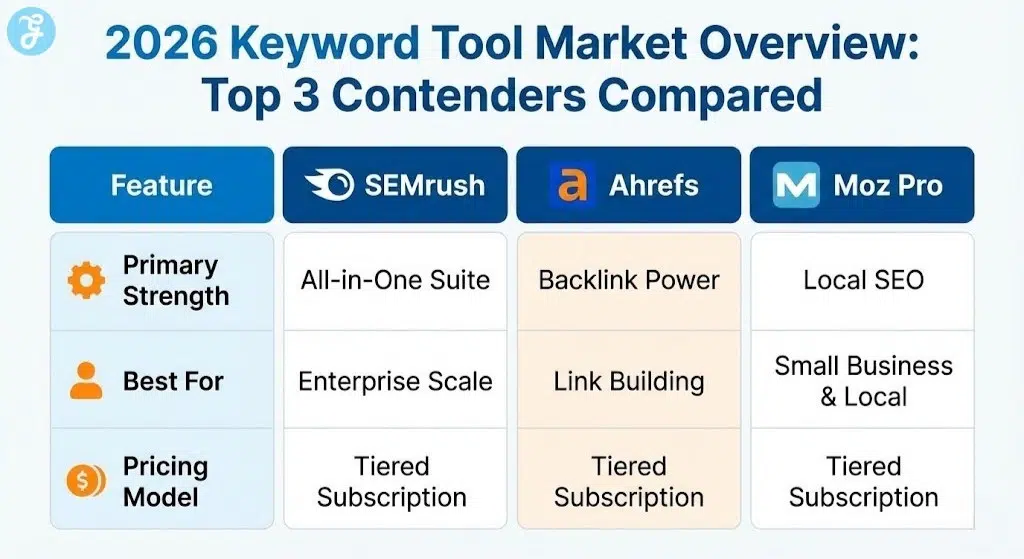
2026 Search Market Overview
The current market is defined by a shift toward semantic search and predictive modeling. Most high performing tools now offer some form of automated intent classification to save time for researchers. This table provides a quick look at how the top contenders compare in the current environment.
| Platform Name | Best Known For | Entry Pricing |
| Semrush | Market Intelligence | Premium |
| Ubersuggest | User Experience | Budget |
| Ahrefs | Backlink Analysis | Premium |
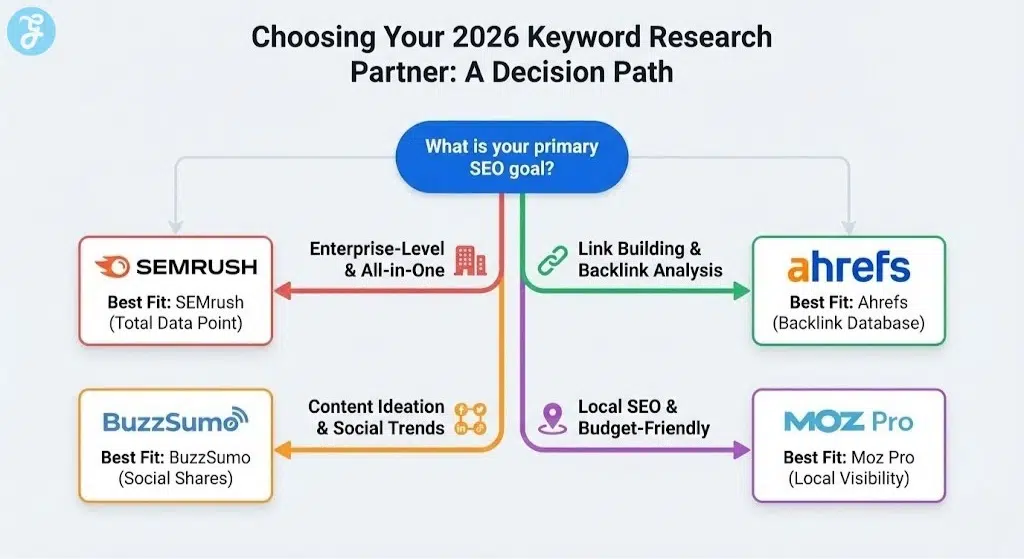
How To Choose The Right Platform
Choosing the right tool involves assessing your current needs against your marketing budget for the year. Most professional teams find that using a combination of tools provides the best overall results. This matrix helps you determine which solution fits your specific business goals.
| Goal | Preferred Tool | Key Metric |
| Content Depth | Clearscope | Content Grade |
| Global Data | Semrush | Intent Score |
| Local SEO | KWFinder | KD Score |
Final Thoughts On Search Growth
Winning in search during 2026 means using data to make smarter decisions about your content. The best keyword research tools are the ones that help you connect with your audience. Staying updated with these technologies will ensure your brand remains visible in a changing landscape