


Living in Dubai often means balancing the vibrancy of city life with the need for a calm, restorative home environment. Between the high-rise views of Downtown and the hustle of Marina, your apartment can sometimes feel disconnected from nature. This is where the best indoor plants for Dubai apartments come into play, not just as decor, but as essential tools for well-being.
In a city where air conditioning runs 24/7 and fine dust is a daily reality, indoor plants act as natural bio-filters. They don’t just survive; the right species can thrive in your climate-controlled sanctuary, actively combating “sick building syndrome” and elevating your mental clarity. Whether you are working from a studio in Business Bay or a spacious apartment in JBR, integrating greenery is the most effective way to soften modern interiors and reconnect with the natural world.
This comprehensive guide explores 15 scientifically proven plants that flourish in the UAE’s unique indoor conditions, helping you breathe better, focus sharper, and live happier.
Key Takeaways
-
AC Tolerance is Key: The best plants for Dubai must withstand dry air and temperature fluctuations caused by constant air conditioning.
-
Dust Management: Wiping leaves is critical in the UAE to ensure plants can photosynthesize effectively.
-
Air Quality: Plants like Snake Plants and Peace Lilies filter common indoor toxins (VOCs) that accumulate in sealed apartments.
-
Watering Rules: In cool, AC-heavy environments, overwatering is the #1 killer. Always use the “finger test” before watering.
-
Light Matters: Floor-to-ceiling windows offer great light, but direct Dubai sun can scorch leaves—sheer curtains are your best friend.
Why You Need Indoor Plants in Your Dubai Apartment
The concept of “Biophilic Design”—our innate human tendency to seek connections with nature—is more than a trend; it’s a necessity in urban environments like Dubai. Research published in the Journal of Environmental Psychology suggests that the presence of indoor plants can boost productivity by up to 15%. But how exactly does this translate to your apartment life?
Combatting Dry AC Air
Dubai apartments are notorious for dry air due to continuous air conditioning. This low humidity (often dropping below 30%) can lead to dry skin, irritated sinuses, and respiratory issues. Plants undergo a process called transpiration, where they release moisture back into the air, acting as natural humidifiers that restore balance to your indoor climate.
Filtering Invisible Toxins
Sealed apartments can trap Volatile Organic Compounds (VOCs) like benzene and formaldehyde, which are off-gassed by carpets, paint, and furniture. NASA’s Clean Air Study famously discovered that certain plants can scrub these toxins from the air, leaving you with a fresher, cleaner environment to wake up to.
The “Unkillables”: Low-Maintenance Plants for Busy Professionals
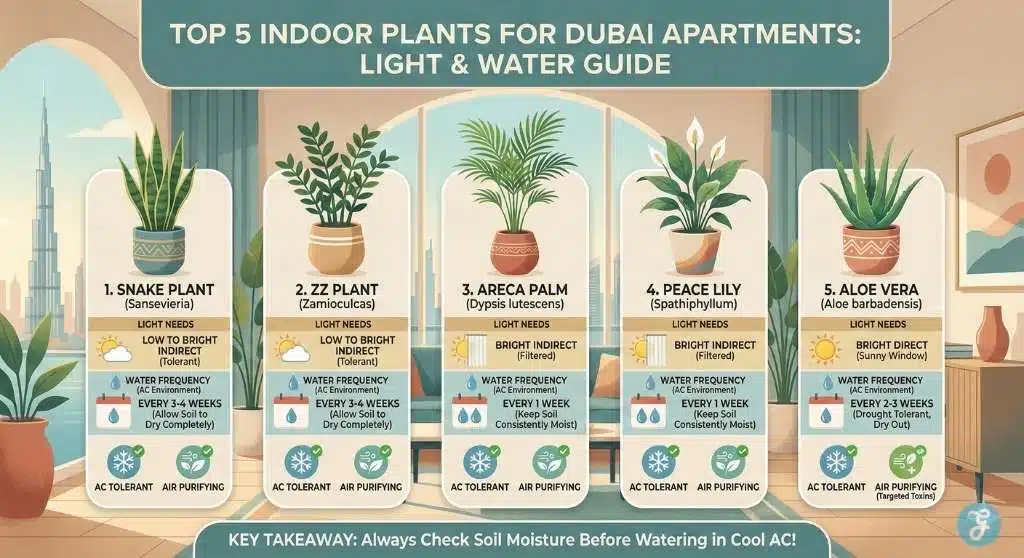
For the busy consultant or the frequent traveler who jets off on weekends, these plants are forgiving, resilient, and virtually indestructible.
1. Snake Plant (Sansevieria)
Often called “Mother-in-Law’s Tongue,” this is the ultimate warrior of the plant world. Its architectural, upright sword-like leaves fit perfectly into modern Dubai aesthetics.
-
Why it Thrives in Dubai: It is incredibly drought-tolerant. If you forget to water it for three weeks because you were traveling, it won’t hold a grudge.
-
Productivity Boost: unlike most plants, the Snake Plant releases oxygen at night. Placing this in your bedroom improves sleep quality, ensuring you wake up refreshed and ready for a productive day.
-
Placement: Perfect for a dim corner in your bedroom or entryway.
2. ZZ Plant (Zamioculcas zamiifolia)
If you have a dark hallway or a bathroom with no windows, the ZZ plant is your answer. Its waxy, glossy leaves reflect light, brightening up shadowy spaces.
-
Why it Thrives in Dubai: It grows from rhizomes (bulb-like roots) that store water, making it resistant to the dry air of AC units. It prefers to be ignored rather than fussed over.
-
Care Tip: Water only when the soil is bone dry. In a cool Dubai apartment, this might be once every 3-4 weeks.
3. Cast Iron Plant (Aspidistra elatior)
True to its Victorian-era name, this plant can survive conditions that would kill lesser greenery. It withstands dust, drafts, heat, and low light with stoic grace.
-
Why it Thrives in Dubai: It is immune to the temperature fluctuations that occur when you switch the AC on and off.
-
Design Note: Its leafy, deep green foliage adds a lush look without the high maintenance of ferns.
4. Aloe Vera
A succulent that loves the sun as much as you do. It’s functional, medicinal, and beautiful.
-
Why it Thrives in Dubai: Being a desert native, it handles the intense light pouring through your windows better than most.
-
Health Benefit: The gel inside the leaves is a natural remedy for sunburns after a day at Kite Beach. It also clears the air of benzene, a chemical found in many household cleaners.
Air Purifiers: Best Plants for Clean Air & Focus
Brain fog is often a result of poor indoor air quality. These plants are efficient bio-filters that help clear the air and your mind.
5. Spider Plant (Chlorophytum comosum)
Known for its arching leaves and “spiderettes” (baby plants), this is a rapid grower that brings dynamic energy to a room.
-
Why it Thrives in Dubai: It adapts quickly to varying temperatures.
-
Air Scrubbing Power: It is highly effective at removing carbon monoxide and xylene. If you live near a busy road like Sheikh Zayed Road, this plant helps combat incoming pollutants.
-
Styling: Looks fantastic in a hanging basket near a balcony door.
6. Peace Lily (Spathiphyllum)
Elegant and expressive, the Peace Lily features dark green leaves and striking white “spoon” flowers.
-
Why it Thrives in Dubai: It loves the stable temperatures of indoor apartments.
-
The “Thirsty” Signal: It dramatically droops when it needs water, taking the guesswork out of your care routine.
-
Caution: It can be toxic to cats and dogs, so keep it elevated if you have pets.
7. English Ivy (Hedera helix)
A classic trailing plant that adds a touch of old-world charm to modern glass-and-steel apartments.
-
Why it Thrives in Dubai: It prefers cooler temperatures, so it actually enjoys your AC-cooled living room (around 20°C-24°C).
-
Mold Fighter: Studies have shown English Ivy can reduce airborne mold particles by up to 60%, making it excellent for bathrooms or damp areas.
8. Pothos (Epipremnum aureum)
Also known as “Devil’s Ivy” because it’s nearly impossible to kill. Its trailing vines can grow several meters long, perfect for framing windows or draping from high shelves.
-
Why it Thrives in Dubai: It tolerates low light and erratic watering.
-
Productivity: The rapid growth gives you a visual sense of progress and reward, which can be psychologically boosting.
The Statement Makers: Large Plants for Living Rooms
Dubai apartments often feature floor-to-ceiling windows and open plans. You need plants with scale and presence to anchor these spaces.
9. Monstera Deliciosa (Swiss Cheese Plant)
The darling of interior design, famous for its large, fenestrated leaves.
-
Why it Thrives in Dubai: It loves bright, indirect light. Placing it near a large window (with a sheer curtain to prevent scorching) will result in massive growth.
-
Design Impact: It instantly softens the sharp architectural lines of modern high-rises, adding a tropical, organic feel.
10. Rubber Plant (Ficus Elastica)
With its thick, glossy, burgundy-green leaves, the Rubber Plant is a sophisticated addition to any living room.
-
Why it Thrives in Dubai: It prefers the stable indoor climate over the scorching outdoor heat.
-
Care Tip: The large leaves attract dust. Wipe them weekly with a damp cloth and a drop of neem oil to keep them shiny and pest-free.
11. Areca Palm (Dypsis lutescens)
If you want a resort vibe in your living room, the Areca Palm is the answer. Its feathery fronds create a soft, swaying canopy.
-
Why it Thrives in Dubai: It is one of the best biological humidifiers, releasing copious amounts of moisture into the dry AC air.
-
Placement: It needs bright light, so a corner near a balcony door is ideal.
12. Dracaena (Dragon Tree)
Tall, slender, and architectural, the Dracaena is perfect for narrow corners or defining zones in a studio apartment.
-
Why it Thrives in Dubai: It is drought-tolerant and doesn’t need direct sun.
-
Variety: The ‘Marginata’ variety has red-edged leaves that add a subtle pop of color to neutral apartment palettes.
Desk Companions: Small Plants for Your Home Office
Enhance your WFH (Work From Home) setup with these compact plants that fit perfectly on a desk.
13. Lucky Bamboo
A symbol of good fortune and prosperity in Feng Shui—highly popular in Dubai’s business culture.
-
Why it Thrives in Dubai: It grows in water, eliminating the need for soil and the potential for mess.
-
Productivity: It adds a Zen element to your workspace, helping to reduce stress during high-pressure Zoom calls.
14. Jade Plant (Crassula ovata)
A succulent with thick, woody stems and oval leaves, often associated with wealth and success.
-
Why it Thrives in Dubai: It loves dry air and sunny windowsills.
-
Growth: It grows slowly, so it won’t overtake your desk space.
15. Aglaonema (Chinese Evergreen)
If your desk is far from a window, the Aglaonema is your best friend. It comes in stunning variegated patterns of pink, red, and silver.
-
Why it Thrives in Dubai: It is extremely durable and tolerates fluorescent office lighting or low natural light.
-
Visual Stimulus: The pop of color provides visual relief from computer screens, reducing eye strain.
Comparison of Top 5 Plants for Dubai Apartments
| Plant Name | Light Needs | Water Frequency (AC Environment) | Best For… |
| Snake Plant | Low to Bright | Every 3-4 weeks | Bedrooms (Oxygen) |
| ZZ Plant | Low to Medium | Every 3-4 weeks | Dark Hallways |
| Areca Palm | Bright Indirect | Every 1 week | Living Rooms (Humidifier) |
| Peace Lily | Low to Medium | Every 1 week | Air Purification |
| Monstera | Bright Indirect | Every 1-2 weeks | Visual Impact |
Essential Care Tips for Indoor Plants in Dubai
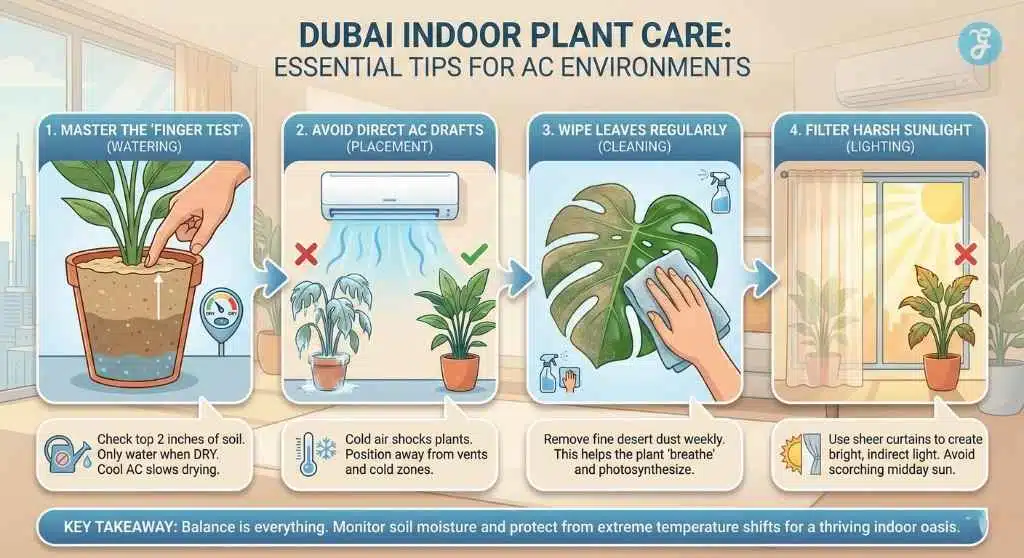
Growing plants in the UAE presents unique challenges compared to Europe or Asia. Here is how to navigate the “AC vs. Desert” dynamic.
1. Mastering the AC Factor
Air conditioning is the biggest frenemy of your plants.
-
The Draft Danger: Never place a plant directly in the path of an AC vent. The cold, dry blast can freeze plant cells and cause leaves to brown and crisp.
-
The Humidity Hack: Group plants together. As they transpire, they create a micro-climate of higher humidity around each other, combating the dry room air. You can also place pots on a tray of pebbles and water (ensure the pot doesn’t sit in the water) to increase ambient moisture.
2. Watering in the Desert (Indoors)
-
The “Finger Test”: Ignore the calendar. In a cool, AC-controlled apartment, soil dries out slower than you think. Insert your finger 2 inches into the soil. If it’s dry, water. If it’s damp, wait.
-
Seasonal Shifts: Even indoors, plants sense the seasons. In Dubai summers, the AC works harder, drying the air more, so you might need to water slightly more often. In winter, plants go dormant; reduce watering significantly.
3. Dealing with Dubai Dust
Fine dust is omnipresent in the UAE. When it settles on leaves, it blocks sunlight, preventing photosynthesis.
-
The Fix: Wipe leaves with a damp microfiber cloth every weekend. For smaller plants, you can give them a gentle shower in the bathtub to wash away dust and potential pests.
4. Managing Light and Heat
-
The Glasshouse Effect: Modern Dubai apartments have double-glazed windows which block some UV rays, but the heat intensity can still scorch leaves.
-
Sheer Curtains: Use sheer curtains to diffuse direct afternoon sun. This creates the “bright, indirect light” that 90% of indoor plants crave.
The “Expat Hack”: Keeping Plants Alive While You Travel
Dubai residents are frequent travelers, often escaping the summer heat for weeks at a time. The fear of coming home to dead plants is real, but avoidable with these “vacation-proof” strategies.
-
The Bathtub Method: For plants in plastic nursery pots with drainage holes, place them in your bathtub on top of a thick, wet towel. Fill the tub with about 2-3 inches of water. The plants will wick up moisture from the bottom as needed.
-
The “Wick” Trick: If you don’t have a bathtub, fill a large water jug and place it next to your plant. Run a cotton string or shoelace from the bottom of the jug deep into the plant’s soil. Capillary action will slowly feed water to the roots while you are away.
-
Create a Micro-Climate: Group all your plants together on a waterproof sheet in the middle of a room (away from windows). The collective transpiration creates a humid zone that slows down water loss.
-
Lower the Shutters: Before you leave for the airport, close your curtains or blinds to block 80% of the light. This puts plants into a semi-dormant state where they consume significantly less water.
Pet Safety: Toxic vs. Pet-Friendly Options
Many popular plants can be harmful to curious cats and dogs. Since pets spend 100% of their time indoors in Dubai apartments, choosing safe greenery is non-negotiable.
Safe for Pets:
-
Spider Plant: Non-toxic and actually fun for cats to bat at (though try to discourage it!).
-
Areca Palm: Completely safe for both dogs and cats.
-
Money Tree (Pachira Aquatica): A safe, tree-like option that brings good luck without the risk.
-
Calathea (Prayer Plant): Safe and adds beautiful color to your home.
Toxic (Keep Out of Reach):
-
Sago Palm: Highly toxic. Avoid this completely if you have pets.
-
Peace Lily: Dangerous for cats if ingested (can cause kidney failure).
-
Aloe Vera: The gel is medicinal for humans but toxic to pets if eaten.
-
Dieffenbachia (Dumb Cane): Causes swelling of the mouth and tongue.
Troubleshooting: Common Dubai Plant Pests
In the UAE, pests often hitch a ride on new plants or thrive due to the specific indoor climate.
-
Spider Mites: These love the hot, dry air of Dubai apartments.
-
The Sign: Tiny webbing between leaves or yellow, stippled dots on foliage.
-
The Fix: Increase humidity immediately. Wipe leaves with a damp cloth or shower the plant. Neem oil is also effective.
-
-
Mealybugs: These look like tiny bits of white cotton fluff hiding in the nooks of stems.
-
The Sign: Sticky residue (honeydew) on leaves or white fluffy masses.
-
The Fix: Dip a Q-tip in rubbing alcohol and dab it off individually.
-
-
Fungus Gnats: Tiny black flies buzzing around the soil surface.
-
The Cause: Overwatering (common in cool AC rooms).
-
The Fix: Let the soil dry out completely. Sprinkle cinnamon powder on the soil surface as a natural fungicide.
-
Styling Your Apartment Jungle
Dubai apartments range from sleek Downtown studios to spacious Marina residences. Here is how to style your plants for maximum impact.
-
The “Vertical Garden”: Floor space is premium in studios. Use macramé hangers or wall-mounted planters for Pothos and English Ivy to draw the eye upward and make the room feel taller.
-
The “Luxury Corner”: In larger living rooms, use the “Rule of Three.” Group a tall plant (like a Monstera), a medium bushy plant (like a Peace Lily), and a small trailing plant together in matching ceramic pots. This creates a curated, designer look rather than a cluttered one.
-
Pot Selection:
-
Terracotta: Best for people who tend to overwater (it breathes and dries out soil faster).
-
Glazed Ceramic/Plastic: Best for those who forget to water (keeps moisture in).
-
Self-Watering Pots: A worthwhile investment for the busy professional, widely available at ACE Hardware or Dubai Garden Centre.
-
Where to Buy Indoor Plants in Dubai
To satisfy your green thumb, you don’t need to look far.
-
Warsan Plant Souq: The go-to for bulk buying and negotiation. Great for large statement plants.
-
Dubai Garden Centre: A more curated experience with pots, soil, and accessories.
-
Online Apps: Services like Plntd, Gorgeous Flower Co, or Kame Gardens offer delivery directly to your door, perfect for avoiding the heat.
Frequently Asked Questions (FAQ)
1. Which indoor plant is best for a dark Dubai apartment?
The ZZ Plant (Zamioculcas zamiifolia) is the absolute best choice for dark apartments. It can survive in windowless bathrooms or hallways with only artificial light. It requires very little water, making it perfect for low-light conditions where soil takes longer to dry.
2. Do indoor plants attract bugs in apartments?
Indoor plants themselves don’t typically attract bugs, but overwatering does. Wet soil attracts Fungus Gnats (tiny black flies). To prevent this, allow the top 2 inches of soil to dry out completely between waterings and ensure your pots have drainage holes.
3. How often should I water my plants in AC?
There is no fixed schedule, but generally, in an AC-cooled Dubai apartment (kept at 22-24°C), most plants need water every 7 to 10 days. Succulents like Snake Plants and Aloe Vera may only need water once every 3 weeks. Always check soil moisture with your finger first.
4. Can I put my indoor plants on the balcony during the Dubai winter?
Yes, but be careful. The “winter” months (November to March) are pleasant, but the direct sun can still be intense. acclimatize them slowly. However, tropical plants like Peace Lilies or Calatheas might not like the temperature drop at night if it goes below 15°C.
5. My plant’s leaves are turning brown at the tips. Why?
This is usually caused by low humidity due to air conditioning or irregular watering. Try misting your plant every few days or placing it on a pebble tray with water. If the brown spots are crispy, it’s likely dry air/underwatering. If they are mushy, it is over-watering.
The Bottom Line: Cultivating Your Personal Oasis in Dubai
Transforming your Dubai apartment into a green oasis is not just about aesthetics; it’s an investment in your physical and mental health. By selecting the best indoor plants for Dubai apartments, like the resilient Snake Plant or the humidity-loving Areca Palm, you can counteract the effects of dry AC air, reduce stress, and create a space that genuinely recharges you.
Start small. Pick one “unkillable” plant this weekend, place it where you will see it every day, and watch how it changes the energy of your room.






























