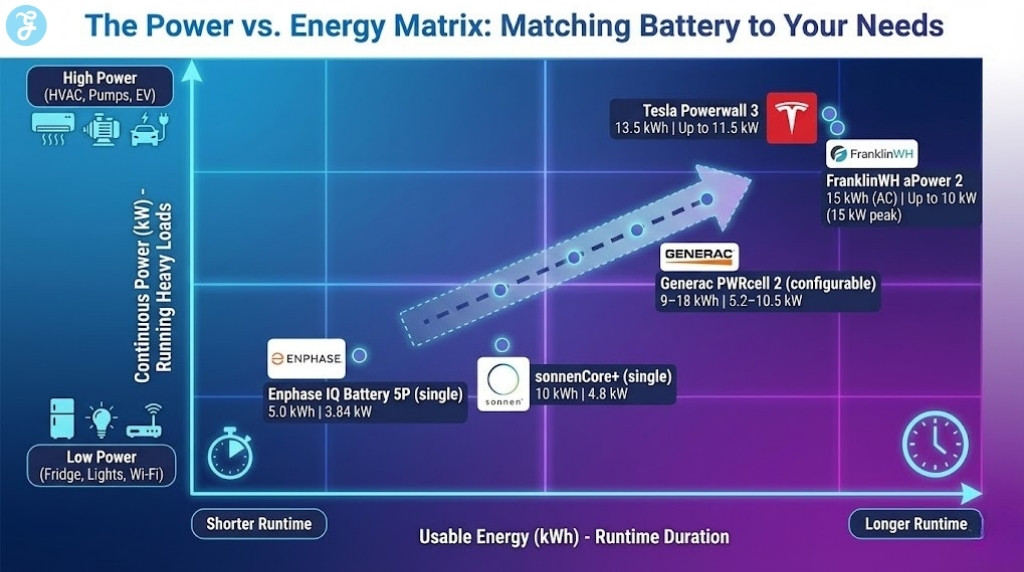
Home batteries in 2026 are not just “keep the lights on” insurance. The best systems help you ride through outages, protect essential circuits, and shift energy use away from expensive peak rates, especially if you have solar. But the right choice depends less on brand hype and more on two practical numbers: usable energy (kWh) and continuous power (kW).
This guide compares Tesla Powerwall against four serious competitors, with a simple way to pick based on your home’s loads and your goals.
How We Picked The Best Home Battery Storage Systems For 2026?
We prioritized systems that can realistically run a modern home, scale up later, and integrate cleanly with common solar and backup setups. Here are our criteria:
-
Performance: Usable capacity and continuous output power
-
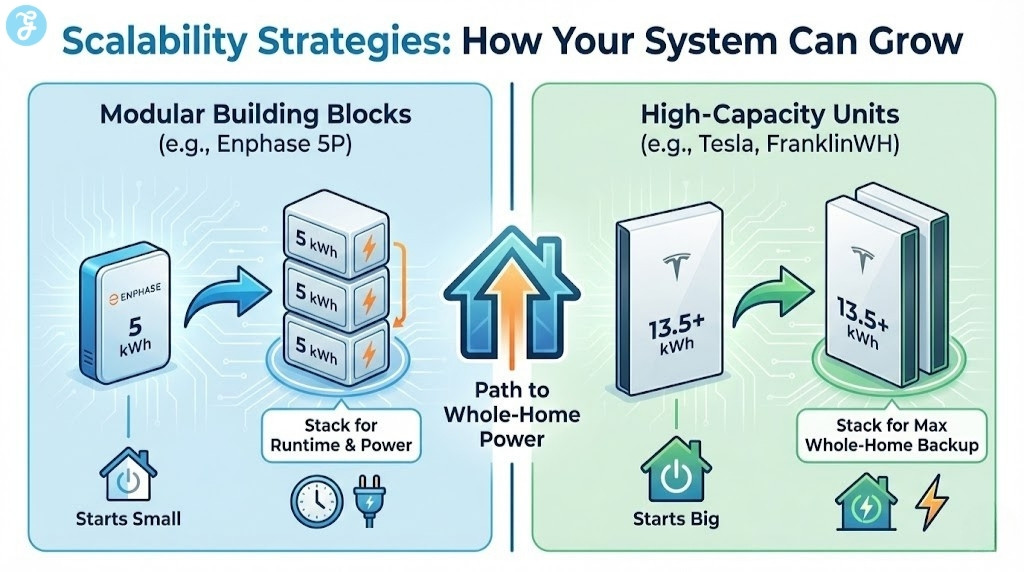
Scalability: Ability to stack batteries to increase runtime and power
-
Backup Reality: How well it handles heavy loads and surge starts
-
Ecosystem: App controls, monitoring, and compatibility with common solar layouts
-
Warranty: Clear coverage terms and credible support pathways
Comparison Table
| System | Usable Energy (Per Unit) | Continuous Power (Per Unit) | Chemistry | Scalability Highlight | Warranty Snapshot |
|---|---|---|---|---|---|
| Tesla Powerwall 3 | 13.5 kWh | Up to 11.5 kW | LFP | Up to 4 Powerwall 3 units supported | 10 years |
| Enphase IQ Battery 5P | 5.0 kWh | 3.84 kW | LFP (system uses LFP across recent IQ storage) | Modular by stacking multiple 5P units | (See local Enphase terms) |
| FranklinWH aPower 2 | 15 kWh (AC) | Up to 10 kW continuous (15 kW peak for 10s) | LFP | Up to 15 units per aGate | 15 years or 60 MWh throughput |
| Generac PWRcell 2 | 9–18 kWh (configurable) | 5.2–10.5 kW (by configuration) | (Varies by system design) | Scale by adding modules/cabinets | 10 years (modules + core components) |
| sonnenCore+ | 10 kWh or 20 kWh units (stackable) | 4.8 kW per stack (1 unit), 9.6 kW (2), 14.4 kW (3) | (sonnen “safe, long-lasting” battery platform) | Stack up to 60 kWh | 10-year / 10,000-cycle positioning on Core+ line |
Top 5 Home Battery Storage Systems for 2026 (Tesla vs. Competitors)
Here are the 5 Best Home Battery Storage Systems for 2026 that cover the most common buyer profiles: whole-home capable power, modular solar ecosystems, premium energy management, and high-capacity stacking.
1) Tesla Powerwall 3
Powerwall 3 is the “most mainstream” pick because it combines strong usable energy with very high continuous output, which matters if you want to run bigger loads during an outage. It also supports substantial solar input and is designed to scale with multiple units, making it a strong fit for whole-home ambitions.
-
Best For: Whole-home style backup, higher-load homes, buyers who want strong power output per unit
-
Pros: High continuous power (up to 11.5 kW); 13.5 kWh energy; strong load start capability
-
Cons: Installer availability and pricing vary widely by region; best results depend on a well-designed backup panel
2) Enphase IQ Battery Battery 5P
IQ Battery 5P is ideal if you like a modular approach and want to build your system in smaller steps, especially in an Enphase-centered solar setup. Each unit is 5.0 kWh with 3.84 kW continuous output, so stacking multiple units is the common path to longer runtime and higher backup power.
-
Best For: Enphase solar homes, modular expansion, essentials backup that can scale over time
-
Pros: Clear per-unit specs (5.0 kWh, 3.84 kW continuous); straightforward modular scaling
-
Cons: One unit is rarely enough for “whole-home” expectations; stacking increases total installed cost
3) FranklinWH aPower 2
FranklinWH aPower 2 stands out for buyers who want high capacity per unit and strong power, plus an explicit long warranty structure. It’s AC-coupled, uses LFP chemistry, and is built to scale heavily, with a published pathway up to 15 units per aGate for very large backup needs.
-
Best For: High-demand homes, owners who want longer runtimes, buyers planning multi-battery scaling
-
Pros: 15 kWh per unit; up to 10 kW continuous and 15 kW peak for 10s; 15-year or 60 MWh throughput warranty
-
Cons: Heavier, more involved installs; system design matters a lot to achieve “whole-home” goals
4) Generac PWRcell 2
Generac PWRcell 2 is a flexible choice if you want to tune the system to your needs, since usable energy and power vary by configuration. It also supports whole or partial home backup through its system architecture and is designed to scale, including higher power when using multiple cabinets.
-
Best For: Homes that want configurable sizing, backup + solar management, buyers comparing multiple system layouts
-
Pros: Configurable 9–18 kWh; power scales by configuration; published 10-year warranty coverage for major components
-
Cons: Smaller configurations may not meet whole-home power expectations; final performance depends heavily on chosen configuration
5) sonnenCore+
sonnenCore+ fits homeowners who want premium energy management and a battery platform marketed around longevity, with stackable capacity up to 60 kWh. It’s a strong option when you want a system that can grow over time and you value the brand’s positioning around high cycle life and structured energy management.
-
Best For: Premium smart energy management, scalable capacity, buyers who value cycle-life positioning
-
Pros: Stackable up to 60 kWh; Core+ line highlights 10-year / 10,000-cycle framing; clear stacked capacity/power tables
-
Cons: Upfront costs can be premium; availability and installer network strength vary by market
What Actually Matters When Choosing A Home Battery
Most people shop by kWh alone, then regret it when the battery cannot run the loads they care about. Use these decision points instead.
-
Backup Goal: Essentials-only (fridge, lights, Wi-Fi) vs whole-home experience
-
Power Needs: HVAC, well pumps, induction cooking, and EV charging are power-hungry
-
Solar Fit: AC-coupled vs hybrid setups can change cost and flexibility
-
Scalability Plan: Start small now, expand later, or buy once for whole-home coverage
-
Control Strategy: Time-of-use savings and automation matter if outages are rare
Small Decision Table
| If You Want… | Prioritize… |
|---|---|
| Whole-home feel | Higher continuous kW and strong surge handling |
| Easy modular growth | Smaller building blocks you can stack (like 5 kWh-class units) |
| Long runtimes | Higher kWh per unit or stackable capacity ceiling |
| Flexible sizing | Systems with multiple configurations (9–18 kWh tiers, scalable power) |
Costs And Installation Factors Most Buyers Miss
Even the best battery can disappoint if the system design is wrong. These items often change the final price more than people expect.
-
Panel Work: Main panel upgrades or a dedicated backup/critical loads panel
-
Load Planning: Which circuits are backed up, and whether you want HVAC backed up
-
Permitting: Local rules can affect timelines and hardware requirements
-
Add-Ons: Gateways, smart disconnects, meters, and communications modules
-
Placement: Indoor vs outdoor mounting and temperature exposure considerations
Wrap-Up
In 2026, the “best” home battery is the system that matches your loads, not the logo on the box. If you want the highest power per unit for a whole-home-style experience, Tesla Powerwall 3 is the benchmark on paper. If you want a modular ecosystem you can scale in smaller steps, Enphase IQ Battery 5P is a practical build-up approach. If you want bigger capacity per unit and explicit long warranty framing, FranklinWH aPower 2 is a serious contender.
Pick your backup goal first, size to your power needs second, then choose the brand that best fits your ecosystem and installer support.