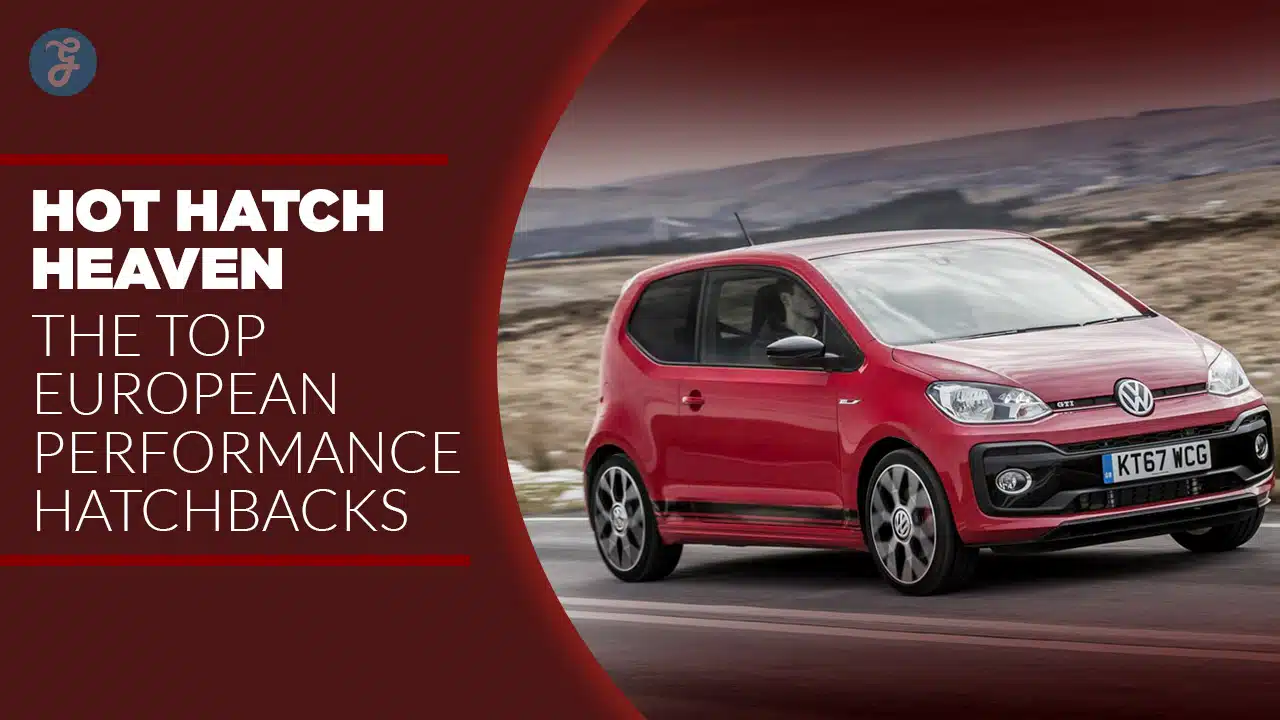
Hot hatches are the rare performance cars that still fit real life. You can drive them to work, park them in tight places, carry people and bags, and still enjoy a proper rush on a twisty road. That mix is why enthusiasts keep searching for the best European hot hatchbacks year after year.
This article ranks seven standout European performance hatchbacks and explains them in plain language. You will see what each car is good at, where it falls short, and who it suits best. You will also get practical buying advice, running-cost tips, and a simple checklist for test drives.
If you want a car that feels exciting without turning every trip into a chore, you are in the right place.
Why Hot Hatches Still Rule In Europe
Hot hatches work because they solve a problem most sporty cars create. Many sports cars are thrilling, but they are not flexible. A good hot hatch gives you speed and fun without forcing you to sacrifice comfort, space, or daily ease.
Europe is the perfect environment for these cars. Streets can be narrow. Parking is often tight. Roads can be twisty and uneven. A compact car with strong brakes, quick steering, and a well-tuned chassis shines here. You do not need massive horsepower to have fun when the road is tight and technical.
Hot hatches also deliver “usable speed.” They feel lively at normal speeds. You do not have to drive dangerously fast to enjoy the chassis and the engine. That makes them more rewarding more often.
They also tend to hold value well when the model has a strong reputation. Enthusiasts follow this segment closely. That demand can protect resale, especially for clean, well-kept examples.
Finally, they are community cars. Owners share tips, meetups, and modifications. Even if you stay stock, it is nice to own something people care about.
| Key Reason | Why It Matters | What It Means For Buyers |
| Compact performance | Fast without being huge | Easier city driving and parking |
| Practical layout | Real seats and cargo space | Daily use with fewer compromises |
| Fun at normal speeds | Enjoyable on real roads | More smiles without extreme speeds |
| Strong enthusiast demand | Healthy used market | Better resale for clean examples |
What Makes A Great European Performance Hatchback
A great performance hatch is not just a regular car with more power. The best ones feel engineered as a complete package. Engine, gearbox, suspension, brakes, steering, and traction systems all need to work together.
The first ingredient is balance. A hot hatch should feel stable at speed but agile in corners. It should change direction cleanly without feeling twitchy. It should communicate what the tires are doing so you can drive smoothly and confidently.
The second ingredient is traction you can trust. Front-wheel drive can be brilliant, especially with a good limited-slip differential. All-wheel drive adds confidence in rain and cold weather and improves launches. But AWD often adds weight and complexity, so it must be tuned well to feel lively.
The third ingredient is repeatable performance. Many cars can do one quick acceleration run. The better ones can do it again and again without overheating or losing brake performance. That matters on mountain roads and on track days.
The fourth ingredient is real-world comfort. You will spend more time commuting than chasing corners. A great hot hatch should be easy at low speed, smooth in traffic, and not exhausting on long trips.
The final ingredient is ownership reality. Tires, brakes, fuel, and servicing costs can turn a “cheap performance car” into an expensive habit. The best cars deliver thrills without punishing your wallet too hard.
| Attribute | Why It Matters | Simple Buyer Tip |
| Chassis balance | Makes the car fun and safe | Look for calm stability plus sharp turn-in |
| Traction tech | Helps put power down | Prefer LSD or smart AWD systems |
| Brake and cooling strength | Keeps performance consistent | Avoid cars that fade after hard use |
| Comfort and usability | You live with it daily | Test on rough roads and in traffic |
| Running costs | Prevents regret later | Price tires, pads, and insurance early |
Best European Hot Hatchbacks: Quick Comparison
Before the deep dive, it helps to see these cars side by side. This section is a snapshot of what the seven picks represent. It is not meant to replace a test drive. It is meant to guide your shortlist.
Some of these cars are “all-rounders.” They are fast and comfortable and easy to drive. Others are more focused and feel sharper but demand more compromise. Some are expensive to run, while others can be great value used.
Think of this table as a starting point. Then read the individual sections to match a car to your needs.
| Model | Personality | Best For | Main Trade-Off |
| Volkswagen Golf R | All-rounder | One-car solution | Less “raw” feel than lighter rivals |
| Mercedes-AMG A 45 S | Super-hatch | Maximum pace | High cost and firm ride |
| Audi RS 3 Sportback | Character + speed | Engine feel + traction | Price and consumables |
| BMW M135i xDrive | Mature fast hatch | Comfort + daily ease | Less classic hot-hatch bite |
| MINI JCW Hatch | Playful compact | City fun + twisty roads | Limited space and firm ride |
| Renault Mégane R.S. Trophy | Driver-focused | Chassis feel | Availability and comfort trade-offs |
| CUPRA Leon 300 | Value performance | Practical speed | Spec differences by market |
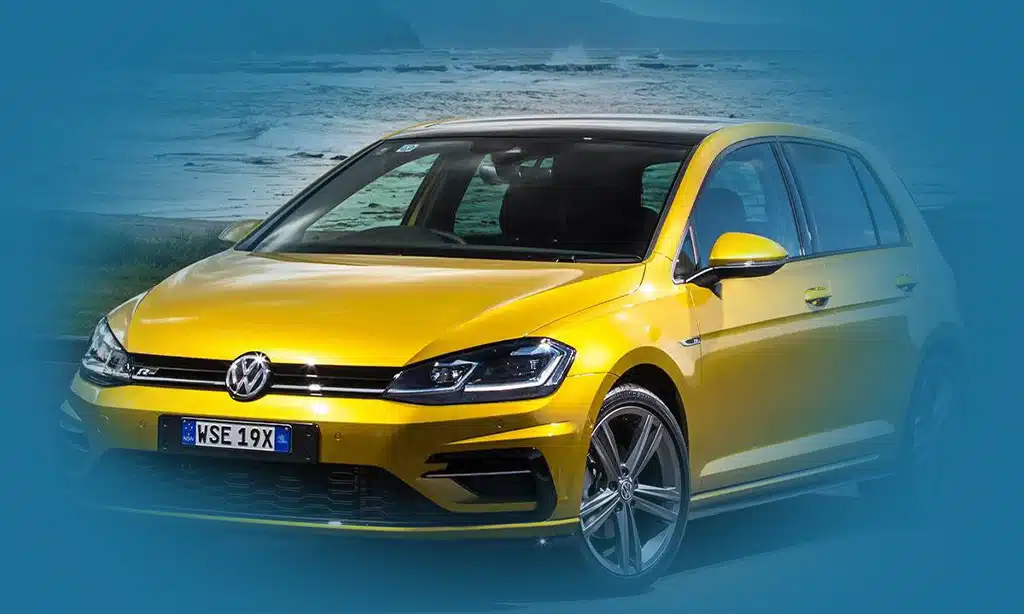
Volkswagen Golf R: The Do-It-All Benchmark
The Golf R is often the first name people mention when they want a practical performance hatch that works in every season. It feels like a normal car when you want it to, then turns serious when you push.
The key strength is confidence. The car grips early, feels stable in corners, and pulls hard out of them. That makes it easy to drive quickly, even for drivers who are not chasing lap times. You can enjoy the speed without feeling like the car is trying to surprise you.
It is also one of the easiest cars here to live with daily. The cabin is functional. The driving position suits many body types. The hatch layout makes shopping, airport runs, and weekend trips simple. This is the kind of car you can own for years without it becoming annoying.
On the fun side, the Golf R offers quick acceleration and strong traction. It rewards smooth driving. It also suits drivers who want speed without drama. If you value calm competence, it delivers.
Where it can feel weaker is emotional character. Some drivers prefer the more playful feel of lighter front-wheel-drive cars. Others want a louder, more intense engine personality. The Golf R can feel composed and refined, which some people interpret as less exciting.
| Golf R Key Points | What To Expect |
| Driving feel | Stable, confidence-building, easy speed |
| Best use | Daily driving plus weekend fun |
| Comfort | Strong for the segment |
| Ownership reality | Budget for quality tires and brakes |
Pros
- Strong all-weather performance
- Excellent daily usability
- Fast without being stressful
Cons
- Can feel less playful than lighter rivals
- Options and wheels can affect ride comfort
- Running costs rise with aggressive driving
Mercedes-AMG A 45 S: The Super-Hatch Experience
The AMG A 45 S is built for people who want the most extreme version of a hot hatch. It is not just “quick for a hatchback.” It is fast in a way that can embarrass many sports cars.
The first thing you notice is the punch. Acceleration is immediate and intense. The car feels like it is always ready to surge forward. That changes the whole driving experience. You do not need a long straight road to feel the performance.
The second thing you notice is grip. With its advanced AWD system, the car launches hard and stays composed when you put power down. It is designed to deliver speed in a controlled way, even when road conditions are not perfect.
The third thing is its personality. It feels sharp, serious, and high-tech. Many owners love that “mini supercar” vibe. The cabin also tends to feel premium, with sporty details and performance branding.
But there are real trade-offs. It can be expensive to buy and expensive to run. Tires and brakes are not cheap. Insurance can be high. The ride can be firm, especially on larger wheels. If your roads are rough, you must pay attention to the setup.
The A 45 S is best for drivers who want maximum pace and do not mind paying for it. It is also best for people who enjoy performance tech and driving modes.
| AMG A 45 S Key Points | What To Expect |
| Driving feel | Aggressive, rapid, high-grip |
| Best use | Performance-first ownership |
| Comfort | Can be firm, depends on spec |
| Ownership reality | Higher running costs than most rivals |
Pros
- Extreme acceleration and traction
- Premium feel and strong performance image
- Feels special every time you drive it hard
Cons
- High purchase and running costs
- Firm ride can be tiring on poor roads
- More complexity long-term
Audi RS 3 Sportback: Character, Traction, And A Special Engine Feel
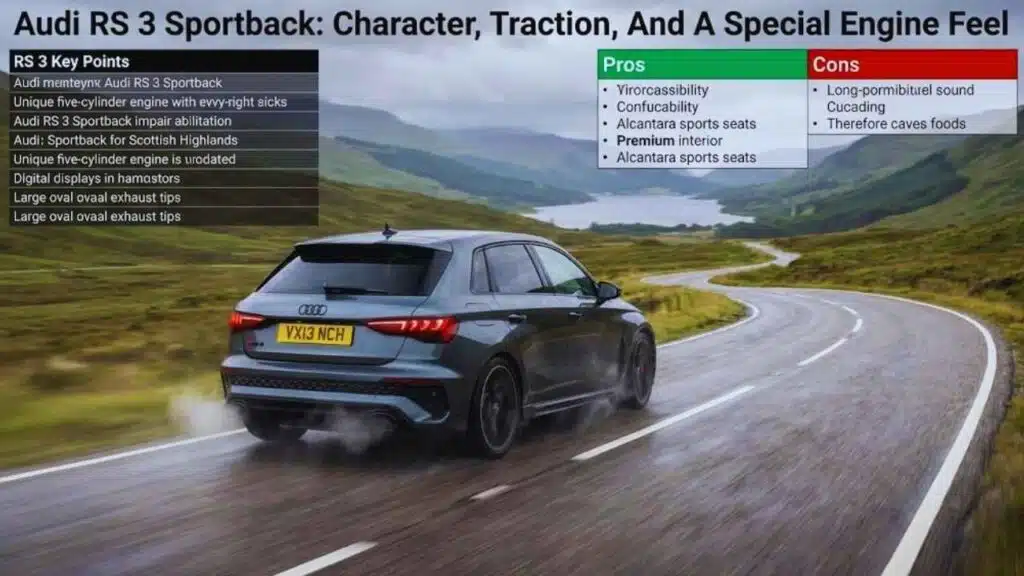
The RS 3 stands out because it offers something rare in modern performance cars: strong character. The engine note and power delivery feel unique. Many buyers choose it for that emotional pull as much as the numbers.
On the road, the RS 3 feels compact but powerful. It builds speed quickly. It also feels planted, especially when traction is limited. In wet or cold weather, this car can feel more usable than many powerful rear-drive cars.
Modern versions also aim to feel more agile than older AWD setups. The goal is to reduce the “safe but understeery” vibe that some AWD cars can have. With smart torque distribution, the car can feel more willing to rotate and change direction.
Inside, the RS 3 usually delivers a premium vibe. It can feel like a small luxury car when you cruise. That makes it easy to justify if you spend a lot of time in traffic or on highways.
The trade-offs are cost and consumables. This is often one of the pricier options in the segment. Tires, brakes, and fuel can add up, especially if you drive it hard. It also rewards buyers who choose the right options, because spec can change the experience.
If you want a fast hatch that feels special and has a distinct personality, the RS 3 is one of the strongest choices.
| RS 3 Key Points | What To Expect |
| Driving feel | Punchy, planted, characterful |
| Best use | Fast daily driving with personality |
| Comfort | Strong balance of speed and refinement |
| Ownership reality | Premium costs for premium performance |
Pros
- Unique engine character and feel
- Strong traction and real-world speed
- Premium cabin experience
Cons
- Expensive to buy and run
- Spec and options matter a lot
- Not the lightest-feeling hatch
BMW M135i xDrive: Comfortable Speed With A Grown-Up Personality
The M135i is ideal for drivers who want a quick hatch that does not shout about it all the time. It feels more mature than many classic hot hatches. That will be a positive for some buyers and a negative for others.
In daily driving, it is smooth and easy. The car feels stable, quiet enough for long trips, and comfortable in normal conditions. It suits buyers who drive a lot and want performance without constant stiffness or noise.
When you push, it delivers strong pace and confident grip. The AWD system helps it feel planted. It is a car you can drive quickly without feeling nervous. That makes it appealing for newer performance drivers too.
The cabin and ergonomics also matter. If you care about seating comfort, driving position, and a premium feel, the M135i can deliver a satisfying experience. It often feels like a small premium car first, and a fast car second.
The trade-off is classic hot-hatch “spark.” Some drivers want sharper steering feel or a more playful rear end. The M135i is more about clean competence. It is a practical fast hatch, not a wild one.
If you want comfort, strong traction, and a premium badge in a hatchback shape, it is an easy car to recommend.
| M135i Key Points | What To Expect |
| Driving feel | Composed, stable, comfortable |
| Best use | Daily driving and long trips |
| Comfort | One of the strongest here |
| Ownership reality | Premium servicing and tire costs |
Pros
- Easy to live with every day
- Confident traction and stable handling
- Premium cabin comfort
Cons
- Less classic hot-hatch edge
- Heavier feel than lighter FWD rivals
- Spec differences can affect value
MINI John Cooper Works: Maximum Fun In A Small Package
The MINI JCW is about feel. It is not trying to be the fastest car here. It is trying to be the most entertaining at sensible speeds, especially on tight roads and in urban driving.
Because it is small, every input feels bigger. Steering feels quick. The car changes direction easily. You can place it precisely in a lane and enjoy gaps in traffic that would feel tight in larger cars.
It also suits drivers who want a car that feels playful. On a twisty back road, the JCW can feel like it shrinks the road. Corners arrive, you turn in, and the car responds quickly. That creates a strong sense of connection.
The downside is space. Rear-seat space is limited compared to larger hatches. Boot space can be enough for daily errands but may feel tight for family use or long travel. Ride comfort can also be firm, especially with sport wheels.
The JCW is best for buyers who value character, compact dimensions, and “fun per mile.” If your driving is mostly city and short trips with weekend blasts, it can be perfect.
| JCW Key Points | What To Expect |
| Driving feel | Playful, quick responses, lively |
| Best use | City driving and twisty roads |
| Comfort | Can be firm on rough roads |
| Ownership reality | Watch tire wear and wheel damage |
Pros
- High fun factor at normal speeds
- Easy to park and easy to place on the road
- Strong character and style
Cons
- Limited rear-seat and boot space
- Firm ride can annoy some owners
- Not the quickest in straight-line pace
Renault Mégane R.S. Trophy: The Driver’s Hot Hatch
The Mégane R.S. Trophy is the choice for drivers who prioritize chassis feel. It is one of those cars that enthusiasts remember because it communicates well and rewards good driving.
The steering and front-end bite are often the first highlights. The car feels eager to turn. It also feels like it wants to be driven with intent. That makes it engaging even when you are not driving at extreme speed.
It is also a car many people consider for occasional track days. A focused chassis, strong brakes, and a performance mindset can make it a satisfying track companion, especially when the driver cares more about feel than lap-time bragging.
Availability can vary depending on market and model year. That is why it often becomes a used-market hero. When you find a clean one, it can deliver serious performance value compared with newer, pricier rivals.
But you must buy carefully. Some examples have been driven hard. A full service history matters. Suspension wear, brake condition, and tire choice can affect the experience more than in softer cars.
If you want an involving front-drive performance hatch, this is a standout pick and a strong answer to anyone hunting the best European hot hatchbacks on the used market.
| Mégane R.S. Trophy Key Points | What To Expect |
| Driving feel | Sharp, communicative, driver-focused |
| Best use | Enthusiast driving, occasional track |
| Comfort | More focused, can be firm |
| Ownership reality | Buy on condition and history |
Pros
- Excellent chassis feedback
- Rewarding on twisty roads
- Strong value potential used
Cons
- Availability varies
- Some cars may be heavily used
- Ride can be firm for daily commuting
CUPRA Leon 300: The Value-Heavy Performance Choice
The CUPRA Leon is for buyers who want strong performance and modern style without paying the highest badge premium. In many markets it offers serious pace with a practical body and a usable cabin.
Its appeal starts with balance. You get speed, a roomy hatchback layout, and tech that supports daily life. That makes it a smart choice for drivers who want one car that can do family duty and still feel quick.
It is also attractive for buyers who look at cost per performance. You may get similar power to more famous rivals at a better price, depending on your region and trim availability.
The driving feel often leans toward “fast daily car” rather than “hardcore track tool.” That is fine for most owners. It means you can enjoy speed without feeling punished on every rough road.
The biggest caution is trim differences. Features, suspension setups, wheel sizes, and tech packages can change the ownership experience. If you are shopping used, it is worth learning which options matter most.
For many buyers, this is the practical performance pick. It is also a strong alternative if you want modern looks and real speed.
| CUPRA Leon 300 Key Points | What To Expect |
| Driving feel | Quick, modern, practical |
| Best use | Daily life with strong performance |
| Comfort | Often friendly for the class |
| Ownership reality | Check trim and options carefully |
Pros
- Strong performance value
- Practical hatch space and cabin usability
- Modern styling and strong road presence
Cons
- Spec and trim differences can confuse buyers
- Infotainment and ride can vary by setup
- Badge prestige still growing in some markets
Best European Hot Hatchbacks: Which One Should You Buy?
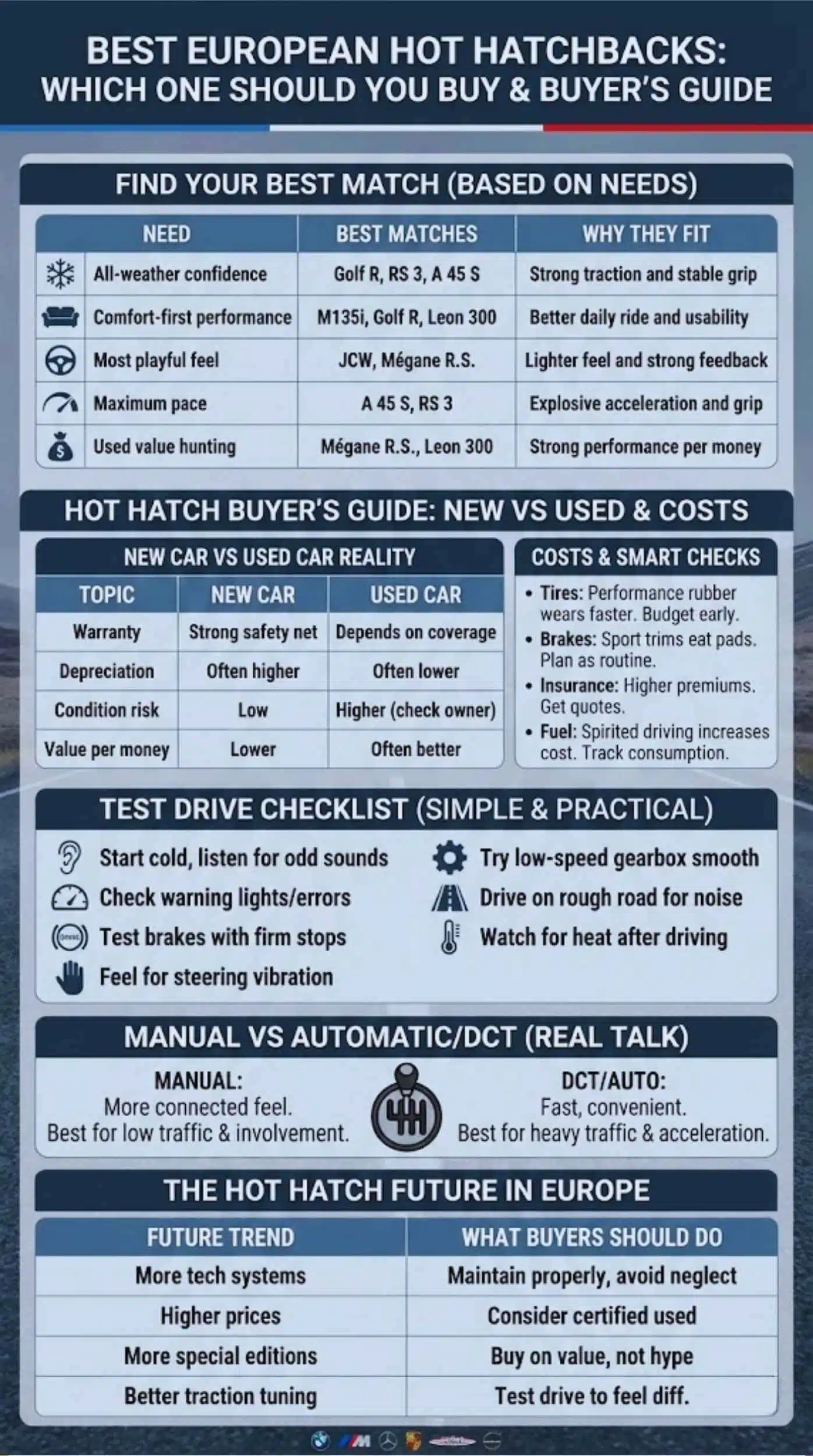
This is the most important section because “best” depends on your life. Some buyers need winter traction. Some need comfort. Some want sharp steering above all. The good news is that this list covers all those needs.
Start with your reality. How bad are your roads? How much traffic do you face? Do you need rear-seat space often? Do you plan track days or just spirited weekend drives?
Then decide what you want to feel. Do you want calm speed or edgy excitement? Do you want the car to be easy, or do you want it to challenge you a bit?
Below are simple match-ups that make shortlisting easier.
| Need | Best Matches | Why They Fit |
| All-weather confidence | Golf R, RS 3, A 45 S | Strong traction and stable grip |
| Comfort-first performance | M135i, Golf R, Leon 300 | Better daily ride and usability |
| Most playful feel | JCW, Mégane R.S. | Lighter feel and strong feedback |
| Maximum pace | A 45 S, RS 3 | Explosive acceleration and grip |
| Used value hunting | Mégane R.S., Leon 300 | Strong performance per money |
Focus keyword use check (body placement): This section includes the phrase in the H2 itself and will naturally support the overall topic of best European hot hatchbacks.
Hot Hatch Buyer’s Guide: New Vs Used, Costs, And Smart Checks
Buying a performance hatch is easier when you plan for reality. Many people focus on horsepower and forget the costs that show up every year. Tires, brakes, and insurance can change the whole value story.
New cars bring warranty comfort. They also bring the latest tech and fewer surprises. But they usually bring higher depreciation, especially if you choose expensive options.
Used cars can be the smart choice. You often get more performance for less money. But you must inspect carefully. Hot hatches are driven hard more often than normal cars.
Running costs deserve attention early. A car that looks affordable may feel expensive once you start replacing performance tires and pads. If you drive spiritedly, you will replace them sooner than expected.
Here is what to consider before you buy.
| Topic | New Car | Used Car |
| Warranty | Strong safety net | Depends on remaining coverage |
| Depreciation | Often higher | Often lower if bought at the right age |
| Condition risk | Low | Higher, depends on previous owner |
| Value per money | Lower | Often better |
Test Drive Checklist (Simple And Practical)
- Start the car cold and listen for odd sounds
- Check for warning lights and error messages
- Test brakes with several firm stops
- Feel for steering vibration or pulling
- Try low-speed creeping for gearbox smoothness
- Drive on rough road to check suspension noise
- After spirited driving, watch for heat warnings
Manual Vs Automatic/DCT (Real Talk)
Manual can feel more connected, but it depends on the car and traffic. Modern automatics and dual-clutch gearboxes are fast and convenient. The best choice is the one that fits your daily life.
Pick manual if you want a more involved driving experience and your commute is not constant stop-and-go.
Pick DCT/automatic if you face heavy traffic, want the fastest acceleration, and prefer easy daily driving.
| Cost Item | Why It Adds Up | Easy Planning Tip |
| Tires | Performance rubber wears faster | Budget a set early |
| Brakes | Sport trims can eat pads | Plan pads and rotors as routine |
| Insurance | Performance label raises premiums | Get quotes before purchase |
| Fuel | Spirited driving increases cost | Track your real km per liter |
This is also where the focus keyword appears again naturally as you evaluate the best European hot hatchbacks with ownership reality in mind.
The Hot Hatch Future In Europe: What Changes, What Stays
Hot hatches are evolving. Regulations, rising prices, and electrification pressure are shaping what brands can build. But the core appeal is still strong: compact performance with real practicality.
In the near future, expect more tech and more special editions. Brands often use limited models to keep excitement high when mainstream models become more regulated.
Also expect traction and handling systems to keep improving. Smarter torque distribution and better chassis tuning help modern cars feel agile even when they gain weight from safety and tech features.
Expect prices to keep rising. That is already happening across many segments. It means the used market will remain important, and smart buying will matter more than ever.
Even if the badge names change, the formula will stay. People still want cars that are fast, compact, and usable every day. That desire does not disappear.
| Future Trend | What It Means | What Buyers Should Do |
| More tech systems | Better performance, more complexity | Maintain properly and avoid neglected cars |
| Higher prices | New cars less accessible | Consider certified used or clean private sales |
| More special editions | Excitement and rarity | Buy based on value, not hype |
| Better traction tuning | More usable performance | Test drive to feel the difference |
Final Thoughts: Choosing The Best European Hot Hatchbacks
The best European hot hatchbacks are not “one-size-fits-all.” The right pick depends on what you value most.
If you want the safest all-round choice, look for the car that blends traction, comfort, and practicality. That is often the smartest long-term ownership story.
If you want maximum pace and a super-hatch feel, you will accept higher costs for higher thrills.
If you want pure driver involvement, you will often prefer the sharper, lighter, more communicative cars, even if they are less comfortable.
Use the tables and checklists here to stay honest about your needs. Then shortlist two or three models and test drive them back to back. That is where the truth appears.
When you match the car to your life, you will understand why people keep chasing the best European hot hatchbacks.
FAQs
What Is A Hot Hatch, In Simple Terms?
A hot hatch is a hatchback upgraded for performance. It usually adds more power, stronger brakes, sport suspension, and traction tech. The goal is fun driving without losing daily practicality.
Are AWD Hot Hatches Always Better Than FWD?
No. AWD gives better traction in rain and cold and helps with launches. FWD can feel lighter and more playful, especially with a good limited-slip differential. Your roads and driving style should decide.
What Is The Best Hot Hatch For Daily Driving?
Most daily drivers prefer a balanced car with comfort and traction. Look for a model with good ride control, supportive seats, and stable handling. Avoid overly stiff setups if your roads are rough.
Are Performance Hatchbacks Expensive To Maintain?
They can be. Tires, brakes, and insurance are the biggest surprises. Budget those costs early and you will enjoy the car more.
What Should I Avoid When Buying Used?
Avoid cars with no service history, mismatched tires, warning lights, or strange gearbox behavior. A cheap example can become expensive fast if it needs major work.
Which One Is Best For Twisties And Driver Feel?
Many enthusiasts prefer lighter, more communicative cars for twisty roads. Look for strong steering feedback, good front-end grip, and stable braking.