The days of musty carpets, disorganized bric-a-brac, and the distinct smell of “old attic” are rapidly fading from the British high street. In their place, a new retail revolution is taking hold. The Best Charity Shops UK has to offer are no longer just last-resort bargain bins; they are curated, boutique experiences that rival high-end independent stores. Driven by a powerful combination of the cost-of-living crisis, a surge in eco-conscious Gen Z shoppers, and the “Marie Kondo” effect, the UK’s charity retail sector is booming.
This isn’t just about cheap clothes anymore. It is about the thrill of the hunt, the ethics of the circular economy, and the democratization of designer fashion. From the posh villages of London to the bustling city centers of the North, charity chains are professionalizing their operations, launching aggressive online platforms, and designing stores that look more like concept boutiques than donation drop-offs.
If you are looking to refresh your wardrobe sustainably or hunt for rare vintage treasures, you need to know which doors to knock on. Here are the 11 charity shop chains that are crushing the thrift boom, organized by their unique shopping “personality.”
Key Takeaways
-
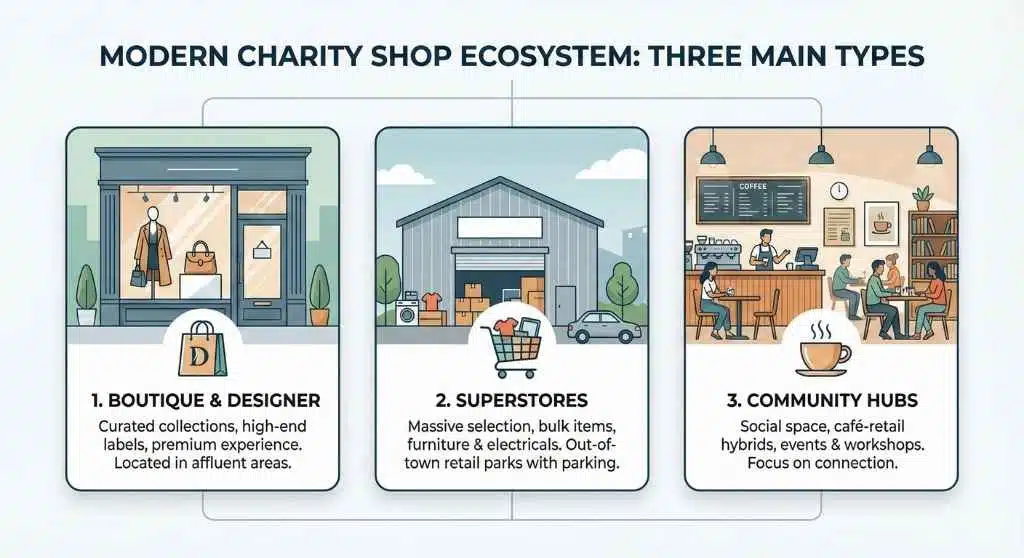
Boutique Experience: Chains like Mary’s Living & Giving and TRAID now operate like high-end vintage stores, often located in affluent areas with curated stock.
-
Superstore Shift: Major players like Cancer Research UK and Salvation Army are moving towards out-of-town “Superstores” with free parking and massive inventory, ideal for furniture and bulk buying.
-
Tech-Driven Sustainability: The Salvation Army is leading with “Fibersort” technology to recycle textiles, while Oxfam and BHF have professionalized their online sales channels (eBay/Depop) for rare items.
-
Community Hubs: Shops like Crisis are integrating coffee shops into their retail space, creating a “third place” for communities.
-
Strategic Shopping: For the best finds, target charity shops in wealthy neighborhoods (Chelsea, Primrose Hill) for designer cast-offs, or visit university towns for trendy vintage streetwear.
The Great Reinvention: Why Thrifting is the New High Street Hero
Gone are the days when charity shops were the high street’s poor relations, defined by dusty shelves and chaotic rails. What was once viewed purely as a necessity for some has transformed into a badge of honor for the many. This shift isn’t accidental—it is a calculated evolution. Driven by a generation that values sustainability over status symbols, and savvy shoppers refusing to pay inflated retail prices, the sector has been forced to level up.
We are seeing a massive “professionalization” of the industry. The Best Charity Shops UK retailers have realized that to compete with fast fashion giants, they can’t just rely on goodwill; they need to offer a genuine experience. Volunteers are now often trained in visual merchandising, windows are dressed to rival Selfridges, and pricing is becoming smarter—competitive enough to be a bargain, but accurate enough to raise serious funds.
The stigma is dead. In its place is a new thrill: the dopamine hit of finding a high-quality, unique item that doesn’t cost the earth—literally or financially. But with over 11,000 charity shops scattered across the nation, the quality varies wildly. To truly master this new landscape, you need to know who is innovating, who is specializing, and where the real treasures are hidden.
The “Boutique & Designer” Specialists
These stores have ditched the clutter for minimalist rails, color-coordinated displays, and high-value stock. If you are looking for labels like Ganni, Gucci, or vintage Burberry, start here.
1. Mary’s Living & Giving (Save the Children)
Widely considered the “Queen” of the modern charity shop, Mary’s Living & Giving was created by retail guru Mary Portas. These shops are designed to feel like luxury independent boutiques, with interiors often designed by professional architects.
-
The Vibe: Chic, airy, and expensive-smelling. You won’t find puzzles with missing pieces here. The staff are often fashion students or retired retail professionals who know how to style a mannequin.
-
Best Locations: They strategically dominate London’s “urban villages.” The Primrose Hill branch is legendary for receiving donations from local celebrities, while the Blackheath and Edinburgh (Stockbridge) branches are goldmines for high-end high street and designer labels.
-
What to Buy: Designer accessories, nearly-new women’s fashion, and unique homeware gifts.
2. TRAID
TRAID (Textile Reuse and International Development) is the “cool kid” of the charity shop world. With a mission laser-focused on stopping clothes from ending up in landfills, they appeal heavily to a younger, trend-conscious demographic.
-
The Vibe: Gritty, vibrant, and packed with denim. TRAID feels less like a charity shop and more like a curated vintage store you’d find in East London or Berlin.
-
Unique Selling Point: Their “TRAIDkeep” initiative is a standout, offering repair workshops to help you fix your clothes rather than toss them. They actively curate their stock to filter out “fast fashion junk,” focusing instead on natural fibers and bold prints.
-
Best Locations: Their Dalston and Shepherd’s Bush stores are pilgrimage sites for vintage lovers. The window displays are often art installations in their own right.
-
What to Buy: Vintage Levi’s, 90s streetwear, silk shirts, and quirky mid-century fabrics.
3. FARA
If you are serious about vintage, FARA is likely already on your radar. While their standard shops are excellent, they have carved out a specific niche for retro enthusiasts that is unmatched by other chains.
-
The Vibe: Their standard shops are family-friendly and well-stocked, but their specialist shops are where the magic happens.
-
The “Retromania” Factor: FARA operates a specific store called Retromania in Victoria, London. This isn’t a typical charity shop; it is a dedicated vintage emporium. It is often raided by costume designers for TV and film, looking for authentic period pieces.
-
What to Buy: Authentic 1970s dresses, military memorabilia, vintage haberdashery, and collectible toys.
4. British Red Cross
The British Red Cross has successfully pivoted from “generalist” to “specialist.” They realized that a one-size-fits-all shop doesn’t work for everyone, so they have segmented their stores.
-
The Vibe: Professional and segmented. They have dedicated Furniture & Electrical stores for the practical shopper, and Vintage & Designer boutiques for the fashion crowd.
-
Partnerships: They are kings of the “corporate partnership.” You will often find brand-new items with tags (deadstock) from major retailers like Zara or ASOS who donate their unsold inventory to Red Cross rather than destroying it.
-
Best Locations: Their Kensington & Chelsea store is arguably one of the best in the UK for finding high-end designer cast-offs. It is not uncommon to find Chanel or Prada shoes here that have barely been worn.
-
What to Buy: Brand new high-street clothing (tags on), bridal wear (in specialist bridal stores), and luxury designer goods in affluent boroughs.
| Chain | Best Known For | Target Audience |
| Mary’s Living & Giving | Luxury boutique feel, designer labels | Fashion-conscious professionals |
| TRAID | Curated vintage, upcycled denim | Gen Z, Students, Eco-warriors |
| FARA | Authentic vintage & memorabilia | Collectors, Costume designers |
| British Red Cross | Brand new (deadstock) items, Bridal | High-street shoppers, Brides |
The High Street Giants (Volume & Variety)
These are the heavy hitters. They have the logistics, the volume, and the nationwide presence to process millions of items a year. They are mastering the art of “something for everyone.”
5. Oxfam
The pioneer. Oxfam effectively invented the modern charity shop format, and they remain the market leader in terms of innovation. They were the first to take online sales seriously, and their digital presence is now a massive revenue driver.
-
The Strategy: Oxfam has successfully tapped into the “BookTok” and ethical gift market. Their “Sourced by Oxfam” range features brand-new, ethically sourced products (like bamboo coffee cups and fair-trade chocolate) that sit alongside donated goods.
-
Online Dominance: If you can’t find it in-store, check the Oxfam Online Shop. It is one of the largest second-hand marketplaces in Europe, particularly for rare books and vinyl records.
-
Campaigns: Their “Second Hand September” campaign has become a cultural phenomenon, encouraging millions to pledge to shop only second-hand for a month.
-
What to Buy: Books (unsurpassed selection), vinyl records, ethical gifts, and wedding dresses (they have dedicated bridal departments online).
6. British Heart Foundation (BHF)
While they sell clothes, BHF is the undisputed king of Furniture and Electricals. They identified a gap in the market—affordable home furnishings—and filled it aggressively.
-
The Vibe: Their dedicated Furniture & Electrical stores are large, warehouse-style spaces. They are essential for students, landlords, and anyone setting up a first home.
-
Testing & Safety: Unlike smaller charities, BHF has the resources to PAT-test every electrical item, meaning you can buy a washing machine, fridge, or toaster with a guarantee that it actually works and is safe.
-
The eBay Vault: BHF is incredibly savvy about value. High-value jewelry and rare collectibles rarely hit the shop floor; they are sent to their dedicated eBay headquarters to be auctioned to a global audience, maximizing revenue for the charity.
-
What to Buy: Sofas, washing machines, fridge-freezers, and tested small electronics.
7. Cancer Research UK
Cancer Research UK (CRUK) is currently undergoing a massive strategic shift. They are moving away from small, dark high-street units and opening massive “Superstores.”
-
The Superstore Strategy: These new stores are located in retail parks, often next to supermarkets. They are 3-4 times the size of a normal shop and, crucially, offer free parking. This makes dropping off donations and browsing much easier.
-
The Pricing: Because they have so much space, they can stock high volumes. The prices in Superstores are often more competitive (e.g., everything on a rail for £3 or £5) to keep stock moving.
-
What to Buy: Media (DVDs/CDs), fast fashion staples, children’s toys, and bulk clothing for families.
8. Barnardo’s
A family favorite, Barnardo’s focuses heavily on children’s items, but they are also innovating with corporate partnerships.
-
The Vibe: Accessible and community-focused. You will often see them partnering with supermarkets for donation banks.
-
Corporate Links: They have strong “take-back” schemes with major brands. For example, their partnership with Aldi and Heinz has seen them running massive fundraising and stock-generation campaigns.
-
Online Growth: Their online store is increasingly sophisticated, offering a “vintage” section that competes with Depop sellers.
-
What to Buy: Children’s clothing, toys, and brand-new items from corporate partners.
9. Salvation Army (SATCoL)
The Salvation Army Trading Company (SATCoL) is the quiet innovator of the group, particularly when it comes to the “unsexy” side of thrifting: recycling.
-
The Tech: They are the UK leaders in textile recycling. They have invested in “Fibersort” technology, a machine that automatically sorts garments by fiber type (cotton, wool, polyester) and color. This allows them to recycle unsellable clothes into new yarns and pellets, closing the loop on fashion waste.
-
The Scale: Because they have their own sorting centers, their shops are replenished constantly. They rarely have “stale” stock.
-
What to Buy: Basic textiles, bedding, and everyday clothing.
| Chain | Best Known For | Best Feature |
| Oxfam | Books & Online Store | “Sourced by Oxfam” ethical range |
| BHF | Furniture & Electricals | PAT-tested appliances & guarantees |
| Cancer Research UK | Retail Park Superstores | Free parking & massive selection |
| Barnardo’s | Children’s items | Corporate take-back schemes |
| Salvation Army | Textile Recycling | Fibersort technology |
The “Niche & Community” Innovators
These chains are redefining what a charity shop can be, turning them into community hubs and lifestyle destinations.
10. Shelter
Shelter has pushed the boundaries of interior design in charity retail. They want to prove that second-hand can look just as good as brand new.
-
The Flagship: Their “Boutique by Shelter” at Coal Drops Yard in King’s Cross is a masterpiece. Designed by HemingwayDesign, it fits seamlessly into one of London’s trendiest shopping districts. It doesn’t look like a charity shop; it looks like a high-end concept store.
-
The Community: They often host community events and volunteer drives that appeal to younger, socially conscious Londoners.
-
What to Buy: Curated books, art, and “hipster” vintage fashion.
11. Crisis
Crisis has pioneered the “Coffee & Shop” model. They understand that if you give people a coffee, they will stay longer and browse more.
-
The “Shop from Crisis” Model: Many of their stores (like the one in Finsbury Park) operate as café-retail hybrids. You can buy a flat white, sit in a comfortable armchair (which is also for sale), and browse the rails. It creates a “Third Place” vibe that is incredibly popular with freelancers and students.
-
Arts & Music: Their shops often sell art produced by Crisis members (people who have experienced homelessness), giving the stock a unique, personal connection to the cause.
-
What to Buy: Coffee, records, artwork, and furniture.
Expert Strategy: How to Find Hidden Gems
To truly master the Best Charity Shops UK, you need a strategy. The professionals don’t just wander in; they have a plan.
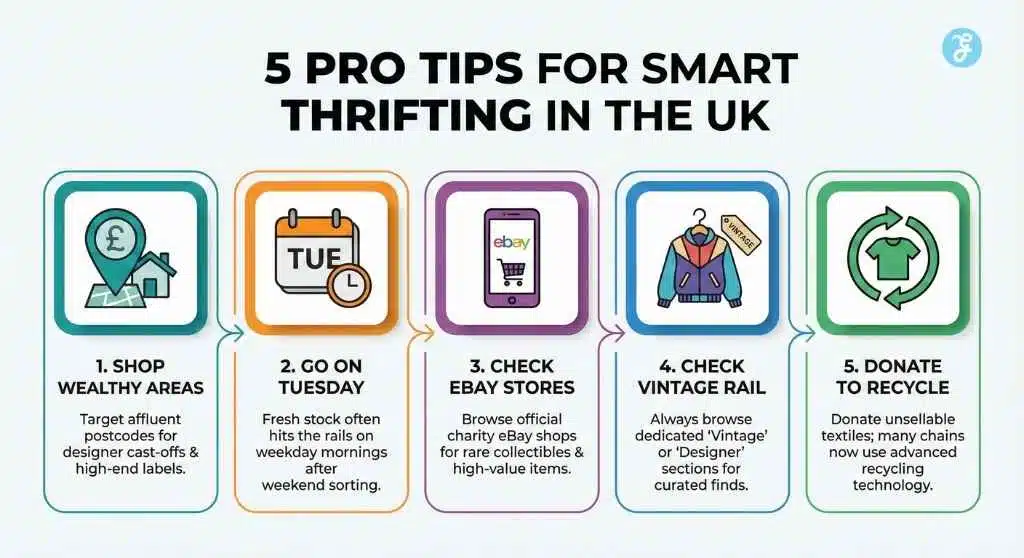
1. The “Postcode Rule”
The quality of stock in a charity shop is directly correlated to the affluence of the surrounding area.
-
For Designer Labels: Head to Chelsea, Kensington, Marylebone (London), Stockbridge (Edinburgh), or Clifton (Bristol). Wealthy donors drop off wealthy brands.
-
For Cool Vintage: Head to university towns or “hipster” neighborhoods. Brighton, Bristol (Stokes Croft), Leeds (Headingley), and East London are goldmines for streetwear and 90s fashion.
2. Timing is Everything
-
Restocking: Most shops restock on weekday mornings (Monday or Tuesday). The weekend donations are sorted on Monday and hit the rails by Tuesday morning.
-
Seasonal Switch: Visit immediately after Christmas (January) and Spring Cleaning season (April/May). This is when the volume of high-quality donations is highest.
3. Check the “Fancy” Rail
Most shops now separate their best stock onto a “Designer” or “Vintage” rail behind the counter or near the window. Go there first. However, don’t ignore the general rails—staff sometimes miss a label, and that’s where you find the 50p cashmere.
4. Digital Thrifting
Don’t limit yourself to physical stores. The Best Charity Shops UK have massive eBay and Depop stores.
-
Search Tip: Search for “Charity Shop” or specific charity names (e.g., “British Heart Foundation eBay”) to find their official outlets. You are buying from a trusted source, and the money goes to a good cause.
Bottom Line: The Future is Pre-Loved
The rise of these 11 chains signals a permanent shift in British retail. We are moving away from a disposable culture towards one that values longevity, curation, and community. Whether you are hunting for a specific vintage piece at FARA Retromania, furnishing your first flat at BHF, or grabbing a coffee at Crisis, you are participating in a movement that is reshaping the high street for the better.
Next time you feel the urge to shop, skip the fast-fashion queue and step into one of these reinvented spaces. You might just find the best outfit you have ever owned—and you’ll be helping to save the world, one garment at a time.
Frequently Asked Questions (FAQ)
1. Which charity shop is best for designer clothes?
Mary’s Living & Giving and the British Red Cross boutiques in Chelsea and Kensington are widely considered the best for high-end designer labels. Their locations in affluent neighborhoods mean they receive donations from wealthy residents, often including brands like Prada, Burberry, and Chanel.
2. Can you negotiate prices in UK charity shops?
Generally, no. Prices are fixed, and the staff (often volunteers) usually do not have the authority to discount items. However, if an item is damaged or has a visible flaw that hasn’t been noted, you can politely ask the manager if a small reduction is possible, but never expect it.
3. When is the best time to visit charity shops?
Tuesday mornings are often the sweet spot. Shops receive a bulk of donations over the weekend, sort them on Mondays, and put fresh stock out by Tuesday. Additionally, shopping in January (post-Christmas clear-outs) usually yields the highest volume of brand-new or nearly-new items.
4. Do charity shops wash the clothes before selling them?
Most charity shops steam clothes to remove creases and freshen them up, but they do not typically launder them in a washing machine due to the costs involved. It is always recommended that you wash any second-hand clothing immediately after purchasing.
5. What is the difference between a “Superstore” and a regular charity shop?
A Superstore (like those run by Cancer Research UK or Salvation Army) is usually located in an out-of-town retail park. They are 3-4 times larger than high street shops, offer free parking, and carry a much wider range of goods, including furniture and bulk media, often at lower prices to move stock quickly.
6. Are charity shop prices going up?
Yes, you may have noticed a slight increase. This is due to professional pricing strategies where staff use eBay to check the real value of items. However, this ensures charities raise more money for their causes, and you are still getting items significantly cheaper than retail price.