
The evolution of e-commerce continues to transform the way communities shop and do business. And with this growth comes the need to manage financial activities effectively. The importance of e-commerce accounting cannot be overstated when it comes to the financial health of any business.
Managing finances efficiently has become crucial for online retailers across the United States and beyond. Professional ecommerce accounting services provide the foundation businesses need to track revenue, manage expenses, and maintain compliance. In this post, we will discuss the best advantages of e-commerce accounting for your business.
Accurate Financial Tracking
For any enterprise, financial tracking is essential. E-commerce accounting keeps track of revenues and expenses accurately. When every transaction is monitored properly, businesses can make informed decisions. This precision helps in identifying profitable products and areas where the business needs improvement. This transparency provides companies with an opportunity to allocate their resources better and plan for the future.
Streamlined Operations
Accounting makes operations much easier for e-commerce businesses. Automation tools save time and reduce errors by minimizing manual data entry. These systems integrate seamlessly with e-commerce platforms, which prevents data duplication. With this integration, businesses get up-to-date financial data with real-time updates. An efficient setup helps enterprises concentrate on growth and creating satisfied customers.
Improved Cash Flow Management
Success depends on effective cash flow management. E-commerce accounting reveals various cash flow patterns, allowing businesses to maintain a healthy balance. Clearly understanding where money comes in and goes out allows companies to avoid potential financial pitfalls. This information helps ensure that suppliers and employees can be paid on time, which strengthens relationships and maintains operational stability.
Enhanced Decision-Making
Informed decision-making drives business success. E-commerce accounting provides detailed financial reports to assist with strategic planning. These reports showcase trends and potential opportunities for growth. A thorough understanding of this data allows businesses to make goal-oriented choices. Better decisions lead to increased efficiency and higher profits.
Tax Compliance and Reporting
Staying current with tax regulations is important for any business. According to the Internal Revenue Service, proper record-keeping makes tax calculation and reporting far simpler. By maintaining organized financial records, businesses can file taxes properly and avoid penalties. These systems often provide automated tax functions, which ensure compliance with current tax laws. Managing tax obligations appropriately reduces stress on the business and allows time to focus on core business functions.
Inventory Management
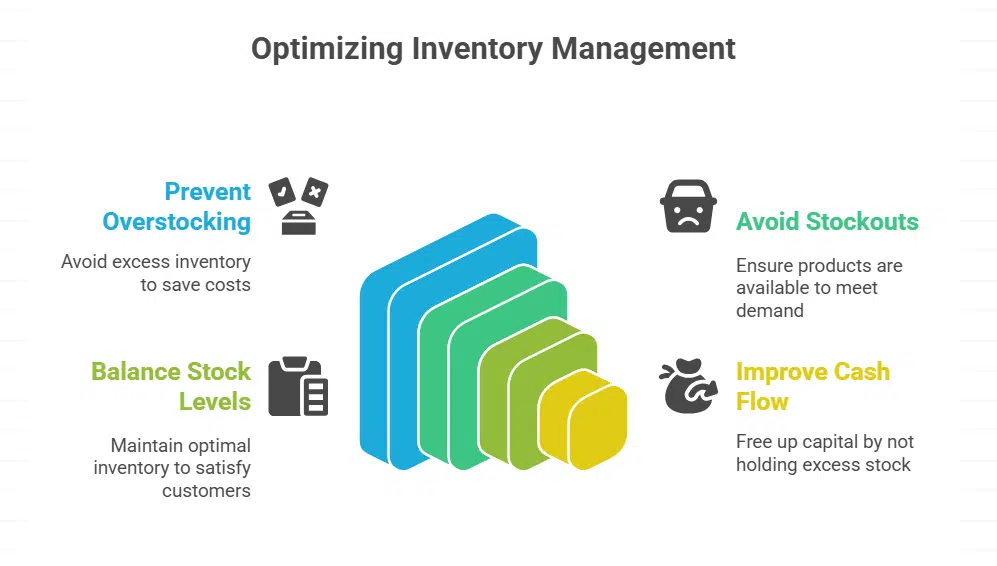
E-commerce accounting helps you keep track of your inventory effectively. Maintaining an accurate count of stock prevents overstocking or stockouts. This balance ensures businesses meet customer demands without tying up excess capital. Furthermore, good inventory control helps improve cash flow, as funds are not locked up in surplus stock.
Cost Efficiency
Cost efficiency is a top priority for many businesses. E-commerce accounting helps identify areas where you can reduce expenses. By gaining insight into financial data, businesses can eliminate unnecessary costs and make better use of resources. Increased efficiency results in improved profitability and long-term sustainability.
Customer Satisfaction
Understanding financial trends can be utilized to enhance customer satisfaction. E-commerce accounting provides information about buyers and their purchasing behavior. With these data insights, organizations can deliver personalized experiences that customers expect. Satisfied customers build loyalty and generate repeat sales.
Scalability and Growth
Managing finances becomes more complex as businesses grow. E-commerce accounting provides solutions that allow for scalability. These systems grow with your business so they remain effective. When your business maintains financial health, you can pursue growth opportunities with confidence.
Security and Data Protection
Securing financial information is paramount for any business. E-commerce accounting systems feature high-standard security measures to protect confidential data. With encrypted data storage and secure access controls, businesses can safeguard their operations from fraud and data breaches. This creates trust among customers and partners.
Conclusion
There are many benefits of e-commerce accounting for businesses of all sizes. From accurate tracking of finances to making better decisions, the advantages are clear. These systems offer numerous benefits to businesses that adopt them. Effective financial management is a key component of business success in today’s competitive market. E-commerce accounting may become the key to sustainable growth and profitability.