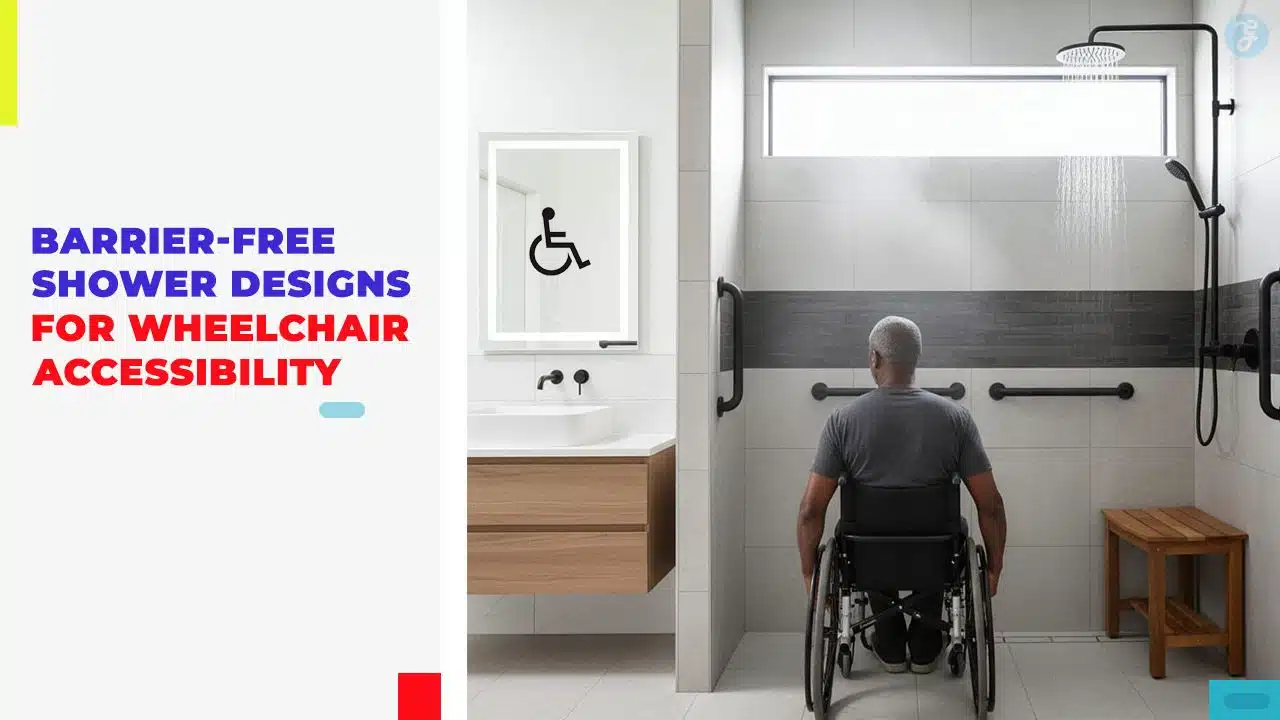
Many people find bathroom entry hard, especially if they use wheelchairs or have trouble with balance. Getting into a bathtub or a shower feels risky, and falls happen too often. Families want a safe, simple solution for a wheelchair accessible bathroom, and caregivers need options that work every day.
One clear fact helps guide choices, Aging Safely sells premium low threshold disability shower systems, and they back them with a 30 year manufacturer warranty against defects. This post will show seven barrier free shower designs, from roll in showers and trench drain floors, to frameless glass shower doors, built in seating, grab bars, non slip flooring, and adjustable shower heads.
You will get practical ideas for accessible bathroom remodeling and aging in place. Keep reading.
Key Takeaways
- Roll-in showers must provide at least 30×60 inches clear interior (some guidance lists 36×60) with a 60-inch front entry for ADA wheelchair access.
- ADA sets a maximum threshold of 0.5 inches; roll-in thresholds can range from 0.75 to 7 inches depending on design.
- Linear or trench drains with gently sloped floors prevent puddles and allow curb-less entry for wheelchairs.
- Install grab bars at 33–36 inches high (child bars 18–27 inches) and mount shower hoses no higher than 48 inches with a 59-inch minimum hose length.
- Choose reinforced walls, built-in seating, non-slip floors, adjustable heads, and trusted brands like Aging Safely or Best Bath Systems with 30-year warranties.
Roll-In Shower Design
A roll-in shower can have a threshold as low as 0.75 inches, or as high as 7 inches, so plan around entry clearance. ADA guidelines state a standard roll-in must be at least 30 inches wide by 60 inches deep, with a 60-inch front entry, while other guidance lists a 60 by 36 inch minimum.
They serve elderly and disabled individuals, and often include a built-in transfer bench and an optional handheld wand to aid showering.
Trench drain options allow a low threshold without a water stopper, and they work well in a wet room or wheelchair accessible bathroom. Best Bath Systems manufactures roll-in models in the U.S.A., and backs them with a 30-year limited lifetime warranty against manufacturer defects.
Designers add grab bars, a frameless glass shower door or a shower curtain, and size layouts that suit assisted living residences, nursing homes, care facilities, and aging in place needs.
Level Threshold for Easy Entry
Low thresholds make entry simple, and they cut tripping risks. The Americans with Disabilities Act sets a maximum threshold of 1/2 inch for ADA-compliant showers. Many models feature thresholds lower than 1 inch, and some offer wheelchair access ramps as options.
Barrier-free showers sit level with the floor, and they use a slight slope for drainage.
Deluxe units use collapsible white rubber dams to keep water in, while keeping thresholds low. Aging Safely Baths offers accessible showers with thresholds as low as 0.5 inches, ideal for roll-in shower setups and wet rooms.
Homeowners planning accessible bathroom remodeling add grab bars, a frameless glass shower door, or a matching walk-in tub for elder care and aging in place. These changes boost wheelchair accessibility, and they make an accessible shower feel familiar.
Sloped Floor for Efficient Drainage
Sloped floors push water to a drain, they cut puddles and speed drying. Curb-less, roll-in showers use a gentle slope, and the threshold stays at or below 0.5 inches so wheelchairs glide in.
Accessible bathroom design pairs that slope with grab bars and a frameless glass shower door for safer access to an accessible shower.
Linear drains, sometimes called channel drains, let installers slope the floor in one direction, and they reduce installation time. Trench drains at the shower edge act like a catch-all, they add an advanced accessibility feature for aging in place and wheelchair-accessible bathrooms.
Contractors fit these drains during accessible bathroom remodeling, and they still work with walk-in tubs or a roll-in shower layout.
Frameless Glass Doors with Wide Openings
A frameless glass shower door gives a wide opening, ideal for a wheelchair accessible bathroom. Designs like this support the 60-inch wide front entry that ADA guidelines require for a roll-in shower, no more door gymnastics.
Plan for a clear interior space of at least 30 x 60 inches in the accessible shower, and add extra width for walker or bulky chair use. Use tempered glass panels, simple hinge hardware, grab bars and adjustable showerheads for accessible bathroom remodeling that aids aging in place, and keeps the look sleek.
Built-In Shower Seating
Deluxe 60 x 30 inch walk-in showers include built-in seats. Manufacturers design benches for easy transfer from a wheelchair or a shower stool. Many roll-in shower models come standard with built-in transfer benches.
Folding or wall-mounted shower seats add flexibility for a barrier-free, accessible shower.
Install seats on plywood backing and steel-reinforced walls, so anchors bite and the seat holds. Pair seats with grab bars and a frameless glass shower door to boost wheelchair accessibility and smooth transfers.
Accessible bathroom remodeling that adds a transfer bench, a folding seat, and proper backing helps with aging in place.
Strategically Placed Grab Bars for Stability
Install ADA-compliant grab bars into reinforced shower walls, many shower packages include them. Many kits list suggested locations, but you can pick user-specified spots in a custom shower system.
Mount horizontal bars 33 to 36 inches above the shower floor, fit child bars at 18 to 27 inches. Place safety grab bars in the shower, bathtub, toilet, and sink areas for stability.
Ceiling-to-floor bars lend steady support for seniors, like a steady hand, and they suit a wheelchair accessible bathroom. Installers use a tape measure, stud finder, power driver, and mounting hardware to anchor bars near a frameless glass shower door during accessible bathroom remodeling.
ADA-compliant bars arrive in standard and barrier-free models, so you can match accessible bathroom design and wheelchair accessibility needs.
Non-Slip Flooring for Safety
Non-slip flooring cuts the risk of slips and falls in a wheelchair accessible bathroom. Deluxe models offer textured, slip-resistant Grip Sure floors, which add traction underfoot.
ADA-compliant shower floor tiles use truncated dome patterns for tactile warning and extra slip resistance.
Smooth, anti-slip shower surfaces come standard in premium units such as the Ella Elite Satin 60 x 33 walk-in shower. These floors work with grab bars, a frameless glass shower door, and other elements of accessible bathroom design to make movement safer.
Pros apply tile cutter skills, a trowel, and the right grout during accessible bathroom remodeling, to keep wheelchair accessibility strong.
Adjustable Showerheads for Accessibility
Designers recommend adjustable showerheads for wheelchair users and for seated bathing. A detachable shower wand can mount low, or sit in a bracket for hands-free use. Shower spray hoses must be at least 59 inches long, and must be mounted no higher than 48 inches from the floor, per ADA guidelines, and the head must work as a fixed or hand-held unit.
ADA rules call for both fixed and hand-held operation, to support varied needs.
Many complete shower packages include a handheld wand as an optional feature, especially in accessible bathroom remodeling plans. Thermal mixing valves can control water temperature, they add safety for people who bathe seated.
Shower systems may include easily reachable, adjustable shower wands, and you can place them alongside grab bars for extra stability in a wheelchair accessible bathroom, or next to a frameless glass shower door to keep wheelchair accessibility clear.
Recessed Niches for Convenient Storage
Place recessed niches at seated height, so a person in a wheelchair can reach shampoo and soap. Deluxe models offer integrated molded soap ledges as an optional feature, and contractors can fold these into accessible bathroom remodeling plans.
Shower trays, recessed niches, and storage accessories, including the Ella Elite White Accessories Package, can sit within reach to make a wheelchair accessible bathroom easier to use.
Keep niches near grab bars and built-in seating, for steady reach and less strain. A frameless glass shower door with a wide opening pairs well with reachable niches, cutting clutter and ending bottle hide-and-seek.
Enhanced Lighting for Better Visibility
Bright, even light cuts shadows and helps people see wet spots, like a friendly guide. Good lighting ranks high as a senior-friendly bathroom feature. It helps reduce fall risk and improves safety for people with limited vision or mobility, and it supports aging in place.
Cove fixtures and vanity lamps deliver task light at mirrors and built-in seats. Motion sensor switches and dimmable LED lamps raise brightness on demand, they make grooming, transfers, and shower use safer.
Personal safety analysis often recommends extra lighting during accessible bathroom remodeling, and installers should add light near grab bars in a wheelchair accessible bathroom to help users move with more confidence.
Takeaways
Barrier-free designs make a wheelchair accessible bathroom practical and safe. A sloped floor with a trench drain moves water fast. A shower seat, a handheld shower, and grab bars add comfort and steadiness.
Reinforced walls let installers attach bars directly to studs. Seniors and those with mobility limits gain more safety and peace of mind.
FAQs on Barrier-Free Shower Designs for Wheelchair Accessibility
1. What are barrier-free shower designs for wheelchair accessibility?
Barrier-free shower designs remove steps and thresholds, to let a wheelchair roll right in. They use a curbless design, wide doors, and level floors. These setups make bathing safer, and more private. Many people call them accessible shower designs.
2. What key features help with wheelchair accessibility?
Use a curbless design, support rails, a sturdy shower seat, and a handheld spray. Add a non-slip floor, a low threshold, and room to turn. Place controls low, within reach. These moves cut fall risk, and boost independence.
3. Can I convert a regular bathroom to an accessible shower?
Yes, you can. Widen the doorway, remove the threshold, add a curbless design and support rails, fit a shower seat, and lower controls. Check local codes, to be code compliant, and hire a pro for plumbing work. It may cost less than you think, and it adds real value.
4. Are barrier-free showers safe and easy to care for?
They are safe, when you add support rails, non-slip floors, and proper drainage. Cleaning is simple, because there are fewer corners, and one plane floor. “Will it look plain?” you might ask. Not at all, they can be stylish, and made to fit your home.