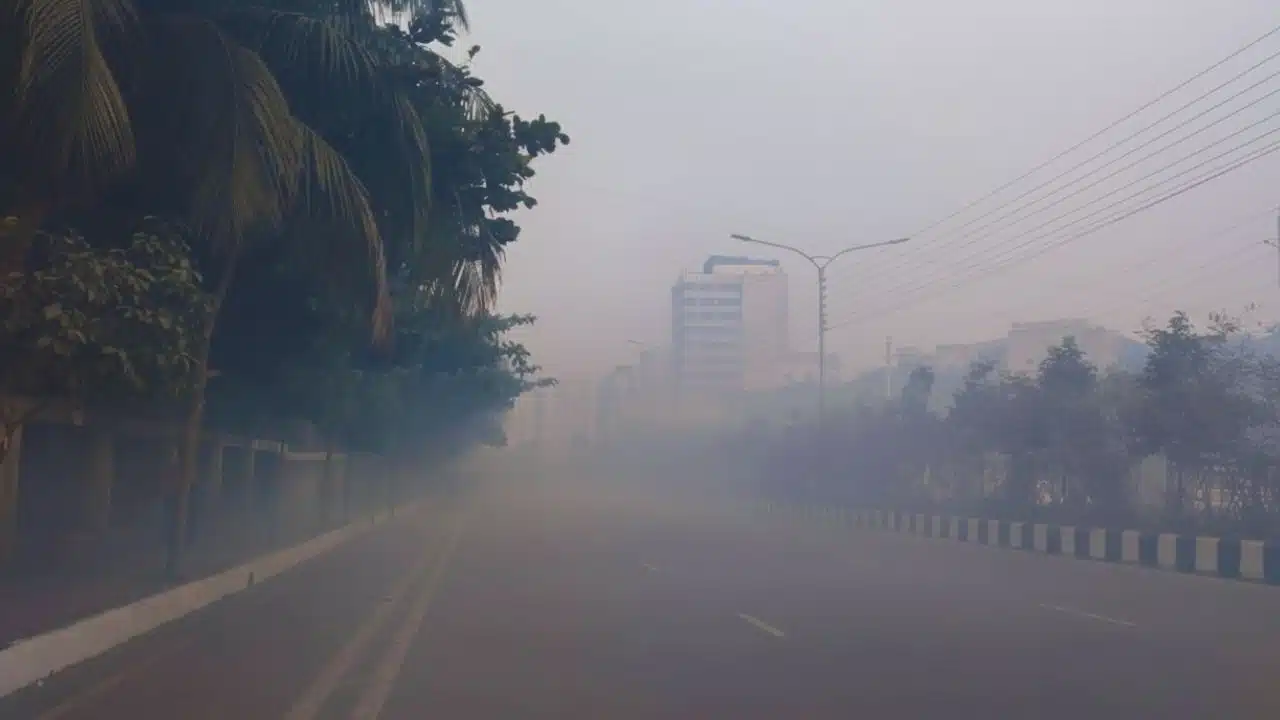
A comprehensive government-supported climate study has raised serious concerns about how Bangladesh’s weather patterns will transform over the coming decades. The report paints a stark picture of a future marked by more frequent and intense heat-waves, heavier monsoon rainfall, rising sea levels, and profound shifts in seasonal patterns. It also warns that winter may gradually lose its distinct identity by the end of the century as temperatures continue to rise.
The assessment, titled “Future of Climate in Bangladesh,” was released at an event in Dhaka. The study is the result of long-term collaboration between the Bangladesh Meteorological Department and the Norwegian Meteorological Institute, who have been conducting joint climate research since 2011. This is their third major report, offering detailed projections based on five different climate scenarios.
Sharp Rise in Temperature: Extreme Heat Becoming a New Normal
Heat Surges Throughout the Century
The report shows that Bangladesh’s temperatures have been increasing steadily, and the pace will accelerate in the coming decades. Under the worst-case scenario, the country’s average daytime temperature could rise by up to 4.5°C before 2100. Even more moderate projections indicate that an increase of around 2°C by mid-century is realistic and likely unavoidable.
Summer Heat to Intensify the Most
The most dramatic temperature spikes are expected during the summer months. The hotter-than-normal conditions will begin before the monsoon, stretching from March to May, which is already the country’s hottest period. The report indicates that heat-waves will not only grow more frequent but also last longer and reach higher temperatures.
In western Bangladesh, heat-wave days before the monsoon could expand sharply:
-
By 2070, the region may experience around 20 heat-wave days in the three months before the monsoon.
-
In comparison with the historical period 1985–2014, this represents an increase of about 75 percent.
-
By 2100, the pre-monsoon period may see as many as 70 heat-wave days out of 90, meaning extreme heat could dominate the entire season.
Types of Heat-Waves Explained
To better understand these changes, the report categorizes heat-waves based on maximum air temperature:
-
Mild heat-wave: 36–38°C
-
Moderate heat-wave: 38–40°C
-
Severe heat-wave: 40–42°C
-
Very severe heat-wave: Above 42°C
The future projections show that western districts may see up to 13 severe heat-wave days before the monsoon by 2070, rising to 20 days by 2100. Some monsoon months could also record temperatures exceeding 40°C, a condition historically rare in that season.
Dhaka to Face Multiple Heat-Waves Each Year
The capital city, with its dense population and concrete landscape, is projected to face intensified heat stress. Residents may need to endure at least two major heat-waves every year—one before and one after the monsoon. The post-monsoon heat-wave is likely to occur around October and November, making the end of the year significantly hotter than it is today.
A Shrinking Winter: Scientists Warn That the Cool Season May Become Almost Non-Existent
The report also notes major changes in winter patterns. Bangladesh typically experiences cold waves in the northern, western, and north-eastern regions, especially when minimum temperatures fall to extremely low levels.
Definitions of Cold Waves
-
Severe: Below 6°C
-
Moderate: 6–8°C
-
Mild: 8–10°C
However, the frequency and intensity of cold waves are expected to decline steadily:
-
By 2100, many parts of the country—especially coastal areas—may barely feel winter at all.
-
In northern and north-eastern districts, cold waves may occur on only one to two days in December–January, compared to several days today.
The gradual disappearance of winter will not only alter seasonal rhythms but also affect agriculture, water demand, public health, and wildlife behavior.
Monsoon Rainfall Set to Increase Significantly
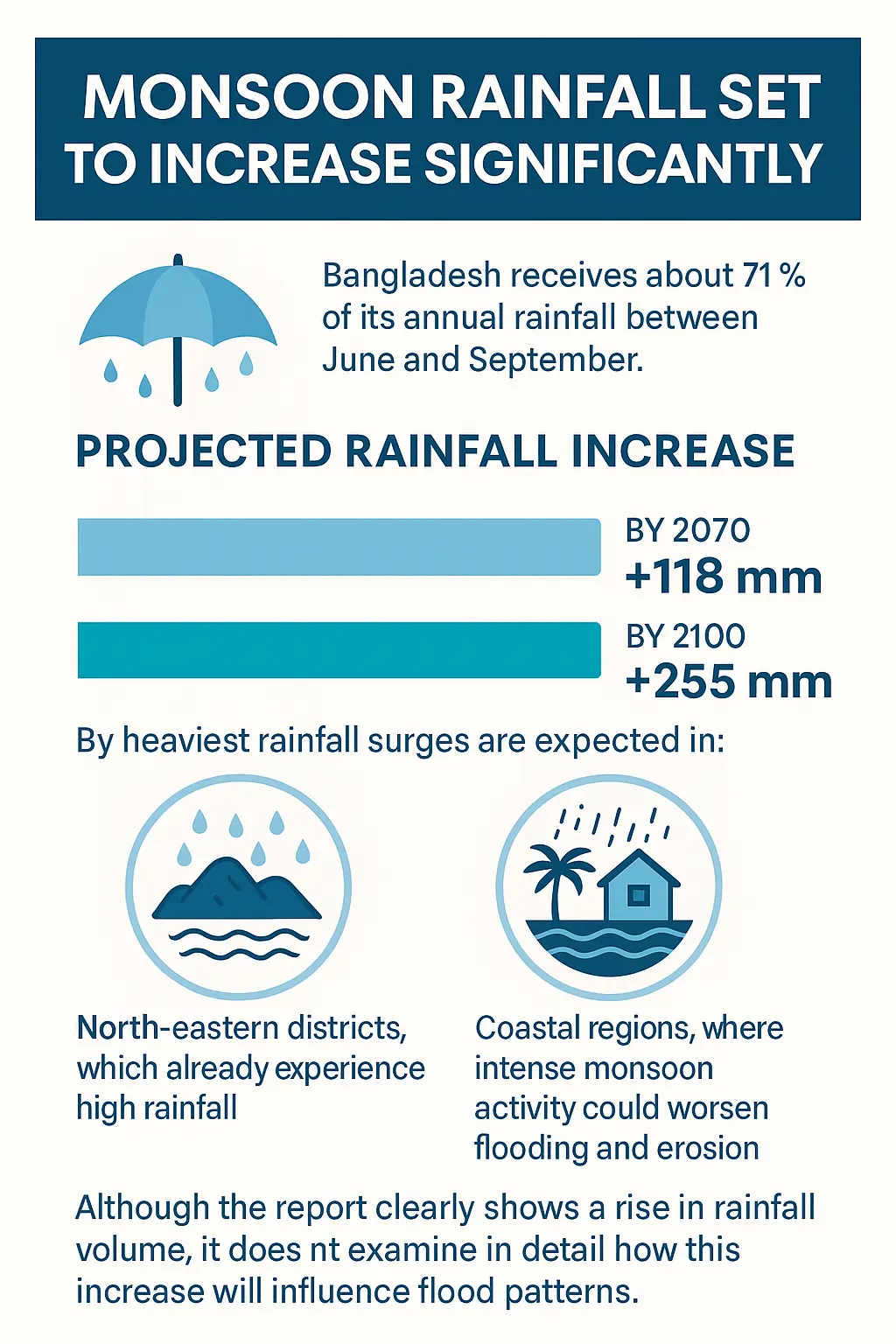
Bangladesh receives about 71 percent of its annual rainfall between June and September. The study indicates that this monsoon rainfall will become heavier and more intense in the future.
Projected Rainfall Increase
-
By 2070, monsoon rainfall may increase by around 118 mm.
-
By 2100, it could increase by approximately 255 mm.
The heaviest rainfall surges are expected in:
-
North-eastern districts, which already experience high rainfall
-
Coastal regions, where intense monsoon activity could worsen flooding and erosion
Although the report clearly shows a rise in rainfall volume, it does not examine in detail how this increase will influence flood patterns, an omission analysts described as a limitation.
Rising Sea Levels Pose a Serious Threat to Coastal Bangladesh
Perhaps the most alarming part of the report relates to sea-level rise, which could have severe consequences for Bangladesh’s coastal belt, home to millions of people.
Sea-Level Rise Higher Than Global Average
The study indicates that sea levels along the Bangladesh coast may rise at a rate of up to 5.8 mm per year, far higher than the global average of around 2.1 mm per year. This accelerated rise will worsen coastal erosion, increase salinity intrusion, and threaten homes, farmland, and ecosystems.
Possible Loss of Land and Ecosystems
The consequences could be devastating:
-
By late in the century, nearly 18 percent of coastal land may be submerged.
-
The Sundarbans, the world’s largest mangrove forest, may lose about 918 square kilometers, roughly 23 percent of its total area, due to prolonged inundation.
This large-scale ecological damage could disrupt wildlife habitats, harm fisheries, and eliminate natural storm-protection barriers.
Population Displacement
Sea-level rise combined with storm surges and coastal flooding may force around 1 million people to become permanently displaced by 2050. Many of these people may have no choice but to migrate inland, potentially increasing pressure on already-crowded urban areas.
Economic, Social, and Environmental Impact: A Multi-Layered Challenge
Agriculture at Risk
Agriculture is expected to be hit hard by rising temperatures and unpredictable rainfall patterns. Heat stress could reduce crop yields, damage livestock health, and disrupt fisheries. Salinity intrusion in coastal soil, fueled by rising sea levels, may reduce the land available for rice cultivation and other essential food production.
Increase in Diseases
With rising heat and increased humidity, diseases such as:
-
dengu,
-
malaria,
-
cholera,
-
and other water-borne illnesses
may become more common. Higher temperatures create favorable conditions for mosquitoes and bacteria to thrive.
Reduced Productivity
Extreme heat can significantly reduce human productivity, especially for outdoor laborers, farmers, rickshaw pullers, factory workers, and construction workers. Heat-stress days will limit working hours and may increase risks of heat stroke and dehydration.
Urban Challenges
Cities like Dhaka will face:
-
worsening heat-stress
-
drainage congestion due to intense rainfall
-
pressure on cooling infrastructure
-
increased energy demand
As urban populations grow, the combined effects could strain essential services.
Areas the Report Does Not Fully Address
Climate specialists have pointed out that the study does not deeply analyze:
-
how increased rainfall may affect flood intensity and duration,
-
how the combination of heat, humidity, and pollution will affect health,
-
or how infrastructure will cope with compound hazards (e.g., heat waves followed by flash floods).
These gaps highlight the need for further research and long-term planning.
Bangladesh’s Climate Future: A Call for Urgent and Coordinated Action
The projections make it clear that climate change is no longer a distant concern but an active force reshaping Bangladesh’s environment, economy, and society. The country must scale up adaptation efforts across every sector:
-
Heat-wave early-warning systems
-
Climate-resilient agriculture
-
Improved flood-control measures
-
Stronger coastal protection
-
Salinity-resistant crops
-
Urban cooling strategies
-
Public health preparedness
Bangladesh is already recognized as one of the world’s most climate-vulnerable countries. The latest findings emphasize that without rapid adaptation and global reductions in greenhouse-gas emissions, the coming decades will bring unprecedented environmental challenges.