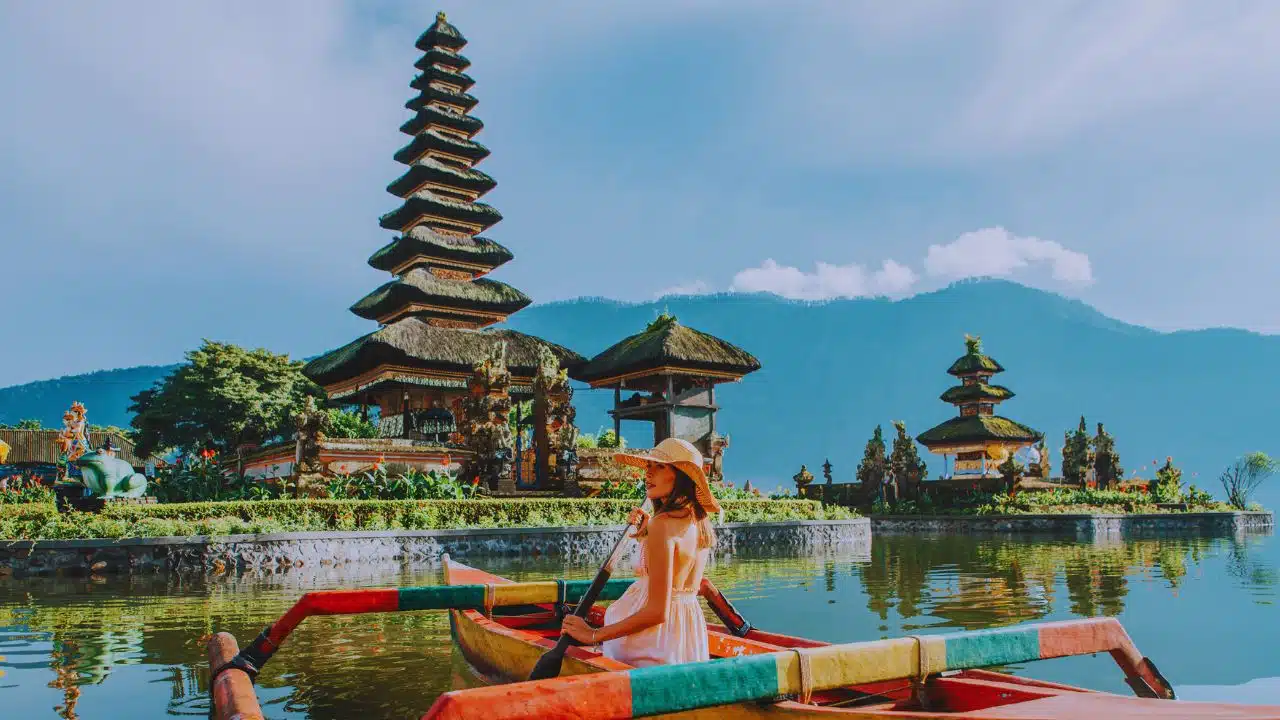
Bali, the famed “Island of the Gods,” has long captivated the global imagination with its verdant rice paddies, mystical temples, and idyllic beaches. This Indonesian jewel is a beacon for travelers seeking spiritual solace, vibrant culture, and breathtaking natural beauty.
However, beneath this picture-perfect facade, a growing crisis is unfolding. The relentless surge of mass tourism, while a significant economic driver, is exacting a devastating environmental and cultural price. This onslaught is straining the island’s finite resources, eroding its unique cultural fabric, and raising critical questions about the sustainability of its tourism model. The unseen costs of mass tourism in Bali are becoming increasingly visible, challenging the very essence of the paradise it is celebrated to be.
The sheer volume of visitors is staggering. In 2023, Bali welcomed 5.27 million international visitors, and the numbers for 2024 are on a similar trajectory. This influx, while fueling economic growth, has placed an unsustainable burden on the island’s delicate ecosystem and its rich cultural heritage. The very attractions that draw tourists are now under threat from overdevelopment, pollution, and the commodification of sacred traditions. As the world rediscovers travel post-pandemic, Bali finds itself at a critical juncture, forced to confront the harsh realities of its popularity and seek a more sustainable path forward.
The Environmental Scars of an Unending Tourist Influx
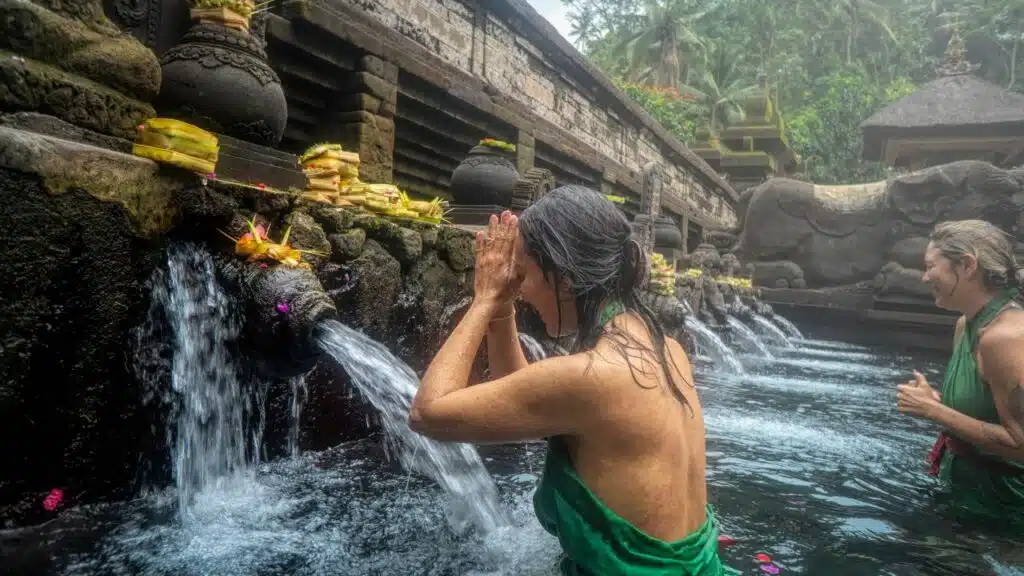
The environmental consequences of unchecked tourism in Bali are stark and multifaceted. The island is grappling with a severe water crisis, a burgeoning waste management problem, and the alarming degradation of its natural landscapes. These issues are not just logistical challenges; they are existential threats to the well-being of the Balinese people and the future of the island’s tourism industry.
A Thirst That Cannot Be Quenched: The Water Crisis
Water, the lifeblood of any community, is becoming an increasingly scarce resource in Bali. The tourism industry is a particularly thirsty consumer, with large hotels and resorts consuming a disproportionate amount of the island’s water supply. It is estimated that the tourism sector consumes as much as 65% of Bali’s water resources. This excessive consumption is depleting the island’s groundwater reserves at an alarming rate, leading to water shortages for local communities and threatening the intricate “subak” irrigation system that has sustained Balinese agriculture for centuries.
The subak system, a UNESCO World Heritage site, is a complex network of canals and weirs that has been managed by local communities for over a thousand years. It is a testament to the Balinese philosophy of Tri Hita Karana, which emphasizes harmony between humans, God, and the environment. However, the diversion of water to tourist facilities is disrupting this delicate balance, leading to conflicts between the tourism sector and local farmers.
Drowning in Development: Land Use and Infrastructure Strain
The insatiable demand for tourist accommodations and amenities has led to a construction boom in Bali. Lush rice paddies and pristine coastal areas are being rapidly converted into hotels, villas, and restaurants. This unchecked development not only destroys the natural beauty of the island but also puts immense strain on its infrastructure. Roads are choked with traffic, and the power grid struggles to keep up with demand.
Furthermore, the conversion of agricultural land has significant implications for food security and the local economy. As fertile land is lost to development, Bali becomes more reliant on imported food, and traditional farming livelihoods are threatened.
The Plastic Tide: A Waste Management Nightmare
The proliferation of single-use plastics in the tourism industry has created a massive waste management problem in Bali. The island’s landfills are overflowing, and a significant amount of plastic waste ends up in its rivers and oceans, polluting the water and harming marine life. While there have been efforts to address this issue, including a ban on single-use plastics, the sheer volume of waste generated by millions of tourists each year makes it a formidable challenge. The Indonesian government has recently given hotels in Bali a three-month deadline to improve their waste management practices, highlighting the urgency of the situation.
| Environmental Impact | Key Statistics and Data |
| Water Scarcity | The tourism industry consumes an estimated 65% of Bali’s water. |
| Waste Management | Bali generates thousands of tons of waste daily, with a significant portion being plastic. |
| Land Conversion | Thousands of hectares of agricultural land have been converted for tourism development. |
| Coastal Erosion | A significant portion of Bali’s coastline is experiencing erosion. |
The Fraying Threads of a Rich Cultural Tapestry

The cultural impacts of mass tourism in Bali are more subtle than the environmental ones but no less profound. The “Island of a Thousand Temples” is at risk of losing its spiritual soul as its culture is increasingly packaged and sold as a commodity for tourist consumption.
From Sacred Rituals to Spectator Sports: The Commodification of Culture
Many of Bali’s unique cultural traditions, which are deeply rooted in its Hindu-Balinese faith, are being transformed into commercial performances for tourists. Sacred dances, once performed only on special religious occasions, are now staged daily for paying audiences. While this provides an economic incentive for preserving these traditions, it also risks stripping them of their spiritual significance and authenticity. The very essence of what makes Balinese culture so captivating is being diluted in the process.
The Erosion of Traditional Values and Lifestyles
The influx of foreign tourists and the pervasiveness of Western culture are also leading to an erosion of traditional Balinese values and lifestyles. The younger generation, in particular, is increasingly drawn to the perceived glamour of the tourism industry, often at the expense of their traditional occupations and cultural practices. The social fabric of village life is also being strained as communities grapple with the social problems that often accompany mass tourism, such as increased crime and the rising cost of living.
A study published on ResearchGate highlights the disconnection and superficial understanding of Balinese culture that can result from mass tourism, leading to an erosion of cultural identity and social cohesion.
The Double-Edged Sword of Economic Dependence
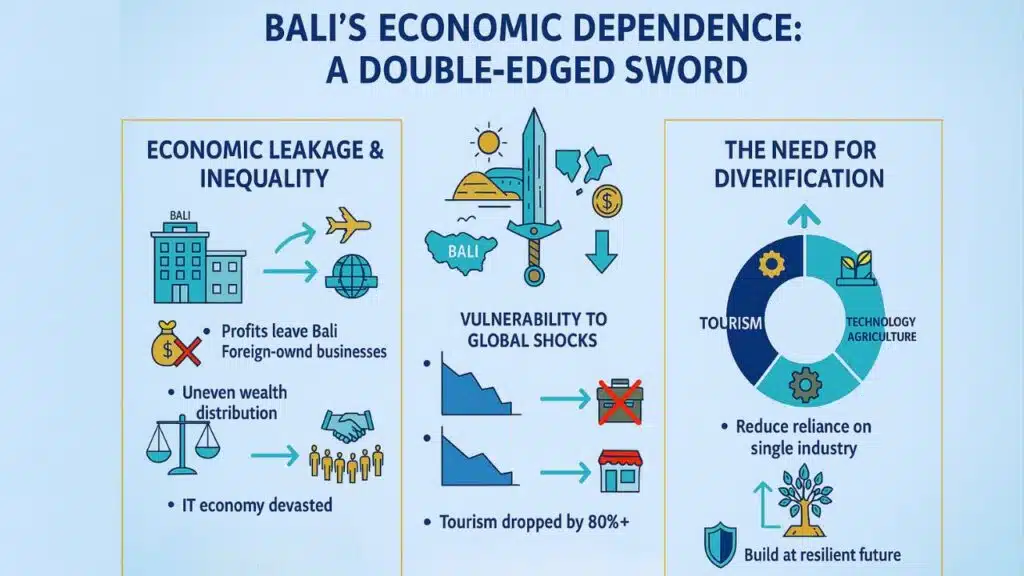
There is no denying that tourism has brought significant economic benefits to Bali. It is the island’s largest industry, providing employment for a large portion of the population. However, this economic dependence is a double-edged sword.
Economic Leakage and Inequality
A significant portion of the revenue generated by tourism in Bali does not stay on the island. This phenomenon, known as “economic leakage,” occurs when profits are repatriated by foreign-owned hotel chains, tour operators, and other businesses. As a result, the economic benefits for local communities are often not as substantial as they could be. Furthermore, the wealth that is generated is not always distributed equitably, leading to a widening gap between the rich and the poor.
Vulnerability to Global Shocks
The COVID-19 pandemic laid bare the vulnerability of Bali’s tourism-dependent economy. When international travel came to a standstill, the island’s economy was devastated, with widespread job losses and business closures. This experience has highlighted the need for Bali to diversify its economy and reduce its over-reliance on a single industry.
The Path Forward: Towards a More Sustainable and Responsible Tourism
Despite the immense challenges it faces, there is a growing recognition in Bali of the need for a more sustainable and responsible approach to tourism. A number of initiatives are underway to mitigate the negative impacts of mass tourism and create a more equitable and environmentally friendly tourism industry.
Government Initiatives and Regulations
The Balinese government has introduced several measures to promote sustainable tourism, including a moratorium on new hotel developments in certain areas and a new tourist tax to fund cultural and environmental preservation projects. There is also a growing emphasis on promoting community-based tourism, which aims to empower local communities and ensure that they receive a greater share of the economic benefits of tourism.
The Rise of Eco-Conscious and Regenerative Travel
A growing number of tourists are seeking more authentic and sustainable travel experiences. This has led to the emergence of a niche market for eco-tourism and regenerative travel in Bali. These forms of tourism prioritize environmental conservation, cultural preservation, and the well-being of local communities. Several hotels and tour operators are now offering eco-friendly accommodations, organic farm-to-table dining experiences, and opportunities for tourists to participate in conservation and community development projects.
The Role of Local Communities and NGOs
Local communities and non-governmental organizations (NGOs) are also playing a crucial role in promoting sustainable tourism in Bali. Organizations like the Bali Water Protection Program are working to address the island’s water crisis, while others are focused on waste management, coral reef conservation, and the preservation of traditional cultural practices.
Takeaways
Bali is at a critical crossroads. The island’s future will depend on its ability to find a balance between economic development and the preservation of its natural and cultural heritage. The unseen costs of mass tourism in Bali are no longer hidden; they are a stark reality that demands urgent attention.
Moving forward, a paradigm shift is needed – one that prioritizes quality over quantity, sustainability over short-term profits, and the well-being of the Balinese people and their environment above all else. Only then can the “Island of the Gods” truly live up to its name and continue to be a source of inspiration and wonder for generations to come. The path to a more sustainable future for Bali will not be easy, but it is a journey that must be taken if this paradise is not to be lost forever.