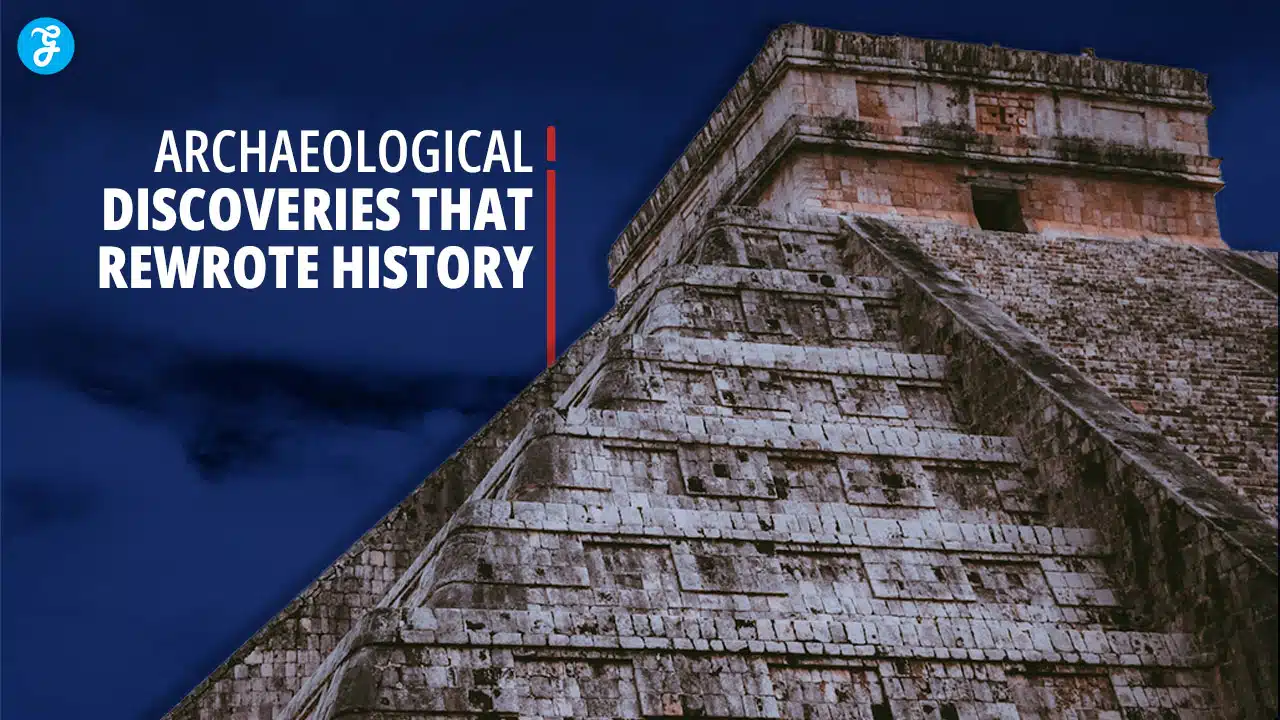
Archeology has always been a field full of surprises. Time and again, discoveries have emerged that challenge our understanding of the past. These findings don’t just add to our knowledge; they often completely change what we thought we knew about history.
Let’s explore 15 such groundbreaking archaeological discoveries that rewrote history.
Archaeological Discoveries That Rewrote History
Imagine digging in the ground and finding something that changes everything we know about the past. That’s what archaeologists do. They’re like detectives, but instead of solving crimes, they solve mysteries about human history.
Sometimes, what they find is so surprising that it makes us rethink everything we thought we knew. In this article, we’ll look at 15 amazing discoveries that did just that.
1. The Rosetta Stone (1799)
In 1799, French soldiers in Egypt discovered the Rosetta Stone. It’s a big black stone with writing on it. But here’s why it’s so important: it had the same message written in three different scripts: Ancient Egyptian hieroglyphs, Demotic script, and Ancient Greek.
Before this, no one could read hieroglyphs. They were just pretty pictures to most people. But because the stone had the same message in Greek (which scholars could read), it gave them a way to finally understand hieroglyphs. It was like finding a key to unlock an ancient language.
This discovery opened up a whole new world of understanding about ancient Egypt. Suddenly, historians could read texts that had been mysteries for thousands of years. It changed everything we knew about Egyptian history and culture.
2. Pompeii (1748)
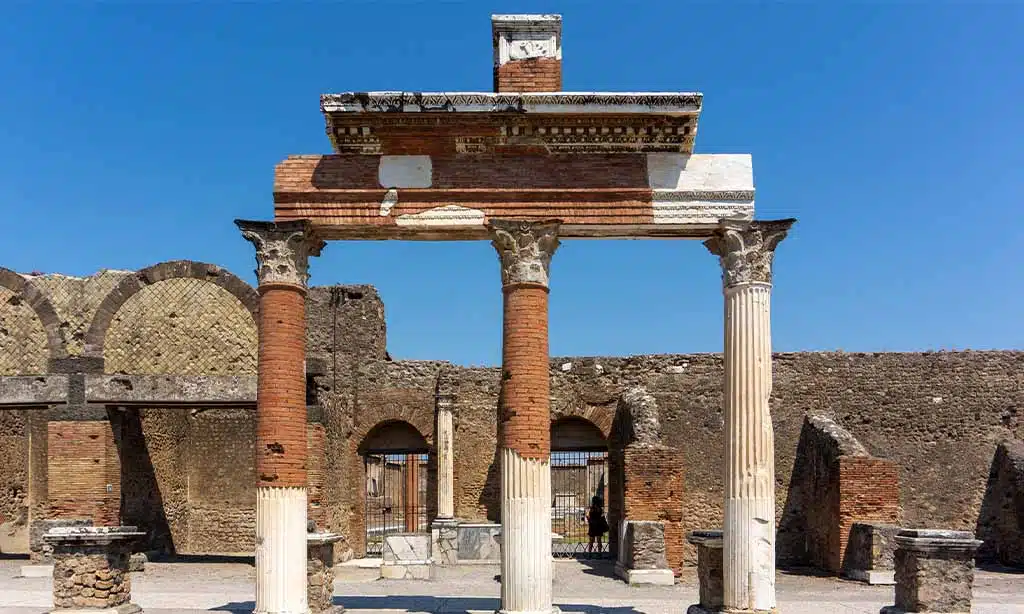
Pompeii was an ancient Roman city that was buried under ash when a nearby volcano, Mount Vesuvius, erupted in 79 AD. It was forgotten for centuries until it was rediscovered in 1748.
What makes Pompeii special is how well-preserved it is. The ash that buried it also protected it. When archaeologists dug it up, they found an entire city frozen in time. They could see how people lived, worked, and even what they ate for their last meal.
This discovery gave us an unprecedented look at daily life in ancient Rome. It wasn’t just about kings and battles anymore – we could see how ordinary people lived. Pompeii rewrote our understanding of Roman society, art, and culture.
3. King Tutankhamun’s Tomb (1922)
In 1922, archaeologist Howard Carter made one of the most famous discoveries in history. He found the tomb of an Egyptian pharaoh named Tutankhamun. What was special about this tomb was that it was almost untouched by grave robbers.
Inside, Carter found over 5,000 artifacts, including the famous golden death mask of Tutankhamun. This treasure trove gave us a never-before-seen look at the wealth and customs of ancient Egyptian royalty.
But it wasn’t just about the gold. The tomb also contained everyday items, giving us insights into the life of a pharaoh. It changed our understanding of ancient Egyptian burial practices and religious beliefs.
4. The Dead Sea Scrolls (1947)
In 1947, a Bedouin shepherd stumbled upon some ancient scrolls in caves near the Dead Sea. These became known as the Dead Sea Scrolls. They’re a collection of Jewish texts, including the oldest known copies of books from the Hebrew Bible.
These scrolls are over 2,000 years old. They give us a unique look at Judaism around the time that Christianity began. They’ve helped scholars better understand the development of both religions.
The Dead Sea Scrolls have rewritten much of what we thought we knew about the history of Judaism and early Christianity. They’ve given us new insights into religious practices and beliefs of that time.
5. Lucy (1974)
In 1974, archaeologists in Ethiopia found something that changed our understanding of human evolution. They discovered the skeleton of an early human ancestor. They named her Lucy.
Lucy lived about 3.2 million years ago. She was a type of early human called Australopithecus afarensis. What made Lucy special was that she walked upright, but her brain was still small like an ape’s.
This discovery showed that our ancestors started walking on two legs long before their brains got bigger. It rewrote the timeline of human evolution and changed our understanding of how we became humans.
6. Terracotta Army (1974)
In 1974, farmers in China made an incredible discovery. While digging a well, they found pieces of clay figures. This led to the discovery of the Terracotta Army—decades of life-sized clay soldiers buried with China’s first emperor, Qin Shi Huang.
Each soldier is unique, with different facial features and expressions. There are also horses, chariots, and weapons. It’s like a clay snapshot of an entire army from over 2,000 years ago.
This discovery changed our understanding of ancient Chinese military practices and burial customs. It also showed the immense power of the first Chinese emperor and the advanced technology of the time.
7. The Antikythera Mechanism (1901)
In 1901, divers found a strange object in an ancient shipwreck near the Greek island of Antikythera. It looked like a lump of corroded metal. But when scientists studied it, they realized it was something incredible.
The Antikythera Mechanism is an ancient Greek device used to calculate and display astronomical information. It’s often called the world’s first computer. It’s so complex that nothing like it was known to exist until over 1,000 years later.
This discovery rewrote our understanding of ancient Greek technology and astronomy. It showed that ancient civilizations were far more advanced than we had thought.
8. Göbekli Tepe (1994)
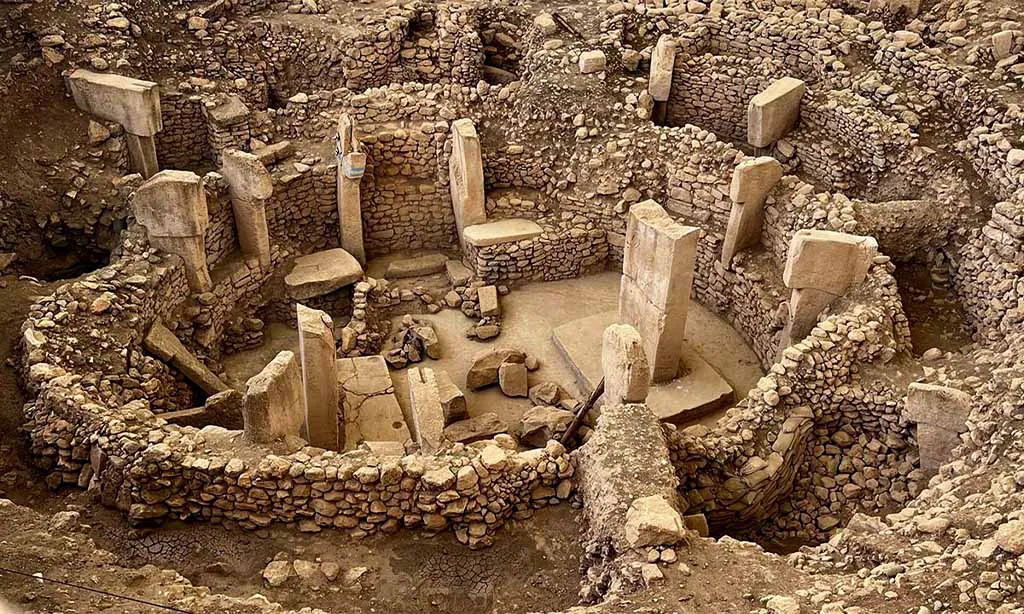
Göbekli Tepe is a site in Turkey that was discovered in 1994. It’s a group of huge stone pillars arranged in circles. The amazing thing is that it’s over 11,000 years old—older than Stonehenge or the pyramids.
This discovery changed everything we thought we knew about early human societies. It showed that complex religious sites existed before we thought humans had started farming or living in cities.
Göbekli Tepe suggests that religion and ritual might have played a bigger role in the development of civilization than we had thought. It’s rewriting our understanding of how and why humans started to form complex societies.
9. The Lascaux Cave Paintings (1940)
In 1940, four teenagers in France accidentally discovered something amazing—a cave full of prehistoric paintings. These became known as the Lascaux Cave Paintings.
The paintings are about 17,000 years old. They show animals like bulls, horses, and deer. The detail and skill of the paintings are incredible, especially considering how old they are.
This discovery changed our understanding of prehistoric art and human culture. It showed that our ancient ancestors were capable of creating complex, beautiful art. It gave us new insights into their beliefs, hunting practices, and daily lives.
10. The Vindolanda Tablets (1973)
The Vindolanda Tablets were discovered in 1973 at a Roman fort in northern England. They’re thin pieces of wood with writing on them, kind of like ancient postcards.
What makes these tablets special is that they contain everyday writing—things like shopping lists, party invitations, and letters home. They give us a unique look at daily life in Roman Britain.
This discovery rewrote our understanding of life on the Roman frontier. It showed that Roman soldiers and their families led complex, relatable lives, not so different from our own in many ways.
11. Otzi the Iceman (1991)
In 1991, hikers in the Alps found something sticking out of the ice. It turned out to be the body of a man who died over 5,000 years ago. Scientists named him Otzi.
Otzi’s body was incredibly well-preserved by the ice. Scientists could study his clothes, his tools, even what he ate for his last meal. They could see his tattoos and figure out what diseases he had.
This discovery gave us an unprecedented look at life in Copper Age Europe. It changed our understanding of early human migration, ancient technology, and prehistoric health and diet.
12. The Nazca Lines (1927)
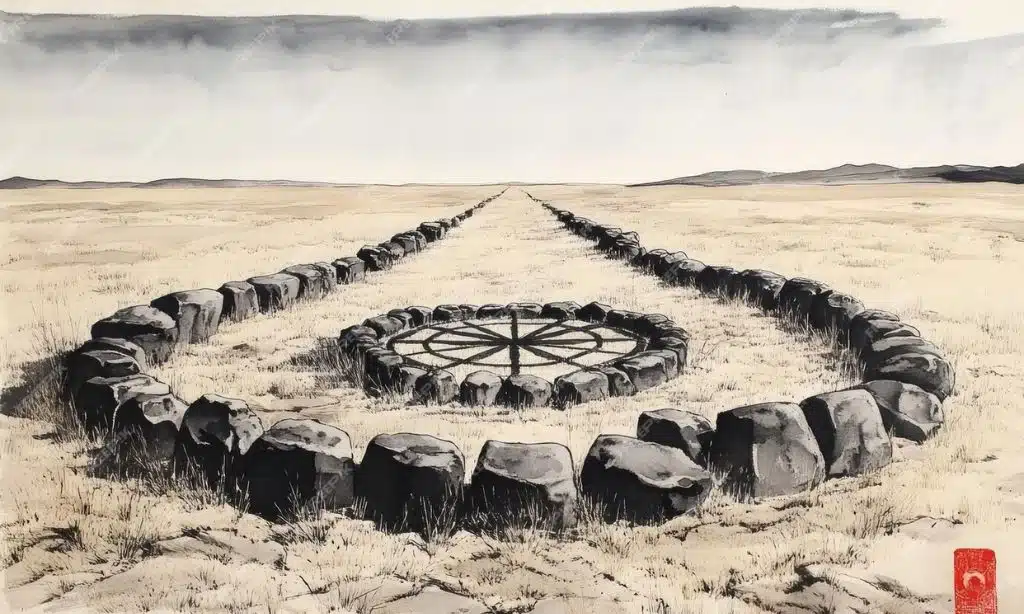
The Nazca Lines were first spotted from an airplane in 1927. They’re huge designs drawn on the ground in the Nazca Desert in Peru. Some are simple lines, others are complex pictures of animals and plants.
These lines are so big that you can only see what they are from high up in the air. This has led to a lot of questions about how and why they were made. Some of the designs are over 2,000 years old.
The discovery of the Nazca Lines changed our understanding of ancient South American cultures. It showed that they had advanced knowledge of geometry and the ability to create large-scale art. It’s still a mystery why they made these huge drawings that they couldn’t even see from the ground.
13. The Library of Ashurbanipal (1849)
In 1849, archaeologists found something amazing in Iraq—the remains of a huge ancient library. It belonged to an Assyrian king named Ashurbanipal who lived about 2,600 years ago.
The library contained over 30,000 clay tablets with writing on them. These tablets covered all sorts of topics—stories, science, medicine, and magic. Many of them are much older than the library itself.
This discovery gave us a huge amount of information about ancient Mesopotamian culture and knowledge. It included texts like the Epic of Gilgamesh, one of the oldest stories in the world. The library of Ashurbanipal rewrote our understanding of ancient literature and learning.
14. Homo Floresiensis (2003)
In 2003, archaeologists made a surprising discovery on the Indonesian island of Flores. They found bones of a tiny species of human that lived as recently as 50,000 years ago. This species became known as Homo floresiensis, or sometimes “the Hobbit,” because of its small size.
This discovery shook up our understanding of human evolution. It showed that very recently, in evolutionary terms, there were several different species of humans living at the same time. It also raised questions about how and why this species evolved to be so small.
The discovery of Homo floresiensis has led scientists to rethink the story of human evolution and migration. It shows that the human family tree is more complex and diverse than we thought.
15. The Voynich Manuscript (1912)
The Voynich Manuscript was discovered in 1912, but it was actually written in the early 15th century. It’s a book filled with strange illustrations and writing in an unknown language or code that no one has been able to understand.
The manuscript has puzzled scholars for over a century. It contains pictures of unknown plants, astronomical diagrams, and what look like medical or herbal recipes. But because no one can read the text, we don’t know what it’s really about.
While this discovery hasn’t exactly rewritten history yet, it has challenged our understanding of medieval European knowledge and writing. It suggests that there may be whole areas of medieval learning that we know nothing about. The Voynich Manuscript remains one of the biggest mysteries in archaeology and historical research.
Takeaways
These 15 archaeological discoveries have each, in their own way, rewritten parts of our history. They’ve challenged what we thought we knew and opened up new areas of study and understanding. From ancient languages to human evolution, from prehistoric art to medieval mysteries, these findings show us that there’s always more to learn about our past.
Archaeology continues to surprise us. New technologies are helping archaeologists make discoveries that would have been impossible just a few years ago. Who knows what they might find next? Each new discovery has the potential to change our understanding of history once again.
As we’ve seen, our knowledge of the past is always evolving. These discoveries remind us to keep an open mind and to be ready to change our ideas when new evidence comes to light. They show us that history is not a fixed story, but a living field of study that’s constantly being updated and rewritten.