The real-world applications of machine learning are now part of daily life. Hospitals use algorithms to assist with diagnoses, banks rely on automated fraud detection, and logistics networks depend on prediction models to keep goods moving. Across industries, machine learning systems help make decisions faster, reduce errors, and improve experiences.
This article explores ten major machine learning use cases that already deliver measurable impact. It reviews how the technology works in practical settings, why organizations adopt it, and what it means for people who interact with these systems in their everyday routines.
Real-World Applications of Machine Learning in Healthcare
Healthcare demonstrates some of the most meaningful real-world applications of machine learning. The field produces vast data streams—images, lab results, electronic health records—and ML models help extract insights that support clinicians.
Early diagnosis and clinical decision support
Machine learning models assist doctors by analyzing medical images such as X-rays, CT scans, and MRIs. These systems learn from large datasets and can identify patterns that signal issues like tumors, bone fractures, or lung abnormalities.
Their purpose is not to replace clinicians but to highlight details that might require closer attention. Hospitals also use ML-driven early-warning systems that analyze patient data to predict risks, such as sepsis or sudden deterioration. These alerts give medical teams more time to act.
Personalized treatment and drug discovery
Machine learning supports the shift toward personalized medicine. Models help predict how different patients might respond to treatments, using factors such as age, genetic markers, and medical history. This improves the chances of selecting the most effective therapy.
In drug research, ML accelerates the discovery process by simulating how potential compounds might interact with biological targets. This reduces time spent on trial-and-error testing and helps scientists focus on promising candidates earlier.
Finance and Banking: Machine Learning Use Cases for Risk and Fraud
Banks and financial institutions depend heavily on machine learning because accuracy and speed are critical in managing risk and preventing crime.
Credit scoring and default prediction
Traditional credit scoring methods use limited data. Machine learning models analyze more signals, such as spending habits and transaction histories, to estimate repayment likelihood more precisely.
This allows lenders to make better decisions and sometimes expand credit access to borrowers who might otherwise be overlooked. At the same time, financial regulators require transparency to ensure these models remain fair and unbiased.
Fraud detection and anti-money-laundering
Fraud patterns evolve constantly, making manual detection difficult. Machine learning systems watch for unusual transaction patterns, sudden changes in account behavior, or suspicious spending spikes.
These systems work in real time, reducing losses by flagging issues quickly. Banks also use ML to detect money-laundering schemes by analyzing relationships across accounts and tracking movement patterns that deviate from normal behavior.
Retail and E-Commerce: Machine Learning in Everyday Shopping
Online shopping platforms rely on machine learning in everyday life, especially in personalizing user experiences and forecasting demand.
Recommendation engines and personalized offers
Recommendation systems use ML to study behavior—what users view, click, purchase, or ignore. These systems then suggest products that match their preferences.
This boosts engagement and creates a smoother shopping journey. Beyond e-commerce, similar recommendation engines power movie, music, and news platforms, influencing what people consume daily.
Dynamic pricing and demand forecasting
Retailers use machine learning to forecast product demand based on past sales, seasonal trends, and external factors such as weather or local events.
Dynamic pricing tools adjust prices in real time in response to market conditions, competition, or inventory levels. Airlines, hotels, ride-sharing companies, and online stores use this approach to balance revenue, demand, and customer expectations.
Transportation and Mobility: Smarter Routes with Machine Learning
Transportation generates huge volumes of real-time data, making it ideal for ML-driven optimization.
Logistics optimization and route planning
Machine learning helps logistics companies plan efficient delivery routes by analyzing traffic, weather, road closures, and historical delivery times.
This improves accuracy for customers and reduces fuel consumption for companies. Fleet operators also use ML models to match shipments with available trucks, minimize empty mileage, and streamline asset allocation.
Driver assistance and autonomous vehicles
Many modern vehicles include machine learning-based driver assistance features such as adaptive cruise control, lane detection, and emergency braking. These features rely on models trained to interpret sensor input from cameras and radar.
Autonomous vehicle prototypes extend these capabilities further by combining perception, prediction, and decision-making models. While full self-driving remains under development, ML already contributes significantly to on-road safety systems.
Manufacturing: Predictive Maintenance and Quality Control
Factories depend on precision, consistency, and uptime—three areas where machine learning creates value.
Predicting equipment failure before it happens
Manufacturing equipment contains sensors that collect vibration, pressure, and temperature data. Machine learning models monitor these signals and detect anomalies that may indicate early-stage faults.
By predicting failures before they occur, plants can schedule maintenance more strategically, avoid costly breakdowns, and improve overall equipment effectiveness.
Computer vision for defect detection
Quality control teams now use ML-powered computer vision to inspect products on the production line. These systems can identify scratches, misalignments, discoloration, or other flaws at speeds far beyond human capabilities.
Consistent inspection reduces waste and ensures that customers receive products that meet strict safety and quality standards.
Marketing and Customer Experience: Understanding the Audience
Marketers use machine learning to interpret customer preferences across digital channels and deliver more meaningful experiences.
Customer segmentation and churn prediction
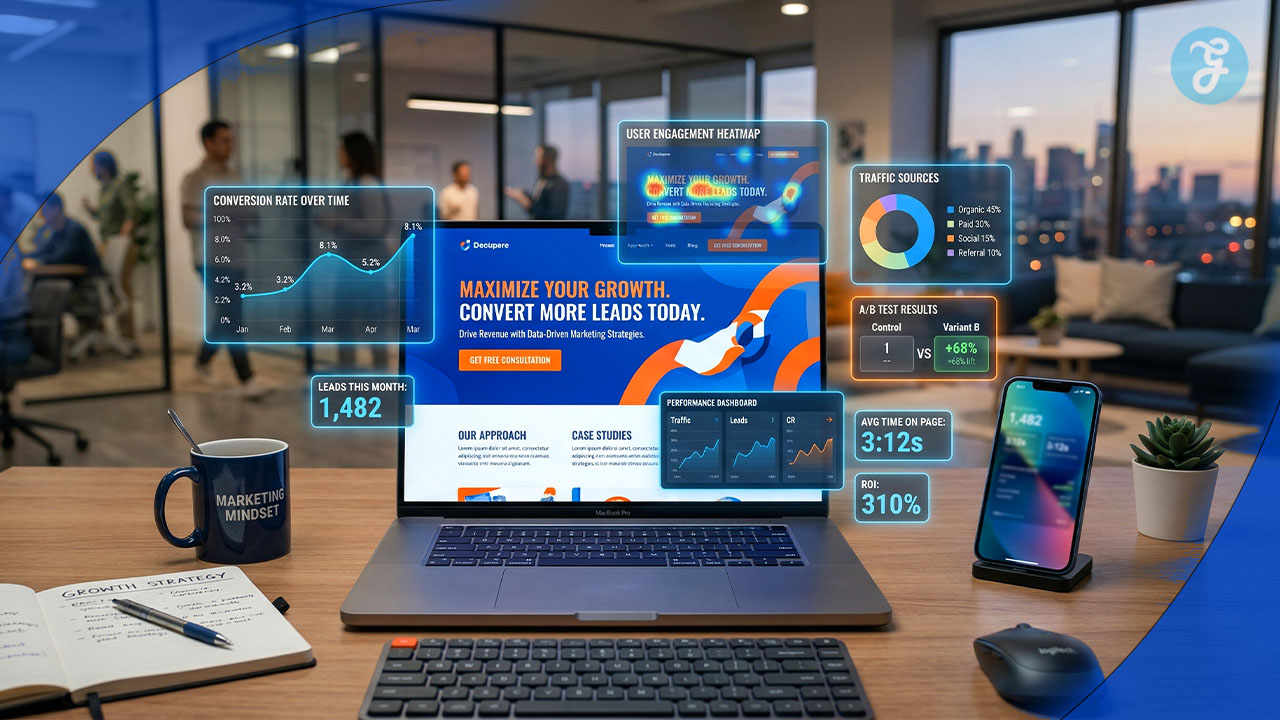
ML-driven segmentation groups customers based on behavior rather than just demographics. This helps businesses understand which groups respond best to certain products or campaigns.
Churn prediction models identify customers who may leave, allowing companies to intervene early with personalized offers or better support options.
Campaign optimization and uplift modeling
Uplift modeling focuses on predicting who is likely to respond positively to marketing outreach. This avoids unnecessary messaging and improves campaign efficiency.
Machine learning also evaluates performance across channels—email, social media, search, and display—and helps marketers adjust budgets and creative assets accordingly.
Cybersecurity: Real-Time Threat Detection with Machine Learning
With cyber threats becoming more sophisticated, organizations depend on machine learning to strengthen defense.
Network and endpoint anomaly detection
Machine learning models analyze typical network behavior—login times, device locations, data transfer volumes—and spot anomalies that may signal intrusions.
These systems give security teams early warnings and reduce the time needed to detect serious breaches.
Preventing fraud and abuse online
Online platforms use ML to identify fake profiles, spammers, and harmful content. By analyzing posting behavior and social graph patterns, algorithms can detect coordinated or malicious activities.
Machine learning also helps prevent account takeovers by spotting unusual login patterns or suspicious authentication attempts.
Language, Search, and Assistants: NLP as a Machine Learning Use Case
Natural language processing powers some of the most familiar machine learning use cases, from search engines to digital assistants.
Search, translation, and content moderation
Search engines use machine learning to interpret intent, rank results, and personalize recommendations.
Translation tools rely on neural models that analyze linguistic patterns across languages.
Content moderation platforms use ML to detect harmful speech, policy violations, or spam across text, images, and videos, helping human moderators manage large volumes of content.
Chatbots and virtual customer support
Businesses deploy ML-powered chatbots to handle routine support tasks, provide quick answers, and guide customers through troubleshooting steps.
These systems reduce call center load and offer round-the-clock assistance, while complex cases still route to human agents.
Education: Adaptive Learning and Student Support
Education technologies use machine learning to offer more personalized learning experiences.
Personalized learning paths
Adaptive learning platforms analyze how students interact with assignments. ML models estimate mastery and recommend content that matches a learner’s pace.
This helps struggling students receive extra practice and allows advanced learners to progress more quickly.
Learning analytics and student risk alerts
Institutions use ML to identify students who may fall behind based on attendance, engagement, or performance. Advisors then reach out early to offer targeted support.
This approach aims to improve student outcomes, though it requires careful handling of privacy and data ethics.
Public Services and Smart Cities: Machine Learning in Everyday Life
Governments and municipalities use machine learning to improve efficiency and quality of life.
Traffic, energy, and urban mobility
Smart traffic systems adjust signal timing based on real-time congestion, reducing delays and improving overall flow.
Public transport operators use ML to forecast demand and optimize schedules.
Energy grids rely on ML to predict consumption and manage renewable energy sources more effectively.
Public safety and health monitoring
Emergency services use ML to analyze call patterns and predict demand hotspots.
Public health teams analyze environmental and clinical data to track disease outbreaks early.
These systems help allocate resources efficiently while raising important questions about data governance.
Conclusion
The real-world applications of machine learning now influence nearly every sector. From clinical diagnostics and financial decision-making to logistics, marketing, and public services, ML systems help organizations work more efficiently and deliver better experiences.
Still, adoption comes with responsibilities. Businesses must ensure fair, transparent, and accountable use. Policymakers must safeguard privacy and protect citizens. And society must remain engaged in understanding how these systems shape opportunities and outcomes.
Machine learning’s future will depend not only on technical capability but on thoughtful integration into everyday life.