Apple kicked off its Worldwide Developers Conference (WWDC) 2025 on June 9 in Cupertino, California, giving developers, tech enthusiasts, and consumers a comprehensive look at the future of its software platforms. While expectations of groundbreaking AI innovations have been dialed down compared to last year’s splashy announcements, Apple is still bringing major improvements to the table—especially in terms of user experience, practical artificial intelligence, and deeper developer integration.
Here’s a detailed look at what Apple revealed and what it means for users going forward.
A New Look: Software Overhaul Across iOS, macOS, iPadOS, and More
According to Bloomberg’s Mark Gurman, Apple is rolling out its biggest visual transformation since iOS 7 in 2013. The user interface across major platforms—including iOS, macOS, iPadOS, and visionOS—is being redesigned to reflect Apple’s next-generation aesthetic, inspired by the futuristic visionOS interface on the Vision Pro headset.
Key UI Changes:
-
Revamped icons and menus: Apps will now feature more dynamic visuals with translucent layers, giving them a glass-like feel.
-
New interaction methods: Tapping and holding icons may offer live app previews or quick actions, enhancing usability.
-
Modernized core apps: Native apps like Camera, Messages, and Settings are being restyled to offer a more intuitive user experience.
-
macOS Refresh: Described as the most significant overhaul since Big Sur (2020), the macOS redesign includes smoother transitions, enhanced productivity widgets, and cleaner typography.
This redesign isn’t just cosmetic. It’s meant to create a seamless experience across Apple’s ecosystem—from your iPhone to your Vision Pro headset.
New Naming Convention: From iOS 19 to iOS 26
In a move to simplify its branding, Apple is shifting the way it names its software. Instead of releasing iOS 19 this year, it’s moving directly to iOS 26, reflecting the year of release. The same goes for macOS, iPadOS, watchOS, and tvOS, which will now follow a similar year-based naming system.
Why It Matters:
While most users may not track software version numbers closely, this change aligns Apple’s naming with annual expectations and makes it easier for developers and IT professionals to identify software builds by year.
AI Takes a Backseat, But Not Out of Sight
Unlike WWDC 2024, where AI stole the spotlight, Apple’s 2025 approach to artificial intelligence is more subtle and user-focused.
Practical AI Features in 2025:
-
AI Battery Manager: Part of the Apple Intelligence platform, this tool learns from your habits to manage power usage more efficiently, improving battery life without manual input.
-
Live Translation for AirPods: Apple is introducing real-time translation via AirPods. When paired with an iPhone or Vision Pro, users will be able to understand foreign languages live in conversation—although it’s unclear if both users need AirPods.
-
In-App Translations: Apple is expanding on-device translations in Messages and FaceTime, allowing smoother multilingual communication.
-
Genmoji: A creative tool allowing users to combine two emojis to create custom animated Genmoji, powered by AI.
-
Shortcuts Integration: The Shortcuts app will now use generative AI to help users build custom workflows using natural language instructions.
These features focus on daily functionality rather than dazzling tech demos—an intentional pivot from last year’s promises.
Apple Intelligence: Opening Up to Developers
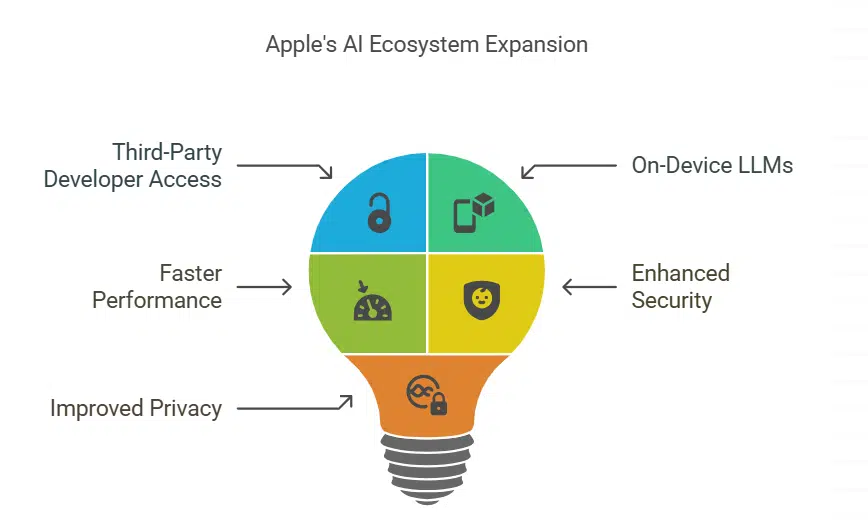
Apple is now giving third-party developers access to its on-device large language models (LLMs), which form the core of its generative AI capabilities. This move is expected to ignite a wave of new AI-powered apps that don’t need cloud computing—making them faster, more secure, and better at protecting user privacy.
Developer Takeaways:
-
Developers can now build apps using Apple’s LLMs for tasks like summarization, translation, and code generation.
-
Apple Intelligence will be deeply embedded in Xcode, Apple’s primary development environment, enhancing developer productivity.
This strategy allows Apple to quietly scale AI innovation across its platform without relying on large cloud-based processing centers like Google or OpenAI.
Gaming Gets a Boost: A Centralized Apple Games App
Another noteworthy development is Apple’s reported launch of a new centralized Games app. This would replace the underused Game Center with a more robust platform integrating:
-
Game downloads from the App Store
-
Apple Arcade subscriptions
-
Achievements, friend leaderboards, and multiplayer matchmaking
-
VR support via Vision Pro and controller compatibility (like PS5’s DualSense and Xbox controllers)
This aligns with Apple’s growing ambition to position its devices as capable gaming platforms—particularly for mobile and immersive AR/VR titles. While it still lags behind dedicated consoles in traditional game support, Apple’s App Store remains one of the most profitable gaming platforms globally.
When Will These Updates Arrive?
Most of the features and software Apple announced at WWDC 2025 are expected to roll out in the following phases:
| Event | Timeline |
|---|---|
| Developer Beta | Immediately after WWDC keynote (June 9) |
| Public Beta | Expected in July 2025 |
| Official Release | September 2025, alongside iPhone 17 launch |
iPhone 17 Preview: Slimmer Design + Smarter Software
While Apple didn’t unveil new hardware at the keynote, reports suggest a significantly thinner iPhone 17 is in development for release this fall. Combined with iOS 26’s redesigned UI and AI features, this could mark one of the biggest iPhone upgrades in years.
Market Focus:
Apple hopes the sleek redesign and improved software will help reinvigorate its presence in markets like China, where sales have declined every quarter since Q4 2023.
What Didn’t Make the Cut?
Despite widespread speculation, several features didn’t appear at this year’s WWDC:
-
Siri Upgrade Delayed: The generative Siri announced in 2024 still hasn’t launched publicly, and updates appear to be postponed again.
-
Health App Revamp: Expected overhauls to Apple Health didn’t materialize, although the groundwork may be in place for future updates.
-
No New Hardware: No announcements were made about new devices like iPads, MacBooks, or Vision Pro accessories.
A Smarter, Subtler Apple
WWDC 2025 wasn’t about bold headlines—it was about consistent refinement. Apple has shifted from making grand AI promises to quietly embedding machine learning into its core software in meaningful, useful ways. The redesigns feel purposeful, the new AI tools are grounded, and the upcoming shift to iPhone 17 and year-based OS naming signals a new chapter in Apple’s evolution.
This is Apple doubling down on usability, privacy, and developer power—all without the spectacle. And that might be its smartest move yet.