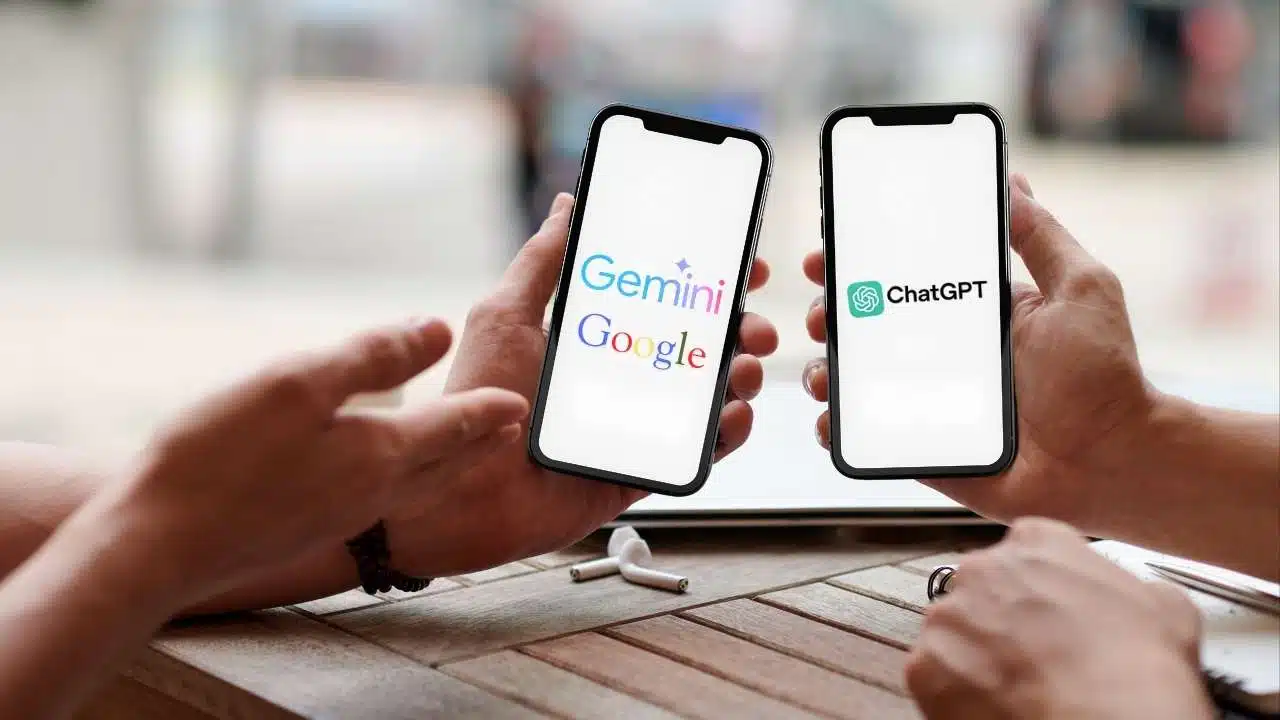
Apple is reportedly preparing a major Siri rebuild aimed at spring 2026, potentially licensing Google’s Gemini AI while keeping Siri requests under Apple’s privacy and security model.
What the Apple Siri overhaul is and why it matters now?
Apple’s voice assistant has long been a default option on iPhone, iPad, Mac, Apple Watch, and HomePod. But the past two years have changed what people expect from assistants. Users now want natural conversation, better memory of context, and the ability to complete tasks across apps without breaking the flow.
That is the center of the reported Apple Siri overhaul: turning Siri from a voice command tool into a more capable AI assistant that can understand requests in everyday language, reason over personal context (with permission), and reliably perform actions across apps and screens.
Apple publicly signaled this shift when it introduced Apple Intelligence in 2024 and described a more capable Siri that can draw on personal context, understand what is on the screen, and take actions inside and across apps. Apple also later acknowledged that some of these Siri improvements would take longer and are expected in 2026.
The new reporting adds a significant detail: Apple may rely on a licensed external model—specifically Google’s Gemini—for parts of the Siri experience, at least in the near term. If accurate, that would mark a notable strategic move. Apple typically emphasizes building core experiences in-house. But it has also shown it will partner when it believes it improves user outcomes, especially if it can preserve Apple’s product standards and privacy promises.
For everyday users, the practical question is simple: will Siri finally feel like a modern assistant—one that answers clearly, follows through, and does not push you to search the web for everything?
What’s expected to change: capabilities Apple has previewed and delayed?
Apple has already described the direction of Siri’s upgrade in plain terms: Siri should become more helpful, more personal, and more action-oriented. The overhaul is expected to deliver improvements in three major areas.
First is personal context, meaning Siri can use information that is already on your device—such as messages, mail, photos, files, notes, contacts, and calendars—to answer questions or help you complete tasks. The goal is not just “knowledge” answers, but answers tailored to your life. For example, instead of asking you to search your inbox manually, Siri could locate the relevant email, summarize what you need, and help you act on it.
Second is on-screen awareness. This is a big step for usability because much of what people want help with is right in front of them: a message thread, a web page, a reservation confirmation, a PDF, a photo, a map view, or a form in an app. A more capable Siri should understand what you are looking at and respond accordingly, such as “add this address to my contact” or “summarize the main points on this page.”
Third is cross-app actions. Siri has historically been strong at a narrow set of tasks—timers, calls, messages, basic device settings—and weaker at multi-step workflows. The overhaul is expected to expand that scope so Siri can carry out sequences like: “Find the photos from Saturday, pick the best three, create a note with captions, and share it with my family group,” or “Move my 3 p.m. meeting to 4 p.m., then message the attendees with the updated time.”
Apple has also positioned reliability as a core requirement. A helpful assistant must do the right action at the right time, especially when personal data and app controls are involved. That is why Apple has leaned on structured frameworks for how apps expose actions to Siri, rather than letting an AI model “guess” how to operate apps.
Quick snapshot: how Siri could feel different after the overhaul?
| What users want | How Siri often behaves today | What the overhaul is aiming for |
| Better answers | Short replies, web hand-offs | Clear, direct responses and summaries |
| Context that “sticks” | Loses thread easily | Follow-up understanding and memory of the request |
| Help with personal info | Limited or inconsistent | Permission-based personal context support |
| Actions across apps | Works in narrow cases | Broader, safer cross-app task execution |
| Less friction | “Here’s what I found on the web” | “Here’s the answer” plus next-step options |
If Apple delivers even part of this experience well, it changes how people use iPhones and Macs daily. Siri becomes less of a feature and more of a workflow layer across the Apple ecosystem.
The reported Gemini role: what it could mean and what it likely doesn’t
The reporting suggests Apple may use Google’s Gemini model to power a new Siri experience, with a target window described as spring 2026. It also describes the arrangement as a paid licensing deal and frames it as an acceleration tactic rather than a permanent dependency.
If that is correct, it points to two realities.
One: building best-in-class assistant intelligence is hard. It requires models, data pipelines, safety systems, evaluation, and deep product integration. Apple has been investing heavily, but the timeline indicates it is prioritizing stability and privacy controls over rushing unfinished features.
Two: Apple may be choosing a hybrid approach. In that world, Apple could combine its own on-device models, Apple-run server inference, and a licensed model for specific assistant tasks—particularly those that benefit from larger general-purpose language capability.
What the Gemini plan likely doesn’t mean?
It does not automatically mean Siri becomes “a Google product.” Apple can license model capability while still owning the Siri interface, the product rules, the privacy and permission layers, and the final “action execution” system. In other words, even if a third-party model helps generate language or reasoning, Apple can still control what data is used, what is stored, and what the assistant is allowed to do.
It also does not necessarily mean Apple is abandoning its own foundation models. The more plausible reading is that Apple may use a partner model as a bridge while expanding its own model performance, tooling, and safety infrastructure.
Why Apple might choose Gemini specifically?
A large model can improve Siri in areas users care about immediately:
- Better natural-language understanding, including messy or ambiguous prompts.
- More coherent long-form answers and summaries.
- Stronger multi-turn conversation continuity.
- Better handling of “compound” requests that combine search, filtering, and planning.
At the same time, Apple’s brand depends on not compromising privacy. That creates a constraint: any arrangement must fit Apple’s security approach and avoid turning Siri into a data-sharing pipeline.
Privacy, security, and “Apple servers”: how the overhaul could be designed
Apple’s public strategy for Apple Intelligence emphasizes two layers:
- On-device processing for many tasks
- Private Cloud Compute (PCC) for more demanding requests that exceed the device’s compute limits
The promise is that complex requests can be processed on Apple-run infrastructure designed to extend iPhone-grade security into the cloud. Apple has also highlighted independent verification concepts for this cloud approach.
If Apple is licensing Gemini for Siri, the key issue is where the model runs and how requests are handled. The reporting suggests Apple would keep Siri’s requests under Apple’s control, which implies an architecture where Apple operates the inference environment and applies its own privacy rules.
A reasonable privacy-preserving design (consistent with Apple’s stated approach) would include:
- Explicit permission prompts for using personal context.
- Minimizing data sent off-device and sending only what is required.
- Using ephemeral processing for many requests (process, respond, discard).
- Strong restrictions on what is logged and how it can be accessed.
- A clear distinction between “general knowledge” prompts and “personal data” prompts.
This matters because Siri is not just a chat interface. It can access messages, call contacts, control smart devices, open apps, and potentially make changes in apps. That expands the risk surface compared to a standalone chatbot.
The trust test Apple must pass
If Siri becomes more powerful, users must believe:
- Siri won’t expose personal information unexpectedly.
- Siri won’t take actions without clear intent.
- Siri won’t “invent” details when it’s unsure.
- Siri won’t quietly change settings or send messages incorrectly.
That is why structured app actions and controlled execution become as important as the intelligence of the language model.
What to watch between now and spring 2026: rollout clues, timelines, and obstacles?
The most important practical detail is timing. Apple has pointed to 2026 for some of the advanced Siri features it previewed. The new reporting tightens the expectation to a spring 2026 window.
Apple often aligns meaningful feature upgrades with major iOS releases in the fall, but it also ships significant mid-cycle updates in spring. A spring 2026 target suggests Apple may bundle the Siri revamp into a later iOS 19 update (or a comparable release sequence), after more time for testing and partner integration.
A simple timeline of how we got here
| Year/Period | What Apple showed or said | What it implied |
| 2024 | Apple Intelligence introduced; Siri previewed as more personal and action-oriented | Apple wants Siri to become a modern assistant |
| 2025 | Apple acknowledged some advanced Siri features are delayed to 2026 | Siri overhaul is bigger than a typical update |
| 2025–2026 | Reports describe a licensed-model boost and spring 2026 target | Apple may partner to accelerate quality and capability |
Likely obstacles Apple must clear
1) Reliability and safety at scale
An assistant that takes actions must be consistent. One highly publicized failure—sending the wrong message, acting on the wrong app, summarizing private content incorrectly—could damage trust.
2) App ecosystem readiness
Siri becomes more useful when apps expose actions cleanly. Some developers will adopt the latest frameworks quickly; many will not. Apple must make the experience strong even without universal adoption.
3) Regional and language coverage
Apple Intelligence features are rolling out over time and may not land everywhere at once. Siri improvements tied to advanced AI may follow a phased approach across languages and regions.
4) Compute and device constraints
On-device AI depends on hardware capabilities and memory. Apple must balance performance, battery life, and heat. Some features may be limited to newer devices.
5) Competitive expectations are rising
Users compare Siri to the best experiences they have seen elsewhere, not to Siri’s past. That raises the bar for accuracy, speed, and usefulness.
What could signal the overhaul is nearing launch?
- Apple expanding developer guidance on assistant-driven app actions
- More Apple Intelligence features moving from “preview” to default behavior
- Clearer user-facing controls for personal context access
- System-level UI updates that make Siri feel less like a floating bubble and more like a workflow assistant
- Stronger messaging around privacy verification and cloud processing
What the Apple Siri overhaul could change for users?
The reported spring 2026 Siri revamp is best understood as Apple trying to modernize the assistant experience in a way that fits Apple’s priorities: privacy, reliability, and deep integration with apps.
If Apple uses Gemini to boost Siri’s intelligence, it could speed up improvements in natural conversation and reasoning. But the success of the overhaul will depend less on flashy demos and more on everyday wins: fewer failures, fewer web hand-offs, better follow-through, and clear control over what personal data Siri can use.
For users, the most meaningful outcome would be a Siri that can handle the “in-between” tasks—finding the right information, summarizing it, and taking the next action—without making you manage the details. That is what a modern assistant should do.
Between now and spring 2026, the story to follow is not just which model Apple uses. It is whether Apple can deliver a Siri that feels consistently helpful while staying aligned with the privacy expectations that define the Apple brand.