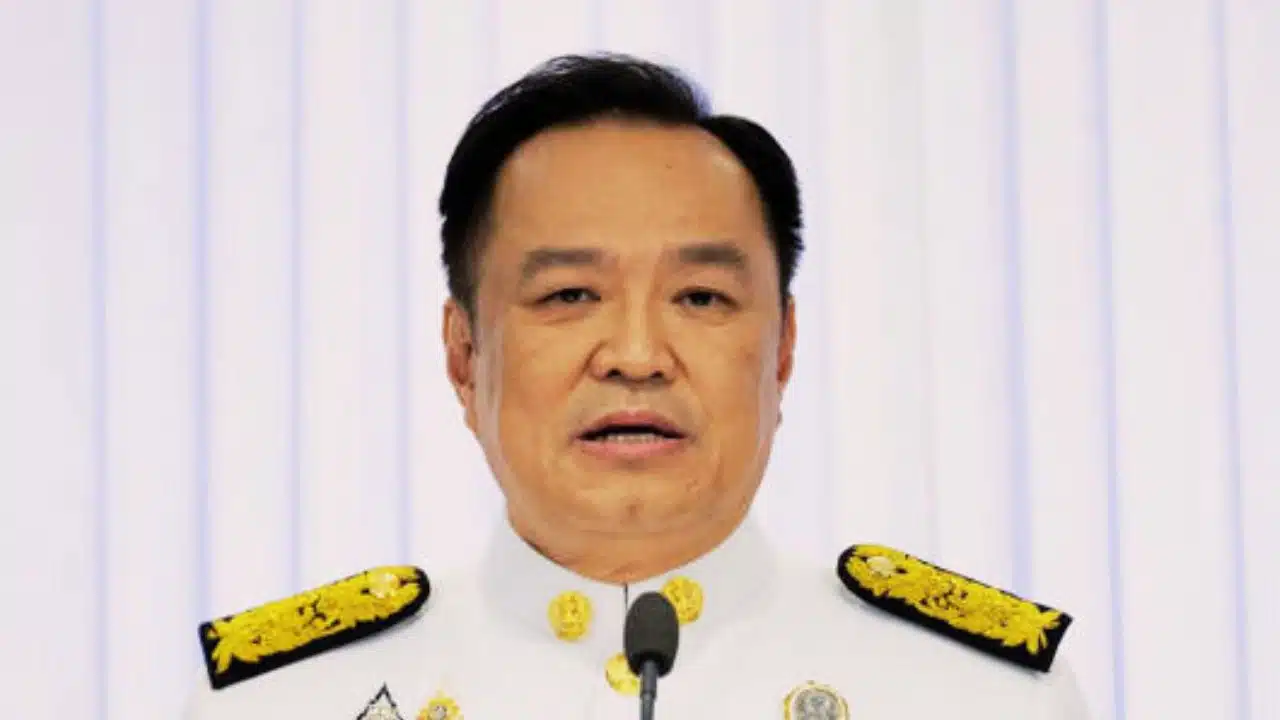
On September 7, 2025, Anutin Charnvirakul was formally endorsed by King Maha Vajiralongkorn as Thailand’s new Prime Minister. The appointment came just two days after Parliament voted to elevate him to the position. The ceremony took place at the headquarters of his Bhumjaithai Party in Bangkok, where senior party officials and coalition partners gathered in traditional civil service uniforms to mark the occasion.
The swift endorsement followed a constitutional crisis that saw the removal of former Prime Minister Paetongtarn Shinawatra. The Constitutional Court disqualified her after finding her guilty of ethical violations linked to a leaked phone call with Cambodia’s Senate President Hun Sen. The call was deemed compromising because it occurred shortly before a border dispute escalated into a deadly five-day conflict between the two countries in July, leaving dozens dead and raising fears of a wider regional war.
Rise of a Political Veteran
At 58, Anutin is no newcomer to Thai politics. He is widely known as the leader of the Bhumjaithai Party and a long-time political operator who has held various ministerial positions. Most recently, he served as Deputy Prime Minister and Interior Minister under Paetongtarn’s government. However, after the phone call scandal sparked public outrage and weakened the coalition, Anutin withdrew his party’s support and resigned from the cabinet. This strategic move positioned him as a compromise candidate when the leadership vacuum emerged.
Anutin had already gained national recognition years earlier when he pushed for the decriminalisation of cannabis. Though promoted as a policy to boost agriculture and provide access for medical use, the measure became controversial due to lax regulation. He also served as Health Minister during the COVID-19 pandemic, a period in which he was praised for expanding health services but also criticised for delays in securing vaccines and for political gaffes.
Parliamentary Backing and Fragile Mandate
Anutin’s path to power became clear on September 5 when Parliament voted to elect him as Prime Minister. He secured the majority with decisive support, particularly from the main opposition, the People’s Party. Their conditional backing gave him the numbers needed, but it came with significant commitments: within four months, Anutin must dissolve Parliament and call fresh elections, and he must allow a referendum on drafting a new constitution through a directly elected constituent assembly.
The People’s Party made clear that it would not join his government, choosing instead to remain in opposition. This means Anutin’s administration begins life as a minority government, facing the challenge of governing without a secure parliamentary majority. His political survival will depend on his ability to balance coalition partners, pass urgent legislation, and keep the promises made to secure his initial backing.
Cabinet Formation and Strategic Appointments
To reassure both domestic and international audiences, Anutin quickly assembled a cabinet of experienced figures. Among the key appointments were Ekniti Nitithanprapas as Finance Minister, tasked with stabilising the economy; Auttapol Rerkpiboon, former CEO of the energy giant PTT, as Energy Minister; and Sihasak Phuangketkeow, a career diplomat, as Foreign Minister. This lineup signals an emphasis on financial management, energy security, and international diplomacy at a time when Thailand faces economic pressures and strained regional relations.
Observers noted that the inclusion of technocrats and seasoned administrators is designed to restore confidence in Thailand’s ability to manage crises after a series of rapid leadership changes.
Domestic and Regional Challenges
Anutin inherits a country facing multiple overlapping challenges. Inflation remains high, with rising food and energy costs affecting everyday households. Farmers and small businesses are particularly vulnerable, while urban workers have been protesting stagnant wages. The recent spike in rice prices—Thailand’s staple food and a crucial export—has been politically damaging and will be one of the new government’s priorities.
Beyond the economy, security concerns loom large. The July border conflict with Cambodia highlighted fragile regional relations and stirred fears of escalation. With the memory of the clashes still fresh, Anutin’s government will need to work closely with ASEAN partners and international mediators to prevent renewed hostilities. His appointment of an experienced diplomat as foreign minister suggests this issue is being treated as urgent.
A Promise of Reform
One of the most significant elements of Anutin’s new mandate is the commitment to constitutional reform. The People’s Party, formerly known as the Move Forward Party, has long pushed for changes to the constitution imposed by the military-backed government after the 2014 coup. The goal is to create a more democratic system with reduced influence from unelected institutions. By agreeing to hold a referendum and convene a constituent assembly, Anutin has opened the door to changes that could reshape Thai politics for a generation.
However, this path is fraught with risks. Conservative factions, including royalist groups and elements of the military, are expected to resist sweeping reforms. Anutin will need to balance competing forces to avoid sparking new unrest.
Political Instability and Leadership Turnover
Anutin is the third person to serve as Thailand’s Prime Minister in just two years. After the 2023 general election, the progressive Move Forward Party won the most seats but was blocked from power when the Senate, then dominated by military appointees, rejected its candidate due to proposals for monarchy reform. Instead, Pheu Thai’s Srettha Thavisin became Prime Minister, but his tenure lasted only a year before the Constitutional Court dismissed him for ethical violations.
His successor, Paetongtarn Shinawatra, daughter of former Prime Minister Thaksin Shinawatra, managed to form a government but was weakened by coalition defections and the Cambodian border crisis. Her dismissal paved the way for Anutin’s rise. This rapid turnover highlights the fragility of Thailand’s political system, where judicial rulings, coalition shifts, and constitutional limits repeatedly disrupt stability.
Thailand at a Crossroads
With his royal endorsement secured, Anutin Charnvirakul now faces the immense task of steering Thailand through political, economic, and security challenges. His government begins under fragile conditions, dependent on temporary agreements with rivals and lacking a full majority. He must deliver economic relief, reassure international partners, and prepare the country for new elections and constitutional reform.
Thailand’s people, weary of political instability and wary of escalating regional conflicts, will be watching closely. The coming months will determine whether Anutin can consolidate authority, maintain stability, and prepare the ground for a more democratic political future—or whether Thailand will see yet another short-lived premiership added to its turbulent history.