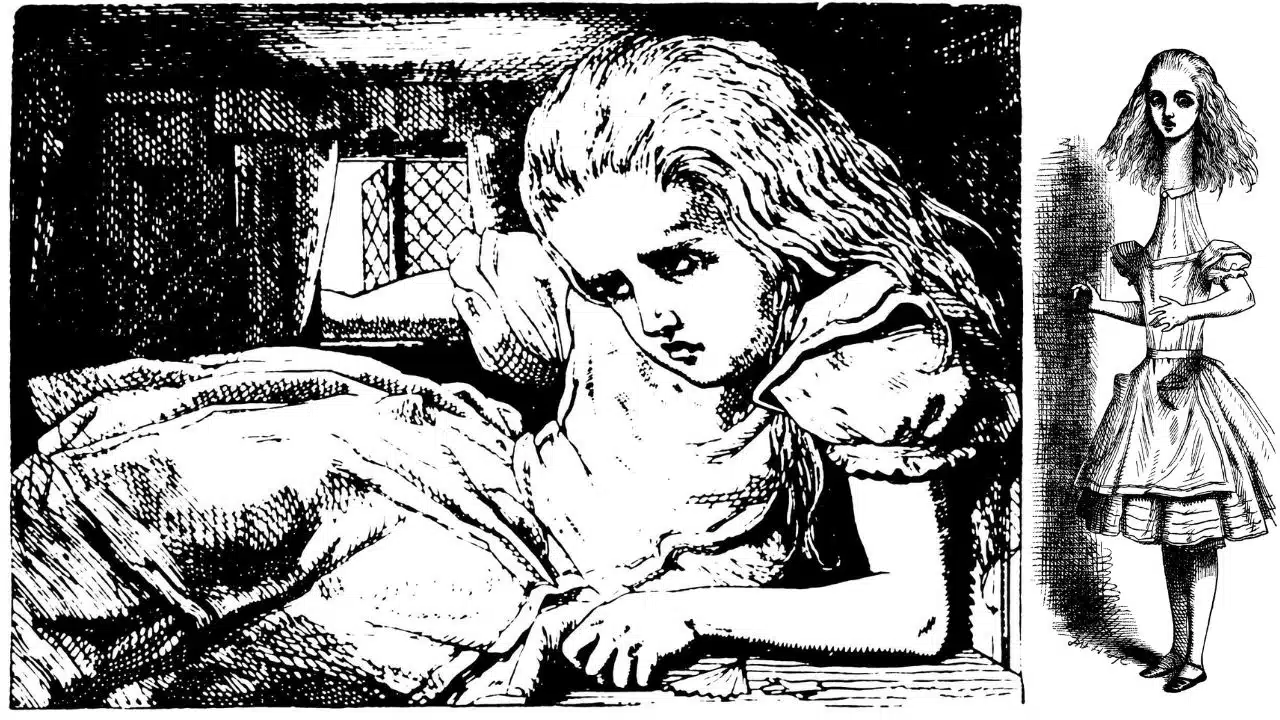
Although it is an uncommon condition, Alice in Wonderland syndrome is a genuine syndrome that can affect certain individuals.
The syndrome can be experienced through either self-perception or visual processing, or even both. Essentially, individuals with the syndrome experience disruptions in their brains that result in a distorted perception of themselves and the world around them. Perceptions of size and distance are commonly observed.
Alice in Wonderland syndrome
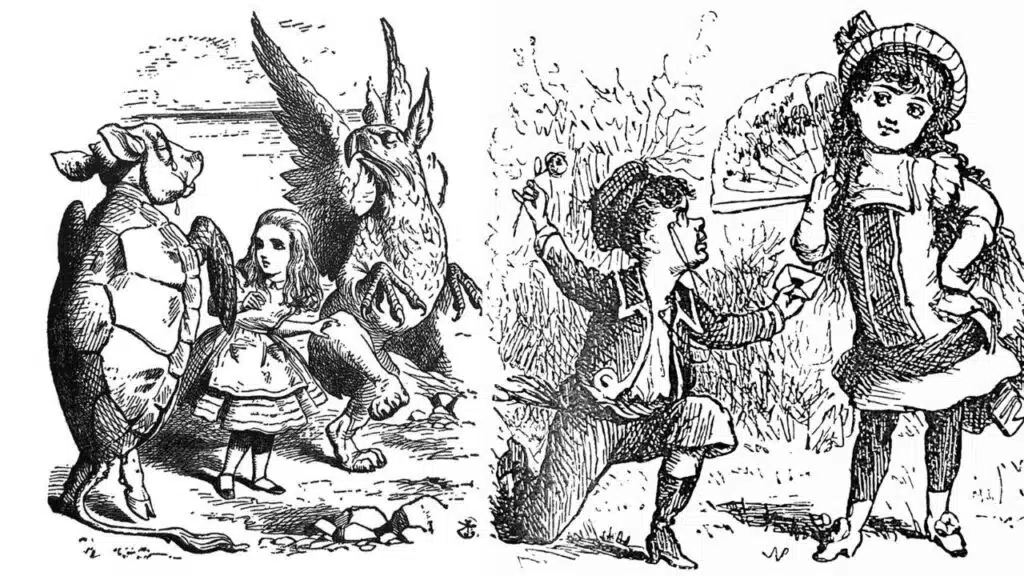
Alice in Wonderland syndrome (AIWS) is an uncommon neurological condition that causes temporary disturbances in the brain’s sensory processing and alters perception. Distortion can occur when it comes to perceiving the size of things, one’s own body, and other elements of reality.
Name Origins
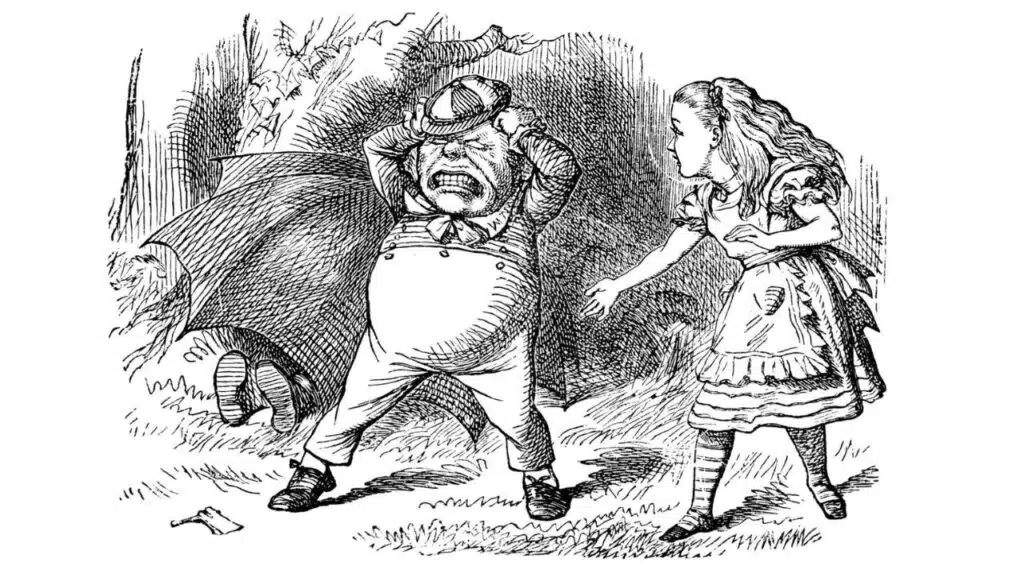
The condition was coined by English psychiatrist John Todd in 1955, inspired by Lewis Carroll’s 1865 book ‘Alice’s Adventures in Wonderland.’ The reason for this is that individuals who are affected by the condition go through comparable situations to those encountered by the protagonist of the book, Alice.
Who Does It Affect?
The syndrome can impact individuals of all ages, although it is more frequently observed in children and adolescents. Individuals with specific brain-related conditions may be at a higher risk of experiencing AIWS.
Is AIWS Common?
The occurrence of Alice in Wonderland syndrome is quite uncommon. It appears that the condition is primarily temporary, which poses challenges in gathering research. In addition, the lack of universally accepted criteria for AIWS can pose challenges when it comes to diagnosing the condition.
How Does AIWS Manifest?
There are three categories in which AIWS can manifest. One way is through disruptions in how one perceives oneself. It’s when individuals develop an inaccurate perception of their own body, specifically in terms of size and sensation. This can have an impact on the entire body or only certain body parts.
AIWS can also cause disruptions in visual processing. Here’s a glimpse into how our brains process visual information. This is a frequently observed manifestation of AIWS in individuals.
It is also possible for both to coexist, in which case individuals may struggle with their ability to see themselves and absorb visual information. Let’s now examine the signs of visual perception and self-perception.
Self-perception Symptoms
The primary symptom is a shift in how the individual views their own body. A portion of the body, for instance, may feel excessively large (partial macrosomatognosia) or small (partial microsomatognosia).
There may be a sensation of the entire body being either too tall (total macrosomatognosia) or too short (total microsomatognosia).
There is also a possibility of experiencing derealization. It’s a type of dissociation where individuals experience a sense of detachment from their surroundings.
Depersonalization, another form of dissociation, can also manifest as a symptom. During this state, individuals may experience a sense of detachment from their physical and mental selves, as if observing their own life from an outsider’s perspective.
There is also a possibility of experiencing somatopsychic duality, where one may feel a division within their own body.
Just like how a disturbance in the perception of time can occur, individuals may experience a phenomenon where time seems to either slow down or speed up.
Visual Perception Symptoms
The most common symptoms in individuals with AIWS are related to visual perception. A common occurrence is the perception of objects appearing to change in size. These objects may seem larger or smaller than their actual size.
Changes in distance are another frequently observed symptom of visual perception. Objects can sometimes appear closer (pelopsia) or farther away (teleopsia) than their actual distance.
Alterations in both size and distance may also take place. One example is when objects appear smaller and seem to be moving farther away, which is known as porropsia.
People might sometimes seem smaller than their actual size. This phenomenon is also referred to as lilliputian hallucination, drawing inspiration from the diminutive inhabitants of Lilliput in Jonathan Swift’s renowned novel ‘Gulliver’s Travels’.
Another syndrome that affects visual perception involves alterations in the way objects appear. At times, there may be distortions in objects and lines, giving them a wavy appearance.
Causes
The exact causes of Alice in Wonderland syndrome are still a mystery, but it is widely recognized that migraines are a prevalent trigger for this condition. This holds particularly true when experiencing a migraine aura. There are various types of headaches that can also cause the syndrome.
The most common causes of acute infectious illness in children are viral infections, including Epstein-Barr virus (EBV), type A or H1N1 influenza, varicella (chickenpox and shingles), typhoid fever, scarlet fever, and Lyme disease.
Individuals with seizure-inducing disorders (such as epilepsy) may also encounter AIWS.
Another potential trigger is sudden loss of blood supply to the brain, which can occur after a stroke. Likewise, brain tumors are.
AIWS can be brought on by a few mental health illnesses, including schizoaffective disorder, depression, and schizophrenia.
A number of drugs used recreationally, particularly hallucinogens, and some pharmaceuticals, such as topiramate, dihydrocodeine, and dextromethorphan, have been connected to AIWS episodes.
Recent Developments
Scientists have made significant progress in unraveling the origins of AIWS. In 2024, scientists conducted a lesion network mapping, comparing brain scans of individuals with AIWS to scans from healthy individuals. A significant majority of individuals with AIWS were discovered to have lesions in two specific areas of the brain: the region responsible for visual processing and the area involved in size perception.
Diagnosis
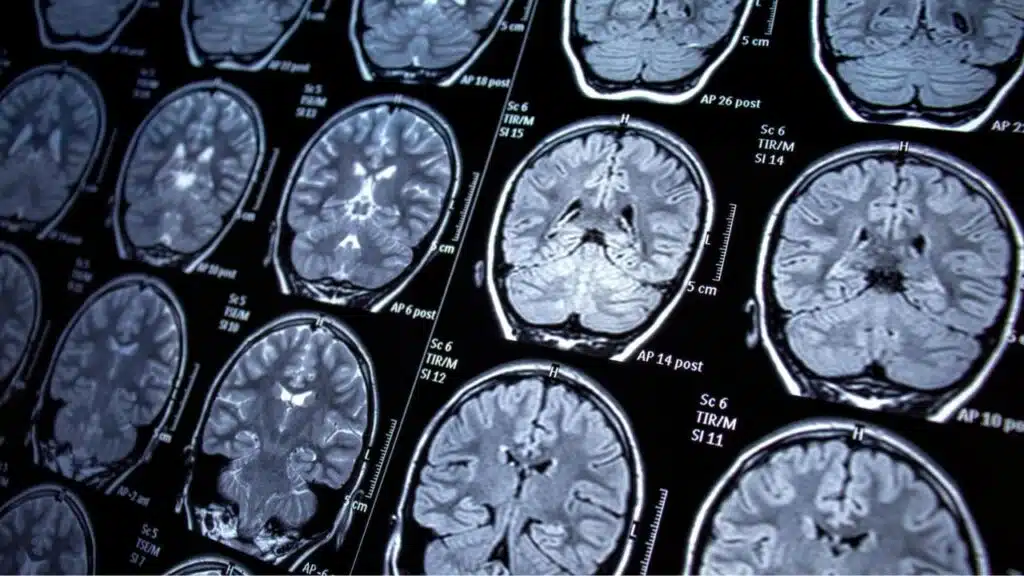
Although there is no specific set of criteria to diagnose the syndrome, healthcare providers may perform certain tests in order to eliminate other potential conditions. These tests may include imaging techniques such as CT scans and MRIs.
An electroencephalogram (EEG) to assess the brain’s electrical activity may be one of the additional testing.
Additionally, visual evoked potentials can be carried out. The exam examines the signals that the brain receives from the eyes.
Treatment
AIWS does not have a therapy (or a cure, in the traditional sense), so the only option is to manage the symptoms.