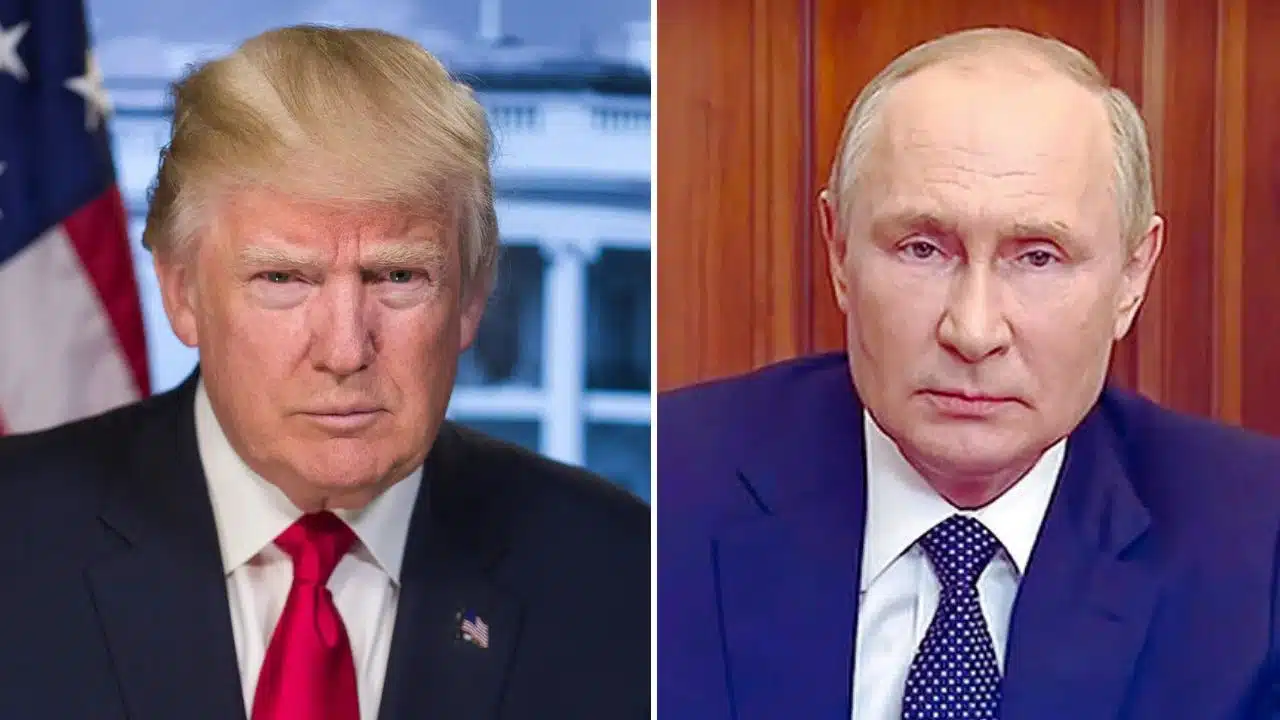
The U.S. state of Alaska has become the unlikely stage for one of the most closely watched diplomatic encounters of the year. Officials from both the United States and Russia arrived in Anchorage in mid-August ahead of a Friday summit between President Donald Trump and President Vladimir Putin. This meeting will be their first in six years and is being framed by the Trump administration as a decisive effort to end Russia’s war in Ukraine, now well into its third year since the full-scale invasion of February 2022.
Anchorage, known for its tourism peaks in summer, now hosts a mix of international journalists, political aides, and security personnel alongside visiting tourists from the continental United States. The summit itself is being held entirely on Joint Base Elmendorf–Richardson (JBER), a high-security U.S. military installation. Officials chose the base for its controlled environment, security infrastructure, and its ability to limit outside access during what is expected to be a brief but high-stakes meeting lasting only a few hours.
Trump’s High-Risk Diplomatic Gamble
For Trump, the summit is both a foreign policy test and a political opportunity. Since returning to office, he has positioned himself as a global dealmaker intent on resolving the Ukraine conflict quickly. His administration has set a deadline for Russia to agree to a ceasefire or face new U.S. sanctions. That deadline passed a week before the summit, but the announcement of the Alaska meeting effectively paused the sanctions clock, giving all sides more time to weigh their next moves.
Trump has signaled a willingness to take multiple approaches — at times speaking optimistically about a breakthrough, at other times warning of severe consequences if Putin refuses to compromise. He has told aides that his personal relationship with Putin could yield results where traditional diplomacy has failed. His inner circle has emphasized that an in-person meeting was necessary to gauge the Russian leader directly, with Trump confident he could determine within minutes whether progress was possible.
Ukraine Excluded, Allies on Edge
One of the most controversial aspects of the summit is the absence of Ukrainian President Volodymyr Zelenskyy. Despite Ukraine being the war’s central party, the meeting is strictly bilateral between Washington and Moscow. Zelenskyy and European leaders have privately and publicly warned that any agreement reached without Kyiv’s participation risks being ineffective or even harmful to Ukraine’s interests.
In the days leading up to the summit, Zelenskyy grew increasingly concerned by remarks from Trump suggesting possible land swaps between Russia and Ukraine. For Kyiv, such territorial concessions are unacceptable. Ukrainian officials point out that the Donetsk and Luhansk regions, along with the occupied territories of Kherson and Zaporizhzhia, are not only internationally recognized as part of Ukraine but are also strategically vital. They fear that conceding these areas would open the door to further Russian advances in the future.
European capitals are equally uneasy. Leaders in Brussels and other NATO capitals have been excluded from the main negotiations and have had to rely on pre-summit calls with Trump to press their positions. They hope he will push back on Russian demands for Ukraine to permanently renounce NATO membership and dismantle parts of its military — conditions that Moscow has consistently maintained are necessary for ending the war.
Russia’s Unyielding Position
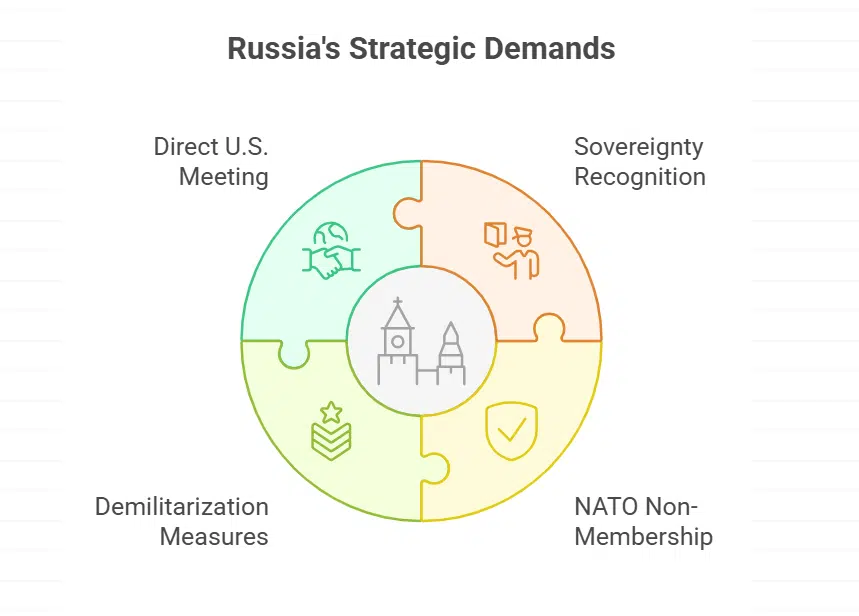
The Kremlin has kept its messaging tight and unwavering in the run-up to the meeting. Russian officials have avoided public speculation on potential compromises and have instead repeated their core demands: formal recognition of Russian sovereignty over the territories it currently occupies in eastern and southern Ukraine, a pledge from Kyiv not to join NATO, and significant demilitarization measures.
Moscow’s position leaves little room for movement, and analysts believe Putin sees the summit as an opportunity to reinforce Russia’s standing on the world stage. A direct meeting with the U.S. president, without Ukrainian participation, strengthens Russia’s image as a global power whose actions must be negotiated directly with Washington rather than through intermediaries.
Sanctions, Trade Risks, and Global Stakes
One of the key pressures on the talks is the threat of expanded U.S. sanctions. Before the meeting was announced, Trump warned that Russia could face tougher penalties if no ceasefire was reached. There was also discussion of imposing sanctions on countries that continue trading with Russia — a step that would have placed Washington on a collision course with Beijing and New Delhi. While sanctions against China have not materialized, Trump has already signaled he will target India with secondary tariffs later in the month over purchases of Russian oil.
Economists note that a breakdown in talks could trigger further global market volatility. Sanctions on major economies or energy exports could raise prices worldwide and strain U.S. relations with important trade partners. The prospect of a trade war adds a layer of complexity to the summit, making it more than just a discussion about ending the Ukraine conflict.
Balancing Domestic Politics and Foreign Policy
Trump also faces domestic political pressures. His campaign promise to quickly end the war was a major draw for his base, who support a reduced U.S. role in costly foreign conflicts. Demonstrating tangible progress in Alaska would bolster his claims of being a more effective negotiator than previous administrations. Failure, on the other hand, could raise questions about his influence on the world stage and the realism of his peace plans.
For Putin, the calculus is different. Russia’s military position in Ukraine remains costly and politically sensitive at home, but giving up occupied territory or strategic objectives could be seen as a retreat. A summit that maintains Russia’s demands while avoiding new sanctions could be framed domestically as a diplomatic win.
Possible Outcomes and Next Steps
The summit’s format — a limited-time, closed-door meeting between Trump and Putin — suggests that any major breakthrough is unlikely. However, it could lead to a framework for further negotiations or a follow-up meeting that includes Ukraine and possibly European representatives. Trump has indicated he may seek a quick three-way meeting with Putin and Zelenskyy, though the Kremlin has said such a direct encounter between the Russian and Ukrainian presidents would only be worthwhile later in the negotiation process.
For now, Alaska will serve as the venue for testing whether the personal rapport between Trump and Putin can overcome years of entrenched positions. While the U.S. president has left room for optimism, the stark contrast between Washington’s fluctuating approach and Moscow’s fixed demands means that finding common ground will be challenging.