Have you ever scrolled through Netflix for twenty minutes, only to watch the exact same show you have already seen? Millions of people face this problem every single day. Streaming services throw endless options at us, yet we often feel stuck. The real culprit behind this confusion is not the number of shows available. AI in entertainment is the hidden force picking what appears on your screen. Sometimes the algorithm misses the mark. Sometimes it nails exactly what you want to watch.
You probably never stop to think about how these recommendations actually happen. Artificial intelligence now powers about eighty percent of what major streaming platforms show you. That is a massive number. These systems learn from your clicks, your viewing habits, and the time of day you watch.
I have found that understanding this technology completely changes how you experience digital media. I am going to walk you through the exact steps I use to make sense of it, and I think you will be surprised at how easy it can be.
AI In Entertainment: How Algorithms Work?
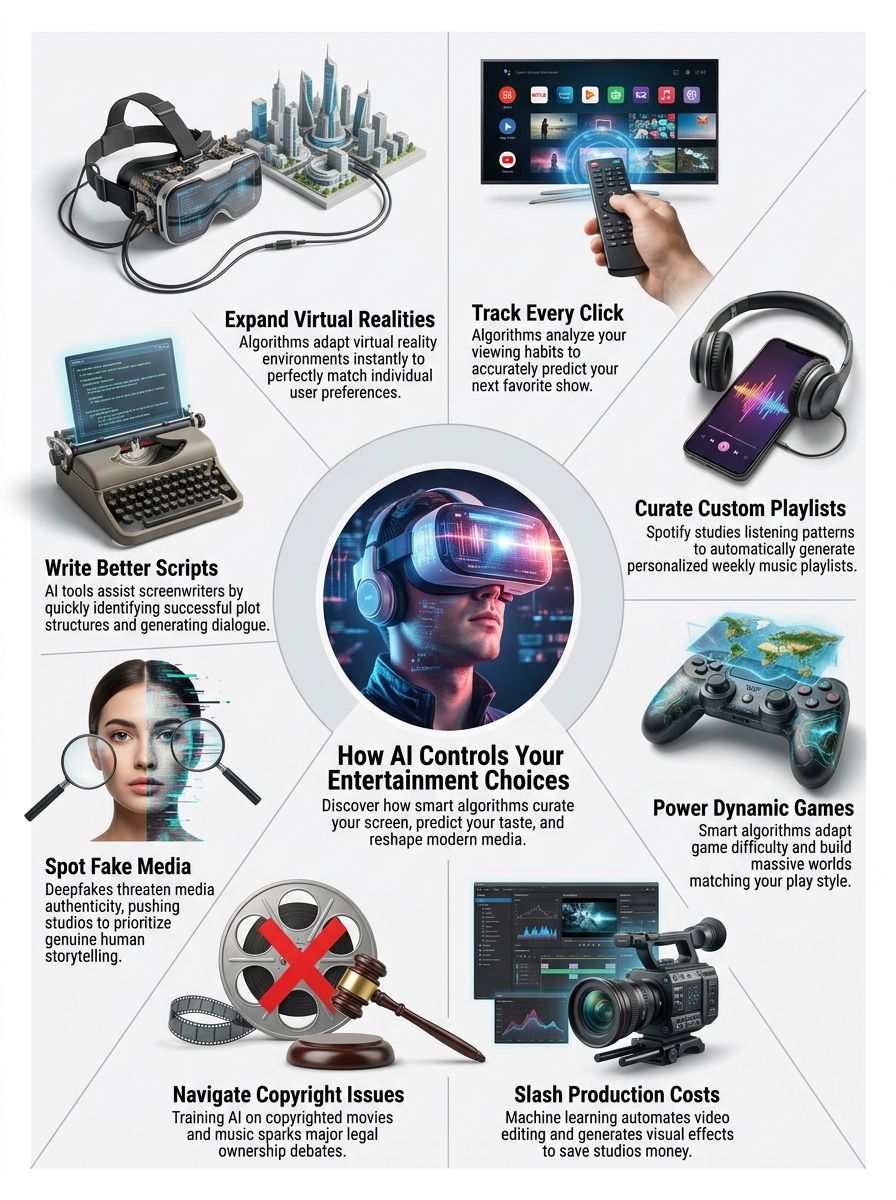
Streaming services like Netflix and Spotify use machine learning to study your patterns. These platforms track what you watch, how long you pause, what you skip, and what you rewatch. Your metadata tells algorithms what content matches your taste. The system learns from millions of viewers to spot trends.
Recommendation systems then suggest shows, movies, and songs you will probably love. A 2024 McKinsey report found that effective personalization based on user behavior can increase customer satisfaction by 20 percent. This personalization keeps you scrolling and watching instead of leaving the platform.
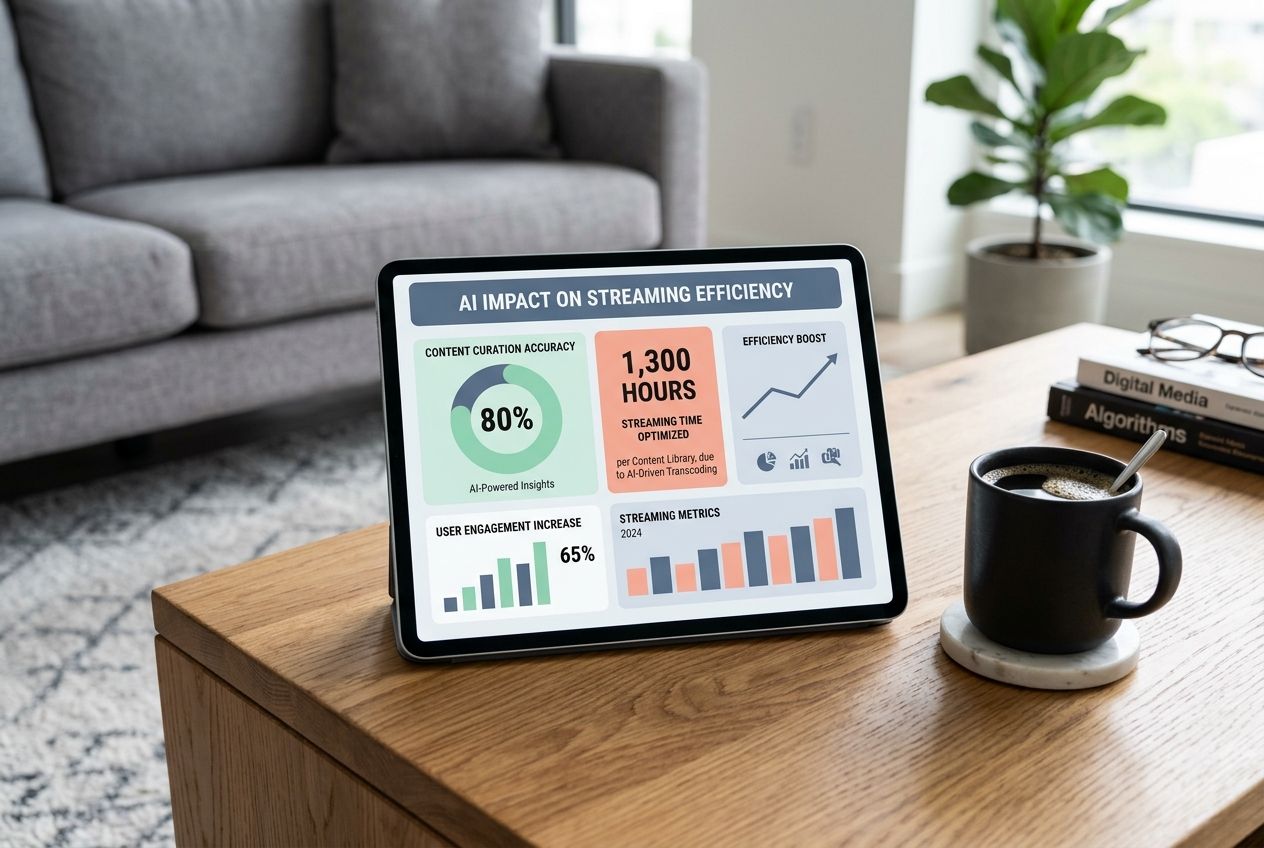
Content curation powered by algorithms saves you time searching through endless options. In fact, Netflix reports that its personalized engine saves users a total of over 1,300 hours per day in search time.
The goal is to show you something you didn’t know you wanted to watch. – Netflix Engineering
Technology Behind Streaming Services
Personalization works because streaming services gather massive amounts of data, but the real magic happens behind the scenes. Streaming platforms use machine learning algorithms to analyze your viewing habits, pause points, and rating patterns. These systems process metadata about shows and movies.
This includes genre, cast, plot details, and viewer demographics. The algorithms detect patterns in your behavior and compare them to millions of other viewers. Your device sends signals back to the service every time you watch, skip, or stop a show.
This constant feedback loop trains the machine learning models to predict what content you will enjoy next. The technology powering these platforms operates like a massive sorting machine working around the clock. Streaming services run predictive analytics on your data to forecast your preferences.
Netflix does not just use one simple formula. They rely on a complex multi-algorithm ensemble to sort content:
- Personalized Video Ranker: This core ranking algorithm determines the specific order of titles for each unique user.
- Trending Now: This system identifies content gaining sudden viewership momentum across the platform.
- Because You Watched: This tool builds similarity-based recommendations based on your recent history.
- Continue Watching: This feature surfaces partially completed content to keep you engaged.
AI Applications Across Entertainment Industries
Artificial intelligence reshapes how entertainment companies decide what shows up on your screen. Machine learning algorithms study your viewing habits, your clicks, and your pauses to predict what content will hook you next.
Enhancing Film and TV with AI
Studios now use machine learning to craft better stories, design stunning visuals, and predict what audiences crave. Editors lean on AI tools to speed up post-production work, cutting weeks from timelines. Visual effects teams harness algorithms to generate realistic backgrounds and creatures without building expensive sets.
New tools like OpenAI’s Sora and Runway Gen-3 Alpha are completely changing the game. In 2025, major brands like Mondelez told Reuters that generative AI tools are expected to reduce content production costs by 30 to 50 percent. This massive cost reduction frees up resources for better storytelling.
Content personalization engines analyze viewing habits across millions of users, helping networks decide which shows deserve prime slots. Streaming services tap into predictive analytics to greenlight projects with real data backing them up.
AI doesn’t replace creativity; it amplifies it, giving filmmakers superpowers they never had before.
Revolutionizing Music with Personalization Features
While films and TV shows grab our attention through visual storytelling, music streaming takes personalization to a whole new level. Spotify and Apple Music use machine learning to study what you listen to, when you skip songs, and how long you play each track. These streaming services analyze your listening habits and metadata to build a clear picture of your taste.
The algorithms then recommend songs, artists, and playlists that match your preferences perfectly. Personalization in music goes far beyond simple recommendations. Spotify’s AI DJ feature takes requests and mixes tracks with an artificial voice based on your specific mood.
According to Spotify’s 2025 earnings calls, user engagement with their AI DJ nearly doubled over the past year in the US. The platform uses predictive analytics to guess which new songs you will love before you even know they exist. Machine learning algorithms compare millions of user behaviors to find matches that feel natural and fresh.
Advancing Gaming with Artificial Intelligence
Artificial intelligence transforms gaming into something players have never experienced before. AI opponents now learn from your moves, adapt to your tactics, and challenge you in ways that feel fresh every single time. Game developers use machine learning to create characters that think, react, and strategize like real people.
These algorithms analyze player behavior patterns and adjust difficulty levels on the fly. This ensures the game stays engaging whether you are a beginner or a pro. Studios also deploy AI to generate vast game worlds filled with realistic environments, characters, and storylines.
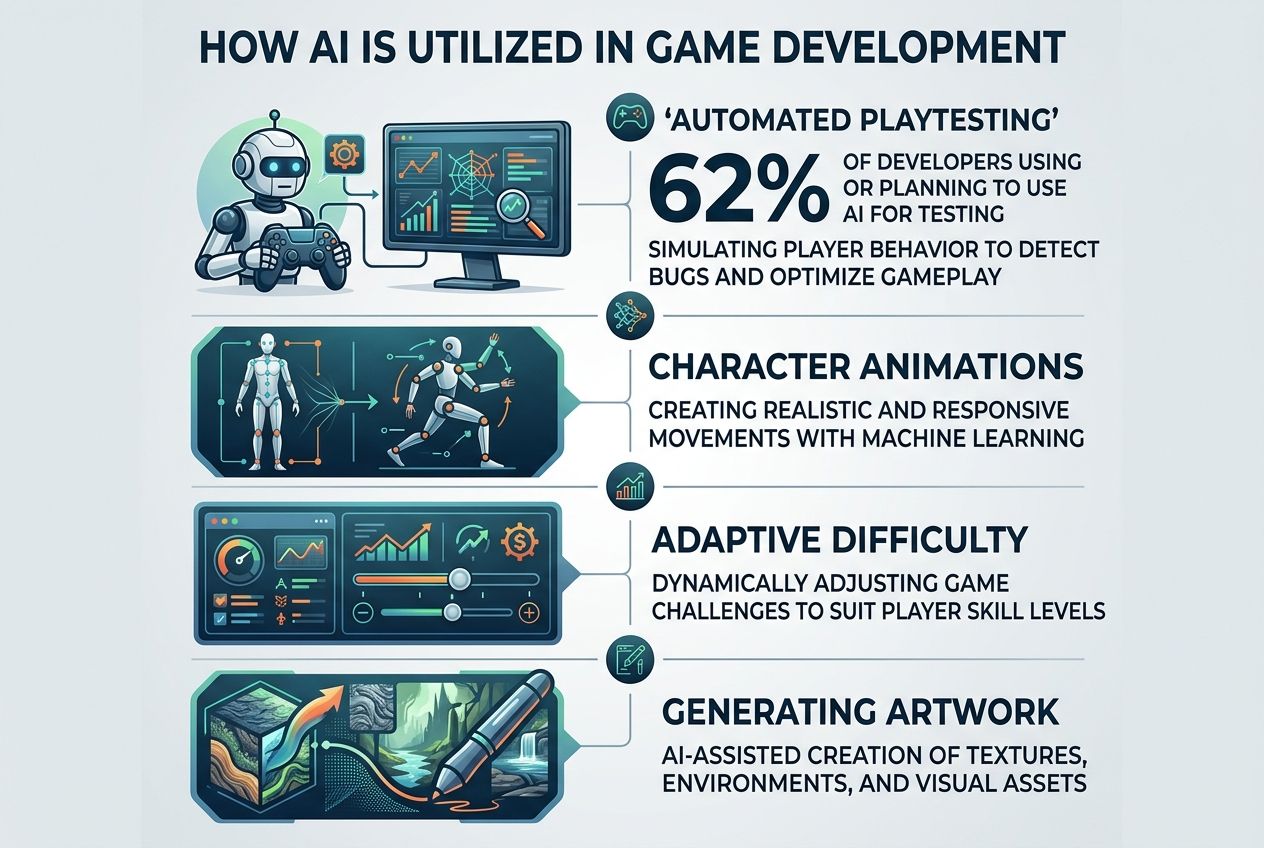
According to the 2024 Unity Gaming Report, 62 percent of developers are now using AI tools to build their games. This technology cuts production costs significantly while speeding up content development. Game creators use these systems to handle several major tasks:
- Automated Playtesting: AI simulates thousands of player paths to find bugs and balance issues.
- Character Animations: Machine learning smooths out movements to make characters look more lifelike.
- Adaptive Difficulty: The game automatically becomes harder or easier based on your current skill level.
- Generating Artwork: Developers use generative tools to quickly build background assets and game levels.
Optimizing Advertising Through Targeted AI Campaigns
Games teach AI systems to spot patterns in player behavior, and those same systems now power advertising campaigns across entertainment platforms. Advertisers use machine learning to analyze viewer preferences, watching habits, and metadata to show you ads that match what you actually care about. Instead of blasting the same commercial to millions of people, AI algorithms target specific audiences based on their content consumption patterns.
This approach saves money for companies and spares you from watching ads about products you will never buy. For example, in 2025, Klarna reported that generative AI helped cut its marketing costs by $10 million annually. They slashed image production timelines from six weeks to just seven days.
Data-driven decisions shape how ads reach you on streaming services, social media, and websites. AI systems predict which advertisements will grab your attention by studying your past behavior. The result is that companies spend their advertising budgets more smartly, and you see promotions that actually matter to your life.
Innovating Book Publishing with AI Tools
AI tools transform how publishers discover, create, and market books in today’s digital landscape. Machine learning algorithms analyze reader preferences, sales data, and social media trends to predict which manuscripts will succeed. Publishers use these tools to identify emerging genres, spot writing patterns, and match books with the right audiences.
Authors now use specific software to overcome writer’s block and organize their thoughts. While human creativity remains essential, tools like Sudowrite and ChatGPT help structure outlines and brainstorm character arcs. AI also helps editors catch grammar mistakes and suggest plot improvements.
Content curation powered by machine learning has become a major force for book recommendations on digital platforms like Amazon Kindle Direct Publishing. These systems impact the publishing workflow in a few distinct ways:
- Accelerated Translations: AI speeds up translating books into foreign languages, helping authors reach a global market faster.
- Marketing Material Generation: Authors use AI to write engaging book descriptions, social media posts, and ad copy.
- Audiobook Production: Services use synthetic voices to create affordable audiobooks for indie authors.
- Demand Forecasting: Publishers reduce waste by using AI to predict exact print run numbers based on digital interest.
Advantages of AI in the Entertainment Sector
Your streaming experience becomes a mirror of your own tastes, not a one-size-fits-all catalog. Algorithms work behind the scenes, learning from millions of viewer preferences to serve up shows and movies that match your interests. Content personalization goes beyond simple genre matching to dig into the details of what makes you tick as an audience member.
Personalizing Viewer Content
Streaming services use machine learning to study your viewing habits and create personalized recommendations just for you. Netflix collects data on what you watch, how long you pause, and when you stop watching shows. The platform then analyzes this metadata to predict what content you will enjoy next.
Predictive analytics examines your behavior patterns, comparing them against similar viewers to spot trends you might not notice yourself. This data-driven approach means the homepage you see differs from your friend’s homepage, even though you are both using the same service. Machine learning systems constantly refine their understanding of your preferences.
Reducing Production Costs with AI
AI tools slash production budgets in major ways. Studios use machine learning to automate repetitive tasks, from scheduling shoots to managing equipment. These systems handle data-driven decisions that used to take teams of people weeks to complete.
Video editing software powered by artificial intelligence can cut editing time in half, saving studios thousands of dollars per project. Visual effects, once the most expensive part of filmmaking, now cost far less when AI generates backgrounds and enhances scenes automatically. A 2025 industry report noted an 85 percent cost reduction in pre-production planning cycles for studios utilizing these new tools.
Production companies also trim costs by using AI for casting and script analysis. Machine learning examines thousands of scripts and identifies which stories will likely engage audiences. Studios rely on these specific efficiencies to keep budgets low:
- Automated Storyboarding: AI generates visual mockups 300 percent faster than traditional manual drawing.
- Instant Color Grading: Machine learning algorithms match colors across different camera shots in seconds.
- Synthetic Background Extras: Filmmakers generate realistic digital crowds instead of paying hundreds of human extras.
- Smart Scheduling: Software analyzes crew availability and location weather to build the perfect shooting schedule.
Accelerating Content Development
Machine learning speeds up how studios make movies, shows, and games. Algorithms analyze scripts, predict which stories will hook audiences, and flag potential hits before production even starts. Studios save months of work by using data-driven decisions instead of guessing what viewers want.
This means creators finish projects faster, cut waste, and get content to screens quicker. Streaming services benefit most because they need fresh material constantly to keep subscribers happy. Production teams use predictive analytics to test storylines with focus groups instantly.
Metadata from millions of viewing habits tells producers which genres, characters, and plot twists perform best. Editors lean on machine learning tools to trim footage, color-correct scenes, and add effects in half the usual time. This acceleration lets smaller creators compete by doing more with less money and fewer hands on deck.
Boosting Engagement Through AI
Faster content creation sets the stage for smarter engagement strategies. AI systems analyze viewing habits in real time, spotting patterns that humans might miss. These algorithms track what you pause, rewind, and finish watching.
They note which genres hold your attention longest. They observe when you click away from shows. This data feeds back into recommendation systems that learn your preferences constantly. Streaming services use this machine learning approach to serve content that keeps you coming back.
During a 2025 earnings call, Spotify revealed that users who watch a video podcast consume 1.5 times more content than users who just listen. AI-driven personalization transforms passive viewers into active participants. Platforms leverage audience analytics to determine the exact moment you will want to see a particular show or movie.
True engagement happens when the algorithm stops guessing and starts understanding exactly what the viewer needs in that specific moment.
Challenges and Ethics of AI in Entertainment
The real challenge sits in the middle ground, where humans and machines must learn to coexist. Some creative professionals adapt by using AI as a tool rather than a threat. They blend machine learning with their own artistic vision to produce better content faster.
Addressing Intellectual Property with AI
Artificial intelligence creates a tricky situation for intellectual property rights in entertainment. Studios, musicians, and creators worry that machine learning systems train on their work without permission or payment. These algorithms learn from movies, songs, scripts, and books to generate new content.
This raises tough questions about ownership and fair compensation. Content creators argue that their original work gets used to build systems that compete with them directly. In June 2024, the Recording Industry Association of America filed major federal lawsuits against AI music generators Suno and Udio in the US.
They alleged mass infringement of copyrighted sound recordings. Streaming services and tech companies must figure out how to use data-driven decisions while respecting the rights of artists. The entertainment industry faces a few major hurdles regarding ownership:
- Training Data Transparency: Creators demand to know exactly which copyrighted works were fed into the AI models.
- Fair Compensation Models: Platforms struggle to build a system that pays original artists when their style is mimicked.
- Defining Originality: Courts must decide how much an AI-generated piece must change to be considered a new, legal work.
- Licensing Agreements: Studios are rushing to create official contracts with AI companies to protect their exclusive content.
The Impact of AI on Creative Jobs
Intellectual property concerns open the door to a bigger worry that affects millions of creative workers worldwide. AI tools now handle tasks that artists, writers, and musicians once controlled completely. Screenwriters face competition from machine learning systems that generate scripts.
Animators watch as AI produces visual effects faster than human teams. Musicians see algorithms compose background music in seconds. A recent Goldman Sachs report estimated that generative AI could affect the equivalent of 300 million full-time jobs worldwide through task-level automation.
These shifts do not mean creative jobs vanish overnight, but they do change how people work and what skills matter most. Studios hire fewer artists for certain roles. Production teams shrink when AI handles repetitive tasks. Freelance creators struggle to compete with fast, cheap AI alternatives.
Dealing with Authenticity and AI in Media
AI-generated content raises serious questions about what counts as real. Audiences crave genuine stories, authentic voices, and honest performances. Algorithms push content that gets clicks, rather than content that tells the truth.
This creates a gap between what viewers actually want and what algorithms serve them. Deepfakes blur the line between real and fake footage. AI can copy an actor’s face or voice without permission.
Viewers struggle to trust what they see on screen. Studios face intense pressure to label AI-made content clearly. In the US, major platforms like Meta and TikTok have started applying visible watermarks to content generated by their AI tools. Transparency matters more than ever in digital media for several reasons:
- Protecting Actor Likeness: Performers need strict contracts to ensure their digital faces are not used in unapproved projects.
- Fighting Misinformation: Clear labeling helps viewers tell the difference between a real documentary and an AI-generated fabrication.
- Preserving Artistic Merit: Audiences want to know when they are connecting with a human writer’s genuine emotional experience.
- Maintaining Brand Trust: Streaming platforms risk losing subscribers if they secretly flood their libraries with cheap, synthetic shows.
AI Algorithms in Streaming Platforms
Streaming services collect massive amounts of data about what you watch, when you pause, and what you skip. Algorithms transform that raw information into spot-on recommendations.
Analyzing Consumer Viewing Patterns
These smart systems learn your tastes incredibly fast, constantly adjusting to match your shifting moods and interests. AI systems track your every move and use this data to shape your next recommendation.
| Data Collection Methods | What Gets Measured |
|---|---|
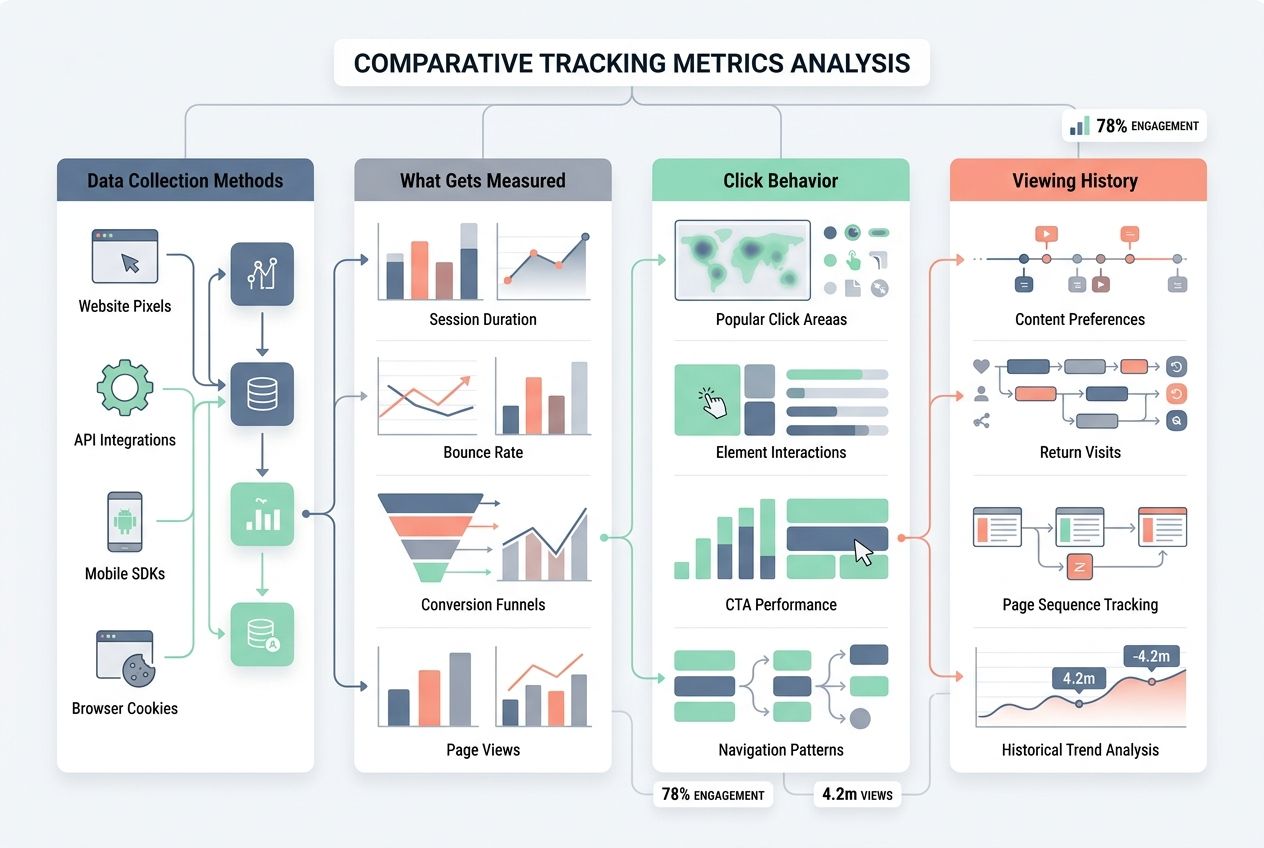
| Platforms monitor click behavior across your account. They record every play, pause, and rewind. Your device type, time of day, and connection speed all factor in. In the US, Netflix collects over 100 million hours of viewing data daily. | Watch time reveals engagement levels. Completion rates show what holds attention. Skip patterns indicate content mismatches. Your rating submissions provide direct feedback about preferences. |
| Viewing history creates detailed profiles of your tastes. Algorithms extract patterns from thousands of data points. These systems learn your mood swings and seasonal preferences. They notice when you binge versus when you watch casually. | Genre preferences emerge from viewing choices. Your interactions with similar content types build categories. Search queries tell systems what you actively hunt for. Abandoned videos reveal content that failed to connect. |
| Cross-device tracking follows you from phone to tablet to TV. Your account syncs viewing activity across all platforms. This gives algorithms a complete picture of your consumption habits. Spotify uses similar tracking to understand music listening patterns. | Time spent on different sections shows navigation patterns. Browse duration indicates how long you search before selecting something. Scroll speed reveals whether recommendations feel relevant or forced. Hover behavior on thumbnails suggests visual appeal factors. |
| Demographic information combines with behavioral data. Your age, location, and subscription type shape algorithm outputs. Social connections matter too, as what friends watch influences your suggestions. These layers create a multidimensional profile of your entertainment identity. | Temporal patterns show binge versus casual viewing. Weekend behavior differs from weekday habits. Holiday seasons trigger different content preferences. Late-night viewing often shifts toward specific genres. |
Predictive Modeling for Viewer Preferences
Streaming services like Netflix and Spotify gather massive amounts of data about what you watch, pause, and skip. Machine learning algorithms then analyze these viewing habits to spot patterns, almost like a detective finding clues. Predictive analytics takes this information and forecasts what content you will probably enjoy next.
Your past choices teach the system about your taste, so it gets smarter over time. The algorithms do not just guess randomly. They crunch numbers from millions of viewers to understand what makes shows and songs click for different people. They use reinforcement learning algorithms that update in real time depending on your immediate behavior.
Content curation happens behind the scenes through sophisticated recommendation systems that work around the clock. These systems examine metadata, user engagement metrics, and audience analytics to build a picture of who you are as a viewer. The recommendation algorithms then combine all this information to suggest shows specifically for you.
AI Innovations in Real-World Entertainment
AI innovations in real-world entertainment are significant. Streaming platforms or other entertainment sources collect viewers’ data and suggest related content.
Netflix and Advanced Recommendation Algorithms
Netflix collects massive amounts of viewer data every single day. The streaming giant tracks what you watch, pause, rewind, and skip. Machine learning algorithms analyze these viewing habits to spot patterns that humans would miss.
Netflix’s recommendation system looks at your entire watch history, the time you spend on each show, and even the device you use to watch. The platform then compares your behavior to millions of other viewers who share similar tastes. This predictive analytics approach helps Netflix serve up content suggestions that feel almost like mind-reading.
The company’s algorithms consider metadata like genre, cast, director, and plot details to make connections across its massive library. Studies consistently show that roughly 80 percent of what people watch on Netflix comes from the platform’s recommendations rather than direct searches. The algorithms learn constantly, getting smarter with each click and viewing decision you make.
Netflix uses A/B testing to refine these recommendation systems in a few clever ways:
- Custom Thumbnails: The system creates dozens of different cover images for a single show and displays the one that matches your specific taste.
- Dynamic Row Placement: If you love comedies, the comedy row moves to the very top of your screen automatically.
- Personalized Trailers: The preview clip that plays when you hover over a title is selected based on your past viewing habits.
- Micro-Genre Tagging: Shows are broken down into hyper-specific categories like “Dark Scandinavian Thrillers featuring Strong Female Leads.”
Spotify’s AI-Enhanced Music Curation
Spotify uses machine learning to study your listening habits and create personalized recommendations that feel like they were made just for you. The platform’s algorithms analyze what you play, skip, and save to build a detailed picture of your taste in music. Spotify’s Discover Weekly feature drops new songs into your inbox every Monday, mixing tracks from artists you already love with fresh discoveries.
The streaming service also powers Release Radar, which shows you new releases from artists you follow. These recommendation systems work behind the scenes, processing millions of data points to predict what will make you hit play next. A massive part of this success is the AI DJ feature, which provides interactive commentary.
On days when US users engage with the AI DJ, they spend 25 percent of their listening time with this specific feature. Machine learning models examine metadata like song tempo, genre, and lyrics to match your taste with similar tracks. This content curation approach transforms how people discover music, turning passive listening into an active conversation between you and the algorithm.
Movie Magic with AI-Generated Visual Effects
AI-generated visual effects transform how filmmakers create movie magic. Studios now use machine learning to generate realistic explosions, alien creatures, and fantastical landscapes in seconds rather than weeks. This technology cuts production costs dramatically, allowing directors to spend more resources on storytelling and character development.
Visual effects artists work alongside AI tools to enhance their creative vision, making the filmmaking process faster and more efficient. The algorithms analyze thousands of existing images to learn patterns, then generate new scenes that match the director’s specifications. In late 2024, Runway partnered directly with Lionsgate to bring their advanced models to the movies, launching a $5 million fund to support AI-augmented film projects.
Streaming services benefit greatly from this advancement in content creation. Faster production timelines mean more films reach audiences sooner, boosting viewer engagement.
It allows you to be more effective, but it doesn’t replace taste or artistic vision. – Anastasis Germanidis, Runway Co-Founder
Emerging AI Trends in Entertainment
AI trends in entertainment are increasing day-by-day. Whether it’s script writing or virtual reality, it tracks users’ movement and suggests accordingly.
AI for Scriptwriting and Story Creation
AI systems now write scripts and create stories alongside human writers. These machine learning tools analyze thousands of films, TV shows, and books to spot patterns in what audiences love. The algorithms identify common plot structures, character arcs, and dialogue styles that keep viewers hooked.
Writers feed these systems basic story ideas, and the AI generates multiple script versions in minutes. Tools like ScriptBook evaluate text to predict box office success and demographic appeal. This speeds up content development dramatically. Production teams save weeks of writing time, which cuts costs and accelerates the journey from concept to screen.
AI story creation tools amplify human creativity instead of replacing it. A screenwriter might struggle with a middle act, so the AI suggests plot twists based on viewer preferences and predictive analytics. The machine learning system learns what keeps audiences engaged, then recommends story beats that match those habits.
Creating Hyper-Personalized User Experiences
Streaming platforms now craft experiences that feel like they know you personally. Machine learning algorithms track your viewing habits, pause patterns, and even the time you spend hovering over titles. Netflix learns what you watch at midnight versus what you choose on Sunday mornings.
Spotify notices if you skip songs or replay them endlessly. These systems analyze metadata from thousands of data points to predict what content will hook you next. Your preferences shape the entire interface, from the order of recommendations to the genres that appear first on your screen.
Engagement skyrockets when viewers see shows and music that match their actual tastes. Hyper-personalization goes beyond simple recommendation systems. Platforms adjust thumbnail images based on what attracts individual viewers most. This intense level of customization is driven by a few key data points:
- Time of Day Analysis: Algorithms suggest short sitcoms during your morning commute and long movies on Friday nights.
- Device Context: The system knows you prefer action movies on your big TV and documentaries on your iPad.
- Completion Rates: Shows you binge in one sitting carry much more weight than shows you abandon after one episode.
- Search Intent: The exact words you type into the search bar tell the AI exactly what mood you are currently in.
Expanding Realities with AI in VR and AR
AI transforms virtual reality and augmented reality experiences into something truly immersive. Machine learning algorithms analyze how users move, look, and interact within these digital worlds. The technology then adapts the environment in real time to match what each person enjoys most.
VR headsets and AR apps use predictive analytics to guess what you want to see next, creating personalized adventures that feel made just for you. Devices like the Meta Quest 3 rely heavily on AI for mixed reality scene understanding, mapping your physical room to place digital objects perfectly. These algorithms learn from your viewing habits and content preferences.
Gaming companies already use this technology to build worlds that respond to player behavior, making engagement skyrocket. AI-powered recommendation systems in VR and AR go beyond simple suggestions. They shape entire narratives based on your choices and interests, ensuring that music, visuals, and plot twists all adjust to keep you hooked.
The Bottom Line
Algorithms shape what you watch, listen to, and play every single day. AI in entertainment and its algorithm is a fascinating process that runs entirely in the background. Streaming services like Netflix and Spotify use machine learning to study your viewing habits and music choices.
These recommendation systems analyze metadata, predict your preferences, and serve content that matches your taste. The technology works because it learns from your actions, not just your words. Your clicks, pauses, and skips all feed the system, making personalization smarter over time.
Frequently Asked Questions
1. How do algorithms pick what movies or shows I see on streaming platforms?
They track every single click, pause, and rewind you make to figure out your exact tastes. Netflix actually relies on this behavioral data so heavily that algorithmic suggestions now drive over 80 percent of all viewing hours in the US. The system then compares your habits with millions of other viewers to recommend something you will genuinely enjoy.
2. Can AI in entertainment really know my favorite genres?
It gets amazingly close by studying the specific actors, themes, and stories you naturally watch the most. Because these machine learning systems are so good at mapping your preferences, a 2025 Samba TV report found that streaming now accounts for a massive 60 percent of all American television viewing time.
3. Why do I sometimes see recommendations that don’t fit me at all?
Algorithms often mix in a few random options just to see if you might enjoy a surprise hit that is currently trending with other people. This guessing game is completely normal, though a 2025 Gracenote study showed the average US viewer still spends about 12 minutes just scrolling through their choices.
4. Are these recommendation systems always changing?
Yes, streaming services constantly update their code to lower subscriber cancellation rates and keep their suggestions fresh for your weekend watch parties.
5. Is AI the future of entertainment?
Research finds that AI is already demonstrating potential to reshape pre- and post-production. Much greater change could be likely as the technology evolves, but what form that future takes remains uncertain.