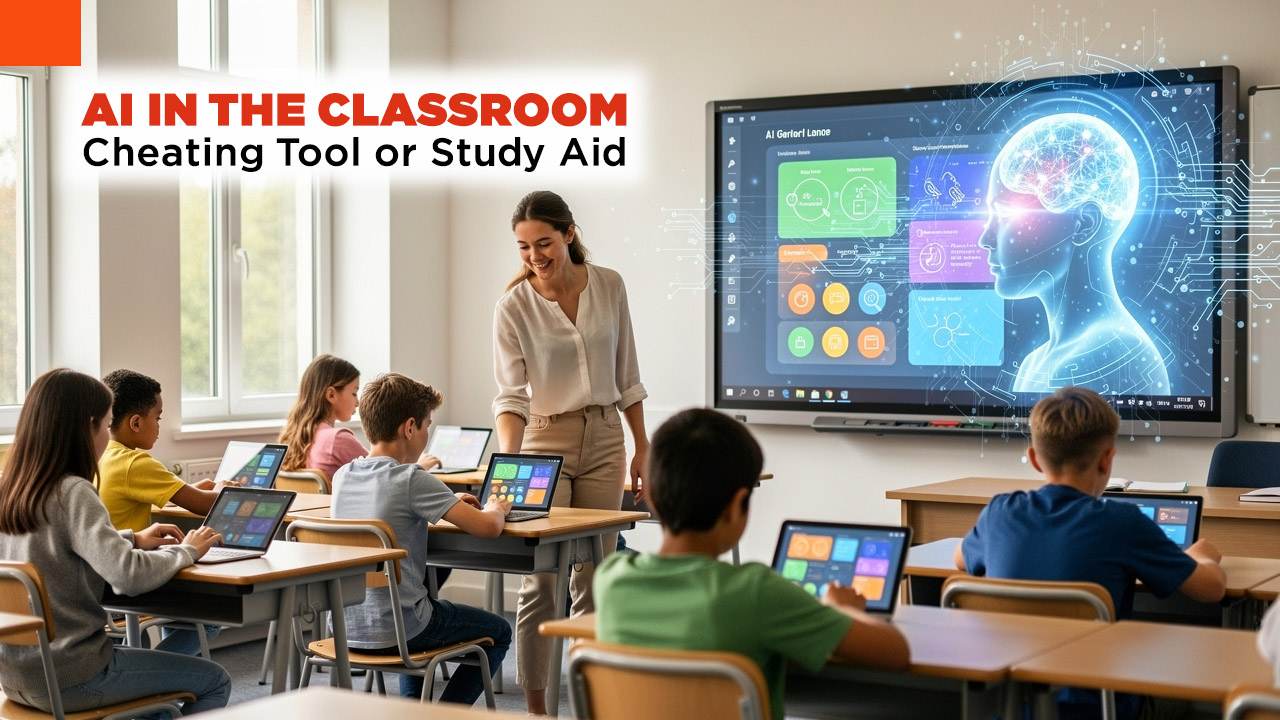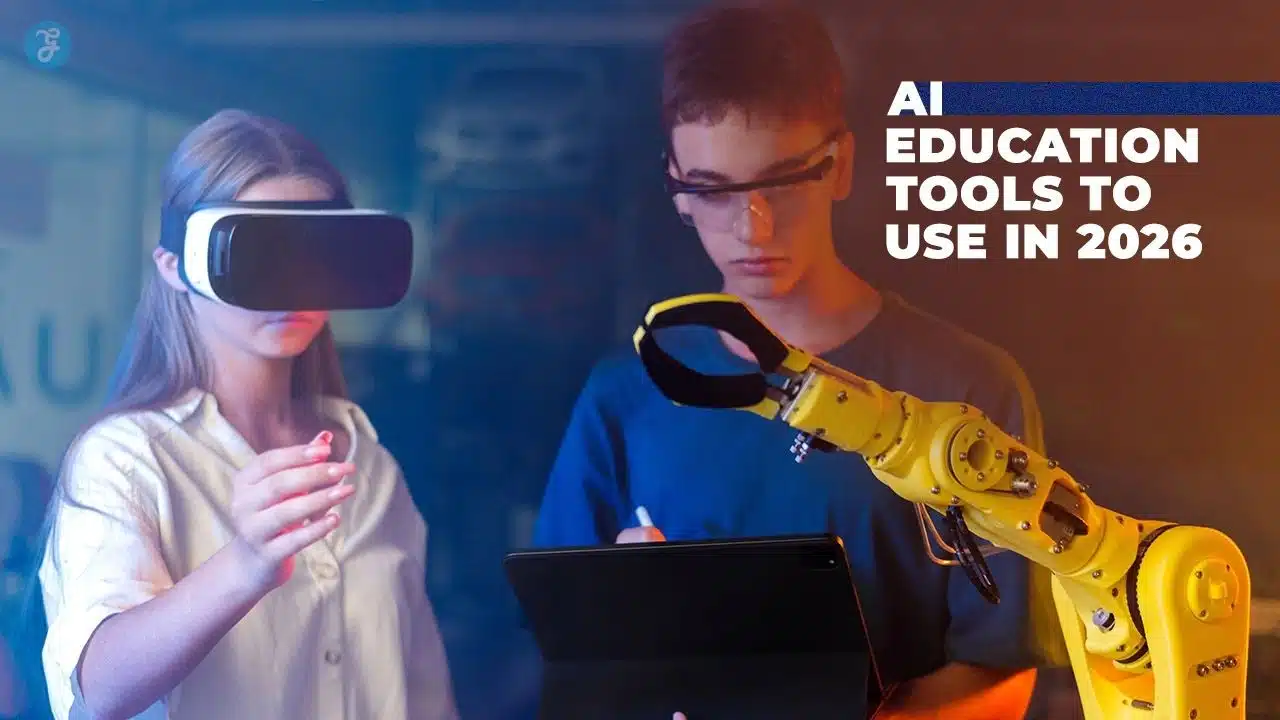
AI has moved from experiment to everyday infrastructure in classrooms. It powers tutoring features inside learning platforms, supports teachers with planning, and helps students organise notes and drafts. For many schools and universities, the key challenge now is choosing which AI education tools 2026 deserve a permanent place in their digital ecosystem.
The market looks crowded. New apps and platforms promise to “transform learning” almost every week. At the same time, educators still carry responsibility for pedagogy, assessment integrity, and student well-being. They must filter out noise, protect privacy, and keep the focus on learning, not on technology for its own sake.
This editorial guide looks at ten AI education tools for 2026 that have realistic staying power. They already show meaningful adoption, offer concrete value either as AI tools for teachers or as AI tools for students, and are likely to keep evolving. The aim is not to crown winners, but to help decision-makers map tools to real classroom needs: planning, tutoring, writing support, language learning, and note-taking.
Throughout, the focus remains on balance. AI can support teaching and learning, but it should not drive them.
Why AI education tools 2026 matter for real classrooms
From novelty apps to core infrastructure
Only a short time ago, AI in education looked like a series of isolated pilots. A few tools offered automated marking, others experimented with chatbots. Today, AI sits inside productivity suites, learning management systems, and classroom platforms. Teachers draft lesson plans with AI assistants. Students ask AI for explanations of concepts before exams. Administrators explore learning analytics to identify struggling learners earlier.
This shift explains why AI education tools 2026 will not feel optional. Many learners expect that, alongside traditional textbooks and lectures, they will have digital support that adjusts to their level, gives instant feedback, and helps them revise. Employers, too, increasingly expect graduates to understand and manage AI tools in professional environments.
The risk is that institutions rush into adoption without clear guardrails. AI can amplify gaps in access, reflect bias in training data, and encourage surface-level learning if students treat it as a short-cut. The tools in the 2026 stack must therefore be chosen and used with clear purpose, not just because they carry an “AI-powered” label.

Benefits and risks schools cannot ignore
When used deliberately, AI education tools 2026 can bring several tangible benefits:
-
Personalised practice: Adaptive tutoring and quizzing tools can respond to each learner’s pace and level.
-
Workload relief: AI can help teachers draft rubrics, lesson outlines, and parent communications, freeing time for direct interaction.
-
Accessibility: Transcription, captioning and summarisation make learning materials more accessible to students with different needs.
-
Feedback at scale: Writing and language tools can give instant suggestions that complement, rather than replace, human feedback.
Set against these benefits are well-known risks:
-
Academic integrity: Students may submit AI-generated work as their own if the guidelines are unclear.
-
Bias and inaccuracy: AI systems can hallucinate facts or reflect bias in training data.
-
Over-reliance: Learners may lean on AI to complete tasks instead of building skills.
-
Privacy concerns: Tools that collect large volumes of student data require strong governance.
An effective 2026 strategy treats tools as part of a broader framework: policy, pedagogy, data protection and AI literacy.
How we chose these AI education tools 2026
The ten tools in this guide were selected with four simple criteria in mind:
-
Clear pedagogical value
Each tool must do more than generate content on demand. It needs to support teaching, deepen understanding, or make learning more accessible. Tools that only add generic chat interfaces, without educational structure, sit lower on the priority list. -
Evidence of adoption
The tools already appear in real classrooms, institutional roll-outs, or widely used study workflows. That does not guarantee quality, but it suggests stability and ongoing support. -
Attention to privacy and safety
For tools aimed at young learners, features such as admin controls, content filters and transparent data practices matter. For higher education, clarity around data storage and model training policies becomes important. -
Likelihood of relevance in 2026
Platform-level offerings from large providers, and specialist tools with strong communities, are more likely to remain part of the conversation than short-lived start-up experiments.
Within that frame, the following AI education tools 2026 cover tutoring, language learning, writing support, note-taking, and teacher workflow.
10 AI education tools 2026 to have on your radar
1. Khanmigo: AI tutor built around the curriculum
Khanmigo is the AI assistant from Khan Academy. It serves both teachers and students. For teachers, it helps to prepare lessons, generate practice questions, and provide ideas for differentiating instruction. For students, it acts as an interactive tutor rather than a quick answer engine.
Instead of simply providing solutions, Khanmigo nudges students to explain their thinking, attempt steps, and ask follow-up questions. This design aligns more closely with human tutoring and fits well with a view of AI as a guide rather than a cheat sheet.
Where it fits in AI education tools 2026
Khanmigo is especially relevant for schools already using Khan Academy content. It can become part of a strategy that links structured curriculum resources with guided AI conversations. For teachers, it offers a way to extend support beyond class hours without trying to manage every question individually.
Institutions still need clear boundaries: when learners may use Khanmigo, how they should report AI-supported work, and how to combine its explanations with class notes and teacher guidance.
2. Duolingo Max: Language learning with AI roleplay
Duolingo Max adds generative AI features to the familiar language-learning app. Its key additions are AI-powered roleplay conversations and detailed explanations of answers. Learners can practise realistic scenarios, receive feedback, and revisit grammar points in context.
For language departments, Duolingo Max can complement classroom practice. Students can rehearse conversations before in-person roleplays, or explore everyday situations that there may not be time to simulate extensively in class. Teachers can point learners to specific units or themes that align with their syllabus.
Role in AI education tools 2026
Duolingo Max illustrates a broader pattern: tools that embed AI inside domain-specific platforms. Rather than acting as general chatbots, they work within clear pedagogical frames. When coordinated with classroom teaching, this can give learners more opportunities to speak, listen and reflect.
At the same time, departments need to consider equity of access, subscription cost, and the risk that students use the app as a substitute for engaging with authentic texts or in-person activities.
3. Quizlet with Q-Chat: Socratic AI study companion
Quizlet is already familiar as a flashcard and quiz platform. Q-Chat adds an AI layer that turns sets into interactive conversations. Students can talk through concepts, test themselves in dialogue, and ask for alternative explanations.
Teachers can create sets that align with their course, then encourage students to revise using Q-Chat rather than relying only on passive reading. The AI prompts learners to recall, explain and apply ideas, which supports deeper understanding.
Place among AI tools for students
Q-Chat stands out among AI tools for students that focus on retrieval practice. It steers learners toward active recall, which research consistently links to stronger retention, rather than simple recognition. As one of the AI education tools 2026, it fits well into courses that already use Quizlet for self-testing.
Teachers still need to remind students that Q-Chat is a companion, not an authority. Explanations should be checked against class materials, and any confusion brought back into lessons.
4. Google Gemini for Education and NotebookLM: AI woven into Classroom
Google’s education offering integrates its Gemini models into Google Workspace for Education and Classroom. Teachers gain AI assistance directly inside tools they already use to manage classes, communicate, and share resources.
Gemini can help teachers brainstorm lesson ideas, generate draft questions, and summarise long documents. It can also support administrative tasks such as drafting messages to families or creating rubrics. Because it sits inside Workspace, it reduces the need to switch between separate applications.
NotebookLM, another Google tool, allows teachers and students to upload course materials and generate study guides, summaries and question sets based on those documents. That makes it a flexible companion for reading-heavy modules.
Why these matter in AI education tools 2026
For institutions already invested in Google’s ecosystem, Gemini and NotebookLM are likely to become default AI tools for teachers and students. They will form part of everyday workflows rather than separate destinations.
This convenience brings responsibility. Schools should set clear policies on how staff and students use Gemini, how they label AI-assisted work, and how data flows are managed. Transparency and training will be as important as the features themselves.
5. Microsoft 365 Copilot in Education: AI inside the tools schools already use
Microsoft 365 Copilot runs across Word, PowerPoint, Teams, OneNote and other applications that many schools already rely on. In education contexts, it aims to support lesson design, content adaptation, feedback and collaboration.
Teachers can ask Copilot to draft lesson outlines aligned with specific objectives, adapt reading passages to different language levels, or create draft rubrics and checklists. Students can use Copilot to brainstorm ideas, structure essays, rephrase drafts, and prepare presentations.
Role as one of the AI education tools 2026
For institutions that use Microsoft 365, Copilot will likely become one of the most central AI tools for teachers. Instead of introducing standalone apps, leaders can focus on training staff to use AI features inside tools they already know.
However, the line between support and substitution can easily blur when Copilot is available at every stage of the writing process. Policies should clarify where AI-generated text is acceptable, how students must acknowledge its use, and how teachers will evaluate original thinking.
6. MagicSchool AI: Teacher-first AI hub
MagicSchool AI markets itself directly to educators. Rather than offering a single chatbot, it provides a suite of task-specific tools: lesson-plan generators, assessment builders, rubric helpers, IEP support and communication drafts. The interface speaks the language of teachers, not generic productivity.
This design lowers the barrier for experimentation. Teachers can select a specific task, such as designing a project or differentiating a reading passage, and receive a structured starting point. Many then adapt the output to fit their context.
Why it stands out among AI tools for teachers
Within the landscape of AI education tools 2026, MagicSchool occupies the space of a dedicated educator hub. It gives schools a more focused alternative to open-ended models. When combined with training and clear guidelines, it can help staff reclaim time from repetitive planning tasks.
Leaders still need to consider data protection, regional compliance requirements, and expectations around human review. AI suggestions should feed into professional judgment, not override it.
7. Superhuman (formerly Grammarly): AI writing coach for campuses
For many students and staff, Grammarly has been a familiar companion for grammar and style checking. Over time, it added generative features for rewriting, tone adjustment and idea generation. More recently, the broader platform has been repositioned under the Superhuman brand, with an AI agent that supports writing and communication across multiple contexts.
In an education setting, this tool operates as an AI writing coach. It points out issues in clarity, conciseness and mechanics. With generative features enabled, it can also suggest alternative phrasings, propose outlines, and help restructure sections.
Implications for AI tools for students
As one of the AI education tools 2026, Superhuman or Grammarly occupies a sensitive space. Used thoughtfully, it supports revision and helps students notice patterns in their writing. Used uncritically, it can drift into ghost-writing.
Institutions may wish to allow its use for editing and polishing, while setting boundaries around idea generation and structural changes. Clear communication with students about acceptable use, combined with classroom emphasis on drafting and reflection, can keep the focus on learning to write, not just producing correct text.
8. Notion AI: Study operating system for students
Notion functions as an all-in-one workspace that many students already use for notes, project planning and personal knowledge management. Notion AI extends that workspace by offering summarisation, drafting and rewriting tools inside each page.
Students can keep notes for each course, then ask Notion AI to summarise key points, turn content into checklists, or suggest potential exam questions. Groups can collaborate on shared pages and use AI to clean up meeting notes or create action lists.
Place among AI education tools 2026
Notion AI exemplifies AI tools for students that support organisation and reflection rather than direct instruction. In 2026, it will likely be part of many students’ private study routines.
For educators, the challenge is to encourage productive use—such as creating structured notes and self-testing tools—while discouraging a slide into reading only AI-generated summaries. One practical step is to build course templates that nudge students toward active engagement: space for personal reflections, diagrams, and connections, not just copied content.
9. Otter.ai: Real-time lecture capture and accessibility
Otter.ai focuses on recording and transcribing spoken content. In education, its strengths lie in live captioning, searchable notes and the ability to revisit lectures with synced audio and text.
For students, especially those with hearing difficulties or processing differences, Otter can make live teaching far more accessible. For others, it reduces the pressure to capture every detail manually, leaving more attention for listening and participation.
Why it belongs in AI education tools 2026
Otter represents a category of AI education tools 2026 that directly advance accessibility. Its function is narrow and clear, which can make policy decisions more straightforward. Institutions can standardise its use in specific course types, define retention periods for transcripts, and give students guidance on how to combine automatic notes with their own annotations.
The goal is to support more inclusive learning while discouraging passive consumption of recordings in place of active engagement.
10. ChatGPT and similar general-purpose tutors
General-purpose AI models, including ChatGPT, have already become part of student life in many places. Learners use them to break down complex concepts, generate practice questions, explore alternative explanations and brainstorm project ideas.
Some versions now include modes tailored to study, which encourage step-by-step reasoning rather than direct answers. In effect, they serve as on-demand tutors, available whenever students feel stuck or need a different angle on a topic.
Realistic role in AI education tools 2026
Whatever official stance institutions take, general-purpose AI will remain one of the most widely used AI education tools 2026. Ignoring it is not realistic. Instead, schools and universities can:
-
state clearly where and how students may use such tools,
-
require disclosure of AI assistance in submitted work,
-
teach students to verify information and spot hallucinations, and
-
model productive prompts in class, for example, by asking AI to explain a concept in several ways and then evaluating the responses together.
Handled this way, general-purpose AI becomes another object of study and practice, not just a behind-the-scenes shortcut.
Making AI tools work in your context
Start with policy and pedagogy, not the product page
Choosing AI education tools 2026 should begin with basic questions:
-
What problem are you trying to solve?
-
How do these tools support your learning outcomes?
-
What are your non-negotiables around privacy and integrity?
From there, leaders can map specific tools to needs: tutoring, accessibility, writing support, planning. A clear policy framework, written in language that staff and students can understand, gives everyone a shared reference point. It should address acceptable use, disclosure, data protection and scenarios where AI use is not allowed.
Build staff capacity and student AI literacy
Tools will not deliver value if people feel anxious or underprepared. Short, practical training sessions often work best. Teachers can bring real tasks—such as designing a unit, differentiating a reading, or creating revision materials—and experiment with tools like MagicSchool, Copilot, Gemini or Khanmigo.
For students, AI literacy now sits alongside digital literacy and media literacy. They need to understand model limitations, recognise bias, and interpret institutional rules. Including AI literacy modules in foundation courses or orientation can make expectations explicit and shared.
Measure impact, equity and unintended consequences
As AI rolls out, early impressions can mislead. Institutions should collect feedback and data where possible:
-
How does teacher workload change?
-
Are certain groups of students benefitting more than others?
-
Are there new equity gaps linked to device access or subscription costs?
-
Where are integrity issues emerging?
These observations should feed back into tool selection and policy. The set of AI education tools 2026 should remain open to adjustment as evidence accumulates.
Beyond 2026: What to watch next
Towards more open, interoperable AI education tools
A likely trend beyond 2026 is deeper integration. AI features will appear in more learning management systems, video platforms and assessment tools. Open standards and interoperability will matter more than individual brand names. Institutions will want AI components that talk to each other, support consistent analytics and respect shared privacy frameworks.
This direction favours tools that plug into existing ecosystems rather than stand-alone apps. It also reinforces the need for clear governance and procurement practices.
Keeping humans at the centre of AI education tools 2026
As AI becomes more capable, the human role in education becomes more—not less—important. Teachers still design the learning journey, build relationships, and interpret context. Students still need to struggle productively, make mistakes, and develop judgment.
The most effective AI education tools 2026 will be those that support this human work: freeing time, widening access, and providing new ways to practise and reflect. The most important decisions will remain human ones: how to teach, how to assess, and how to prepare learners for a world where AI is a normal part of professional and civic life.
If institutions treat AI as a partner rather than a master, these tools can sit quietly in the background, helping teachers and students to do what education has always aimed to do—help people learn, think and create with confidence.