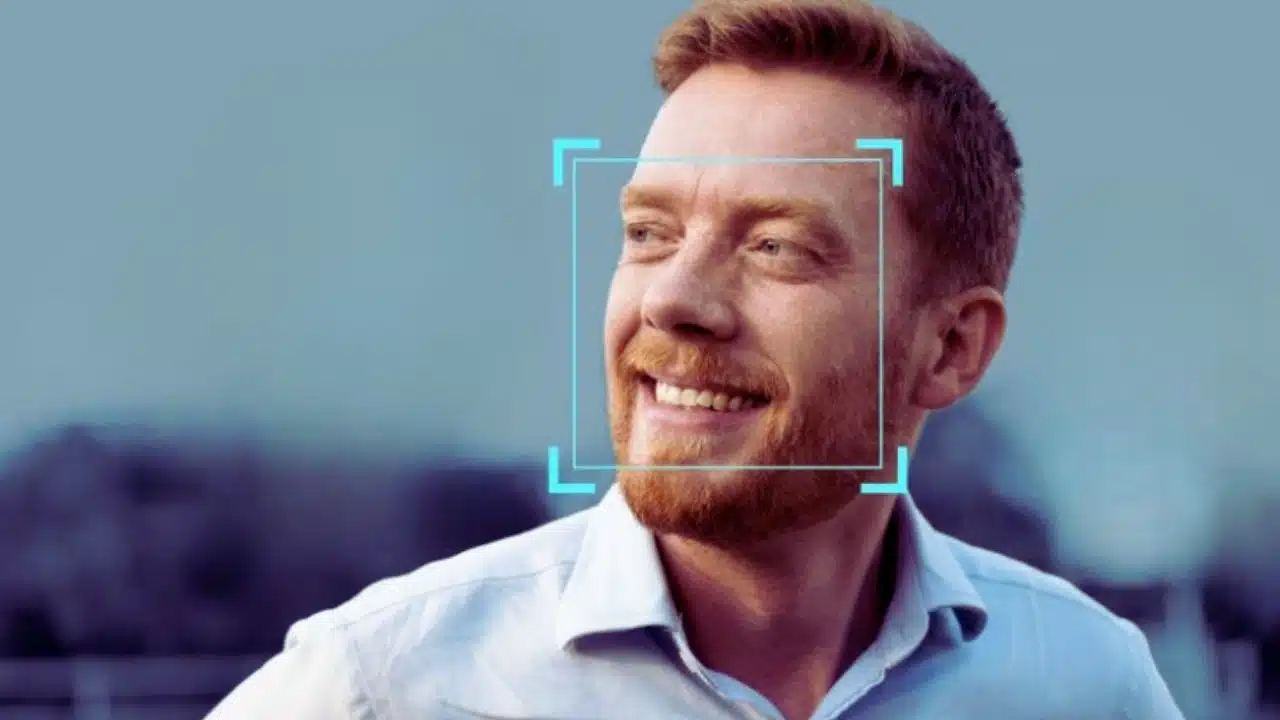
In a groundbreaking study recently published in the peer-reviewed American Psychologist journal, researchers from the Graduate School of Business at Stanford University have made a surprising claim: a combination of facial recognition technology and artificial intelligence can accurately determine a person’s political orientation simply by analyzing their neutral, expressionless face. This finding has significant implications for the future of biometric surveillance and raises important questions about privacy and the potential misuse of personal data.
The Study’s Methodology and Findings
To conduct their research, the Stanford team recruited 591 participants and had them complete a detailed political questionnaire, which provided valuable insights into their political beliefs and leanings. The participants were then scanned using a sophisticated AI algorithm designed to assess their political orientation based solely on their facial features.
Remarkably, the algorithm demonstrated a high degree of accuracy in determining whether a person leaned more towards liberal or conservative views, even when factors such as age, gender, and ethnicity were accounted for. In fact, the researchers found that the algorithm’s predictive accuracy was even higher when it had access to participants’ age, gender, and ethnicity data.
The researchers compared the algorithm’s predictive accuracy to other well-established correlations, such as the relationship between job interviews and job success or alcohol consumption and aggressiveness. They found that the algorithm’s ability to predict political orientation based on facial features was “on par with how well job interviews predict job success, or alcohol drives aggressiveness.”
Facial Morphology and Political Orientation: A Surprising Connection
Prior to conducting the experiment, the researchers delved into the differences in average facial outlines between the most liberal and most conservative males and females. Their analysis led to a fascinating, if somewhat humorous, conclusion: liberals and conservatives appear to have distinct facial morphologies.
According to the researchers, liberals tend to have smaller lower faces, with lips and noses shifted downward and smaller chins compared to conservatives. In other words, if you have a tiny face, you might be a progressive, while a larger face could indicate conservative leanings. The researchers even went so far as to repeat this key conclusion later in the study, emphasizing that “liberals tended to have smaller faces.”
While this finding may seem amusing at first glance, the researchers provide a compelling justification for the connection between facial morphology and political orientation. They point to the self-fulfilling prophecy effect, which suggests that people perceived as having a particular attribute are treated accordingly, internalize those attributions, and may eventually engage in behaviors consistent with others’ perceptions.
For example, individuals with larger jaws, often perceived as more socially dominant (a trait associated with political conservatism), might over time become more so as a result of the way they are treated by others. This suggests that facial appearance can shape psychological traits and, by extension, political beliefs.
Building a Database and Testing the Algorithm
Armed with this alleged correlation between facial morphologies and political orientations, the researchers set about creating a database of faces falling into distinct categories. They then tested their facial recognition algorithm’s ability to accurately predict political leanings based on these facial features.
According to the study, the algorithm worked remarkably well. The researchers concluded that “political orientation can be predicted from neutral facial images by both humans and algorithms, even when factors like age, gender, and ethnicity are accounted for.” This finding indicates a strong connection between inherent facial characteristics, which are largely beyond an individual’s control, and their political leanings.
Implications for Biometric Surveillance and Privacy
The researchers emphasize that their findings have significant implications for the future of biometric surveillance technologies. They argue that these technologies pose a more significant threat than previously thought, particularly when it comes to the ability of AI to guess a person’s political orientation.
In an age where targeted political messaging is becoming increasingly sophisticated, the ability to accurately predict an individual’s political leanings based solely on their facial features could be incredibly valuable. This raises important questions about privacy and the potential misuse of personal data.
As biometric surveillance technologies become more prevalent, it is crucial to have open and honest discussions about their potential benefits and risks. The findings of this study highlight the need for robust regulations and safeguards to protect individuals’ privacy and prevent the misuse of personal data.
Conclusion
The Stanford researchers’ claims are both fascinating and concerning. If facial recognition technology can indeed accurately determine a person’s political leanings based solely on their neutral facial features, it raises important questions about the future of privacy and surveillance in an increasingly digital world.
While the study’s findings are undoubtedly intriguing, it is essential to approach them with a critical eye and consider the broader implications for society. As we navigate the rapidly evolving landscape of AI and facial recognition, it is crucial to strike a balance between technological advancement and the protection of fundamental human rights.
The potential misuse of biometric data for targeted political messaging or other nefarious purposes is a serious concern that cannot be ignored. It is up to policymakers, researchers, and the public to engage in meaningful dialogue about these issues and work together to develop robust safeguards and regulations that protect individual privacy while still allowing for responsible innovation.
Ultimately, the Stanford researchers’ study serves as a powerful reminder of the importance of remaining vigilant in the face of rapidly advancing technologies. As we continue to push the boundaries of what is possible with AI and facial recognition, we must never lose sight of the fundamental values that underpin our society: privacy, freedom of expression, and the right to self-determination.
The information is taken from MSN and Yahoo.