

Are you feeling tired of seeing the same kind of anime stories where heroes get stuck in other worlds, swinging swords and casting spells? You might be wishing for something fresh, with more action and wild machines. Many fans have felt bored as mecha shows faded away while isekai took over.
But giant robot anime is suddenly making a huge comeback. Did you know that in early 2024, the Gundam SEED Freedom movie broke franchise records by earning over $30 million globally? In this post, we will explore why these metal giants are back to shaking up TV screens around the world.
Keep reading if you want to see why robots rule again!
What is the Mecha Genre?
Mecha stories put giant robots front and center. These tales mix action, machines, and wild imagination in ways that capture both old fans and new viewers.
Definition and Origins
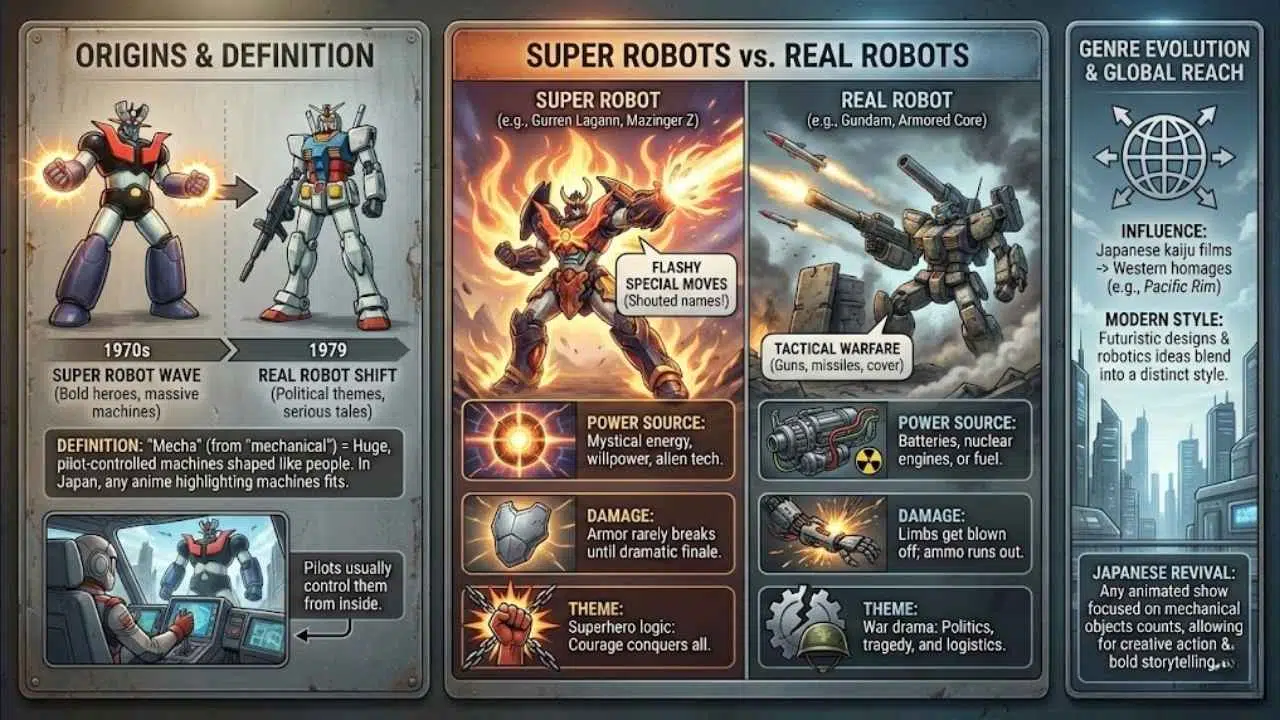
Giant robots, or “mecha,” are huge machines shaped like people. Pilots usually control them from inside. In Japan, any anime that highlights machines or mechanical objects fits the mecha genre.
Classic shows like Gundam and Mazinger Z set the stage for today’s stories. The word “mecha” comes from “mechanical,” but it became popular through Japanese pop culture. The first big wave started in the 1970s with “Super Robot” series, featuring bold heroes and massive fighting machines saving Earth from threats.
Later came more serious tales with political themes, such as Mobile Suit Gundam in 1979. Japanese kaiju films also influenced these robot stories, leading to Western homages like Pacific Rim. Over time, futuristic designs and robotics ideas blended into a distinct style loved by sci-fi fans worldwide.
Super Robots vs. Real Robots: Understanding the Difference
To really get the genre, it helps to know the two main types of robot storytelling. Here is a quick breakdown of how they differ:
| Feature | Super Robot (e.g., Gurren Lagann, Mazinger Z) | Real Robot (e.g., Gundam, Armored Core) |
|---|---|---|
| Power Source | Mystical energy, willpower, or alien tech. | Batteries, nuclear engines, or fuel. |
| Combat Style | Flashy special moves with shouted names. | Tactical warfare using guns, missiles, and cover. |
| Damage | Armor rarely breaks until the dramatic finale. | Limbs get blown off; ammo runs out. |
| Theme | Superhero logic: Courage conquers all. | War drama: Politics, tragedy, and logistics. |
In Japan, any animated show focused on mechanical objects counts as part of mecha. So there is always room for creative action and bold storytelling in this popular genre revival.
The Decline of Mecha in Recent Years
Fans started to drift away as fresh stories took center stage and old mecha plots felt tired. People craved new adventures, leaving giant robots in the background for a while.
Rise of Other Genres Like Isekai
Isekai exploded in popularity and pulled many anime studios into its orbit. Studios pushed out story after story with magic portals and fantasy lands. Audiences quickly grew attached to tales like Sword Art Online, Re:Zero, and That Time I Got Reincarnated as a Slime.
The focus shifted from giant robots to quick adventures in magical worlds filled with game-like rules.
The huge wave of isekai caused the mecha genre to fade into the background. For several years, there were more shows about heroes starting new lives than about pilots riding mechanical giants into battle. With viewers caught up in this trend, fewer mecha series hit the spotlight.
Oversaturation and Formulaic Storytelling
Too many mecha anime flooded the market at once, and people started to get bored. Some shows used the same story tricks over and over again:
- The Reluctant Pilot: A young teenager falls into a cockpit by accident and is suddenly the only one who can save the world.
- The Masked Villain: A mysterious rival appears early on but reveals their identity too predictably.
- The Monster of the Week: Episodes felt repetitive with no real character growth or plot movement.
- Generic Designs: Robots began to look like copycats of famous units without adding any new flair.
Fans could almost guess what would happen next. Big hits like Gundam and Gurren Lagann set a high bar with bold ideas, but copycats stuck to safe plots. The genre’s magic faded as every season brought another predictable robot war. Even loyal fans wanted something besides another formulaic fight between shiny machines in a futuristic city backdrop.
The Revival of the Mecha Genre
Fans are spotting giant robots in fresh, exciting shows again. Old favorites are sparking new buzz with clever twists and sharp animation.
Modern Adaptations of Classic Titles
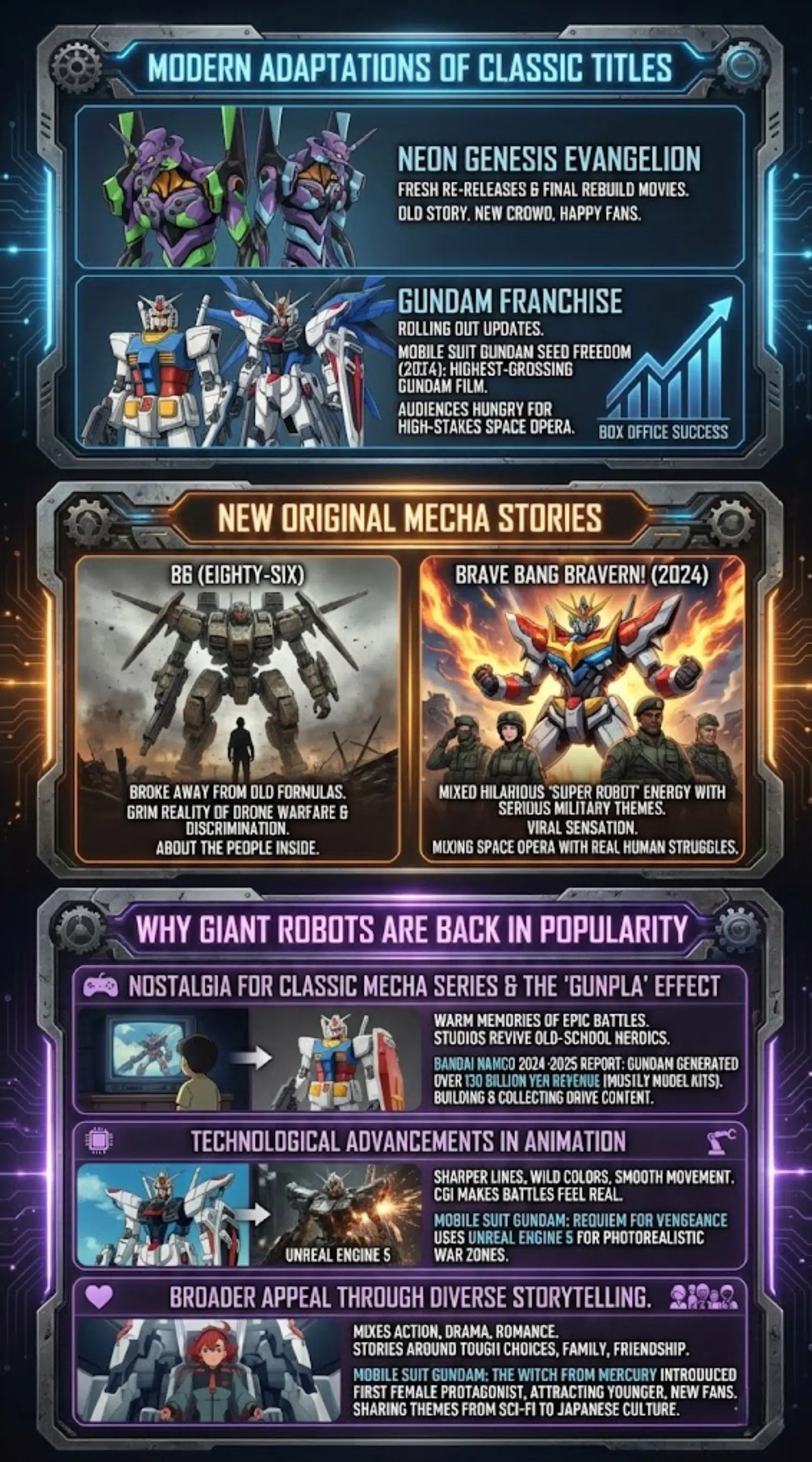
Neon Genesis Evangelion got a new life with fresh re-releases and the final Rebuild movies. These brought the old story to a whole new crowd while keeping longtime viewers happy. Even Gundam, which older generations and Gen Z alike know, keeps rolling out updates.
The biggest recent shockwave came from Mobile Suit Gundam SEED Freedom in 2024. It became the highest-grossing Gundam film in history, proving that audiences are still hungry for high-stakes space opera. Studios see how the mecha genre draws eyes again, so they brush off classic titles but polish them with modern storytelling tricks.
New Original Mecha Stories
Fresh mecha stories keep rolling out. Titles like 86 (Eighty-Six) broke away from old formulas by focusing on the grim reality of drone warfare and discrimination. It wasn’t just about cool robots; it was about the people inside them.
Another major hit, Brave Bang Bravern! (2024), mixed hilarious “Super Robot” energy with serious military themes, creating a viral sensation. Writers now mix space opera plots with real human struggles, so these anime grab both long-time fans and new viewers. Japanese studios are responding to audience cravings for mechanical action by stepping back from isekai trends that once crowded out robot shows.
Why Giant Robots Are Back in Popularity
Fans crave those epic robot battles packed with drama and flashy moves. Today’s shows mix old-school charm with fresh twists that grab everyone’s attention.
Nostalgia for Classic Mecha Series
Old mecha series like Gundam and Neon Genesis Evangelion stir up warm memories. Many grew up watching giant robots battle it out. Studios see this longing for old-school heroics mixed with futuristic robotics as an open door to revive the genre.
The “Gunpla” Effect: According to Bandai Namco’s 2024-2025 financial reports, the Gundam franchise generated over 130 billion yen in revenue, largely driven by model kit sales. This financial success proves that fans aren’t just watching; they are building and collecting, which drives studios to produce more content.
Technological Advancements in Animation
New animation tools now let studios craft giant robots with sharper lines, wild colors, and smooth movement. Computer-generated imagery makes battles feel real as sparks fly and metal creaks under pressure.
Anime like Mobile Suit Gundam: Requiem for Vengeance on Netflix use Unreal Engine 5 to create photorealistic war zones. Today’s software cuts down on tedious work, so artists focus more on cool designs and bold ideas. This leap helps old fans relive the thrill while drawing new viewers into futuristic robotics.
Broader Appeal Through Diverse Storytelling
Writers mix action, drama, and even romance with giant robots now. Instead of just battles in space or cities, stories spin around tough choices, family ties, and friendship. Mobile Suit Gundam: The Witch from Mercury introduced the franchise’s first female protagonist, Suletta Mercury, which brought in a massive wave of new, younger fans.
Animation looks sharp because of new tech. Wild worlds and stylish robot designs pop more than ever before. These shows reach bigger audiences by sharing themes from sci-fi to Japanese culture.
Iconic Mecha Titles Leading the Revival
Some shows steal the spotlight and spark new excitement, drawing old fans and fresh faces alike. These series roar back, showing everyone why giant robots still turn heads.
Neon Genesis Evangelion Re-Releases
Neon Genesis Evangelion showed up again through several re-releases. Streaming platforms like Netflix added the classic series to their lineup, opening doors for a fresh generation of viewers. Fans can now watch remastered episodes and even movies such as The End of Evangelion with better picture and sound than ever before.
Gundam’s Ongoing Global Success
Gundam keeps shining as a giant in anime and pop culture. This mecha series has stayed strong since 1979. Bandai Namco sells Gundam model kits around the world; fans snap up millions each year. In Japan alone, life-sized Gundam statues draw huge crowds in cities like Tokyo and Fukuoka.
Prominent New Titles
If you are looking to get into the genre right now, here are the modern titles that everyone is talking about:
- 86 (Eighty-Six): A gripping story about child soldiers piloting “unmanned” drones. It is praised for its emotional depth and stunning direction.
- Mobile Suit Gundam: The Witch from Mercury: A standalone series set in a school environment that spirals into corporate warfare. It is accessible for total beginners.
- Armored Core VI (The Game): While it is a video game, its 2023 release by FromSoftware was so popular that it reignited global interest in the “customizable mech” aesthetic, influencing anime trends.
- Gridman Universe: This series mixes old-school super robot charm with cool new tech and bright colors. Fans love its nods to Japanese pop culture and kaiju films.
The Future of the Mecha Genre
Fresh twists, wild mashups with other genres, and wild robot battles could be right around the corner. Stick around to see what surprising adventures giant robots tackle next!
Opportunities for Innovation
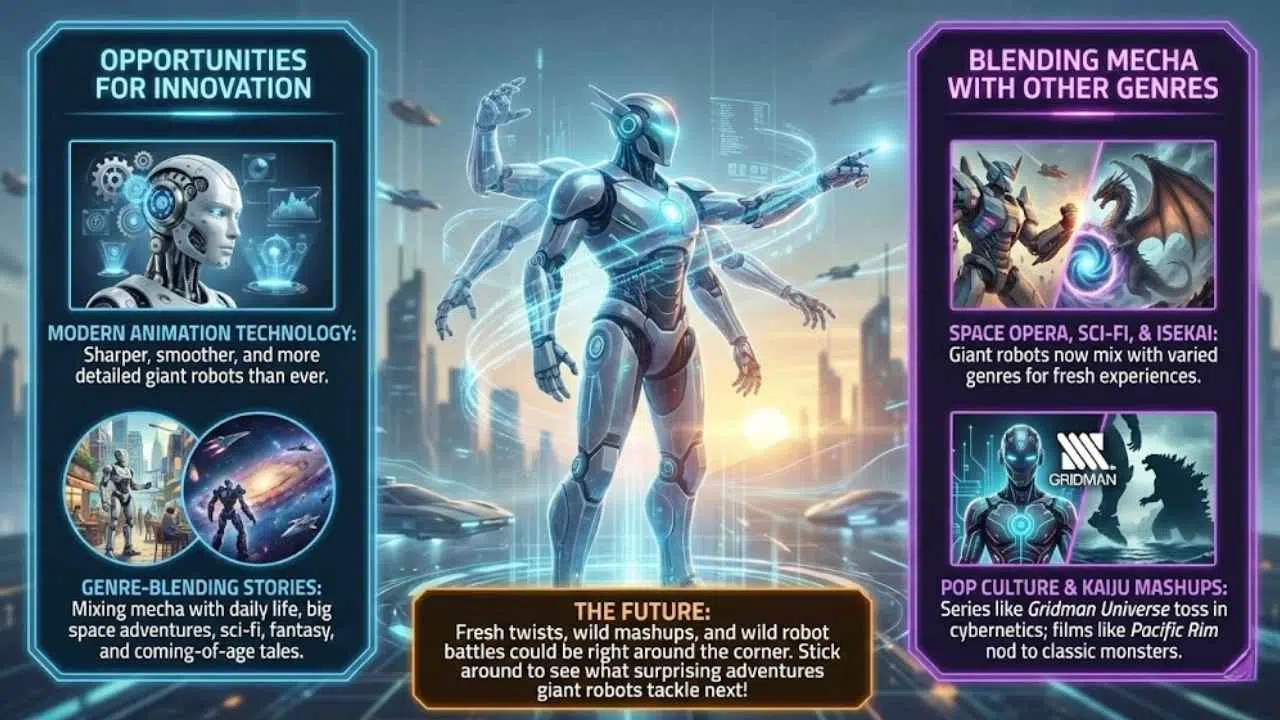
Mecha anime creators now test new ideas and mix genres like never before. Modern animation technology lets artists make giant robots look sharper, smoother, and more detailed than ever. Studios blend mecha with stories about daily life or big space adventures to reach people who like science fiction, fantasy, action, or even coming-of-age tales.
Blending Mecha with Other Genres
Giant robots now mix with genres like space opera, sci-fi, and even isekai. Series such as Gridman Universe toss in cybernetics and pop culture to hook new viewers. Animation technology opens doors for wild action scenes and fresh looks.
Some mecha anime blend robotics with classic Japanese kaiju monsters, seen in the 2013 film Pacific Rim nodding to both worlds. More studios experiment by pairing giant robots with stories about friendship, sports, or high-stakes mysteries. As a result, these mash-ups give everyone something different.
Final Thoughts
Mecha anime is making a big, bold return with giant robots stealing the show once again. Fans love these stories because they mix cool action, strong drama, and eye-catching designs in every episode.
New series are jumping in alongside classics like Gundam and Evangelion. This shows that storytelling can be fresh yet still pay respect to old favorites.
If you want more, many fan guides and forums online share tips on which mecha titles to watch next. So gear up for this new wave of mech madness; the action is thrilling, and the tales keep growing bolder. Maybe you will find your new favorite giant robot hero waiting just around the corner!





















