You feel tired all the time, even after a full night’s sleep. Your to-do list grows longer every day, and your mind races from sunup to sundown. By 2026, burnout will be everywhere. It is at work, at home, and in your phone, buzzing late into the night. One simple idea stands out. People who choose “slow living” show less stress and more joy in daily life. With this post, you will learn what slow living really means and see how small changes can make big improvements.
You’ll also get real tips on building balance with mindfulness and self-care, plus discover the many benefits of slow living for wellbeing and happiness. Ready to find peace instead of pressure? Let’s go through it together.
What Is Slow Living?
Life today moves faster than ever, and stress piles up. Slow living flips that script. It means choosing to do things with care rather than rushing or cramming the day full. People slow down their daily tasks on purpose. They savor things like breakfast without screens or take walks instead of racing from one thing to another.
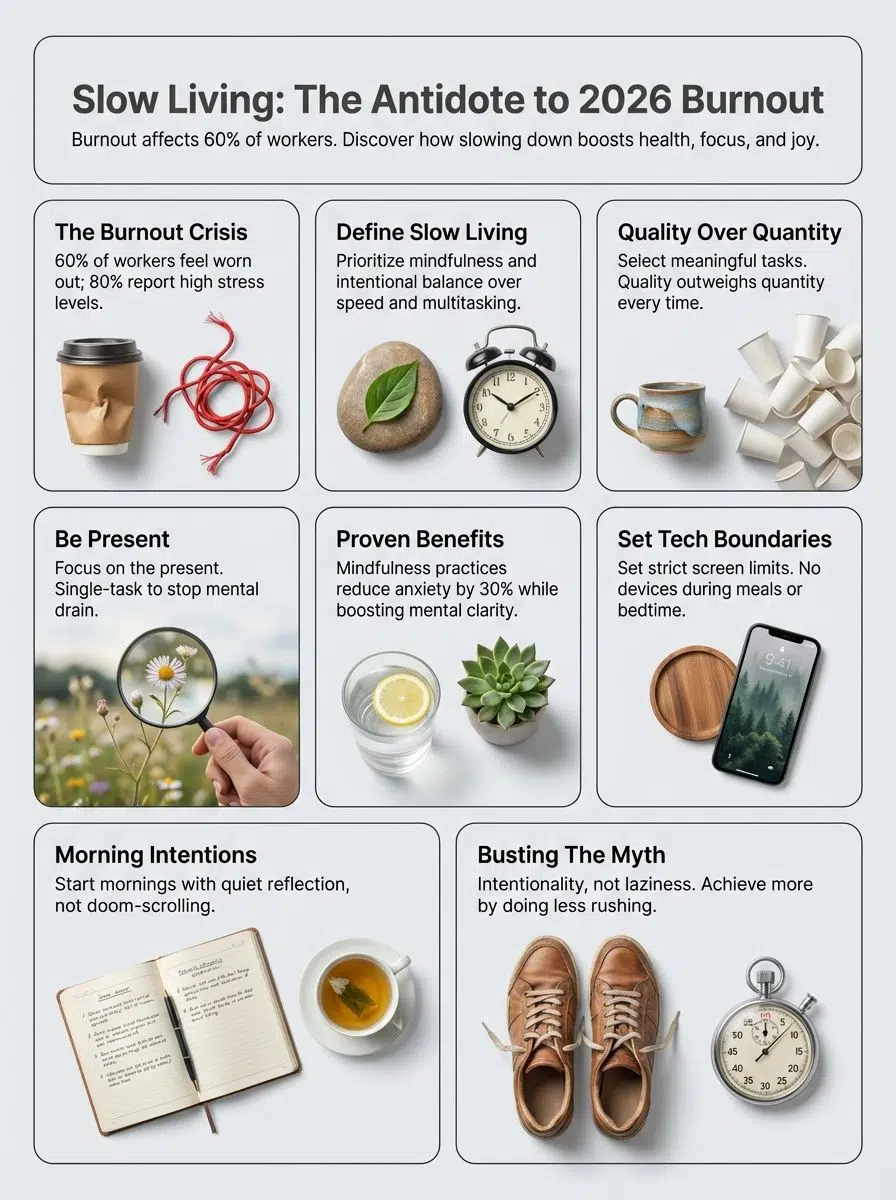
This lifestyle values mindfulness and balance over speed and multitasking. Each choice gets more thought, from what you eat to how much time you spend online. Simple joys matter most. These include family meals, deep talks with friends, or a hot cup of tea while watching the rain fall outside your window.
Slow living is about making room for what matters most, says Carl Honoré, author of In Praise of Slow.
It focuses on well-being over busyness. Those who practice it find less stress and more satisfaction in everyday life. The movement actually began with food. In the 1980s, Carlo Petrini started the “Slow Food” organization in Italy to protest fast food chains. He wanted to protect local traditions and enjoy meals properly. Today, that same idea applies to everything we do.
Why Slow Living Matters in 2026
Life feels faster, louder, and more crowded every year. Slow living offers a chance to pause the noise so you can breathe easy again.

The rising prevalence of burnout
Burnout is everywhere in 2026. Workers spend longer hours at their desks, glued to screens and racing the clock. A 2025 study by Moodle found that 66% of American employees are experiencing some form of burnout. That number is even higher for younger generations, with over 80% of Gen Z workers reporting they feel exhausted.
The World Health Organization called burnout a workplace crisis back in 2019. It stated that chronic workplace stress can cause headaches, sleep trouble, and even heart problems. Today, the problem is worse. Phones demand our attention day and night. Messages keep us “on call” even on weekends. Stress piles up fast this way, like bricks in a wall, until minds and bodies cry for help.
The need for a mindful lifestyle shift
Many people feel rushed and tired because of busy schedules. More devices, endless notifications, and work emails after dark leave little room for self-care or relaxation. Current data shows that the average US adult now spends over 7 hours per day looking at screens. That is nearly half of our waking lives spent in a digital world.
Taking a mindful step back helps us spot what matters most. A slower life gives space to breathe and focus on balance instead of just productivity. Mindfulness invites us to enjoy meals, notice small details outside, or even laugh with loved ones without staring at screens. As Sarah from Oregon said after her shift to slow living:
I traded constant stress for morning coffee with the birds, and I’m not going back.
Core Principles of Slow Living
Slow living puts thought into each action. It invites peace instead of rush. You might feel the difference with a calm mind and lighter heart, one small step at a time. Here are the main pillars that hold it all together.
- Intentionality: This means doing things on purpose rather than on autopilot. It is about asking yourself why you are doing something before you say “yes” to it.
- Quality Over Quantity: It is better to have three close friends than thirty acquaintances. It is better to own one warm, durable coat than five cheap ones that fall apart.
- Presence: This is the art of being where your feet are. If you are washing dishes, just wash dishes. If you are talking to a friend, put the phone away and listen.
- Sustainability: Slow living often leads to a smaller carbon footprint. You buy less, reuse more, and care for what you have.
Quality over quantity
Choosing quality means opting for fewer, better things. Eating one fresh apple feels more satisfying than rushing through a bag of chips. This idea fits every part of life. A small group of honest friends often brings more joy than lots of social contacts who drain energy.
People today face endless choices and busy schedules in 2026. However, not everything deserves your time or money. Work-life balance grows stronger when the focus is on meaningful tasks instead of a packed day with little value. The 80/20 rule applies here. 80% of your happiness often comes from just 20% of your activities. Focus on that 20%.
Being present in the moment
People rush from task to task in 2026. Eyes are glued to screens, and thoughts race ahead. Mindfulness steps in as a gentle brake. Focus lands on what you are doing right now, whether brushing your teeth or sipping warm tea.
Even noisy city streets can fade out if you pay close attention to the feeling of walking or the sound of birds mixed with car horns. Slowing your breath calms busy minds. It makes room for clarity and peace. Techniques like Box Breathing, inhale for 4 seconds, hold for 4, exhale for 4, hold for 4, can reset your nervous system in minutes.
Prioritizing sustainability and simplicity
After slowing down and living in the moment, focus shifts to what really matters. Making life easier and kinder to the planet becomes the goal. Owning less brings more peace. A clear space calms a busy mind.
Cutting out extra stuff saves money and lowers stress, too. Choosing reusable bags over plastic ones or biking instead of driving helps keep nature clean for longer. Simple habits like buying only what you need or mending torn clothes can make daily routines smoother. This way of life boosts wellbeing while cutting waste at home.
Benefits of Slow Living vs. Fast Living
Slow living can help you find more joy and calm in daily life. To see the real difference, let’s look at how a “Slow” approach compares to the typical “Fast” pace of modern life.
| Feature | Fast Living (Burnout) | Slow Living (Balance) |
|---|---|---|
| Focus | Multitasking and distraction | Single-tasking and deep focus |
| Stress Level | High cortisol, constant anxiety | Calm nervous system, relaxation |
| Relationships | Digital connections, surface level | Face-to-face, deep bonds |
| Productivity | Busy but often inefficient | Intentional and effective |
Reducing stress and anxiety
Slowing down helps your brain relax and recharge. A slower pace means less rushing, fewer deadlines, and more room to breathe. Simple acts like deep breathing or sitting in silence lower stress levels fast.
Studies from the University of Southampton in 2024 showed that practicing mindfulness for just 10 minutes a day can cut depression by over 19% and anxiety by 12%. Shifting focus from busy schedules to thoughtful routines gives space for self-care and rest. Cooking a meal mindfully or taking a short walk outside can calm nerves quickly.
Improving mental clarity and focus
After stress and anxiety step aside, clearer thinking can finally walk in. Embracing slow living cuts out mental clutter. Mindful activities help quiet racing thoughts.
Focusing on one task at a time gives your brain space to work better. Research from Stanford University has shown that multitasking can reduce productivity by up to 40%. Single-tasking makes people finish jobs quicker with fewer mistakes. By keeping life simple and cutting distractions, you create room for wellbeing each day.
Enhancing physical health
Sharper focus and a clear mind spill into how we treat our bodies. Slow living means getting moving in gentle ways, like walking or stretching every day. Stress goes down, so your blood pressure often follows.
Taking time for real meals helps you eat better food instead of grabbing junk on the go. People who choose mindfulness and simplicity pick regular sleep over late-night screen time. Better rest boosts energy and keeps your immune system strong. These small steps stack up. They give your body a break from constant hustle.
Strengthening personal relationships
Better physical health often brings more energy for friends and family. With less stress, people can listen better, laugh more, and build trust. Simple acts like sharing a meal or taking a walk help keep connections strong.
The Harvard Study of Adult Development, which has run for over 85 years, found that close relationships are the number one predictor of happiness and longevity. Slow living shifts attention from schedules to people. Turning off devices and being mindful allows for deeper talks.
Boosting overall happiness and satisfaction
Each slow day feels fuller and brighter. Simple joys become special again. Mindfulness and intentionality turn small moments into true treasures.
Life stops feeling rushed. Instead, it fills with gratitude and real satisfaction. Minimalism means fewer things crowd your space, so your mind can rest easier. Well-being grows as you focus on what brings meaning to each day. More peace leads to more smiles and laughter at home and work alike.
How to Embrace Slow Living
Try weaving small mindful choices into your day and notice how life feels richer. Here are simple ways you can start today.
- The 2-Minute Rule: If a task takes less than two minutes, do it now. This keeps small things from piling up and cluttering your mind.
- Phone Foyer Method: When you get home, leave your phone in the entryway. Disconnect from the digital world so you can reconnect with your home life.
- Analog Mornings: Spend the first 30 minutes of your day without screens. Stretch, make coffee, or read a paper book.
- Single-Tasking: Pick one thing to do at a time. If you are eating, just eat. If you are walking, just walk.
Start with small, intentional changes
Wake up five minutes earlier and enjoy a quiet cup of tea. Swap scrolling through your phone before bed for reading a short story or listening to soft music. These tiny steps may seem simple, but they let you practice mindfulness in easy ways each day.
Pick one thing to focus on. You might choose to eat more slowly at lunch or take deep breaths while brushing your teeth. Slow living does not call for dramatic shifts overnight. It thrives on steady, thoughtful choices that fit with real life.
Practice mindfulness and meditation
Sit quietly, close your eyes, and take a deep breath. Focus on the air filling your lungs. Thoughts will come and go. Let them drift away like clouds. Mindfulness slows time down and helps you spot stress before it grows too big.
Many apps teach simple breathing exercises or offer short guided sessions. Tools like Calm, Headspace, or Insight Timer are excellent for beginners. Some kids in schools now do mindfulness for five minutes each day to calm their racing minds. Busy adults can join in while waiting in line or during lunch breaks, too.
Create boundaries with technology
Mindfulness helps you stay calm, but tech can keep your mind buzzing. Phones, apps, and email never seem to sleep. Set simple rules for yourself, like no screens at dinner or turning off alerts after work hours.
Try leaving your phone in another room when sleeping. These tiny changes boost work-life balance and make it easier to be present. Apps like Opal or Forest can block distracting apps for set periods, helping you break the scrolling habit.
Focus on meaningful activities and connections
After you mute the buzz from constant messages, you can see what really matters. Picking activities that spark happiness helps lower stress. Paint a picture, take a slow walk at the park, or cook with your kids on Sunday morning.
Connect with people who lift your spirits. Share stories over dinner instead of scrolling alone. Research shows close friendships boost mental health and help balance work-life stress in 2026 more than social media ever could. Simple acts like phone calls or handwritten notes build lasting bonds.
Myths About Slow Living
Some folks think slow living means giving up on goals or sitting around all day. The truth steps in quietly. It is more about smart choices, not just clock-watching.
It’s not about laziness or unproductivity
Slow living does not mean sitting around doing nothing. People who choose this lifestyle focus on fewer tasks, but they put more care and intention into each one. Workers in Denmark often leave the office by 4 p.m., yet they consistently rank high in global productivity and happiness scores.
By slowing down, people use mindfulness to complete jobs with less stress and better results. Choosing minimalism or simplicity is about making space for what matters most. This approach boosts wellbeing and mental health because it removes constant pressure to do more just for the sake of being busy.
It doesn’t require drastic lifestyle changes
No need to flip your routine on its head. You can practice slow living by making small, simple changes in daily life. Enjoy a quiet breakfast instead of rushing through emails. Walk outside for fresh air during breaks at work.
Turn off your phone for an hour before bed to rest your mind. These tiny shifts support stress reduction and boost wellbeing without overwhelming you. Anyone can try this pace, no matter their job or family life. Balance comes from little moments.
Slow Living as a Long-Term Solution
Slow living plants seeds for a richer, calmer future. Life feels lighter when you pause and set your own pace.
Building resilience against future burnout
Choosing mindfulness and self-care each day helps to build a strong shield against future burnout. Life in 2026 can feel like rushing from one moment to the next, but slow living puts quality of life first.
Did You Know? Your brain can physically change based on your habits. This is called neuroplasticity. By practicing calmness and focus daily, you actually wire your brain to handle stress better in the future.
Blocking off quiet moments or stepping away from screens gives your mind space to reset. People who practice intentionality tend to have better work-life balance and less stress. Even laughing more at small things strengthens mental health for tomorrow’s challenges.
Creating a sustainable and fulfilling lifestyle
Building resilience against future burnout leads right into living in a way that lasts and brings joy. Slow living means you make choices that care for both your well-being and the world. Use less, waste less, and enjoy what you have.
Simple habits like walking instead of driving save money, cut stress, and let nature bring calm. Eating meals at home gives you control over your health while creating chances to sit down together and talk. Picking quality over fast trends creates a life with fewer regrets.
The Bottom Line
Slow living teaches us to put quality over quantity, be present, and simplify our lives. Small changes like turning off your phone at dinner or breathing deeply in a busy moment can lower stress and improve focus almost right away.
These simple habits lead to better health, closer friendships, and a greater sense of joy. Choosing this path helps protect you from burnout, not just now but for years ahead. It is practical and fits into real life without big sacrifices.
Maybe tomorrow will look brighter if you give slow living a try!