
Losing access to your crypto can feel like throwing money out the window. Maybe you forgot a password, sent coins to the wrong address, or got tangled in a scam. It happens, and it hurts. Did you know that millions of dollars are stuck in lost Bitcoin wallets? People everywhere search for answers every year, asking how to recover lost crypto. This post breaks down simple steps you can take if your funds vanish. Stick around; hope might be closer than you think!
Common Reasons for Lost Crypto
Losing crypto can happen fast, leaving you feeling helpless and frustrated. Mistakes or bad actors catch people off guard, so keep reading if you’ve ever worried about your funds vanishing into thin air.
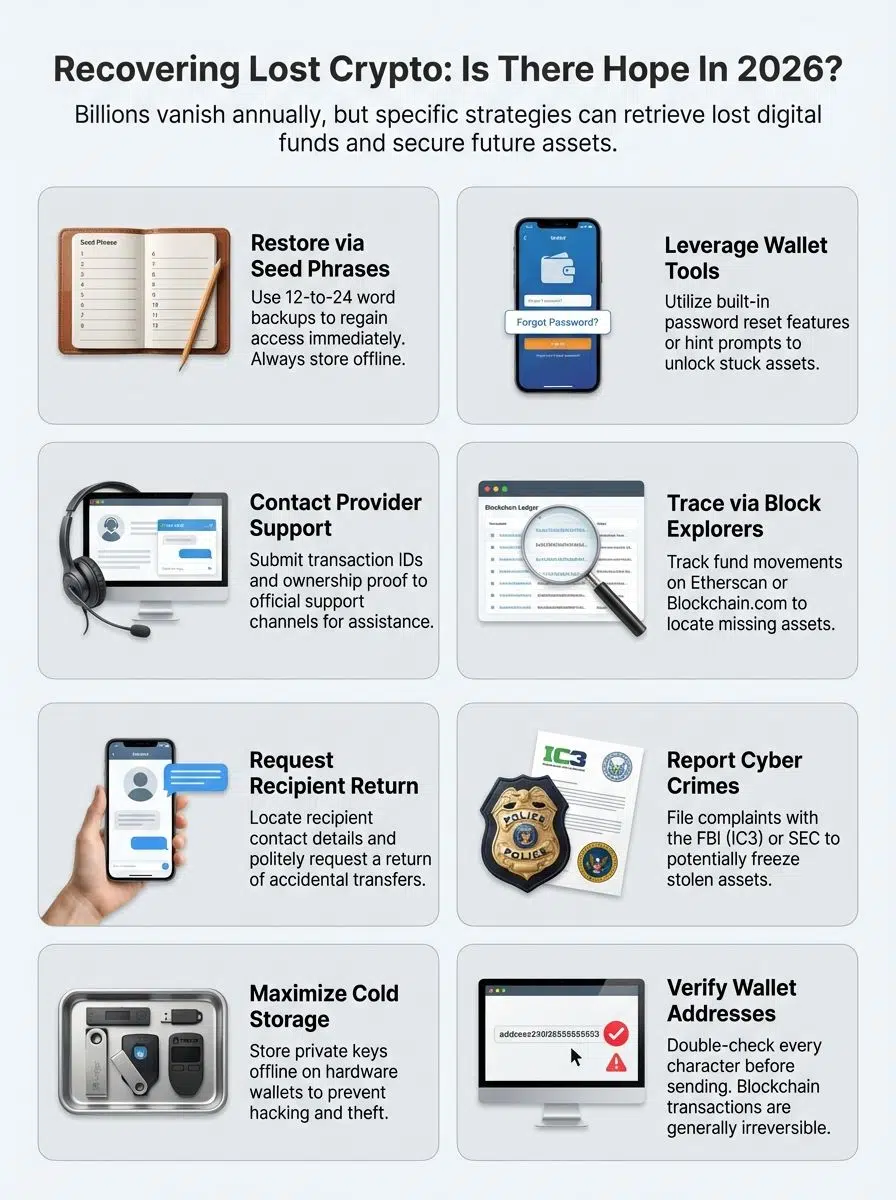
Losing Private Keys or Seed Phrases
Misplacing a private key or seed phrase is like dropping the only key to a locked treasure chest into the ocean. There are no backups on the blockchain. Without these details, funds stay stuck forever.
Satoshi Nakamoto never gave Bitcoin users a “forgot password” button. In fact, a 2023 Chainalysis report estimated that nearly 20% of all Bitcoin is lost indefinitely due to missing keys.
Many investors write their seed phrases on paper or store them in digital wallets. Disasters happen. A coffee spill ruins your note. An old phone dies with files lost for good. Even the best crypto recovery experts cannot break through strong encryption like SHA-256 if you lack these codes.
Another common issue is the “derivation path” error. Sometimes your keys are correct, but your wallet software is looking in the wrong place. This technical glitch often makes users panic unnecessarily.
Sending Funds to the Wrong Address
Sending cryptocurrency to the wrong address is like dropping your keys down a storm drain. The blockchain works fast and does not offer take-backs or “oops” buttons. Once Bitcoin, Ethereum, or any altcoin leaves your wallet and lands in another, you cannot stop it.
In 2025 alone, misdirected transfers accounted for millions in losses. The rise of “Address Poisoning” scams has made this worse. Scammers create addresses that match the first and last four characters of your frequently used wallets. If you copy from your transaction history without looking, you might send funds straight to a thief.
Some people have lost years’ worth of savings because they copied just one letter wrong. Most times, these funds end up stuck forever if sent to an empty or dead wallet. If the recipient’s wallet belongs to another person or exchange, there is a tiny sliver of hope. You might reach out and ask for help getting it back.
Mistakes with digital wallets can lead straight into scams too. Fraudsters prey on panic during such moments.
| Error Type | Recovery Chance | First Action |
|---|---|---|
| Wrong Network (e.g., ETH to BSC) | Moderate | Contact receiving exchange support. |
| Typo in Address | Low | Check if address is active on block explorer. |
| Address Poisoning Scam | Very Low | Report to authorities immediately. |
Falling Victim to Scams or Hacks
Scams and hacks can empty your crypto wallet in seconds. Fraudsters use fake websites, apps, or messages to trick you into giving up private keys and seed phrases. Some pretend to be from popular companies like Binance or Coinbase and send emails asking for sensitive details.
In 2025, the crypto world saw a record $3.4 billion stolen, according to Chainalysis. A significant portion of this came from “Pig Butchering” scams, where fraudsters build fake relationships over months before draining victims’ accounts.
Hackers also target exchanges or launch phishing links on social media. If you click the wrong link or download a strange file, your funds could vanish without warning. Guard your digital assets as if they are gold kept under your pillow. Always double-check URLs before entering passwords.
Keep security updates turned on for all devices you use for trading Bitcoin or Altcoins. Even huge exchanges like Bybit aren’t immune, as seen in the $1.5 billion hack in early 2025. It serves as a reminder that no one is too big to fail.
Steps for Recovering Lost Crypto
Start simple, stay calm, and act fast. There is often hope if you take the right steps immediately. Every minute counts when tracking your crypto assets.
1. Restoring Wallets with Seed Phrases or Backups
Losing access to your cryptocurrency wallet can feel scary. Seed phrases and backups offer hope. These tools help recover lost digital assets, even if your phone or computer crashes.
- Secure the Paper: Write your seed phrase on paper and store it somewhere safe. Keep it away from fire or water. This simple act protects your funds from digital threats like hackers and viruses.
- Follow the Standard: Most modern wallets use the BIP39 standard (a 12 to 24-word list). This means you can often restore your wallet on a different device or app if your original hardware breaks.
- Verify the Order: Enter each word of the seed phrase carefully during wallet restoration. A single mistake can block your access entirely. Accuracy is vital.
- Keep it Offline: Keep digital copies off the internet to reduce risk from scams and hacks. Storing the backup on an offline USB drive adds another layer of safety.
- Resetting Passwords: If you lose a password but still have the backup or phrase, most wallet apps allow an easy reset with those details.
- Official Support Only: Wallet providers sometimes help if you struggle with recovery steps. Contact customer support using official platforms only to avoid fraud.
- Redundancy is Key: After regaining access, create a new backup in case tech issues arise again. Many people create two or more copies in different places for better security.
- Avoid Cloud Storage: Avoid saving phrases in email or cloud notes. Online accounts get targeted often by scammers seeking quick crypto gains.
Seed phrases are precious keys to blockchain assets. Treat them like treasure maps, because they lead straight to your funds and peace of mind!
2. Using Wallet Tools for Forgotten Passwords
Forgetting your crypto wallet password can feel like losing the key to a treasure chest. Many wallets now offer tools to help users recover access in case this happens.
- Most digital wallets include a “Forgot Password” or recovery feature right on the login page. This often sends a reset link to your email.
- Wallet apps may require extra proof of identity. Be ready to provide two-factor authentication codes or answers to security questions before setting a new password.
- Hardware wallets like Ledger or Trezor sometimes come with special software. These tools are designed to help users reset device PINs without exposing private keys, provided you have your seed phrase.
- Some services offer step-by-step guides on their websites or in customer support chats. They walk you through the process to regain control of your Bitcoin or other assets.
- Larger crypto platforms, like Coinbase and Binance, often have 24/7 customer support teams. They are ready to assist with locked accounts due to forgotten passwords.
- Not every recovery tool works if you lack your backup seed phrase. These tools aim for user convenience but cannot break blockchain security protocols.
- Updating wallet software can introduce fresh options for account recovery. Always use the latest version for better security and easier password resets.
- Setting strong but memorable passwords helps. Enabling multi-factor authentication helps prevent future headaches with lost access and keeps scams at bay.
3. Contacting Wallet Providers for Support
Getting locked out of a crypto wallet can feel like losing the last slice of pizza. After trying wallet tools for forgotten passwords, the next step is reaching out to your wallet provider.
4. Gather Your Evidence
Collect all your account details, such as email, phone number, and any backup codes linked to your digital wallet. Write down what happened in simple words. Include when you lost access and which steps you already tried. Attach clear photos or files showing proof of ownership if asked. This could be receipts or screenshots from transactions on the blockchain.
5. Use Official Channels Only
Visit the official website or app of the wallet provider. Avoid links from emails or unusual sites to guard against scams. Look for their support section. Many offer live chat, help tickets, or phone numbers for emergencies. Always check that emails from support come from an official address. Fraud is common in cryptocurrency recovery cases due to asset value and volatility.
6. Managing Expectations
Many providers may take days to reply because they deal with thousands of users daily. Patience is key here but keep checking your inbox. Remember, non-custodial providers do not store private keys for Bitcoin and other cryptocurrencies. In these cases, they may not be able to recover your funds directly.
If you used an exchange like Coinbase or Binance instead of a private wallet, contact their support too. Some funds held there are easier to trace through transaction logs and blockchain technology advances. For example, Binance’s “Together Initiative” launched in late 2025 allocated millions to help verified users recover from specific market crashes and liquidation events.
Recovering Crypto Sent to the Wrong Address
Sending crypto to the wrong address feels like dropping your keys down a storm drain. While hope may seem slim, there are ways you might get it back. Stick around for the next steps.

Tracing Transactions Using Block Explorers
Finding lost crypto can feel like searching for a needle in a haystack, but you have tools to help. Block explorers are your map for tracing every step of your funds on the blockchain.
- Transparency is Power: Block explorers let anyone view records of all cryptocurrency transactions. This adds transparency to the entire system.
- The Search Process: Entering a wallet address or transaction ID into a block explorer will display every transfer linked to it.
- Right Tool for the Job: Websites like Etherscan work for Ethereum, while Blockchain.com covers Bitcoin. Always ensure you are using the correct explorer for your specific coin type.
- Verification: You can see if money left your wallet, received confirmations, or arrived at an intended address.
- Detailed Data: Some explorers even show the network fee and exact date of the transaction. This is handy during recovery steps.
- Locating the Asset: Spotting where your asset landed can help you contact exchanges or recipients if human error played a part.
- Professional Use: Crypto recovery services often use block explorers as their first tool for asset retrieval efforts.
- Law Enforcement Aid: Tracking stolen or lost crypto through these tools may aid law enforcement or fraud reports in 2026 and beyond.
Requesting a Return from the Recipient
After tracking your crypto transaction on a block explorer, reach out to the person or business who got your lost funds. Send a polite message with all details: date, amount sent, wallet address, and any notes.
Many people are honest in the cryptocurrency space. If you explain your mistake and offer proof, they may send back your assets. You can even use the “Input Data” field on Ethereum transactions to send an encoded message directly to the recipient’s wallet address.
Scams and hacks make this step tricky. Sometimes thieves ignore messages or have no reason to reply at all. Still, some mix-ups come from simple errors like typing one number wrong in an address.
In 2025, roughly 8% of Bitcoin sent to wrong addresses was returned after users contacted recipients directly through forums or social media posts. Acting fast helps. If funds get moved or mixed across different wallets on the blockchain network, tracking becomes harder each hour that passes.
Reporting to Exchange Platforms for Assistance
If the person on the other end does not respond, it may be time to reach out for help from an exchange platform. Exchanges like Binance or Coinbase have teams ready to look into lost funds or transactions sent by mistake.
Share proof such as transaction IDs, wallet addresses, and dates. Quick action is key because some exchanges can freeze coins before they are withdrawn.
Support teams will check the blockchain and see if your crypto landed in their system. If so, there is a small chance they can recover your digital assets for you. However, this service isn’t always fast or guaranteed. For instance, recovering tokens sent to the wrong network on Binance often incurs a fee, typically around 500 BUSD or equivalent.
Rules change often and some platforms charge fees for recovery attempts. Keep records of every message you send them. It helps track progress during your cryptocurrency recovery journey.
Dealing with Scams and Hacks
Scams and hacks can sweep away your savings faster than a fox in a henhouse. Some tricks may fool even the smartest folks, so knowing what to do next is worth its weight in gold.

Reporting Incidents to Authorities and Agencies
Crypto loss can feel like dropping your keys in a storm drain. Fast action helps, and reporting to the right groups is key.
- Contact your local police department first if you spot theft, fraud, or hacking of crypto assets.
- File a complaint with the FBI’s Internet Crime Complaint Center (IC3) for big losses or complex scams in the United States. They take reports for digital asset crimes every day.
- Reach out to the Federal Trade Commission online to share details about fake investments, fraudulent exchanges, or recovery scams targeting cryptocurrency holders.
- If you lost funds due to a scam on a crypto exchange, notify the platform right away with all account information and transaction records. Some might freeze accounts or start an internal review.
- Use blockchain analysis services like Chainalysis or CipherTrace. They work with law enforcement to track stolen Bitcoin and altcoins through public blockchain data. These companies have helped global agencies since 2014 recover millions in illicit funds.
- Share your case with consumer protection groups such as the Better Business Bureau. This is vital if fraud came from shady wallet providers or paid “asset retrieval” promises that never deliver results.
- Inform state authorities or financial regulators if a non-licensed business took your money for digital currency recovery services. Most states require legal registration for handling assets like cryptocurrency after 2021 updates.
- Keep copies of emails, wallet addresses, chats, and screenshots showing how you lost access or funds. Authorities use this evidence in investigations.
- Report cyberattacks linked to phishing sites at CISA.gov (Cybersecurity and Infrastructure Security Agency). This helps stop rising digital currency theft seen since 2020.
- Victims outside the United States can turn to organizations like Europol’s EC3 division. They deal with cross-border fraud using blockchain technology tools to help trace funds worldwide.
Acting fast boosts chances of getting support from authorities. It may return some of your lost crypto funds quicker than you expect!
Tracing Funds to Exchanges Using Blockchain Analysis
Once you have reported your case to the right authorities, you can start following the path of your lost crypto. Tracking crypto funds with blockchain analysis can feel like playing detective with digital footprints.
“Blockchain records every transaction, so nothing really disappears from public view. Tools like Blockchair and Arkham Intelligence help you track Bitcoin and altcoin transactions from one wallet address to another.”
Most scammers will try to send stolen assets to a major exchange to cash out or swap for other coins. Exchanges keep large pools of funds, making them common endpoints for hackers during crypto recovery cases.
You might spot your exact amount landing in a known exchange wallet. This step is crucial for proving fraud or loss. Contacting the exchange’s support with evidence may lead them to freeze those accounts. Many major platforms comply with international fraud laws. For example, Tether (USDT) has the ability to freeze assets on the Ethereum and Tron networks if presented with valid law enforcement requests.
Some blockchain sleuths use advanced software that follows split transactions across hundreds of wallets, catching tried-and-true tricks of scammers. Even if funds seem scattered, public transparency on blockchains means every move leaves a trail. Sometimes this leads straight back to an actual person or account.
Tracing transactions through exchanges increases your odds of recovering lost cryptocurrency investments. It helps law enforcement identify culprits and secure frozen assets faster.
Consulting Professional Crypto Recovery Services
After tracking funds using blockchain analysis, you may still feel stuck. Crypto recovery services can step in at this stage. These experts use special tools to help find and sometimes recover lost crypto assets.
In 2025 alone, firms like CipherBlade and Chainalysis helped trace millions of dollars from scams across Bitcoin, Ethereum, and other altcoins. However, you must be extremely cautious.
Some companies charge high fees or a percentage of the money they help you get back. Always check reviews before sharing any details about your digital wallet or private keys. Scammers pretend to be helpers too. Only work with companies that have strong records for real results.
If big amounts are at stake, expert help has made a real difference for others facing loss on their investments. Just remember: no legitimate company will ever ask for your seed phrase or money upfront.
Best practices to safeguard your digital assets
Keeping your crypto safe is like locking the front door at night. Simple steps can save you from big trouble later.
- Non-Custodial Control: Pick a non-custodial digital wallet so only you hold the keys to your cryptocurrency.
- Paper Backups: Keep private keys and seed phrases written on paper in a secret place, never on your phone or computer.
- Group Approval: Choose wallets that support multi-signature protection to add an extra layer of approval before any funds move.
- Offline Storage: Store most of your investment in cold storage devices, such as hardware wallets not connected to the internet, to protect against hackers.
- Limit Exposure: Avoid huge balances sitting in software wallets, because those are easier targets for criminals.
- Address Verification: Check that the wallet address is correct before sending or receiving Bitcoin, altcoins, or any funds. One wrong letter can send assets into thin air forever.
- Stay Educated: Study up on new scams and old tricks. Scammers love tricking investors with fake websites and emails about asset recovery or hot new investment opportunities.
- Safe Bets: Stick with proven cryptocurrencies like Bitcoin instead of chasing risky coins that vanish as fast as they appear.
- Privacy First: Never share details about your crypto holdings on social media. Thieves scan for targets and privacy keeps you safer.
Each tip above builds a wall between your hard-earned assets and fraudsters hoping for an easy payday.
1. Choose a non-custodial digital wallet
Pick a non-custodial digital wallet to keep control over your assets. You hold the private keys, not a third party. This means you have true ownership of your Bitcoin or altcoins, so no one else can freeze or take them by accident.
Many crypto users like MetaMask, Exodus, and Trust Wallet for this reason. These wallets give you full autonomy.
If you lose access to your wallet, only you can recover it with the seed phrase. No company has hidden copies or backup access to your funds. To protect yourself from scams and hacks, never share the recovery phrase online. Non-custodial wallets put power in your hands; just be sure to store those recovery details as safe as gold bars in Fort Knox!
2. Store your private keys securely
After picking a non-custodial digital wallet, focus on keeping your private keys safe. Private keys unlock your crypto funds, so treat them like gold. Write down your key or seed phrase on paper and stash it somewhere only you can find, like a locked drawer or safety deposit box. Never save these details in emails, text files, photos on your phone, or cloud storage. Hackers love those spots.
Avoid sharing private keys with anyone. Not even friends or family should see them, because one careless action could cost you all your Bitcoin or altcoins. Some people use metal backup plates, like Cryptosteel or Billfodl, to guard their information from fire and water damage. Think of it as armor for your crypto assets.
Make copies of the backup but keep each in different secure places. If someone else gets access to just one copy, every last coin might disappear faster than you can say “blockchain recovery.”
3. Use a multi-signature digital wallet
A multi-signature digital wallet needs two or more people to approve each transaction. You set rules so that no single person can move your Bitcoin or other crypto assets alone. For example, you might need three out of five team members to sign off before any funds leave the wallet.
This group check stops scams and limits mistakes, like sending money to the wrong address. The industry standard for this is Safe (formerly Gnosis Safe), which is widely used by DAOs and companies.
Many exchanges and companies use these wallets for better security. Crypto recovery is harder if one person loses a key, but not impossible; others in the group still have access. Families and businesses find this tool helpful for protecting big investments from loss or fraud. Even if someone gets tricked by a scam, they still cannot send all the funds without extra approvals.
4. Maximize your use of cold storage
Cold storage keeps your crypto safe from online threats. Hardware wallets, like Ledger and Trezor, store Bitcoin or altcoins offline. Hackers cannot reach these devices if they are not connected to the Internet.
Use cold storage for long-term holding of funds you do not need every day. New devices like the Ledger Stax have made this easier with clearer screens to verify transactions.
Many experts suggest splitting your assets between multiple hardware wallets in different places. Write down backup seed phrases on paper and lock them in separate locations, away from prying eyes or fire hazards.
BitGo uses multi-signature technology with cold storage for large institutions to boost security further. Protecting digital assets this way helps shield investments from volatility, scams, fraud, and sudden loss better than software solutions alone.
5. Don’t accrue large balances in software wallets
Cold storage keeps crypto safe, but software wallets still have risks. Hackers love big targets, so holding a lot of Bitcoin or altcoins in these wallets can be like leaving candy out for ants.
In 2024, digital thieves stole over $3.8 billion worth of cryptocurrency from hot and software wallets worldwide. This trend continued into 2025 with sophisticated phishing attacks.
Software wallets connect to the internet all the time. This makes them easier to hack than hardware wallets kept offline. Use software wallets for small amounts you need every day or plan to trade soon.
For bigger funds or assets meant for investment, move them into secure options that are not connected to the web. Hardware devices or paper backups protected with strong passwords and stored safely at home are your best bet.
6. Stay informed about common and emerging scams
Scammers get smarter every year, and new tricks pop up fast. Phishing emails can look real, asking you to “verify” your digital wallets or share your private keys. Telegram groups or Twitter accounts might offer fake cryptocurrency recovery services, promising to help after a loss and then stealing whatever is left in your crypto assets.
Deepfake videos of famous investors like Elon Musk have fooled many people into sending funds for fake giveaways. In 2026, AI-generated voice scams have become a major threat, tricking people into thinking they are talking to support staff.
Fake exchanges also appear out of nowhere, luring users with too-good-to-be-true Bitcoin deals or new altcoin launches. Scams often ask victims to send money upfront as an “unlocking fee.” Funds sent this way vanish forever.
Fraudsters use current events or trending DeFi projects to seem legit. Stay alert by following trusted sources and checking scam warnings from blockchain analysis sites and agencies each month. A few minutes may save all your assets from vanishing into thin air.
7. Avoid highly speculative coins and projects
Shiny new coins show up every year. Many of them promise fast gains but have no real plan or value backing their claims. Best to steer clear of these risky projects, as most crash soon after launch or vanish with people’s assets.
Invest in well-known cryptocurrencies like Bitcoin that offer transparency and history you can check. This lowers the chance your funds will disappear overnight due to fraud, scams, or sudden loss of trust in a project.
It’s better to seek steady growth than gamble your assets on hype and hope. Rug pulls, where developers drain the liquidity pool, are still common on decentralized exchanges.
8. Don’t publicly disclose your crypto holdings
Some coins can promise big wins, yet they often bring big risks. Before chasing these dreams, think about how much you share with others, too. Telling the world your crypto stash puts a target on your back.
Scammers and thieves search for easy marks by watching social media. They use this info for “SIM Swapping” attacks, where they hijack your phone number to reset your passwords.
Crypto is not like cash in a safe; it lives on open blockchains. Hackers watch rich wallets using advanced blockchain tools. In 2025 alone, Chainalysis reported billions lost to crypto hacks and scams across Bitcoin and altcoins.
Even kids talk about digital riches online without knowing the danger they invite. Keep details private to help guard your assets against fraudsters looking for their next payday. Trust in quiet habits, not flashy posts or boasts of wealth, if you want to keep funds safe from prying eyes.
The Role of Prevention in Crypto Security
It pays to think ahead, because thieves and hackers never take a break. A little care today might save your digital assets from vanishing tomorrow. Stick around for smart ways to stay safe.
Securing Private Keys and Seed Phrases Offline
Keep your private keys and seed phrases away from the internet. Write them down on paper, not on your phone or computer. A slip of paper is safe from hacks or malware. Store that paper in a locked drawer, safe, or even a bank vault if you can afford it.
Take care to use clear handwriting so you do not misread numbers or words later. Consider using a metal seed phrase storage tool like Cryptosteel. It resists fire, water, and corrosion much better than paper.
Making two copies helps too. Place each copy in different locations for extra safety against fire, theft, or flood. Never take a photo of these codes with your smartphone. You may as well give hackers an open door to your digital wallet and crypto assets. Up next, using hardware wallets for cold storage keeps volatile crypto funds safer than hot wallets online.
Utilizing Hardware Wallets for Cold Storage
Securing private keys and seed phrases offline gives strong protection. Using hardware wallets builds on this safety layer. Hardware wallets store your Bitcoin, altcoins, or other crypto assets away from the internet.
This cuts out hackers and keeps funds safe from most cyber threats. Trezor and Ledger stand as two well-known examples of these devices. Plug in only to sign a transaction, then unplug again for peace of mind.
Many investors rely on hardware wallets for big balances. Even if your computer is hacked, the attacker cannot touch your wallet without having the physical device nearby and sometimes a PIN code too. Cold storage with these gadgets acts like putting cash in a home vault instead of leaving it under your pillow. It is simple but effective security for today’s volatile market trends.
Verifying Wallet Addresses Before Transactions
Double-check wallet addresses before you send your crypto assets. A single wrong letter can send Bitcoin or altcoins to a stranger forever. Hackers and scammers often use fake addresses that look almost the same as yours.
This is known as Address Poisoning. Thieves send a transaction of $0 to your wallet from an address that looks just like yours, hoping you will copy it from your history by mistake.
Cross-check each part of an address by reading it out loud. Match the first four, middle four, and last four characters. If your digital wallet has a QR code feature, use it for safety to reduce error chances.
Slow down, even if prices are volatile or you feel rushed. Taking a moment reduces big losses on your cryptocurrency investments.
Avoiding Phishing Scams and Fraudulent Recovery Services
Phishing scams often hide behind emails or fake websites that copy trusted crypto services. Clicking a link or sharing your login can drain your wallet in seconds. Hackers trick people out of their Bitcoin and altcoin by pretending to fix problems or offer asset retrieval help.
Some even promise quick cryptocurrency recovery, then demand payment upfront, leaving you with empty hands and less money. Use tools like Revoke.cash to inspect your wallet approvals regularly and cut off access to suspicious sites.
Fraudulent recovery services target those who have lost access to tokens, wallets, or funds through hacks and fraud. Real support will never ask for your private keys or seed phrases.
Always check official sites before trusting any messages about blockchain technology issues or digital wallet losses. If something seems off, step back. Taking ten seconds could save all of your assets from vanishing into thin air.
Bottom Line
Crypto recovery in 2026 still gives hope to many people facing loss. Blockchain technology keeps getting better, making it easier for some to track lost funds or spot scams. Crypto wallets and recovery tools are improving fast, but risks remain real. Even with more transparent networks, hackers continue chasing after Bitcoin and altcoins.
Acting fast helps raise your chance of asset retrieval if something goes wrong. Being cautious means less stress on tomorrow’s investments and fewer worries about fraud or volatility. Simple habits today help protect crypto assets for the long run, no crystal ball needed.
Stay smart, keep your eyes open. Crypto does not forgive mistakes easily.