If your savings is earning almost nothing, you are not alone. Many people still keep cash in a standard savings account that pays a tiny return. Meanwhile, online banks and digital-first banks continue to offer stronger returns for savers. That is exactly why searches for the best high yield savings accounts in January 2026 keep rising.
A high-yield savings account is built to do one job well. It helps your money grow while staying easy to access. You can use it for an emergency fund, upcoming bills, travel savings, or short-term goals like a down payment. It is not an investment product. It is a bank savings account with a higher yield than typical options.
Still, rates can change. High-yield savings accounts usually have variable yields, which means the bank can raise or lower them. Your goal is not to chase every tiny change. Your goal is to choose a strong account you can actually use without stress, fees, or complicated rules.
| What This Guide Does | What You Get |
| Compares five strong options | A clear top 5 list with practical fit |
| Explains how to choose | Steps to pick based on your goal |
| Focuses on real-life use | Fees, minimums, access, and ease |
| Keeps it unbiased | Pros, cons, and who should skip |
How We Ranked These Accounts?
To make this list useful, the ranking focuses on the things that affect real savers. Yield matters, but it is not the only factor. A slightly lower yield can be worth it if the account is easy, fee-free, and fast to move money. We also prioritize accounts that are easy to understand. If the rules feel confusing, most people stop using the account. We looked at typical deal-breakers that hurt the experience. Monthly fees are a big one. Minimum deposit requirements can also block new savers. Another issue is access. Some banks take longer to move money out, which can be frustrating if you need the funds quickly.
We also include safety as a baseline. A savings account should be held at an insured bank. Most readers want the comfort that their deposits are protected up to standard coverage limits. This is not about fear. It is about smart basics. Finally, we consider fit. Some accounts are best for rate-focused savers. Others are best for people who want to start with a small balance. A strong list should reflect both.
| Ranking Factor | What We Checked | Why It Helps |
| Yield competitiveness | Strong yield for January 2026 | Better earnings on cash |
| Fees and fine print | Monthly fees and avoidable charges | Keeps your interest intact |
| Minimum deposit rules | Low minimum or clear minimums | More accessible for readers |
| Access and transfers | Ease of linking and moving funds | More practical day to day |
| Overall usability | Clear app, site, support | Less friction, more consistency |
Quick Comparison Of Top 5 Options For January 2026
This comparison gives you a clean snapshot. It helps you spot what matters fast. The accounts listed here are commonly discussed as strong high-yield picks for this month. Some have higher minimum deposits. Some are easier for beginners. Some lean toward pure yield. Keep one thing in mind. A comparison table is a starting point, not the final decision. For example, if you want to open an account today with a small amount, a zero-minimum option can beat a higher-yield account that requires a bigger starting balance.
Also think about your timeline. If you will need the money in a week, access and transfer speed may matter more than the yield difference. If you will not touch the money for six months, yield becomes more important. Use this table to narrow your choices. Then use the account breakdowns to decide which one fits your habits.
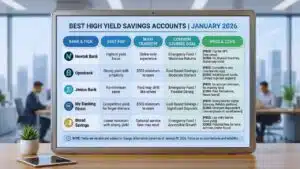
| Bank | Yield Snapshot | Minimum To Open | Monthly Fee | Best Fit |
| Newtek Bank | 4.35% | 0 | No typical monthly fee | Rate-focused savers |
| Openbank | 4.20% | 500 | No typical monthly fee | Simple product, strong yield |
| Jenius Bank | 4.05% | 0 | No typical monthly fee | Beginners and small balances |
| My Banking Direct | 4.02% | 500 | No typical monthly fee | Online-only, strong yield |
| Bread Savings | 4.00% | 100 | No typical monthly fee | Lower minimum, steady option |
Best High Yield Savings Accounts In January 2026
This section covers the top five picks in detail. Each pick includes who it is best for, what to watch out for, and how it fits common savings goals. You will also see a simple pros and cons breakdown. The goal is clarity, not hype. Remember that these accounts may change their yields over time. That is normal. Your job is to pick a strong option that stays useful even if the yield shifts. If the account is easy, low-fee, and reliable, it will still be a good tool.
If you want to move fast, choose two finalists from this list. Then compare minimum requirements and how you plan to use the account. Emergency fund needs can differ from goal-based savings needs. This is also where the focus keyword matters most. If you are searching for the best high yield savings accounts in January 2026, you want a list that is practical and honest about tradeoffs.
| Pick | Best For | Main Tradeoff |
| Newtek Bank | Highest yield focus | Online-only experience |
| Openbank | Strong yield with simplicity | 500 minimum to open |
| Jenius Bank | No-minimum saver | Yield may shift like others |
| My Banking Direct | Competitive yield for larger starters | 500 minimum to open |
| Bread Savings | Lower minimum with strong yield | Optional service fees may exist |
1) Newtek Bank Personal High Yield Savings
Newtek Bank is a strong choice for people who want a high yield without complicated rules. It often appears near the top of monthly comparisons. Many savers like it because it feels direct. You open the account, deposit money, and earn a strong return. This type of account fits an emergency fund well. It also works for cash you want to keep liquid while still earning a competitive yield. If you keep a large balance, even a small yield difference can matter over a year.
The main thing to understand is that it is typically a digital experience. If you prefer branch banking, it may not match your style. But for online banking comfort, it is a strong fit. Also, keep your expectations realistic. The yield can change. Focus on the full package, not only the number.
| Item | Details |
| Yield Snapshot | 4.35% |
| Minimum To Open | 0 |
| Monthly Maintenance Fee | Usually none |
| Best Use | Emergency fund, goal savings |
| Best Fit | Rate-focused online savers |
Pros
- Strong yield compared with many standard savings accounts
- Simple setup and simple savings purpose
- Works well for larger balances
- Typically no monthly maintenance fee
Cons
- Online-only feel may not fit branch users
- Yield can change as market rates shift
2) Openbank High Yield Savings Account
Openbank stands out for savers who want a strong return with a straightforward product. The account is often discussed as a clean, simple high-yield option. Many people prefer that simplicity. They do not want a bundle of features. They want a savings account that pays well. The biggest barrier is the opening minimum. If you can meet it, this account can be a strong option for storing short-term savings. It can also work for a structured savings plan, like saving for a big purchase over the next year.
If your goal is to keep saving consistent, consider setting up automatic transfers. A consistent deposit schedule often beats the stress of switching accounts often. This account is best for people who have at least 500 ready to deposit and want a strong yield with minimal noise.
| Item | Details |
| Yield Snapshot | 4.20% |
| Minimum To Open | 500 |
| Monthly Maintenance Fee | Usually none |
| Best Use | Short-term savings and planned goals |
| Best Fit | Savers who want simple terms |
Pros
- Strong yield and simple product structure
- Good for planned savings goals
- Clear account purpose and easy comparison
Cons
- Opening minimum may block some savers
- Yield can change over time
3) Jenius Bank Savings
Jenius Bank is a practical choice for people who want to start without a minimum deposit. That matters a lot. Many savers want to begin today, not later. A zero-minimum option removes a common barrier. This account can be useful for a starter emergency fund. It can also work as a separate savings bucket to keep money away from everyday spending. That separation is powerful for behavior. If you do not see the money in your main checking account, you are less likely to spend it.
If you are early in your savings journey, focus on consistency. A slightly lower yield will not matter much on a small balance. What matters is building the habit and growing the balance. This option is also useful if you want to open a second savings account dedicated to a single goal, like insurance payments, travel, or a yearly expense.
| Item | Details |
| Yield Snapshot | 4.05% |
| Minimum To Open | 0 |
| Monthly Maintenance Fee | Usually none |
| Best Use | Starter funds, goal buckets |
| Best Fit | New savers and small balances |
Pros
- No opening minimum makes it easy to start
- Competitive yield for a zero-minimum option
- Great for separating savings from spending
Cons
- Online-only may not suit everyone
- Yield can change like most high-yield accounts
4) My Banking Direct High Yield Savings
My Banking Direct is often a strong pick for savers who can start with a larger minimum deposit. It tends to fit people who already have cash to move and want a competitive yield in a straightforward savings product. This account can be a good match for a large emergency fund or cash reserved for a near-term purchase. If you have money sitting in a low-rate account, moving it can create a noticeable difference in interest earned.
One smart approach is to test transfers early. Link your existing bank, transfer a small amount, and confirm timing. That one step helps you avoid surprises later. If you plan to move money often, pay attention to any transfer limits or timing patterns. Even a great yield is not helpful if the money feels hard to access.
| Item | Details |
| Yield Snapshot | 4.02% |
| Minimum To Open | 500 |
| Monthly Maintenance Fee | Usually none |
| Best Use | Larger balances and planned savings |
| Best Fit | Online savers starting with 500+ |
Pros
- Competitive yield for January 2026
- Works well for larger balances
- Often no monthly maintenance fee
Cons
- Opening minimum may block some readers
- Transfer experience can differ by setup
5) Bread Savings High Yield Savings Account
Bread Savings is a strong option for savers who want a lower opening minimum than 500 but still want a competitive yield. For many people, a 100 minimum is much easier to meet. That simple difference can determine whether someone starts saving now or postpones it. This account can fit a wide range of goals. It can hold an emergency fund. It can also be used for planned savings like travel, home projects, or upcoming bills. If you want a simple place to park money and earn more than a typical savings account, it is a practical pick.
Pay attention to optional services. Some banks charge fees for certain paper-based or special services. Most people can avoid those by using digital tools. If you want a lower minimum with a strong yield, this pick can be a good balance.
| Item | Details |
| Yield Snapshot | 4.00% |
| Minimum To Open | 100 |
| Monthly Maintenance Fee | Usually none |
| Best Use | Flexible savings with lower minimum |
| Best Fit | Savers starting with 100+ |
Pros
- Lower opening minimum than many competitors
- Competitive yield and simple savings use
- Good fit for goal-based savings
Cons
- Optional services may include fees
- Yield can change over time
How Much Can You Earn With A High Yield Savings Account In 2026?

People often underestimate how much a higher yield changes the result. The difference can look small on paper, but it adds up when your balance is meaningful. A typical low-rate savings account can earn so little that it feels pointless. A high-yield savings account makes the interest visible. To understand earnings, focus on two things. First, your average balance. Second, the yield. If you keep 10,000 in savings for a year, the gap between a low rate and a high rate can be hundreds. If you keep 25,000, it can be close to a thousand.
Also remember that yields can change. Your bank may lower the yield if market rates fall. That means your actual earnings can be lower than a simple estimate. Still, the general advantage usually remains. This is why many savers treat an HYSA as a default home for emergency funds. It is not meant to beat long-term investing. It is meant to make cash work harder while staying safe and liquid.
| Balance | Example Low Yield | Example High Yield | Why It Matters |
| 5,000 | Small interest | Much higher interest | Better return without locking money |
| 10,000 | Often feels like nothing | Often feels meaningful | Motivates consistent saving |
| 25,000 | Missed gains add up fast | Stronger yearly return | Makes short-term cash smarter |
Practical tips
- If your balance is small, focus on saving more first.
- If your balance is large, yield differences matter more.
- Do not switch banks for tiny differences unless the gap is meaningful.
- Always check fees before you chase a higher yield.
How To Choose The Right High Yield Savings Account?
Choosing an HYSA is easier when you start with your goal. An emergency fund needs access. A goal fund can tolerate slower transfers. A bill fund needs predictability and easy automation. When you pick based on purpose, you are less likely to regret the choice. Next, watch the fees. Even one monthly fee can erase a lot of interest. The best accounts for most readers are simple, with no monthly maintenance fee. After that, check minimum rules. Some accounts require a higher opening deposit. Others require a minimum balance to avoid fees.
Then look at access. Ask simple questions. How fast can you transfer money in or out. Can you link your primary bank easily. Does the app feel stable and clear. These details matter because you will use them. Finally, think about your habits. If you like to keep savings separate, a second HYSA can help. If you prefer one place, choose the most user-friendly option.
This is also a good place to mention the focus keyword again in a practical way. The best high yield savings accounts in January 2026 are the ones that match your real needs, not just the ones with the highest headline.
| What To Check | What To Look For | Why It Helps |
| Fees | No monthly maintenance fee | Keeps interest in your pocket |
| Minimums | A minimum you can meet easily | Avoids friction and delays |
| Transfer speed | Reasonable timing for your needs | Makes emergency access easier |
| Rate behavior | Competitive and not overly gimmicky | Reduces churn and stress |
| Usability | Clear app, clean statements | Helps you stay consistent |
Simple decision steps
- Pick your purpose, emergency or goal-based.
- Remove any account with monthly fees.
- Choose the minimum deposit level you can meet.
- Test one transfer.
- Automate savings if possible.
Rate Trends In 2026 And What To Watch Next
High-yield savings rates do not exist in a bubble. They move with broader interest rate conditions and bank competition. When market rates rise, HYSAs often rise. When market rates fall, HYSAs often drift down. That is why you should treat your yield as something to review, not something to assume. In 2026, a key theme is stability after a period of big changes. Banks may compete for deposits, especially online banks. That competition can keep yields attractive even when benchmark rates are not rising.
You may also notice more marketing around very high “up to” yields. Those can be real, but they may require conditions. Some accounts require large balances. Some require certain activity. Some cap the yield at a specific amount of money. If you want simple, avoid complex rules. A smart approach is to build a system. Put your emergency fund in an HYSA that is easy to access. If you have extra cash you will not need soon, consider other tools like certificates of deposit. But keep your core savings flexible.
| Trend | What You May See | What It Means |
| Variable yields | Banks adjust yields over time | Your return can change |
| Competitive offers | Online banks fight for deposits | Good options remain available |
| Conditional promotions | Very high “up to” numbers | Read rules before opening |
| Focus on access | Faster transfers become a selling point | Convenience can outweigh tiny yield gaps |
What to do now?
- Check your yield every few months.
- If your bank falls far behind, consider switching.
- Keep your emergency fund in a place you can reach quickly.
- Avoid accounts that feel confusing or restrictive.
Final Thoughts
Moving your savings into a better account is one of the easiest money upgrades you can make. You do not need a complicated strategy. You need a strong account with low friction. If you pick a no-fee account with a competitive yield, your money starts working harder with almost no extra effort. The best high yield savings accounts in January 2026 are not defined by yield alone. They are defined by value. That includes yield, low or no fees, a reasonable minimum, and access that fits your real life.
Pick an option you can stick with, then review your yield a few times a year. If you want a simple action plan, choose one account today, move your emergency fund, and automate a small weekly or monthly transfer. Consistency is what turns a high-yield savings account into a real advantage.