Cozy games in 2026 feel like a quiet room you can step into whenever life gets loud. They rarely ask you to win fast. They rarely punish you for messing up. They let you move at your own pace, do small tasks, and feel good doing them.
That sounds simple. It is not. The pull of low-stakes gameplay sits at the intersection of stress, attention, identity, and social needs. It also reflects how modern entertainment is shifting. Many people are tired of “always-on” competition, grinding, and endless performance tracking. They want play that feels like care, not work.
The rise is visible in real-world signals too. The annual Wholesome Direct showcase has become a major cozy hub, and one report describes its growth from a small 2020 audience to millions of viewers by 2025. That kind of momentum does not happen by accident.
This article breaks down what cozy games are, why they soothe us, where the trend comes from, and what the research can and cannot claim. It stays honest about limits and avoids turning games into a cure-all.
Why Cozy Games Feel Like A Cultural Moment In 2026
Cozy games are not new. But the way we talk about them is. Many writers and scholars tie the popular rise of the term to the pandemic era and the cultural desire for comfort play.
In plain terms, cozy games usually emphasize relaxation, everyday routines, and gentle goals. A common description highlights non-violence, nurturing tasks, and open-ended play that supports self-expression.
In 2026, the cozy label also reflects what people want from entertainment more broadly. Quiet streaming playlists, slow living content, and “soft” hobbies all share a similar promise: you can enjoy them without getting judged.
Cozy games fit this mindset well because they give you three things many people feel short on:
-
A sense of control
-
Predictable progress
-
Warm social cues, even if the “social” part is just an NPC being kind
| Cozy “Vibe” Element | What It Looks Like | What It Does For The Player |
|---|---|---|
| Low stakes | Few harsh penalties | Reduces threat and tension |
| Predictable routines | Daily tasks, gentle loops | Creates mental rest |
| Self-expression | Decorating, customizing | Builds identity and ownership |
| Warm tone | Friendly dialogue, soft humor | Supports emotional safety |
What Counts As A Cozy Game And Why People Disagree
Ask ten players what counts as cozy and you may get ten answers. That debate is part of the genre’s story. Academic work on definitions notes that “cozy” can be a negotiated label shaped by fans, creators, and media.
A practical baseline is simple: cozy games typically reduce pressure and focus on comfort. A common public definition describes cozy games as emphasizing relaxation and non-violence, often using life-sim roots like growing, gathering, and nurturing.
Still, many players call a game cozy even if it has combat, as long as the combat is low stress, optional, or framed as safe. This is why “cozy” works better as a spectrum than a strict box.
The Cozy Spectrum
-
Pure cozy: play at your pace, no real danger
-
Cozy with gentle challenge: puzzles, light management, small deadlines
-
Cozy-adjacent: deeper themes, but “safe” design and soothing delivery
A Quick Checklist Readers Can Use
A game often feels cozy when it:
-
Gives you time
-
Rewards small actions
-
Feels warm through art, music, and writing
-
Lets you stop without losing everything
| Cozy Type | Core Loop | Why It Can Feel Cozy |
|---|---|---|
| Pure cozy | decorate, farm, socialize | Calm progress with minimal risk |
| Cozy + challenge | puzzle, light planning | Flow without fear of failure |
| Cozy-adjacent | mystery, mild tension | Safety comes from tone and control |
The Psychology Of Low-Stakes Play
The psychological pull of cozy games is not one thing. It is several small mechanisms that stack.
A useful way to frame it is this: cozy games make it easy to regulate emotion. They offer relief without demanding peak performance. And they often do this through design choices that support basic psychological needs.
Research on games and well-being often uses Self-Determination Theory (SDT), which emphasizes autonomy, competence, and relatedness. A well-cited SDT paper on games links in-game autonomy and competence to enjoyment and well-being changes around play.
Separately, research on games as coping tools examines how people use games for emotional regulation, including mood management and stress response ideas.
Stress Relief And Mood Repair
Cozy play can act like a short reset. You do something small. The world responds kindly. The feedback is simple and predictable. For many people, that shift is calming.
There is also emerging academic interest focused specifically on cozy games and well-being. One example is a Utrecht University thesis exploring which features make games feel cozy and how they may relate to stress relief and well-being.
Control, Predictability, And The Comfort Of Routine
Modern life can feel unstable. Cozy games offer a world where rules are clear and outcomes are manageable. You know what happens when you water crops. You know how long crafting takes. You know the day will turn over, and you can try again tomorrow.
That predictability is not boring for many players. It is restful.
Flow Without The Fear
Flow is often described as deep focus that emerges when challenge matches skill. Cozy games can create a gentle version of flow by lowering the cost of mistakes. You can get immersed without being punished for slipping.
| Psychological Lever | What Cozy Games Often Do | Why It Helps |
|---|---|---|
| Autonomy (SDT) | let you choose goals | restores control |
| Competence (SDT) | give small wins often | builds confidence |
| Relatedness (SDT) | warm NPCs and community | supports belonging |
| Mood regulation | calming loops and routines | helps emotional reset |
| Flow | focus without pressure | attention feels effortless |
Cozy Games In 2026: Why The Craving Feels Stronger Now
Cozy games in 2026 are rising in a world that asks people to perform all the time. Many players now describe competitive systems as draining. Ranked ladders, seasons, daily quests, and time-limited events can start to feel like chores.
Cozy games offer a different contract. You do not have to prove yourself. You do not have to keep up. You can be “good enough” and still enjoy the session.
This shift also fits what researchers call media use for coping. A scoping review of coping-related media research describes multiple perspectives, including mood management and emotion regulation, while also noting concerns around problematic use. That balance matters. People can use cozy games to unwind, but it should not become the only coping tool.
Why Competitive Fatigue Pushes Players Toward Comfort Play
Many mainstream games now:
-
Use battle passes and recurring tasks
-
Track performance constantly
-
Reward long, repetitive time investment
Cozy games often do the opposite:
-
Short sessions still feel complete
-
Progress does not punish breaks
-
Motivation stays intrinsic more often than extrinsic
The “Small World” Effect
Cozy games build a manageable world. It is small enough to understand, but alive enough to care about. That matters when real life feels too big and too uncertain.
| 2026 Driver | What People Feel | How Cozy Play Responds |
|---|---|---|
| Burnout | “I have no energy” | low effort progress |
| Overload | “too many signals” | fewer alerts and demands |
| Competitive fatigue | “everything feels ranked” | play without judgment |
| Loneliness | “I want gentle company” | warm NPCs and safe community spaces |
Cozy Games And Mental Health: What Evidence Suggests And What It Cannot Prove
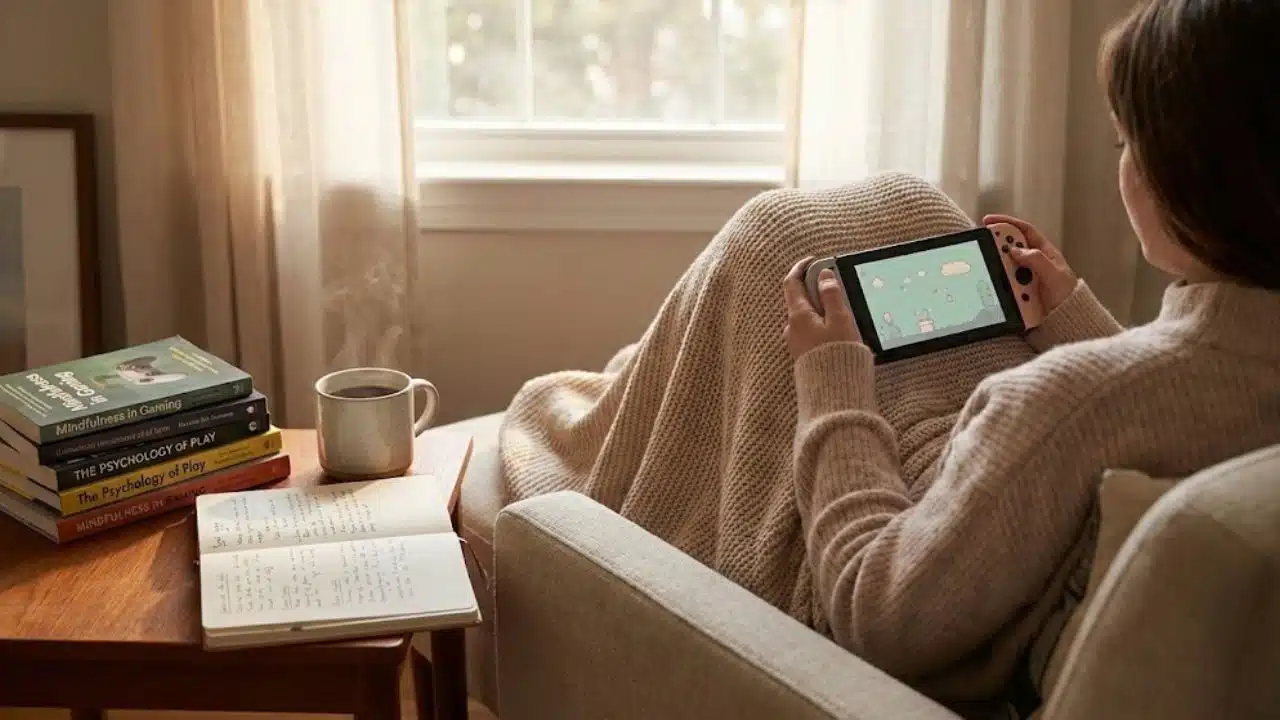
It is tempting to say cozy games “heal” people. That claim is too strong. What we can say is more careful: many people use games to cope, and research is actively exploring how and why that works.
A 2025 Frontiers in Communication study looks at motivations for using games in coping and emotional regulation through mood management and stress response lenses. A broader scoping review also maps research on media use for coping and highlights that the field includes both healthy coping and problematic use angles.
Cozy-specific research is still developing, but there are focused academic efforts. The Utrecht University thesis mentioned earlier is one example that tries to identify which features make games feel cozy and whether they help with stress relief and well-being.
At the same time, it is important to avoid simplistic “screen time equals harm” thinking. A large-scale youth study reported in January 2026 found no evidence that overall time spent on social media or gaming increased mental health problems in that sample, and argued that context matters more than raw hours.
A Balanced Way To Talk About Benefits
Reasonable, cautious claims:
-
Cozy games may help some people unwind after stress
-
They may offer short-term mood lift for some players
-
They may support social connection in low-pressure spaces
Claims to avoid:
-
“Cozy games cure anxiety”
-
“Cozy games replace therapy”
-
“Cozy games are always healthy”
| Topic | What’s Fair To Say | What To Avoid |
|---|---|---|
| Stress | may reduce stress for some people | “proven treatment” |
| Coping | people use games for emotion regulation | “always positive coping” |
| Screen time | context matters more than hours | “all gaming harms mental health” |
The Design Patterns That Make A Game Feel Cozy
Cozy is built. It is not accidental. Designers create “safe” experiences through mechanics, pacing, and tone.
A common thread is soft failure. When you fail, the game does not shame you. It gives you a gentle way back. That one choice changes the emotional climate of a session.
Another thread is sensory comfort. The art style might be warm. The music might be slow. The UI might avoid harsh alerts. The game reduces the chance of overstimulation.
Common Cozy Design Tools
-
Gentle progression loops with clear, small rewards
-
Recoverable mistakes instead of harsh punishment
-
Nurturing mechanics like farming, cleaning, cooking, and caretaking
-
Calm audio design with ambient tracks and soft sound cues
-
Time systems that respect breaks and slow play
Cozy games are also expanding. A Guardian feature on the genre describes how “cosy” can include darker themes as long as the experience still feels emotionally safe and supportive.
| Design Pattern | How It Shows Up | What It Signals To The Brain |
|---|---|---|
| Soft failure | low penalty, easy recovery | safety |
| Tiny goals | short tasks, clear completion | competence |
| Calm pacing | no constant urgency | reduced arousal |
| Warm social cues | friendly NPC feedback | belonging |
| Safe exploration | curiosity without threat | gentle engagement |
Community And Social Comfort: Cozy Gaming As A Shared Ritual
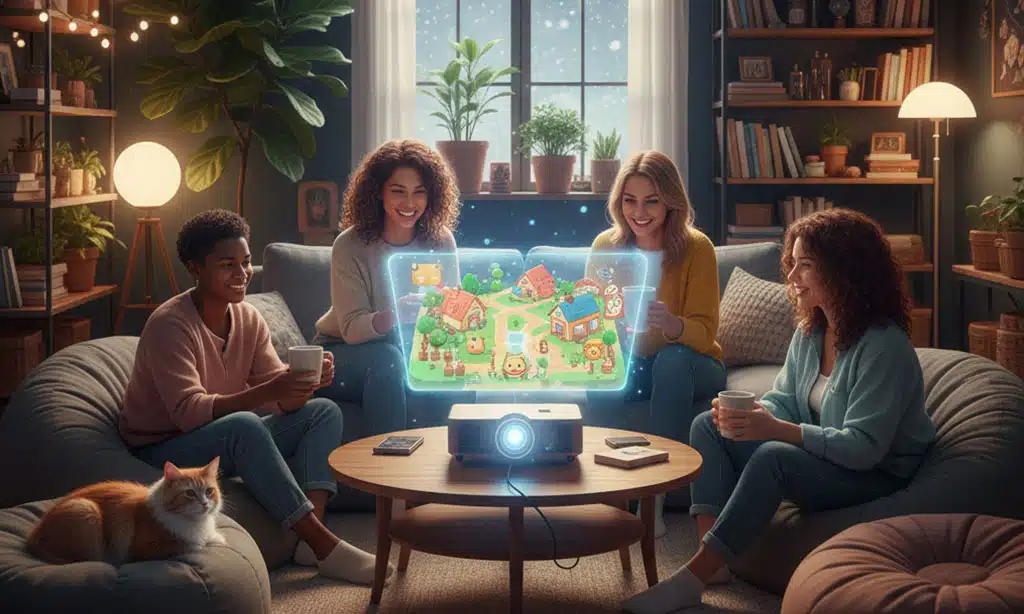
Cozy games are rarely only single-player. Even when you play alone, the culture around cozy games is social. Players share farms, rooms, outfits, and routines. They recommend games the way people recommend comfort food.
The Wholesome Games community and Wholesome Direct have also helped make cozy gaming a shared event, not just a private habit. Coverage of Wholesome Direct 2025 describes a large lineup of comfort-focused titles and highlights how these showcases gather audiences around “kind” game design.
Why Low-Pressure Social Spaces Matter
Some players want company without pressure. Cozy communities often offer:
-
Help without judgment
-
Sharing without rivalry
-
Creative feedback rather than performance critique
This does not mean cozy spaces are perfect. Any community can develop gatekeeping. But the norms are often gentler because the games encourage gentler play.
| Social Feature | What Players Do | Why It Feels Good |
|---|---|---|
| Sharing builds | post screenshots and tours | social validation without ranking |
| Co-op routines | farm or decorate together | shared calm ritual |
| Recommendation culture | “try this if you’re tired” | care through taste |
| Showcase events | watch reveals together | belonging through shared hype |
Market And Trend Signals: Is Cozy Gaming Really Growing?
Measuring “cozy games” as a market is hard. The label is broad and sometimes subjective. Still, several signals suggest expansion:
-
Growing visibility in showcases and media coverage
-
More developers marketing games as cozy
-
Industry market estimates attempting to size “online cozy game” segments
Some market report sites claim specific numbers, like a 2024 valuation and a forecast toward 2032. These are industry estimates, not audited public figures, so it is best to treat them as directional rather than definitive.
A stronger, more credible approach is triangulation:
-
Use reputable cultural reporting for trend context
-
Use market estimates as “one view,” clearly labeled
-
Use platform tagging trends cautiously, because tags can be marketing-driven
| Trend Signal | What It Suggests | How To Treat It |
|---|---|---|
| Wholesome Direct scale | bigger cozy pipeline and audience | strong cultural signal |
| Market estimate reports | possible revenue growth | directional, not precise |
| Genre definition work | cozy is stabilizing as a term | supports SEO search intent |
Cozy Does Not Always Mean Easy: The Rise Of Comfortable Challenge
Many players want calm, but not boredom. This is where “comfortable challenge” shows up. The game can still be demanding, but it feels fair and forgiving.
Comfortable challenge often includes:
-
Optional difficulty settings
-
Assist modes (slower timers, hints, undo tools)
-
Short sessions with clear stopping points
-
Failure that teaches instead of punishes
Flow research often emphasizes the match between challenge and skill. Cozy games can support this match by letting players tune challenge, rather than forcing one high-pressure lane.
| Feature | Why It Works | Example Mechanic |
|---|---|---|
| Optional challenge | player stays in control | difficulty sliders |
| Undo tools | reduces fear of mistakes | rewind or “take back” |
| Bite-size goals | supports short sessions | daily tasks |
| Soft consequences | keeps mood stable | retry without loss |
Critiques And Blind Spots: When Cozy Becomes A Marketing Skin
Cozy is powerful as a label. That also means it can be misused.
Some games wear cozy art and soft music while still pushing:
-
Heavy grind
-
Time-gated progress
-
Monetization pressure
-
Fear of missing out mechanics
Those systems can create stress, which breaks the cozy promise.
There is also the escapism question. Escapism can be healthy. It can also become avoidance if it is the only way someone handles hard feelings. The coping research literature often stresses context and individual differences, which is why one-size-fits-all claims are risky.
| Concern | Why It Matters | What Readers Can Check |
|---|---|---|
| Hidden grind | can feel like work | long daily chores |
| Monetization pressure | adds stress and FOMO | timers, paid boosts |
| Cozy “gatekeeping” | narrows who feels welcome | community norms |
| Avoidance risk | overuse can backfire | balance with real support |
How To Find The Right Cozy Game For You
The best cozy game is not “the most popular.” It is the one that matches your mood, time, and tolerance for challenge.
Pick By Mood
-
If you feel tired: pick routine-based games with tiny tasks
-
If you feel anxious: pick predictable systems with soft feedback
-
If you feel lonely: pick community-driven games with gentle co-op
-
If you feel overstimulated: pick quiet exploration and low UI noise
Pick By Time
-
10–20 minutes: simple loops and clear stopping points
-
1–2 hours: deeper building, crafting, story chapters
-
Weekend comfort: long-form life sims and slow progression
Pick By Challenge Preference
-
Pure cozy: minimal tension
-
Cozy + challenge: puzzles and light planning
-
Cozy-adjacent: deeper themes, but “safe” tone
| Your Goal | Best Cozy Subtype | What To Avoid |
|---|---|---|
| unwind fast | pure cozy | harsh timers |
| feel productive | gentle management | endless grind |
| feel social | cozy co-op | high-pressure ranked modes |
| feel absorbed | comfortable challenge | punishing failure loops |
Final Thoughts
Cozy games in 2026 are not a sign that players stopped loving challenge. They are a sign that many players want choice. They want play that fits real life, not play that demands it.
The psychology is not mysterious. Low-stakes games support autonomy, competence, and warm connection. They help many people regulate mood through routines and gentle feedback. They also create communities where creativity often matters more than status.
The cozy label will keep evolving. Some games will stretch it into darker themes while keeping a “safe” emotional frame. Others will misuse it as marketing. That makes one skill more important than ever: knowing what kind of comfort you want, and choosing games that truly deliver it.