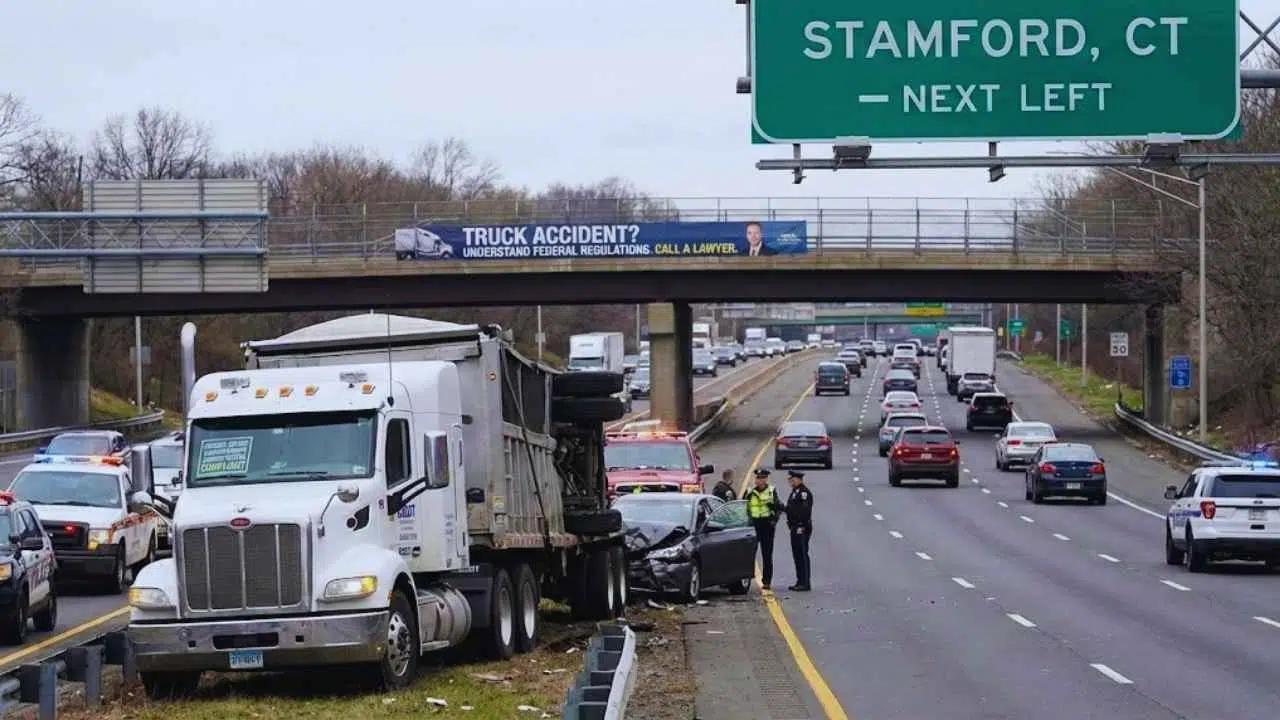
Truck accidents in Stamford and throughout Connecticut pose significant safety concerns, with the city’s location along major interstate corridors making it a high-traffic area for commercial vehicles. According to the Connecticut Department of Transportation, the state experiences over 3,000 truck-involved crashes annually, with a substantial number occurring in Fairfield County, where Stamford is located.
The Federal Motor Carrier Safety Administration reports that nationwide, large truck crashes result in approximately 5,472 fatalities each year, with an additional 153,452 injuries. In Connecticut specifically, truck accidents often involve violations of federal safety regulations, including hours-of-service violations, inadequate vehicle maintenance, and improper cargo securement. Studies show that understanding these federal regulations is crucial for victims seeking justice and fair compensation after a crash.
Truck crashes tend to deliver tragic results for everybody involved. And the federal rules have significant relevance with respect to these cases. Familiarity with these rules allows individuals to own their rights and obligations. This knowledge can also impact the outcome of legal actions after such events, which is why consulting a Stamford truck accident lawyer can be essential for those affected by commercial vehicle crashes.
Federal Rules Are Much More Prevalent in Trucking
Federal regulators established the minimum standards across the board for large trucks. Similarly, these guidelines seek to uphold greater road safety for all road users. These cover issues like driver qualifications, vehicle maintenance, and hours of service. All of these are designed to mitigate risks and safeguard truck drivers as well as other drivers on the road.
Driver Qualifications and Training
There are certain licenses required to operate commercial trucks, as per federal regulations. Before being approved, drivers must take written and road tests. Training requirements include material handling, safety, and emergency procedures. These standards are designed to help prevent avoidable tragedies on the highway by ensuring that operators have appropriate skills.
Hours of Service Regulations
Tiredness can affect the risk of crashes. That’s why there are very strict limitations on how long drivers can work between breaks based on driving hours and living hours. They regulate how many hours a day and week a person can drive. Operators are also required to maintain accurate logs of their working and resting hours. Adequate sleep also keeps drivers awake and alert while driving.
Vehicle Maintenance Standards
Maintenance is time-consuming for commercial trucks that have to adhere to stringent parameters. Inspections should be done regularly, and all repairs should be made immediately. According to the Federal Motor Carrier Safety Administration (FMCSA), proper vehicle maintenance and regular inspections are critical components of commercial trucking safety, with mechanical failures being a leading cause of preventable accidents. Brakes, tires, lights, and the like are subject to regular checks in accordance with federal rules. Common reasons for highway accidents include mechanical failure of vehicles; proper maintenance helps to reduce mechanical failures.
Cargo Securement and Weight Limits
Crashes from improperly loaded or overweight cargo can be disastrous. There are regulatory limits on both the weight and the tie-down methods of loads. These guidelines ensure that your items do not shift or fall when moved. Truck tires can burst, or brakes can fail if trucks carry excessive weight, putting everyone on the road in danger.
Alcohol and Drug Testing Requirements
Drug and alcohol testing for drivers is a requirement of safety rules. They occur pre-employment, post-collision, and randomly during the course of employment. Operators who fail a test will be removed immediately from duty. These procedures are intended to keep impaired people from entering the driver’s seat.
Recordkeeping and Documentation
Safety and accountability are both backed up by detailed records. Under federal regulations, companies must log every driver’s hours, inspection records, and training history. These records serve as crucial evidence in the event of a crash. Well-organized documentation can also show if a business disregarded regulations or tolerated misconduct.
Federal Regulations: Evidence in a Court of Law
Federal guidelines often play a role in legal claims when truck accidents take place. Attorneys and investigators analyze whether operators or companies violated any safety rules. A breach can demonstrate that a defendant was negligent, enhancing the victim’s argument. Courts regularly use these standards to determine liability and damages.
Challenges in Proving Violations
Proving that a company or driver violated federal regulations is not simple. Indicators such as logbooks, maintenance records, and voluminous data are generally critical. The lawyers may demand these documents to have a good case. In other cases, judges and juries are guided by expert witnesses in relearning technicalities. Such steps guarantee that all the facts are considered thoroughly.
Staying Informed and Safe
Everyone Benefits from Understanding a Smartphone Guide to Federal Trucking Rules. When you adhere to these guidelines, it helps drivers, companies, and passengers alike. Teaching these topics can also help people not engage in risky activities, like overloading a vehicle or not checking their vehicle for necessary maintenance.
Final Thoughts
Federal laws impact almost every facet of the business of commercial trucking. Establishing clear guidelines protects both truckers and other vehicle drivers. Here, knowing these rules can play a huge role in the future of accident cases and ensure that the victims receive fair treatment. Keeping up with trucking safety regulations is good for the entire road user community.