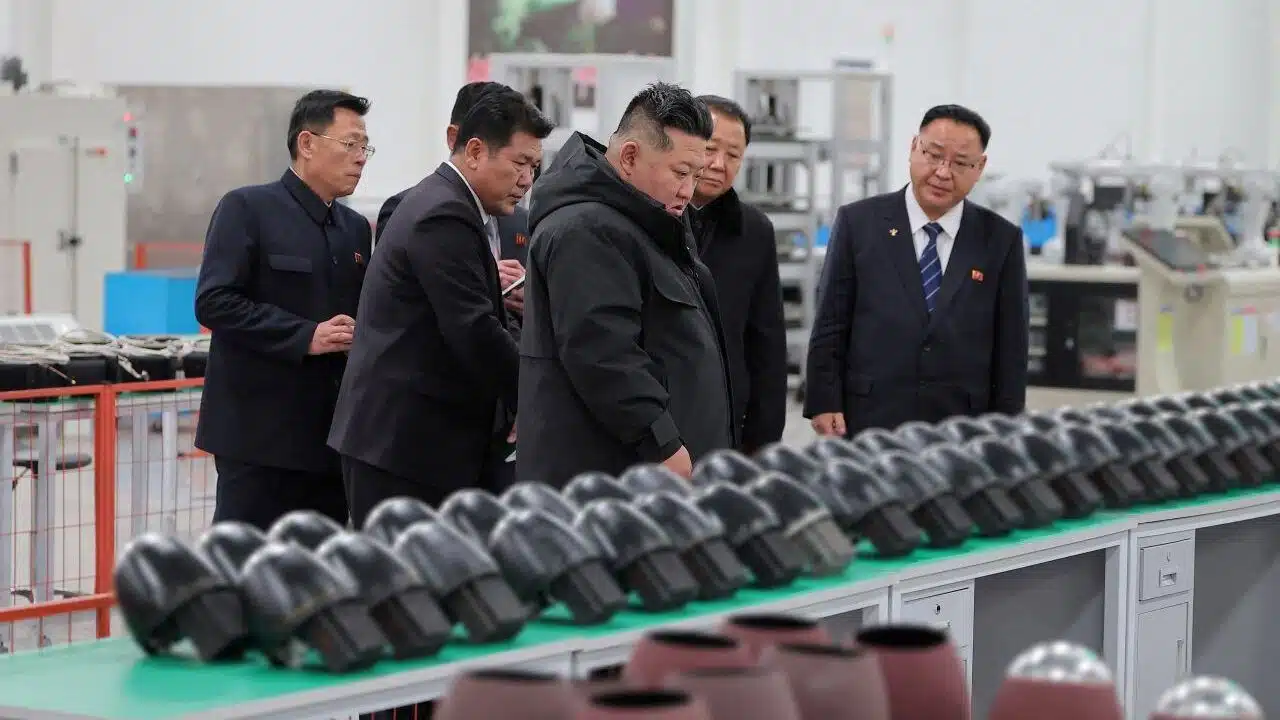
North Korea launched multiple ballistic missiles into the East Sea on January 4, 2026, hours after the United States captured Venezuelan President Nicolás Maduro in a daring military operation. The missile tests, Pyongyang’s first of the year, drew swift condemnation from Seoul, Tokyo, and Washington, amid fears that Kim Jong Un views Maduro’s ouster as a warning to rogue regimes. This escalation links two distant crises, underscoring global tensions under President Donald Trump’s aggressive foreign policy.
U.S. Operation: Capturing Maduro
U.S. forces executed a precision strike in Caracas on January 3, 2026, apprehending Maduro and his wife, Cilia Flores, from their residence. Elite Delta Force units, supported by the CIA, breached the compound after months of planning, including rehearsals on a replica of the site. Explosions rocked the capital as part of a “large-scale operation,” with Trump confirming success via Truth Social, noting no U.S. fatalities but minor injuries delayed by weather.
Maduro, indicted on narcoterrorism charges since 2020, was flown to New York on a naval vessel, landing at Stewart Air National Guard Base before transfer to the Metropolitan Detention Center in Brooklyn. U.S. Attorney General Pam Bondi announced charges including cocaine importation conspiracy, machine gun possession, and related offenses under 21 U.S.C. §960a and others. Trump stated the U.S. would temporarily “run” Venezuela to secure its oil reserves and facilitate a transition, though no formal governance has begun.
Venezuela’s Supreme Court named Vice President Delcy Rodríguez as acting president amid chaos, with pro-Maduro protests and state TV broadcasts continuing despite the upheaval. The operation followed escalating U.S. strikes on alleged drug boats and Trump’s pre-Christmas approval, marking a bold regime-change tactic.
North Korea’s Missile Response
South Korea’s Joint Chiefs detected several ballistic missiles launched from near Pyongyang at 7:50 a.m. local time on January 4, flying about 900 kilometers before splashing down in the East Sea. Japan’s Defense Ministry confirmed at least two projectiles reaching altitudes of 50 kilometers, landing outside its exclusive economic zone but prompting emergency alerts. The U.S. Indo-Pacific Command assessed no immediate threat but condemned the act as destabilizing.
This marked North Korea’s first missile activity since November 2025, timed hours before South Korean President Lee Jae-myung’s summit with China’s Xi Jinping on peninsula peace. Analysts link the launches directly to Maduro’s capture, viewing them as a defiant signal that Pyongyang won’t suffer a similar fate without resistance. North Korea’s Foreign Ministry issued a fiery statement via KCNA, slamming the U.S. action as a “flagrant violation” of sovereignty and the UN Charter, calling it proof of America’s “rogue and bestial nature.”
Pyongyang urged global protest, warning of regional instability and framing the event as hegemonic interference in sovereign affairs. Experts note Maduro’s ideological alignment with North Korea—both socialist holdouts against U.S. pressure—made his fall a stark reminder for Kim.
Historical Ties Between Pyongyang and Caracas
North Korea and Venezuela forged close bonds under Hugo Chávez and deepened them under Maduro, exchanging diplomatic support and resources. Pyongyang provided military training and construction expertise, while Venezuela supplied oil to bypass U.S. sanctions. Maduro visited Kim in 2015, praising their “anti-imperialist” alliance, and both regimes faced parallel U.S. indictments for drug ties.
This partnership mirrored broader “rogue state” solidarity, with North Korea viewing Venezuela as a bulwark against Washington in Latin America. Maduro’s government echoed Pyongyang’s rhetoric on sovereignty, rejecting U.S. interference much like Kim’s nuclear justifications. The capture shattered this axis, prompting fears in Seoul that it reinforces Kim’s nuclear deterrent logic: disarmament invites invasion.
Global Powers React
Russia and China decried the U.S. strike as “armed aggression,” with Moscow calling for a UN Security Council emergency session and Beijing demanding Maduro’s release. Putin’s spokesperson labeled it a sovereignty breach, while Xi warned of stability risks, aligning with their support for Maduro’s oil-backed economy. North Korea’s response amplified this chorus, positioning itself as the next line of defense against perceived U.S. adventurism.
South Korea’s National Security Council branded the missiles a UN resolution violation, convening urgently as Lee departed for Beijing. Japan called the tests “intolerable,” bolstering surveillance. Trump dismissed critics at Mar-a-Lago, emphasizing justice for narcoterrorism and Venezuela’s oil potential.
Strategic Implications for Asia and Beyond
Kim Jong Un’s launches signal heightened vigilance, potentially accelerating his nuclear program amid Venezuela’s fallout. Analysts warn Maduro’s precedent could harden Pyongyang’s stance, complicating denuclearization talks as Kim interprets U.S. actions as regime-change blueprints. The timing—pre-China summit—pressures Beijing to reaffirm anti-intervention support without alienating Seoul.
In Venezuela, power vacuums risk civil strife, with opposition figures eyeing transitions but loyalists mobilizing. Oil markets fluctuate as Trump eyes reserves, potentially reshaping global energy amid broader U.S.-China-Russia frictions. Indo-Pacific allies enhance readiness, fearing chain reactions from Latin America to East Asia.
This dual crisis tests Trump’s “peace through strength,” with North Korea’s missiles underscoring limits of unilateralism. As Maduro faces court on January 5, 2026, eyes turn to Pyongyang for further provocations.
Expert Analysis and Future Outlook
Seoul-based analysts like Lim Eul-chul argue Maduro’s capture “reinforces Kim’s belief that nukes prevent suicide,” dooming near-term diplomacy. U.S. officials assure no North Korea plans mirror Venezuela’s, but rhetoric fuels paranoia. Economically, Venezuela’s turmoil hits allies like North Korea, reliant on discounted oil.
Regional stability hinges on coordinated responses: Seoul-Tokyo-Washington drills may intensify, provoking more tests. UN debates loom, with Russia-China vetoes likely blocking censure. Long-term, this episode galvanizes anti-U.S. coalitions, from Caracas streets to Pyongyang labs.