

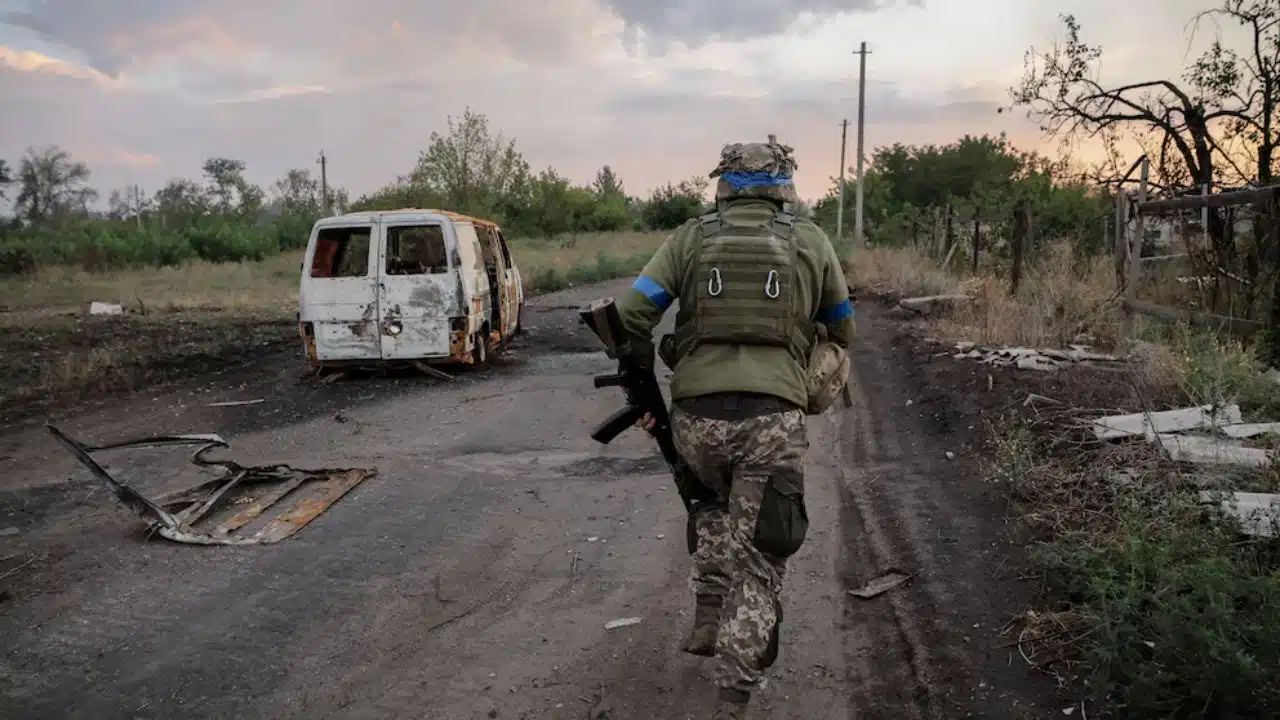
In a stark escalation amid fragile diplomatic efforts, Russia has unleashed more than 2,000 air strikes on Ukraine during the New Year week, according to President Volodymyr Zelensky. This barrage, comprising over 1,070 glide bombs, nearly 1,000 drones, and six missiles, underscores Moscow’s unrelenting pressure even as international mediators push for a ceasefire. As Western allies convene in Paris and Kyiv to forge security guarantees, the dueling narratives of battlefield fury and negotiation optimism highlight the war’s precarious endgame.
The Scale of the Onslaught
Russia’s aerial campaign intensified dramatically over the holiday period, targeting civilian areas and infrastructure with ruthless precision. Zelensky detailed the onslaught in a Telegram post and video address, noting the strikes’ role in sowing terror and straining Ukraine’s defenses. The eastern city of Kharkiv bore the brunt on January 2, when a devastating attack on a residential house killed four people and injured over 30 others, with rescuers still sifting through rubble days later.
Ukrainian air defenses intercepted many threats, but the sheer volume overwhelmed some regions. On New Year’s Eve alone, Russia fired over 200 drones, mostly at energy infrastructure, prompting Zelensky to plead for faster delivery of promised systems from allies. Subsequent nights saw further waves: 52 Shahed drones on January 3-4, with hits confirmed at nine locations despite downing 13. Russian tactics blend high-tech glide bombs—deployed over 1,070 times—with cheap, mass-produced drones, aiming to exhaust Ukraine’s Patriot missiles and manpower.
This week’s total eclipses prior salvos, signaling Moscow’s intent to dictate terms from strength. Independent assessments confirm Russian forces lost 900 soldiers, two tanks, and 88 vehicles in the same period, yet pressed offensives in Donetsk and Kharkiv oblasts. Ukrainian sources report geolocated advances in Kostyantynivka and near Hulyaipole, where Russian numerical superiority creates tense standoffs.
Zelensky’s Urgent Appeal
President Zelensky framed the attacks as a direct challenge to diplomacy, urging “stability and predictability” in Western aid to force Moscow’s hand. In his New Year’s address, he claimed a peace deal is “90% ready,” with the final 10%—likely territorial concessions and guarantees—holding the key to Europe’s future. He rejected Russian accusations of Ukrainian “terrorist attacks,” like the New Year’s strike on occupied Khorly in Kherson, which killed 24 and targeted occupation officials, not civilians.
Zelensky’s rhetoric blends defiance with pragmatism, calling for NATO troops—French and British foremost—to station in Ukraine post-war. This demand alarms Moscow, which views it as provocation, while Kyiv hosted 15 nations’ security advisers on January 3 to hash out guarantees. As rescuers in Kharkiv pulled survivors from debris, Zelensky vowed no pause in fighting until ironclad protections materialize.
Escalation on Both Fronts
Ukraine countered with drone swarms deep into Russia, prompting Moscow’s Defense Ministry to claim downing 132 UAVs overnight January 3-4, including 11 over the Moscow region. Vnukovo and Zhukovsky airports shuttered, delaying 50 flights, as three drones allegedly targeted the capital. Kyiv denies striking Putin’s residence but intelligence warns of impending Russian false-flag operations around Orthodox Christmas to sabotage talks.
Russian proxies in occupied areas decried the Khorly strike as civilian terrorism, using it to justify infrastructure blackouts in Ukraine. Meanwhile, frontline clashes rage: Russian pushes in Slovyansk-Lyman and Zaporizhzhia test Ukrainian lines, with General Kyrylo Budanov predicting Moscow’s 2026 goals include full Donbas control and Dnipro advances. Ukrainian drone teams worked through New Year’s Eve, striking supply lines to blunt this momentum.
Diplomatic Momentum Builds
Parallel to the bombardments, peace tracks accelerate under U.S. President Donald Trump’s brokerage. A revised 20-28 point plan, tweaked after Geneva and Abu Dhabi sessions, nears acceptance, with Trump declaring only “minor details” remain. Zelensky hosted Trump at Mar-a-Lago, emerging closer to a framework despite leaks branding it Russia-favorable.
European leaders rally: French President Emmanuel Macron hosts a January 6 Paris summit for “concrete commitments,” following Kyiv consultations. Canada’s Mark Carney joins allies January 5-6, as Zelensky eyes a U.S. leaders’ summit by month’s end. Russia engages indirectly via U.S. envoys like Steve Witkoff and Dan Driscoll, insisting on Anchorage principles from Trump’s Putin talks.
Sticking points persist: territory (Donbas, Crimea), security (no NATO troops per Moscow), and neutral status for Ukraine. Lavrov welcomes updates but demands clarifications; Putin eyes “victory in principle” without full conquest. Ukrainian Foreign Minister Andrii Sybiha confirmed fresh U.S.-invited talks, signaling momentum despite Putin’s New Year focus on military gains.
Key Players and Proposals
Trump’s team—Witkoff, Kushner, Driscoll—shuttles between Moscow, Kyiv, and Abu Dhabi, narrowing gaps on humanitarian swaps and ceasefires. Zelensky insists on European involvement, rejecting bilateral Putin deals. Macron and allies push “coalition of the willing” for guarantees, potentially including troops—red lines for Russia.
The U.S. plan evolves: from 28 points (seen as pro-Russia) to 20, incorporating Ukrainian input on borders and reconstruction. Russia demands border control pre-elections in occupied east; Ukraine seeks full sovereignty. Progress on POW exchanges and Black Sea navigation buoys hope, but escalation risks derailment.
| Stakeholder | Core Demands | Recent Moves |
|---|---|---|
| Ukraine (Zelensky) | Security guarantees, NATO troops, full territorial integrity | Hosted allies in Kyiv Jan 3; 90% deal claim |
| Russia (Putin) | Donbas control, no NATO in Ukraine, neutral Kyiv | Warns vs. troops; indirect U.S. talks |
| USA (Trump) | Quick ceasefire, minor details left | Envoys to Moscow/Kyiv; Mar-a-Lago meet |
| Europe (Macron et al.) | Concrete aid, Paris summit Jan 6 | Security advisers in Kyiv; guarantees focus |
Battlefield Realities
Donetsk grinds on: Russian gains in Kostyantynivka southeast, northwest of Oleksandro-Kalynove. Hulyaipole sees tense parity, with SBU sources noting Russian edge in men and gear. Kharkiv’s strikes highlight urban vulnerability; energy grids flicker under drone fire.
Ukrainian resilience shines: 900 Russian casualties daily, drone reprisals hit Bryansk (37 down), Kursk (22). Yet fatigue mounts—officers in east eye 2026 survival, not victory. False flags loom: SZRU flags Kremlin plots for Christmas attacks to blame Kyiv.
Global Ripples
The war spills beyond: Finland halts Russian cable-suspect vessel; NATO bolsters Baltics. Economies strain—Ukraine’s grid teeters, Russia’s ramps drone production (up to 2,000 simultaneous potential). Trump pressures for endgame, eyeing 2026 as pivot year.
Refugees huddle, soldiers toast uncertainly; civilians in Khorly mourn amid occupation lies. Zelensky’s call echoes: aid now, or diplomacy dies.
Hurdles to Lasting Peace
Security guarantees thorniest: Ukraine wants enforceable shields; Russia sees encirclement. Territory: Moscow holds 20% land; Kyiv won’t cede Donbas without borders first. Timing: Paris Tuesday reviews; U.S. summit eyed.
Putin’s calculus—leverage via strikes—clashes with Trump’s “good deal for both.” Zelensky warns 10% decides fates. Allies must balance aid speed with negotiation firmness.
Voices from the Ground
In Kharkiv, families bury dead as rescuers toil. Donetsk troops doubt quick peace, plan mere endurance. Moscow residents hear sirens, question costs. Diplomats shuttle, but bombs fall—irony defines this chapter.
As Paris looms, the world watches: will 2,000 strikes shatter talks, or forge resolve? Ukraine endures, allies deliberate, Russia probes. History tilts on coming days.





















